
Joint Israeli Palestinian Poll, October 2010
PALESTINIANS BELIEVE THEY ARE OF GREATER NEED OF SUCCESS IN THE NEGOTIATIONS, ISRAELIS THINK BOTH SIDES NEED IT EQUALLY, BUT BOTH PUBLICS ARE SKEPTICAL ABOUT THEIR SUCCESS
These are the results of the most recent poll conducted jointly by the Harry S. Truman Research Institute for the Advancement of Peace at the Hebrew University of Jerusalem and the Palestinian Center for Policy and Survey Research in Ramallah, between September 30 to October 7. This joint survey was conducted with the support of the Ford Foundation Cairo office and the Konrad Adenauer Stiftung in Jerusalem and Ramallah.
64% of the Palestinians believe that they and not Israel are of greater need of success in the direct negotiations; 51% among Israelis believe that both sides are of equal need of success. Nevertheless both publics are skeptical about the success of the talks, Israelis overwhelmingly support their continuation while Palestinians oppose it.
If the peace talks fail, the option endorsed by most Palestinians is to ask the UN Security Council to recognize a Palestinian State. The second most popular option is to declare unilaterally the establishment of a Palestinian state. The options to resort to resistance are less popular. However Israelis misperceive these preferences, and fear that Palestinians will resume the Intifada.
The Palestinian sample size was 1270 adults interviewed face-to-face in the West Bank, East Jerusalem and Gaza Strip in 127 randomly selected locations between September 30 and October 2, 2010. The margin of error is 3%. The Israeli sample includes 610 adult Israelis interviewed by phone in Hebrew Arabic or Russian between October 3 and 7, 2010. The margin of error is 4%. The poll was planned and supervised by Prof. Yaacov Shamir, the Harry S. Truman Research Institute for the Advancement of Peace and the Department of Communication and Journalism at the Hebrew University, and Prof. Khalil Shikaki, Director of the Palestinian Center for Policy and Survey Research (PSR).
For further details on the Palestinian survey contact PSR director, Prof. Khalil Shikaki or Walid Ladadweh, at tel. 02-2964933 or email pcpsr@pcpsr.org. On the Israeli survey, contact Prof Yaacov Shamir at tel. 03-6419429 or email jshamir@mscc.huji.ac.il.
MAIN FINDINGS
(A) Palestinian Israeli talks
- Regarding the construction freeze in the settlements 29% of the Israelis support a full construction freeze in all settlements 36% support construction only in settlement blocks which will remain under Israeli rule in a future agreement and 28% support unlimited construction in all settlements.
- Now after more than a month since the beginning of the direct negotiations 78% of the Israelis support their continuation while only 30% among Palestinians support it.
- Nevertheless 64% of the Palestinians believe that they and not Israel are of greater need of success in the direct negotiations while 51% among Israelis believe that both sides are of equal need of success.
- Neither Palestinians nor Israelis think that the negotiations will succeed and yield an agreement. Only 6% of the Palestinians and 5% of the Israelis think that there are high or very high chances for that.
- If Palestinians withdraw from the negotiations, 30% of the Israelis suggest that Israel should change its policy which instigated the withdrawal, 23% suggest to leave the problem to the Americans to take care of, 31% believe that Israel should respond by similar threats to Palestinian counterproductive steps.
- If the peace talks fail, the option endorsed by most Palestinians is to ask the UN Security Council to recognize a Palestinian State (69%). The next most popular option (54% support) is to unilaterally declare a Palestinian state. 51% support the option to start a non-violent resistance. The other options asked about received only minority support: 41% support the resumption of the armed Intifada (57% oppose it); 40% support the dissolution of the PA if the talks fail (57% oppose it), and 27% support abandoning the two-state solution and demanding instead a one-state solution (71% oppose it).
- We also asked Israelis’ assessment as to Palestinian preferred response to a failure of the talks. Israelis perceive quite accurately Palestinians’ preferences to act in the international arena, but they misperceive their preferences on resistance. While Palestinians prefer popular non-violent resistance over armed resistance (51% vs. 41%), 63% of the Israelis fear the Palestinians will resume the intifada and only 42% estimate that they will start a non-violent resistance.
(B) The Saudi Plan
- 56% of the Israelis oppose and 33% support the Saudi initiative which calls for Arab recognition of and normalization of relations with Israel after it ends its occupation of Arab territories occupied in 1967 and after the establishment of a Palestinian state. The plan calls for Israeli retreat from all territories occupied in 1967 including Gaza, the West Bank, Jerusalem and the Golan Heights, and the establishment of a Palestinian state. The refugees problem will be resolved through negotiation in a just and agreed upon manner and in accordance with UN resolution 194. In return, all Arab states will recognize Israel and its right to secure borders, will sign peace treaties with her and establish normal diplomatic relations. In our June 2010 poll 59% of the Israelis opposed the plan while 35% supported it. Among Palestinians, 57% support the plan and 39% oppose it; 67% supported it in June and 30% opposed it.
- 35% of the Israelis support yielding to American pressure to accept and implement the Arab (Saudi) Peace Initiative, while 55% oppose it. Among Palestinians 53% accept such pressure while 42% will reject it. In June 2010, 31% of Israelis thought Israel should accept such American pressure and 60% thought it should reject such pressure. Among Palestinians 60% believed they should accept American pressure to adopt and implement the Saudi Plan, 36% said they should reject such pressure.
- As to their assessments of the other side’s response to such pressure: 26% of the Israelis believe Palestinians will reject and 60% think they will accept it, while 53% of the Palestinians think Israel will reject and 40% think it will accept it.
(C) Conflict management and threat perceptions
- 52% of the Israelis support and 44% oppose talks with Hamas if needed to reach a compromise agreement with the Palestinians. In our June 2010 poll, 49% supported and 49% opposed such talks. However 63% think that the majority of the Israeli public opposes such negotiations and only 22% think a majority supports it.
- Neither Palestinians nor Israelis consider it likely that an independent Palestinian State will be established next to the State of Israel in the next five years. Two thirds of the Palestinians and 60% of the Israelis think that chances for the establishment of an independent Palestinian State next to the State of Israel are non-existent or low; 35% of Israelis and 32% of Palestinians believe the chances are medium or high. In June 2010, two thirds in both publics thought that chances for the establishment of an independent Palestinian State next to the State of Israel are non-existent or low.
- In our poll we also examine periodically Israelis’ and Palestinians’ readiness for a mutual recognition of identity as part of a permanent status agreement and after all issues in the conflict are resolved and a Palestinian State is established. Our current poll shows that 64% of the Israelis support and 24% oppose mutual recognition of Israel as the state for the Jewish people and Palestine as the state for the Palestinian people. Among Palestinians, 49% support and 48% oppose this step. In June 2010, 60% of the Israelis supported and 32% opposed this mutual recognition of identity and among the Palestinians support stood at 58% and opposition at 39%.
- Despite the recent return to dialogue between Fateh and Hamas to reach a reconciliation agreement, neither Palestinians nor Israelis believe that unity of Gaza and the West Bank will be resumed soon: only 14% of Palestinians and 6% of Israelis think so. 51% of Palestinians and 29% of Israelis think that unity will be resumed only after a long time. 30% of Palestinians and 47% of Israelis believe that Gaza and the West Bank will stay two separate entities.
- Among Israelis, 54% are worried that they or their family may be harmed by Arabs in their daily life, compared to 58% in our June poll. Among Palestinians 76% (compared to 74% in June) are worried that they or a family member might be hurt by Israel in their daily life or that their land would be confiscated or home demolished.
Joint Israeli- Palestinian Public Opinion Poll
Skeptical Israelis and Palestinians are Split Half in Support for a Final Status Package along the Clinton Parameters
These are the results of the most recent poll conducted jointly by the Harry S. Truman Research Institute for the Advancement of Peace at the Hebrew University of Jerusalem and the Palestinian Center for Policy and Survey Research in Ramallah, between December 11 and 19, 2007.
The joint poll examined Israelis and Palestinians’ assessments of the Annapolis conference and their expectations regarding its outcomes.
The findings indicate considerable disappointment with the Annapolis conference. There is much skepticism both among Israelis and among Palestinians regarding their leaders’ ability to implement their commitments and to stand by their declared time frame.
The joint poll further examined Israeli and Palestinian attitudes regarding a permanent settlement along the lines of President Clinton’s package for a Palestinian-Israeli final status settlement and the Geneva Initiative against the backdrop of the resumption of the political process by the Palestinian and Israeli governments.
The results document overall stability among Palestinians and a decline in support for that permanent status package and its parameters among Israelis since 2005.. Despite the declining trend among Israelis there is still a majority of 53% who support these parameters as a combined overall package. Among Palestinians, 47% support the package now (see summary table below).
Total Palestinian sample size is 1270 adults interviewed face-to-face in the West Bank and Gaza Strip in 127 randomly selected locations between December 11 and 16, 2007. The margin of error is 3%. The Israeli sample includes 564 adult Israelis interviewed by phone in Hebrew Arabic or Russian between December 11 and 19, 2007. The margin of error is 4%. The poll was planned and supervised by Dr. Yaacov Shamir, the Harry S. Truman Research Institute for the Advancement of Peace and the Department of Communication and Journalism at the Hebrew University and Dr. Khalil Shikaki, director of the Palestinian Center for Policy and Survey Research (PSR).
For further details on the Palestinian survey contact PSR director, Dr. Khalil Shikaki or Walid Ladadweh, at tel. 02-296 4933 or email pcpsr@pcpsr.org. On the Israeli survey, contact Dr. Yaacov Shamir at tel. 03-6419429 or email jshamir@mscc.huji.ac.il.
MAIN FINDINGS
(A) The Annapolis Conference
- Only 16% of the Israelis and 11% of the Palestinians deem the Annapolis conference a success in pushing the peace process forward, while 74% and 59% respectively see it as a failure.
- Both sides’ expectations with regard to the conference potential to moderate the conflict are rather low. 3% of the Israelis and 18% of the Palestinians believe that in the aftermath of Annapolis, negotiations will resume soon enough and armed confrontations will stop, 39% of the Israelis and 42% of the Palestinians expect negotiations to resume but some armed attacks will continue, 55% of the Israelis and 32% of the Palestinians believe that confrontations will not stop and the two sides will not return to negotiations.
- Both publics are also skeptical about their leaders’ ability to implement the commitments they made in the conference’s joint statement. In the statement both leaders stated that the two sides will seek to conclude the permanent status negotiations before the end of 2008. However only 23% of the Palestinians and 8% of the Israelis believe they will indeed succeed in achieving that in the period indicated. 72% and 89% respectively believe they will not succeed.
- In the joint statement, the two leaders also commit to immediately implement their respective obligations under the Quartet’s Roadmap, however only 18% of the Palestinians and 21% of the Israelis believe that the other side’s leadership will indeed implement their roadmap obligations while 79% and 77% respectively do not believe these obligations will be implemented. On the other hand 67% of the Palestinians and 59% of the Israelis think that their own leadership will implement these obligations if the other side implements them.
(B) Clinton/Geneva Parameters
The Clinton parameters for a Palestinian-Israeli permanent settlement were presented by President Clinton at a meeting with Israeli and Palestinian officials seven years ago, on December 23, 2000, following the collapse of the July 2000 Camp David summit. The Geneva Initiative, along similar lines, was made public around the end of 2003. These parameters address the most fundamental issues which underlie the Palestinian-Israeli conflict: (1) Final borders and territorial exchange; (2) Refugees; (3) Jerusalem; (4) A demilitarized Palestinian state; (5) Security arrangements; and (6) End of conflict. We addressed these issues several times in the past since December 2003, and in the current poll we revisited these crucial issues following the Annapolis conference and the resumption of the peace talks between the parties. The findings indicate stability in support of the overall package among Israelis compared to 2006, with a slight majority supporting the package (53%). This is a significant decline from close to two thirds support in December 2004 and December 2005. Among Palestinians there is similar stability in the level of support since December 2005, with a minority of 47% supporting the overall package. Since we have been tracking these issues in 2003, there was only once majority support for this package on both sides, in December 2004, shortly after the death of Arafat which was followed by a surge of optimism and considerable moderation in both publics. Among Israelis there is consistent majority support for the Clinton package since 2004, but this majority has been shrinking. Palestinian support for this permanent status framework package seems to have been affected more by the disengagement and the disappointment from it, than by Hamas' rise to power. Israeli support only fell following the Palestinian political turnabout, and does not seem to have been affected by the disengagement. Below we detail support and opposition to the individual items in the Clinton permanent status package.
(1) Final Borders and Territorial Exchange
Among Palestinians 56% support or strongly support and 42% oppose or strongly oppose an Israeli withdrawal from the West Bank and the Gaza Strip with the exception of some settlement areas in less than 3% of the West Bank that would be swapped with an equal amount of territory from Israel in accordance with a map that was presented to the Palestinian respondents. The map was identical to that presented to respondents in December 2006, when support for this compromise, with its map, stood at 61% and opposition at 37%.
Among Israelis 46% support and 50% oppose a Palestinian state in the entirety of Judea, Samaria and the Gaza Strip except for several large blocks of settlements in 3% of the West Bank which will be annexed to Israel.Israel will evacuate all other settlements, and the Palestinians will receive in return territory of similar size along the Gaza Strip. In December 2006, 44% of the Israelis supported this component while 54% opposed it.
(2) Refugees
Among Palestinians, 39% support and 57% oppose a refugee settlement in which both sides agree that the solution will be based on UN resolutions 194 and 242. The refugees would be given five choices for permanent residency. These are: the Palestinian state and the Israeli areas transferred to the Palestinian state in the territorial exchange mentioned above; no restrictions would be imposed on refugee return to these two areas. Residency in the other three areas (in host countries, third countries, and Israel) would be subject to the decision of these states. As a base for its decision Israel will consider the average number of refugees admitted to third countries likeAustralia, Canada, Europe, and others. All refugees would be entitled to compensation for their “refugeehood” and loss of property. In December 2006, 41% agreed with an identical compromise while 54% opposed it.
Among Israelis 44% support such an arrangement and 52% oppose it. In December 2006 38% supported it and 60% opposed.
(3) Jerusalem
In the Palestinian public 36% support and 63% oppose a Jerusalem compromise in which East Jerusalem would become the capital of the Palestinian state with Arab neighborhoods coming under Palestinian sovereignty and Jewish neighborhoods coming under Israeli sovereignty. The Old City (including al Haram al Sharif) would come under Palestinian sovereignty with the exception of the Jewish Quarter and the Wailing Wall that would come under Israeli sovereignty. In December 2006, an identical compromise obtained 39% support and 59% opposition.
Among Israelis, 36% agree and 63% disagree to this arrangement in which the Arab neighborhoods in Jerusalem including the old city and the Temple Mount will come under Palestinian sovereignty, the Jewish neighborhoods including the Jewish quarter and the Wailing Wall will come under Israeli sovereignty, East Jerusalem will become the capital of the Palestinian state and West Jerusalem the capital of Israel. In December 2006, 38% supported this arrangement and 60% opposed it.
(4) Demilitarized Palestinian State
Among Palestinians 23% support and 76% oppose the establishment of an independent Palestinian state that would have no army, but would have a strong security force and would have a multinational force deployed in it to ensure its security and safety. Israel and Palestine would be committed to end all forms of violence directed against each other. A similar compromise received in December 2006 28% support, and opposition reached 70%.
This item receives the lowest level of support by Palestinians. Unlike the refugees and Jerusalem components, this issue has not received due attention in public discourse, as it should, since it may become a major stumbling block in the efforts to reach a settlement.
Among Israelis 61% support and 38% oppose this arrangement compared to similar levels of 62% support and 36% opposition obtained in December 2006.
(5) Security Arrangements
In the Palestinian public 51% support and 47% oppose a compromise whereby the Palestinian state would have sovereignty over its land, water, and airspace, but Israel would have the right to use the Palestinian airspace for training purposes, and would maintain two early warning stations in the West Bank for 15 years. A multinational force would remain in the Palestinian state and in its border crossings for an indefinite period of time. The task of the multinational force would be to monitor the implementation of the agreement, and to monitor territorial borders and coast of the Palestinian state including the presence at its international crossings. In December 2006, 42% of the Palestinians supported this parameter while 55% opposed it.
In the Israeli public 53% support and 44% oppose this arrangement compared to 51% who supported it and 47% who opposed it in December 2006.
(6) End of Conflict
In the Palestinian public 66% support and 32% oppose a compromise on ending the conflict that would state that when the permanent status agreement is fully implemented, it will mean the end of the conflict and no further claims will be made by either side. The parties will recognize Palestine and Israel as the homelands of their respective peoples. An identical question received in December 2006 the support of 62% and the opposition of 34%.
In the Israeli public 67% support and 30% oppose this component in the final status framework. In December 2006, 68% of the Israelis supported it while 30% opposed it.
The Whole Package
Among Palestinians 47% support and 49% oppose the whole package combining the elements as one permanent status settlement. This level of support is similar to that obtained in December 2006, when 48% supported and 49% opposed such a package.
This stability in the level of support for the package among Palestinians deserves attention given the official and publicly endorsed Hamas position toward a permanent peace agreement with Israel. In this regard it is also important to stress the four percentage point increase in the “end of conflict” component which stands in open contradiction to Hamas refusal to such a clause and its willingness to grant Israel only a long-range Hudna.
Among Israelis 53% support and 43% oppose all the above features together taken as one combined package. In December 2006, 52% supported and 46% opposed such a package.
It is important to see that the pattern of support for the overall package is more than the sum of its parts, suggesting that people’s calculus is compensatory and trade-offs are considered. Despite strong reservations regarding some of the components, the overall package always receives greater support in both publics, where the desirable components and the chance of reaching a permanent status agreement seem to compensate for the undesirable parts.
37% of the Israelis estimate that a majority in their society supports the Clinton parameters as a combined final status package. 51% believe that the majority opposes it. These perceptions tap the normative facet of public opinion and indicate that despite the consistent support in the package over time, it has not acquired widespread normative legitimacy in the Israeli public. Among Palestinians 45% believe now that a majority in their society supports the Clinton parameters as a combined final status package and 46% believe that the majority opposes it. In addition a majority among Palestinians incorrectly assumes that the majority of Israelis opposes the package while Israelis accurately estimate that a Palestinian majority opposes the parameters.
Summary Table: Support for Clinton’s Permanent Settlement Framework (2003-2007)
Israelis
| Palestinians
| |||||||||
| Dec 03
| Dec 04
| Dec 05 | Dec 06 | Dec 07 | Dec 03
| Dec 04
| Dec 05
| Dec 06 | Dec 07 |
1) Borders and Territorial Exchange | 47%
| 55% | 53% | 44% | 46% | 57% | 63% | 55% | 61% | 56% |
2) Refugees | 35% | 44% | 43% | 38% | 44% | 25% | 46% | 40% | 41% | 39% |
3) Jerusalem | 41%
| 39% | 38% | 38% | 36% | 46% | 44% | 33% | 39% | 36% |
4) DemilitarizedPalestinian State | 61%
| 68% | 69% | 62% | 61% | 36% | 27% | 20% | 28% | 23% |
5) Security Arrangements | 50%
| 61% | 62% | 51% | 53% | 23% | 53% | 43% | 42% | 51% |
6) End of Conflict | 66%
| 76% | 80% | 68% | 67% | 42% | 69% | 64% | 62% | 66% |
Overall Package | 47%
| 64% | 64% | 52% | 53% | 39% | 54% | 46% | 48% | 47% |
(C) Other Conflict and Conflict Resolution Issues
- 66% of the Israelis support negotiations between Israel and Abu Mazin over a final status settlement. Despite these levels of support only 41% of the Israelis believe that it is possible and 57% think it is impossible to reach nowadays a compromise settlement between Abu Mazin and Olmert. Among Palestinians 32% believe that it is possible and 63% think it is impossible these days to reach a permanent status agreement with Olmerts’ government.
- 58% of the Israelis support negotiations with a Palestinian national unity government which includes Hamas if needed to reach a compromise agreement.
- Even when a Hamas-led government is concerned, 46% of the Israelis support and 52% oppose talks with it if needed in order to reach a compromise agreement with the Palestinians.
- 65% of the Israelis and 49% among Palestinians agree with the proposal that after reaching a permanent agreement to all issues of the conflict, there would be mutual recognition of Israel as the state for the Jewish people and Palestine as the state for the Palestinian people. 32% and 49% respectively disagree to this step. This is the first time since June 2003 that this step fails to obtain majority support among Palestinians. Presumably this is a reaction to the Palestinian leaders’ public statements against the recognition of Israel’s Jewish identity which came in response to Israelis’ attempts to raise this issue as a precondition to the resumption of the peace talks. 43% of the Palestinians and 52% of the Israelis believe that a majority of their domestic public supports such a proposal, and 48% and 34% respectively think the majority opposes it.
- 52% of the Israelis estimate that a Palestinian majority opposes this step, and 35% believe that a majority supports it. Among Palestinians, 48% incorrectly believe that the Israeli majority opposes this step, and 40% think the majority supports it.
- 69% of the Palestinians and 74% of the Israelis will support the efforts to reach full reconciliation between Israel and the Palestinian state if a peace agreement is reached, and a Palestinian state is established and recognized by Israel.
- If the shelling of Israeli communities from the Gaza Strip continues, 30% of the Israelis think that Israel should reoccupy the Gaza Strip and stay there, 40% think Israel should carry out ad-hoc operations against the shelling and get out, and 25% believe Israel should use primarily diplomatic rather than military steps.
26 March 2017
On the 50th anniversary of the Israeli occupation of the West Bank and the Gaza Strip, a majority believes that most of the Arab and European countries do not stand with the Palestinian people; but the overwhelming majority believes that God stands with the Palestinians and that the occupation will end soon or within five to ten years
8-11 March 2017

These are the results of the latest poll conducted by the Palestinian Center for Policy and Survey Research (PSR) in the West Bank and the Gaza Strip between 8 and 11 March 2017. Internally, the period before the poll witnessed the setting of a May 2017 date for holding local elections and Hamas announced its intentions to boycott them. A novel by a Palestinian writer was banned by the PA and the license for the Palestinian Telecommunication Company was renewed without opening the market to competition. The Israeli government announced big plans for more settlement construction and the Palestinian president threatened to suspend security coordination in response to these announcements. Internationally, the Trump Administration took office in January. This press release addresses these issues and covers other matters such as Palestinian elections, general conditions in the Palestinian territories, and reconciliation. It also covers the peace process and the 50th anniversary of the Israeli occupation of the West Bank and the Gaza Strip. Total size of the sample is 1270 adults interviewed face to face in 127 randomly selected locations. Margin of error is 3%.
For further details, contact PSR director, Dr. Khalil Shikaki, or Walid Ladadweh at tel. 02-296 4933 or email pcpsr@pcpsr.org.
Main Findings:
Findings of the first quarter of 2017 show a high level of dissatisfaction with the performance of President Abbas; in fact, two-thirds demand his resignation. Nonetheless, if new presidential elections take place today, he would receive the same level of support as that of Ismail Haniyeh, Hamas’ candidate. Findings also show a decline in the level of support for Fatah compared to our findings three months ago when Fatah’s popularity rose a little in light of its successful holding of its 7th Convention.
On other domestic issues, the public is divided into two halves regarding the banning of a Palestinian novel which the PA claims to contain indecent language. Two-thirds disagree with the renewal of the license of the Palestinian Telecommunication Company (PALTEL) without the opening of the market to competition. We also found that a little over one fifth of the public goes to private, rather than governmental, hospitals because they think that the chances for a medical error in such hospitals are lower. A large minority indicates that they personally or a member of their family and friends had an experience involving a medical error.
On the 50th anniversary of the Israeli occupation of the West Bank and the Gaza Strip, more than half of the public is optimistic about its end soon or within the next five to ten years; but one third believes that it will last another 50 years. The public places the blame for the continuation of the occupation equally on its leadership and on the Palestinian factions and political parties, but it also places the responsibility on itself. A majority thinks the standing of Palestine today is worse than it was fifty years ago and also worse than it was ten years ago. But despite the belief of the public that most Arab and European countries do not stand with the Palestinian people, an overwhelming majority believes that God stands with the Palestinians.
Findings show a slight increase in the level of support for the two-state solution compared to our findings three months ago, but it is still just below the 50% mark. Strong correlation exists between the belief in the viability of the two-state solution and its support: the more viable the solution, the higher the support. Today, most Palestinians believe that the two-state solution is no longer viable due to settlement construction. Still, most Palestinians have not shifted to supporting the one-state solution; two-thirds continue to oppose it.
The overwhelming majority of the public is dissatisfied with the response of the Palestinian leadership to the new Israeli plans for settlement construction. In this context, a similarly large majority believes that Abbas is not serious about suspending security coordination with Israel. Abbas announced that if settlement construction continues, he would be forced to suspend security coordination. The public believes that the most suitable response to the new Israeli settlement plans should be the suspending of security coordination and the formal submission of a complaint against Israel to the International Criminal Court.
(1) 50th anniversary of Israeli occupation:
- 32% believe that the occupation will last for another 50 years
- Only 25% say the Palestinian leadership is doing all it can to end the occupation
- 44% say that the place and status of Palestine today is worse than it was 50 years ago
- 72% believe that Netanyahu does not attach importance to Palestinian reaction to his policies
- Two thirds believe that most of the Arab counties do not stand with the Palestinian people, but 94% believe that God stands with them.
On the 50th anniversary of the Israeli occupation of the West Bank and the Gaza Strip, the public is divided on the future directions: 32% believe the occupation will last for another 50 years, 24% believe it will end soon, and 29% believe it will end after five to ten years or more. The belief that the occupation will end soon or within five to ten years is greater in the Gaza Strip (66%) compared to the West Bank (45%), among supporters of Hamas and third parties (66% and 65% respectively) compared to supporters of Fatah (49%), among residents of refugee camps and cities (57% and 55% respectively) compared to residents of villages and towns (39%), among the religious (59%) compared to the somewhat religious (47%), among those who are opposed to the peace process (67%) compared to the supporters of the peace process (45%), among refugees (59%) compared to non-refugees (48%), among holders of BA degree (55%) compared to the illiterates (46%), among farmers, students, and employees (68%, 61%, and 56% respectively) compared to the retired and laborers (43% and 46% respectively).
We asked the public to assess the strength of the role played by four different Palestinian actors in the struggle to end the Israeli occupation: (1) the Palestinian leadership, (2) most political parties and factions, (3) most of the public, and (4) the respondent himself or herself. Respondents were given three options to choose from: do their best, inadequate, and negligent role. Only 25% said the leadership is doing its best; 41% said its role is inadequate; and 32% said it is negligent. Similarly, 26% said most factions are doing their best; 49% said their role in inadequate; and 23% said they are negligent. On the other hand, 39% said the public is doing its best; 44% said its role is inadequate; and 16% said it is negligent. Finally, 29% assessed their own personal role as doing their best; 40% as inadequate; and 28% said they are negligent.
The belief that the leadership is doing all it can is higher in the Gaza Strip (33%) compared to the West Bank (20%), among supporters of Fatah (42%) compared to supporters of Hamas and third parties (17% and 28% respectively), in refugee camps (43%) compared to villages and cities (20% and 24% respectively), among supporters of the peace process (32%) compared to those who are opposed to the peace process (17%), among the illiterates (32%) compared to holders of BA degree (27%), and among the public sector employees (30%) compared to those employed in the private sector (23%).
The belief that the respondent himself or herself is doing all he or she can do is also higher in the Gaza Strip (38%) compared to the West Bank (23%), among men (31%) compared to women (26%), among the religious (33%) compared to the unreligious and the somewhat religious (22% and 25% respectively), among those who are opposed to the peace process (32%) compared to the supporters of the peace process (28%), among the refugees (31%) compared to the non-refugees (27%), among holders of BA degree (33%) compared to the illiterates (28%), among employees (38%) compared to students (26%), and among those employed in the public sector (40%) compared to private sector employees (32%).
44% of the public believe that the standing of Palestine today is worse than it was 50 years ago. By contrast, 39% believe it is better than it was 50 years ago. Moreover, 43% believe that the place or standing of Palestine today is worse than it was 10 years ago and 36% believe it is better than it was 10 years ago. The belief that the standing of Palestine today is worse than it was 50 years ago is higher in the Gaza Strip (52%) compared to the West Bank (40%), among supporters of third parties and Hamas (47% and 41% respectively) compared to supporters of Fatah (37%), among residents of cities and refugee camps (48% and 40% respectively) compared to residents of villages and towns (34%), among those who are opposed to the peace process (53%) compared to supporters of the peace process (40%), and among refugees (46%) compared to non-refugees (43%).
A large majority (72%) believes that the Netanyahu government does not take into consideration or attach importance to Palestinian reaction to its policies or actions while 26% believe it does take into consideration Palestinian reaction. Moreover, two thirds (65%) of the public believe that most Arab counties do not stand often enough with the Palestinian people. A similar majority (66%) believes that most European countries do not stand most of the time with the Palestinian people. But 51% believe that most of the Muslim countries do stand most of the time with the Palestinian people and 56% believe that most of the peoples of the world do stand most of the time with the Palestinians. On the other hand, an overwhelming majority of 94% believes that God stands with the Palestinian people. Although this figure reflects a consensus, it is worth noting few differences that seem to reflect level of religiosity and political affiliation: while 97% of the religious believe that God stand with the Palestinians, the percentage drops slightly to 94% among the somewhat religious and 77% among the unreligious; similarly, it rises among supporters of Hamas, reaching 99% and drops slightly to 94% among Fatah supporters and 85% among supporters of third parties.
(2) Presidential and parliamentary elections:
- 64% want President Abbas to resign
- In presidential elections, Abbas receives 47% and Haniyeh 47%; and if the two candidates are Marwan Barghouti and Haniyeh, the former receives 59% and the latter 36%
- In new parliamentary elections, Fatah receives 36% and Hamas 30%
64% of the public want president Abbas to resign while 31% want him to remain in office. Three months ago, 64% said they want Abbas to resign. Demand for Abbas’ resignation stands at 61% in the West Bank and 70% in the Gaza Strip. If president Abbas does not nominate himself in a new election, 33% prefer to see Marwan Barghouti replacing him, while 20% prefer Ismail Haniyeh; Mohammad Dahlan 7%; Khalid Mishal, Rami al Hamdallah and Mustapha Barghouti (5% each); Salam Fayyad 3%, and Saeb Erekat 2%.
Level of satisfaction with the performance of president Abbas stands at 36% and dissatisfaction at 61%. Level of satisfaction with Abbas stands at 41% in the West Bank and 29% in the Gaza Strip. If new presidential elections were held today and only two were nominated, Ismail Haniyeh and Mahmoud Abbas, the former would receive 47% (compared to 49% three months ago) and the latter 47% (compared to 45% three months ago). In the Gaza Strip, Abbas receives 46% of the vote (compared to 45% three months ago) and Haniyeh receives 50% (compared to 51% three months ago). In the West Bank Abbas receives 47% (compared to 45% three months ago) and Haniyeh 45% (compared to 47% three months ago). If presidential elections were between three: Mahmud Abbas, Marwan Barghouti and Ismail Haniyeh, Abbas would receive 26%, Barghouti 40% and Haniyeh 33%. If presidential elections were between two: Marwan Barghouti and Ismail Haniyeh, Barghouti receives 59% and Haniyeh 36%.
If new legislative elections were held today with the participation of all factions, 69% say they would participate in such elections. Of those who would participate, 30% say they would vote for Hamas and 36% say they would vote for Fatah, 11% would vote for all other third parties combined, and 22% are undecided. Three months ago, vote for Hamas stood at 32% and Fatah at 41%. Vote for Hamas in the Gaza Strip stands today at 34% (compared to 38% three months ago) and for Fatah at 37% (compared to 40% three months ago). In the West Bank, vote for Hamas stands at 28% (compared to 29% three months ago) and Fatah at 36% (compared to 41% three months ago).
(3) Local elections:
- Only 45% say they will participate in the upcoming local elections
- Only 31% believe that Hamas is right to boycott the upcoming local elections
Only 45% (46% in the West Bank and 44% in the Gaza Strip) say they will participate in the local elections which are scheduled to take place in May. 35% say they will not participate and 15% are not sure. 35% believe that the holding of local elections in May will serve the interests of reconciliation while 22% believe it will not serve it and 34% believe it will have no impact on it. About half (49%) of the public believes that Hamas is making a mistake in its decision to boycott local elections while 31% believe it is not making a mistake. The belief that Hamas is right in boycotting the local elections is higher in the Gaza Strip (38%) compared to the West Bank (28%), in refugee camps and cities (35% and 32% respectively) compared to villages and towns (27%), among women (33%) compared to men (30%), among the religious (39%) compared to the somewhat religious and the unreligious (26% and 19% respectively), among those who are opposed to the peace process (47%) compared to supporters of the peace process (23%), among holders of BA degree (34%) compared to illiterates (7%), among those employed in the private sector (35%) compared to those employed in the public sector (27%), and among supporters of Hamas (62%) compared to supporters of Fatah and third parties (16% and 31% respectively).
(4) Domestic conditions: security, Gaza electricity, banned novel, PALTEL, medical errors, and others:
- Only 11% think conditions in the Gaza strip are good; 25% think conditions in the West Bank are good
- 46% of Gazans and 23% of West Bankers say they wish to emigrate
- Gazans place the responsibility for the electricity crisis equally on Fatah and Hamas
- 47% say the PA is a burden on the Palestinian people
- 46% support and 44% oppose the ban on a Palestinian novel
- Two thirds disapprove the renewal of the license of the telecommunication company PALTEL without opening the market to competition
- 38% say that they or a family member have experienced a medical error in Palestinian hospitals
Positive evaluation of conditions in the Gaza Strip stands at 11% and positive evaluation of conditions in the West Bank stands at 25%. Moreover, perception of safety and security in the Gaza Strip stands at 38%. In the West Bank perception of safety and security stands at 50%. Three months ago, perception of safety and security in the Gaza Strip stood at 47% and in the West Bank at 56%. Findings show that the percentage of Gazans who say they seek to migrate to other countries stands at 46%; in the West Bank, the percentage stands at 23%. Three months ago 46% of Gazans and 24% of West Bankers said they seek to emigrate.
In the West Bank, the largest percentage (44%) places responsibility for the electricity crisis in the Gaza Strip on Israel, 18% place it on the PA and president Abbas; only 13% place it on Hamas’ shoulders. By contrast, Gazans place the responsibility for the crisis on the PA and Hamas equally (31% on the PA and 30% on Hamas); only 20% place it on Israel.
We asked the public about its viewership habits in the last two months. Findings indicate that Maan TV viewership is the highest, standing at 16%, followed by al Jazeera TV (at 15%), Palestine TV (at 14%), al Aqsa TV (at 13%), Filasteen al Youm (Palestine Today) at 12 %, Al Arabiya at 7%, and al Quds TV and al Mayadeen at 4% each.
Perception of corruption in PA institutions stands at 77%. Only 38% of the Palestinian public say people in the West Bank can criticize the PA without fear. 47% view the Palestinian Authority as a burden on the Palestinians while 48% view it as an asset.
The public is almost evenly divided concerning the banning by the PA of a Palestinian novel charging that it contains indecent language: 46% approve the ban and 44% do not. Disapproval of the ban is higher in the Gaza Strip (46%) compared to the West Bank (43%), among supporters of third parties (62%) compared to supporters of Fatah and Hamas (41% and 47% respectively), among residents of refugee camps (61%) compared to residents of villages and cities (41% and 42% respectively), among women (46%) compared to men (42%), among those whose age is between 18 and 22 (55%) compared to those whose age is 50 and above (39%), among those who are opposed to the peace process (49%) compared to supporters of the peace process (42%), among refugees (47%) compared to non-refugees (42%), among holders of BA degree (44%) compared to the illiterates (17%), and among students (51%) compared to farmers and housewives (34% and 41% respectively).
Two thirds do not agree with the PA decision to renew the license of the Palestinian Telecommunication Company (PALTEL) without a competitive bidding; only 24% agree with the PA decision. Disagreement with the PA decision is higher in the West Bank (73%) compared to the Gaza Strip (57%), among supporters of Hamas and third parties (70% and 68% respectively) compared to Fatah supporters (56%), among residents of villages and cities (70% and 68% respectively) compared to residents of refugee camps (59%), among men (71%) compared to women (63%), among the somewhat religious (71%) compared to the religious (63%), among those who are opposed to the peace process (78%) compared to supporters of the peace process (61%), and among non-refugees (69%) compared to the refugees (63%).
38% say that they personally, or one of their family members or friends, had experienced a case of medical error and 61% say they did not. While 36% believe that such medical errors occur equally in private and governmental hospitals, 22% indicate that they go to private hospitals because they think errors are less likely in them and 23% indicate that despite the danger of medical errors they still go to governmental hospitals because of the cheaper costs.
(5) Reconciliation and the reconciliation government:
- 27% are optimistic and 67% are pessimistic about reconciliation
- Only 26% are satisfied with the performance of the reconciliation government
- Only 18% put the blame on Hamas for the poor performance of the reconciliation government
Optimism about the success of reconciliation and the end of the split stands today at 27% and pessimism at 67%. Three months ago optimism stood at 35% and pessimism at 61%. 26% say they are satisfied and 63% say they are dissatisfied with the performance of the reconciliation government. In the Gaza Strip, dissatisfaction stands at 74% and in the West Bank at 56%. Belief that Hamas was responsible for hindering the functioning of the reconciliation government does not exceed 18% (9% in the West Bank and 33% in the Gaza Strip) while 34% believe that the PA and president Abbas were to blame for that and 14% blame the prime minister of the reconciliation government.
(6) New Israeli settlement plans and the peace process:
- Palestinians think the response to Israel’s settlement policy should be the termination of security coordination and the submission of a formal complaint to the ICC
- 77% are dissatisfied with the response of the Palestinian leadership to the new Israeli settlement plans
- 47% support and 51% oppose the two-state solution
- 60% say the two-state solution is no longer practical due to settlement construction
- 67% think that the Paris peace conference did not contribute to improving the chances for peace
- Only 9% think the Trump Administration will renew the peace process
We asked the public about the most effective means of responding to the recent Israeli settlement plans: 25% think it is the suspension of security coordination with Israel; 22% think it is the submission of a formal complaint to the International Criminal Court; 19% think it is the resumption of armed attacks; 19% think it is a strong international condemnation of Israel, and 14% think it is the organization of popular non-violent protests. An overwhelming majority of 77% are dissatisfied, and only 18% are satisfied, with Abbas’ response to the recent Israeli announcement of plans for 6,000 new settlement units. In fact, a large majority of 72% believes that President Abbas is not serious in his threat to suspend security coordination with Israel if settlement construction continues; only 21% believe he is serious. The belief that President Abbas is serious is higher in the Gaza Strip (24%) compared to the West Bank (19%), in refugee camps and cities (23% and 22% respectively) compared to villages and towns (17%), among supporters of the peace process (29%) compared to those who are opposed to the peace process (8%), among the illiterates (30%) compared to holders of BA degree (17%), and among Fatah supporters (45%) compared to supporters of Hamas and third parties (6% and 21% respectively).
On the two-state solution, the public is divided: 47% support and 51% oppose it. Three months ago, 44% supported it. Palestinians are divided into three groups on the most effective means of building a Palestinian state next to the state of Israel: 34% believe that negotiation is the most effective; 37% think armed action is the most effective; and 24% think non-violent popular resistance is the most effective. Three months ago, 37% said armed action is the most effective means.
A majority of 60% believes that the two-state solution is no longer viable due to settlement expansion while 37% believe that it is still viable. A minority of 32% supports a one-state solution in which Jews and Arabs enjoy equal rights; 67% oppose the one-state solution. Three months ago, support for the one-state solution stood at 36%. 70% believe that the chances for creating an independent Palestinian state alongside the state of Israel during the next five years are slim or non-existent while 29% believe the chances are medium or high.
The percentage of those who are worried that they would be hurt by Israel or that their land would be confiscated or homes demolished stands at 71%; 29% are not worried. Furthermore, a majority of 52% believes that Israel’s long term aspiration is to annex the lands occupied in 1967 and expel their population and 32% believe that Israel wants to annex the West Bank while denying the Palestinians their rights. 14% believe that Israel’s long term aspiration is to insure its security and withdraw from all or most of the territories occupied in 1967. 50% believe that Israel intends to destroy al-Aqsa Mosque and the Dome of the Rock and replace them with a Jewish temple; 17% believe that it intends to divide the plateau on which the two mosques sit so that Jews would have a synagogue alongside the Muslim holy places. Only 10% believe that Israel is interested in maintaining the status quo without change.
In the absence of peace negotiations, 77% support joining more international organizations, 67% support non-violent popular resistance, 51% support a return to an armed intifada, and 49% support the dissolution of the Palestinian Authority. Three months ago, support for a return to an armed intifada stood at 53%. Few months after the holding of the Paris peace conference, two thirds (67%) of the public believe that it did not contribute to improving the chances for Palestinian-Israeli peace; only 21% believe it did. With Trump in the White House, 38% believe that the new American administration will aggravate Palestinian-Israeli tensions leading to escalation in popular and violent confrontations due to the expected settlement build-up; 33% believe conditions will remain as they are now; 11% believe the new administration will provoke diplomatic confrontation; only 9% believe it will lead to a renewal of the peace process. If the Trump Administration called upon the two side to resume negotiations without any preconditions, a majority of 58% believe that the Palestinian leadership should reject the call; only 31% believe it should accept it.
(7) The Arab World, ISIS:
- 76% believe that the Arab World is preoccupied with its own problems and 59% believe that today there is a Sunni Arab alliance with Israel against Iran
- 92% believe that ISIS does not represent true Islam and 80% support the war against it
76% say the Arab World is too preoccupied with its own concerns, internal conflicts, and the conflict with Iran and that Palestine is no longer the Arab’s principal or primary issue or cause. Only 23% think Palestine remains the Arab’s principal cause. 59% believe that there is an Arab Sunni alliance with Israel against Iran despite the continued Israeli occupation of Arab land while 29% believe that the Arabs would not ally themselves with Israel until it ends its occupation and allows the creation of a Palestinian state.
An overwhelming majority of 92% believes that ISIS is a radical group that does not represent true Islam and 4% believe it does represent true Islam. 4% are not sure or do not know. In the Gaza Strip, 5% (compared to 4% in the West Bank) say ISIS represents true Islam. 80% support and 16% oppose the war waged by Arab and Western countries against ISIS.
(8) Most vital Palestinian goals and the main problems confronting Palestinians today:
- 43% say the most vital Palestinian goal should be the establishment of a state along the 1967 lines and 34% say it should be the attainment of the right of return
- Poverty and unemployment is the main problem confronting Palestinians in the eyes of 27%
43% believe that the first most vital Palestinian goal should be to end Israeli occupation in the areas occupied in 1967 and build a Palestinian state in the West Bank and the Gaza Strip with East Jerusalem as its capital. By contrast, 34% believe the first most vital goal should be to obtain the right of return of refugees to their 1948 towns and villages, 12% believe that it should be to build a pious or moral individual and a religious society, one that applies all Islamic teachings, and 10% believe that the first and most vital goal should be to establish a democratic political system that respects freedoms and rights of Palestinians.
The most serious problem confronting Palestinian society today is poverty and unemployment in the eyes of 27% of the pubic; an identical percentage believes it is the continuation of occupation and settlement activities; 24% say it is the spread of corruption in public institutions; 17% say it is the siege of the Gaza Strip and the closure of its crossings; and 4% say it is the absence of national unity.
With Increased Dissatisfaction with the Performance of Mahmud Abbas and with the Government of Ismail Haniyeh Seen as Having Greater Legitimacy and Better Performance than the Government of Salam Fayyad, and with Confidence in the Negotiations with Israel Collapsing, Hamas’s and Haniyeh’s Popularity Increase and Fateh’s and Abbas’s Decrease While Support for Rocket Launching and Suicide Attacks Increase
13-15 March 2008
These are the results of the latest poll conducted by the Palestinian Center for Policy and Survey Research (PSR) in the West Bank and the Gaza Strip between 13 and 15 March 2008. This period witnessed a limited lull that prevailed between Israel and Hamas in the Gaza Strip in the aftermath of the Israeli incursion into Gaza in early March that left more than 130 Palestinians dead and after the bombing attack in West Jerusalem that led to the death of 8 Israeli religious students. The poll examines the following topics: the domestic balance of power, the performance and legitimacy of two governments, that of Ismail Haniyeh and Salam Fayyad, and the peace process. Total size of the sample is 1270 adults , 830 in the West Bank and 440 in the Gaza Strip, interviewed face to face in 127 randomly selected locations. Margin of error is 3%. For further details, contact PSR director, Dr. Khalil Shikaki, or Walid Ladadweh at tel 02-296 4933 or email pcpsr@pcpsr.org.
Main Findings:
Findings indicate that a major shift, in Hamas’s favor, had occurred during the last three months with about 10% of the population shifting their attitudes and perceptions. The change included increased popularity of Hamas and its leadership, increased support for its positions and legitimacy, and greater satisfaction with its performance. These changes might have been the result of several political developments starting with the breaching of the Rafah border with Egypt during the last week of January and first week of February, followed by the Israeli military incursion into the Gaza Strip leading to a large number of Palestinian causalities and an increase in the number of rockets launched from the Gaza Strip against Israeli towns such as Sderot and Ashkelon, the two suicide attacks in Dimona and Jerusalem leading to the death of nine Israelis, and ending with the failure of the Annapolis process in positively affecting daily life of Palestinians in the West Bank, in stopping Israeli settlement activities, or in producing progress in final status negotiations. These developments managed to present Hamas as successful in breaking the siege and as a victim of Israeli attacks. These also presented Palestinian President Abbas and his Fateh faction as impotent, unable to change the bitter reality in the West Bank or ending Israeli occupation through diplomacy.
Findings also show that the increase in the intensity of Palestinian-Israeli confrontations during the last few months has left an important impact on public attitudes regarding the peace process and armed attacks. While support for compromise and a two-state solution remain stable, findings show significant increase in support for armed attacks, particularly suicide attacks against Israelis. Moreover, the failure of diplomatic contacts to change daily life in the West Bank or in stopping settlement activities or making progress in final status issues is pushing Palestinians to pessimism with sweeping lack of confidence in the Annapolis peace process and opposition to Abbas-Olmert talks.
Domestic Balance of Power:
- The gap between the standing of Fateh compared to the standing of Hamas decreases significantly in three months from 18 percentage points to 7. If new parliamentary elections were to take place today, Hamas would receive 35%, Fateh 42%, other electoral lists combined 12%, and 11% remain undecided. This represents a significant increase in Hamas’s popularity compared to December 2007 when it received 31% compared to 49% to Fateh, 10% to other lists and 11% undecided.
- Hamas is more popular in the Gaza Strip reaching 40% compared to 31% in the West Bank. Fateh’s popularity is slightly greater in the Gaza Strip, reaching 43% compared to 41% in the West Bank.
- The gap between the standing of Abbas compared to the standing of Haniyeh decreases significantly in three months from 19 percentage points to almost zero. If new presidential elections were to take place today, Mahmud Abbas and Ismail Haniyeh would receive almost equal number of votes, 46% for Abbas and 47% for Haniyeh. Abbas’s popularity stood at 56% and Haniyeh’s at 37% last December.
- However, if the competition was between Marwan Barghouti and Haniyeh, the former would receive 57% and the latter 38%. Moreover, the percentage of non-participation would decrease from 34% (if the competition was between Abbas and Haniyeh) to 24% (if the competition was between Barghouti and Haniyeh).
Findings show that Hamas has managed to regain the initiative and won back those among public opinion it lost last June after its violent takeover of the Gaza Strip. Our poll last December indicated that Hamas’s popularity has stabilized after six months of continued decline. Our current poll shows that the gap between the standing of Fateh compared to the standing of Hamas decreases significantly in three months from 18 percentage points to 7. If new parliamentary elections were to take place today, Hamas would receive 35%, Fateh 42%, other electoral lists combined 12%, and 11% remain undecided. This represents a significant increase in Hamas’s popularity compared to December 2007 when it received 31% compared to 49% to Fateh, 10% to other lists and 11% undecided. It is worth noting that Hamas’s popularity increased to 34% during the breaching of the Rafah border with Egyptduring the last week of January while Fateh’s popularity dropped to 46%. PSR conducted a special poll during that period of late January-early February 2008 during the breaching of the Rafah borders with Egypt.
Hamas is more popular in the Gaza Strip reaching 40% compared to 31% in the West Bank. Fateh’s popularity is slightly greater in the Gaza Strip, reaching 43% compared to 41% in the West Bank. Hamas is also popular among women (37%) compared to men (33%), in refugee camps (43%) and cities (36%) compared to towns and villages (30%), among the religious (42%) compared to the “somewhat religious” (29%), among those opposed to the peace process (72%) compared to those supportive of the peace process (25%), among those who would be strongly opposed to buying a lottery ticket, the most traditional, (55%) compared to those most willing to buy a lottery ticket, the most untraditional, (12%), and among those between the ages of 38 and 47 years (42%) compared to the young, 18-27 years of age, (31%).
The gap between the standing of Abbas compared to the standing of Haniyeh decreases significantly in three months from 19 percentage points to almost zero. If new presidential elections were to take place today, Mahmud Abbas and Ismail Haniyeh would receive almost equal number of votes, 46% for Abbas and 47% for Haniyeh. Abbas’s popularity stood at 56% and Haniyeh’s at 37% last December. It is worth mentioning that during the breaching of the Rafah border with Egypt, Abbas’s popularity dropped to 51% and Haniyeh’s increased to 43%. Haniyeh’s popularity today is the highest ever registered since Hamas’s electoral victory in January 2006.
Haniyeh’s popularity compared to that of Abbas increases in the Gaza Strip (49% to Haniyeh and 46% to Abbas), among women (50% to 42%), in refugee camps (57% to 38%), among the religious (50% to 42%), among those opposed to the peace process (88% to 7%), among supporters of Hamas (97% compared to 2%) and Islamic Jihad (61% to 28%), PFLP (68% to 29%), and independent Islamists (67% to 13%), among holders of BA degree (48% to 41%) among the unemployed (52% to 39%), among those with least incomde (55% to 36%), and among those between the ages of 38 and 47 years (53% to 41%).
However, if the competition was between Marwan Barghouti and Haniyeh, the former would receive 57% and the latter 38%. Moreover, the percentage of non-participation would decrease from 34% (if the competition was between Abbas and Haniyeh) to 24% (if the competition was between Barghouti and Haniyeh). Last December, Barghouti’s popularity stood at 63% compared to 32% for Haniyeh; in other words, the gap between Barghouti and Haniyeh has decreased from 31 percentage points to 19 percentage points in three months. During the breaching of the Rafah borders with Egypt, Barghouti’s popularity dropped to 60% and Haniyeh’s increased to 35%.
Performance and Legitimacy of Two Governments:
- Findings show continued decrease in the level of satisfaction with the performance of Abbas and a greater positive evaluation for the performance of Haniyeh’s government over the performance of Fayyad’s government.
- Findings show depreciation in the legitimacy of Fayyad’s government and a significant rise in public perception of the legitimacy of Haniyeh’s government. 49% say Haniyeh should stay in office as prime minister while 45% say he should not. Last September only 40% said Haniyeh should stay as prime minister. By contrast, today only 38% say Fayyad’s government should stay in office and 55% say it should not. Support for Fayyad’s government stood at 49% last September.
- Similarly, 34% say Haniyeh’s government is the legitimate Palestinian government and only 29% say Fayyad’s government is the legitimate one. 9% say both governments are legitimate and 24% say both are illegitimate. Last December, belief that Fayyad’s government was legitimate stood at 38% and belief that Haniyeh’s government was legitimate stood at 30%.
- Despite the fact that the majority continues to reject Hamas’s June 2007 violent takeover of the Gaza Strip, only a small minority believes that Hamas alone is responsible for the continued political split between the West Bank and the Gaza Strip.
- Perception of personal and family security and safety diminishes considerably in the West Bank declining from 44% last December to 32% in this poll.
Findings show continued decrease in the level of satisfaction with the performance of Abbas and a greater positive evaluation for the performance of Haniyeh’s government over the performance of Fayyad’s government. Satisfaction with the performance of Abbas stands today at 41% and dissatisfaction at 56%. Satisfaction with Abbas’s performance stood at 50% last December and 46% during the breaching of the Rafah border with Egypt. Moreover, only 30% say that the performance of the Fayyad government is good or very good and 42% say it is bad or very bad. By contrast, 39% say the performance of the Haniyeh’s government is good or very good and only 34% say it is bad or very bad.
Similarly, findings show depreciation in the legitimacy of Fayyad’s government and a significant rise in public perception of the legitimacy of Haniyeh’s government. 49% say Haniyeh should stay in office as prime minister while 45% say he should not. Last September only 40% said Haniyeh should stay as prime minister. By contrast, today only 38% say Fayyad’s government should stay in office and 55% say it should not. Support for Fayyad’s government stood at 49% last September. Similarly, 34% say Haniyeh’s government is the legitimate Palestinian government and only 29% say Fayyad’s government is the legitimate one. 9% say both governments are legitimate and 24% say both are illegitimate. It is noticeable that Haniyeh’s government receives greater public legitimacy both in the West Bank (32% to Haniyeh’s compared to 26% to Fayyad’s) and the Gaza Strip (37% to Haniyeh’s compared to 34% to Fayyad’s). It is also worth mentioning that this is the first time that Haniyeh’s government has received greater public legitimacy than Fayyad’s. Last December, belief that Fayyad’s government was legitimate stood at 38% and belief that Haniyeh’s government was legitimate stood at 30%.
Belief that the government of Haniyeh is more legitimate than the Fayyad government increases in the Gaza Strip (37% for Haniyeh’s and 34% for Fayyad’s), among women (33% to 25%), in cities (35% to 30%), in refugee camps (38% to 29%), among the religious (38% to 28%), among those opposed to the peace process (65% to 4%), among supporters of Hamas (82% to 2%), among holder of BA degree (36% to 26%), among the unemployed (45% to 29%), among those working in the private sector (35% to 23%), among those with the lowest income (42% to 26%), and among those between the ages of 38 and 47 (41% to 27%).
Despite the fact that the majority continues to reject Hamas’s June 2007 violent takeover of the Gaza Strip, only a small minority believes that Hamas alone is responsible for the continued political split between the West Bank and the Gaza Strip. Rejection of Hamas’s violent takeover stands today at 68% and acceptance of the takeover at 26%. Rejection of the takeover stood at 73% last September. Acceptance of Hamas’s takeover increases in the Gaza Strip reaching 33% compared to 23% in the West Bank. However, only 17% believe that Hamas alone is responsible for the continued split between the West Bank and the Gaza Strip and in fact 21% say Fateh alone is responsible for the continued split. A majority of 54% believes that both Hamas and Fateh are responsible for the continued split. The tendency to avoid blaming Hamas alone for the continuation of the split reflects a change in public perception regarding the positions of the two factions regarding return to dialogue as an exit from the current crisis. Support for Fateh’s and Abbas’s position, which demands a return to the status quo ante as a precondition to dialogue drops from 46% last September to 39% in this poll. Support for Hamas’s position, which calls for unconditional dialogue, increases from 27% to 37% during the same period.
Perception of personal and family security and safety diminishes considerably in the West Bank declining from 44% last December to 32% in this poll. Perception of security and safety improved greatly in the West Bank in December 2007 compared to September when it stood at 35%. In the Gaza Strip, perceptions of personal and family security and safety diminish somewhat from 52% to 46% between December 2007 and March 2008.
Peace Process:
- 66% support and 32% oppose the Saudi initiative which calls for Arab recognition of and normalization of relations with Israel after it ends its occupation to Palestinian territories occupied in 1967 and after the establishment of a Palestinian state.
- 55% support and 44% oppose mutual recognition of Israel as the state for the Jewish people and Palestine as the state for the Palestinian people as part of a permanent status agreement.
- But 80% believe that the negotiations launched by the Annapolis conference will fail while 14% believe it will succeed.
- Moreover, 68% believe that the chances for the establishment of a Palestinian state during the next five years are non-existent or weak and 30% believe chances are fair or high.
- 75% believe that the meetings between Mahmud Abbas and Ehud Olmert are not beneficial and should be stopped while only 21% believe they are beneficial and should be continued.
- 64% support and 33% oppose launching rockets from the Gaza Strip against Israeli towns and cities such as Sderot and Ashkelon.
- An overwhelming majority of 84% support and 13% oppose the bombing attack that took place in a religious school in West Jerusalem. Support for this attack increases in the Gaza Strip (91%) compared to the West Bank (79%).
Findings show that despite the significant shift in the balance of power in favor of Hamas and despite the increased belief in the legitimacy of the Hamas government and its superior performance, public attitude regarding a political settlement based on a two-state solution remained stable during the last three months. Findings show that two thirds of the public support the Saudi peace initiative which calls for Arab recognition of Israel and its right to live in secure borders and normalization of relations with it after it withdraws from the Arab territories occupied in 1967 and after the establishment of a Palestinian state and the resolution of the refugee problem in a just and agreed upon manner. 32% oppose this initiative. Last December, support for the Saudi initiative stood at 65% and opposition at 32%.
More importantly, findings show an increase in the level of support for a settlement in which there would be a mutual recognition of Israel as the state for the Jewish people and Palestine as the state for the Palestinian people as part of a permanent settlement. Support for such mutual recognition of identity stands today at 55% compared to 49% and opposition at 44% compared to 49% last December.
But the findings show total lack of confidence in diplomacy with 80% saying that negotiations launched by the Annapolis conference will fail while only 14% believe it will succeed. Similarly, findings show that more than two thirds (68%) believe that the chances for the creation of an independent Palestinian state living next to Israel in the next five years are none-existent or weak while 30% believe chances are medium or high. Belief that chances are none-existent or weak increases in the West Bank (72%) compared to the Gaza Strip (62%), among those opposed to the peace process (85%) compared to supporters of the peace process (61%), and among supporters of Hamas (71%) compared to supporters of Fateh (57%).
This pessimism regarding the future of the diplomatic process pushes three quarters of the public to believe that the meetings between Abbas and Olmert are not beneficial and should be stopped while only 21% believe they are beneficial and should be continued. Pessimism about diplomacy also leads people to search for alternative means to end the occupation with findings showing about two thirds (64%) supporting the continued launching of rockets from the Gaza Strip against Israeli towns and cities such as Sderot and Ashkelon while only 33% oppose that. A poll conducted by PSR in December 2006 (#22) found that 48% of the public at that time believed that launching rockets at Israeli towns was useful for Palestinians while an identical percentage believed it was not useful.
Finally, findings show a significant increase in the level of support for armed attacks against Israeli civilians inside Israel with 67% supportive and 31% opposed. Average support for such attacks on Israeli civilians stood at 40% in 2005 and 55% in 2006. Findings also show wide-spread support for the suicide attack that took place in the Israeli town Dimona and led to the death of one Israeli woman, with support standing at 77% and opposition at 19%. The armed attack on a religious school in West Jerusalem which led to the death of eight Israeli students is supported by 84% and opposed by 13%. Support for similar suicide attacks inside Israel dropped significantly during 2005 with only 29% supporting a suicide attack that took place in Tel Aviv and 37% supporting another one in Beersheba. But support for such attacks increased in mid 2006 as a suicide attack in Tel Aviv at that time received the support of 69% and the opposition of 27%..... Full Report
SPSS Data File:

While the domestic balance of power shifts a little in favor of Fatah, about 70% express worry, in light of the attempt to assassinate Dr. Nasser al Sha’ir, that internal armed strife might erupt at one point in the future, almost 90% do not trust the statements by the PA government regarding the transfer to Palestinian banks of the salaries of laborers who work in Israel, and about 80% oppose plans by the PA to cut down the size of the public sector employees; in Israeli-Palestinian relations, support for the two-state solution and for the one-state solution rises while support for armed attacks declines and support for negotiations increases
13-17 September 2022

These are the results of the latest poll conducted by the Palestinian Center for Policy and Survey Research (PSR) in the West Bank and the Gaza Strip between 13 and 17 September 2022. The period before the conduct of the poll witnessed several developments including armed confrontation between Islamic Jihad in the Gaza Strip and the Israeli army without the participation of Hamas, the visit of the US president Joe Biden to Bethlehem and his meeting with president Abbas, the appointment of Yair Lapid as a prime minister replacing Bennet and the setting of a date for new Israeli elections, an announcement by the United Arab Emirates of $25 millions in support to al Makasid Hospital in East Jerusalem, talk about opening the Israeli Ramon airport to Palestinian travel, an Israeli decision to increase the number of Gazan laborers working in Israel, an attempted assassination against the former deputy prime minister in Hamas’ government, Dr. Nasser al Sha’ir, near Nablus, a PA announcement that salaries of Palestinian laborers working in Israel would be paid via Palestinian banks, plans by the PA to reduce the number of employees working in the public sector, and Abbas talk during his visit to Germany of 50 Holocausts. This press release addresses these issues and covers other matters such as the general conditions in the Palestinian territories, the peace process and future possible directions for Palestinians in the absence of a viable peace process. Total size of the sample is 1270 adults interviewed face to face in 127 randomly selected locations. Margin of error is +/-3%.
For further details, contact PSR director, Dr. Khalil Shikaki, or Walid Ladadweh at tel. 02-296 4933 or email pcpsr@pcpsr.org
Main Findings:
The results of the third quarter of 2022 show a limited change in the domestic balance of power as the gap between Fatah and Hamas is now two percentage points in favor of Fatah while, three months ago, it was one point in favor of Hamas. Similarly, the gap in the
popularity of president Abbas vs. Ismail Haniyyeh has now narrowed to 15 percentage points in favor of Haniyyeh while, three months ago, it was 22 points in favor of Haniyyeh. It seems there are two main reasons for this limited change: the disapproval of Hamas, especially in the West Bank, regarding its non-involvement in the armed confrontation between Islamic Jihad and Israel in August and the rise of Abbas popularity, also especially in the West Bank, in light of the Israeli and German criticism of his reference to the “Holocaust” when describing the Israeli massacres against the Palestinians.
Among the findings on the domestic side, three in particular stand out and should raise an alarm:
- There is a widespread worry among all Palestinian sectors, reaching about 70% in the West Bank, who view the attempted assassination of Dr. Nasser al Sha’ir as an indication that an internal armed strife might erupt in the West Bank when conditions are ripe, as happened in the past in the Gaza Strip.
- The narrative of the PA government, regarding the transfer of salary payments to Palestinian laborers who work in Israel, has no credibility among the public as the poll finds only one in ten Palestinians trusting the PA statements regarding this matter while the vast majority stand with the laborers and sympathize with their fears.
- There is a widespread rejection, reaching about 80%, of the PA government plans to cut down the number of the public sector employees. In case the PA goes ahead with its plans, a large majority wants the cuts to take place in the security sector only which reveals existing concerns among the public regarding the justification for having such a large security sector to begin with.
On Israeli- Palestinian relations, support for the two-state solution and for the one-state solution rises in this poll. It now resembles the support that existed about 6 months ago. This development is accompanied, as expected, with a decline in the percentage of those who think the two-state solution is no longer feasible due to settlement expansion. The findings also show a continued rise in the positive view of the public regarding Palestinian-Israeli confidence building measures, reaching 70% for the first time, with an even greater appreciation of the measure in which a larger number of work permits are issued by Israel for laborers from the Gaza Strip.
Perhaps because of the above, but also due to the negative public assessment of the last armed confrontation between Islamic Jihad and Israel, the findings indicate a significant decline in support for armed attacks or a return to an armed intifada and a significant rise in support for Palestinian-Israeli negotiations.
(1) Legislative and presidential elections:
- In presidential elections between president Abbas and Hamas leader Haniyyeh the former receives 38% and the latter 53%
- But in presidential elections between Marwan Barghouti and Haniyyeh, the former receives 63% and the latter 33%
- Satisfaction with president Abbas stands at 26% and dissatisfaction at 71% and 74% demand Abbas' resignation
- In parliamentary elections, Hamas receives 32% of the vote and Fatah 34%
- 27% believe that Hamas is most deserving to lead the Palestinian people while 26% think Fatah under president Abbas is the most deserving
69% say they support the holding of presidential and legislative elections in the Palestinian territories in the near future while 29% say they do not support that. Demand for elections stands at 78% in the Gaza Strip and 63% in the West Bank. However, a majority of 57% believes no legislative or legislative and presidential elections will take place soon.
If new presidential elections were held today and only two were nominated, Mahmoud Abbas and Ismail Haniyeh, only 46% would participate and from among those, Abbas would receive 38% and Haniyeh 53% of the votes (compared to 55% for Haniyeh and 33% for Abbas three months ago). In the Gaza Strip, Abbas receives 37% of the votes and Haniyeh receives 59%. In the West Bank, Abbas receives 40% and Haniyeh 46%. If the competition was between Marwan Barghouti and Ismail Haniyeh, participation would increase to 64% and from among those, Barghouti receives 63% and Haniyeh 33%. If the competition is between Prime Minister Mohammad Shtayyeh and Haniyyeh, participation rate would decrease to 45% and from among those, the former receives 32% and the latter 60%.
If Abbas does not run for elections, the public prefers Marwan Barghouti to succeed him as the largest percentage (41%) selected him in a closed-ended question, followed by Ismail Haniyyeh (17%), Mohammad Dahlan (5%), Yahya al Sinwar (4%), Mohammad Shtayyeh (3%), Hussein al Sheikh (2%), and 22% said they do not know or have not decided.
Level of satisfaction with the performance of president Abbas stands at 26% and dissatisfaction at 71%. Level of satisfaction with Abbas stands at 26% in the West Bank and 26% in the Gaza Strip. Satisfaction with the performance of Abbas three months ago stood at 23% and dissatisfaction at 73%. Moreover, a vast majority of 74% of the public want president Abbas to resign while only 23% want him to remain in office. Three months ago, 77% said they want Abbas to resign. Demand for Abbas’ resignation stands at 73% in the West Bank and 77% in the Gaza Strip.
If new legislative elections were held today with the participation of all factions that participated in the 2006 elections, 68% say they would participate. Of those who would participate, 32% say they will vote for Hamas and 34% say they will vote for Fatah, 12% will vote for all other third parties combined, and 22% are undecided. Three months ago, vote for Hamas stood at 36% and Fatah at 35%. Vote for Hamas in the Gaza Strip stands today at 44% (compared to 43% three months ago) and for Fatah at 29% (compared to 32% three months ago). In the West Bank, vote for Hamas stands at 21% (compared to 30% three months ago) and Fatah at 38% (compared to 37% three months ago).
27% say Hamas is most deserving of representing and leading the Palestinian people while 26% think Fatah under president Abbas is the most deserving of representing and leading the Palestinians; 42% think neither side deserves such a role. Three months ago, 33% selected Hamas, 23% Fatah under Abbas, and 38% said neither side deserves such a role.
(2) Domestic conditions and satisfaction with the Shtayyeh government:
- Positive evaluation of conditions in the Gaza Strip stands at 7% and positive evaluation of conditions in the West Bank stands at 25%; in the Gaza Strip, 29% want to emigrate and in the West Bank, 23% want to emigrate
- 86% say there is corruption in the PA institutions and 73% say there is corruption in the institutions under Hamas’ control in the Gaza Strip
- 57% say the PA has become a burden on the Palestinian people and 38% say it is an asset
- 27% accuse the PA security services or armed men from Fatah of the responsibility over the attempted assassination against Dr. Nasser al Sha’ir and 63% are worried that this incident might signal possible future internal armed strife
- 79% are opposed to PA plans to reduce the size of the public sector
- Only 12% trust PA statements regarding the transfer of salary payments of laborers, who work inside Israel, to Palestinian banks
- 73% believe the PA government is not doing enough to reduce prices
Positive evaluation of conditions in the Gaza Strip stands at 7% and positive evaluation of conditions in the West Bank stands at 25%. Nonetheless, perception of safety and security in the Gaza Strip stands at 76% and in the West Bank at 54%. Moreover, 25% of the public say they want to emigrate due to political, security, and economic conditions. The percentage in the Gaza Strip stands at 29% and in the West Bank at 23%. Three months ago, 26% of West Bankers expressed a desire to emigrate and 27% of Gazans expressed the same desire.
Perception of corruption in PA institutions stands at 86%. When asked about institutions controlled by Hamas in the Gaza Strip, 73% indicated that there is corruption in these institutions. Three months ago, 86% said there is corruption in PA institutions and 71% said there is corruption in public institutions controlled by Hamas. On free speech, 39% of West Bankers think people in the West Bank can criticize the PA without fear while 58% think they cannot. In the Gaza Strip, 46% think people in the Strip can criticize Hamas’ authorities without fear and 54% think they cannot. Moreover, in its assessment of the PA, a majority of the Palestinians (57%) views it as a burden on the Palestinian people while 38% view it as an asset for the Palestinian people. Three months ago, 59% viewed the PA as a burden and 36% viewed it as an asset. On the reunification of the West Bank and the Gaza Strip, 25% are optimistic and 73% are pessimistic about the success of reconciliation. Three months ago, optimism stood at 26%.
After more than three years since the formation of the Shtayyeh government, findings indicate persistent pessimism. Responding to a question about expectations regarding the ability of the Shtayyeh government to make progress in reconciliation and reunification, 74% expect failure; only 21% expect success. When asked about the ability of the government to organize legislative or legislative and presidential elections in the West Bank and the Gaza Strip, 25% of the public expect success and 69% expect failure. In another question about the ability of the new government to improve economic conditions, a majority of 73% expects failure and 22% expects success. But the majority is satisfied with the performance of the various actors involved in the management of the Coronavirus crisis: 67% express satisfaction with the performance of the security services deployed in their areas and 68% are satisfied with the performance of the ministry of health. Satisfaction with the performance of the prime minister in the management of the coronavirus crisis stands at 49%. Three months ago, satisfaction with the prime minister’s performance in the coronavirus crisis stood at 41%.
We asked the public about its expectations regarding the identity of the perpetrators of the attempted assassination against Dr. Nasser al Sha’ir near Nablus two months ago. The responses did not indicate a clear trend but about 27% pointed the figure at the Palestinian security services and Fatah: 14% said the security services and 13% said armed men from Fatah. Additionally, about 14% said the assassination attempt came as a result of a struggle within al Najah university, where Dr. al Sha’ir works, while an identical percentage accused the Israeli army, 9% thought it resulted from personal or family conflict, and 6% thought it resulted from conflict within Hamas. A large majority of 63% is worried that this assassination attempt might lead to internal armed confrontations when conditions are ripe as had happened in the past in the Gaza Strip; 28% say they are not worried. The level of worry is higher in the West Bank than in the Gaza Strip, 69% and 53% respectively. Worry is also higher in villages/towns (72%) compared to cities and refugee camps (61% and 66% respectively), among the less educated (64%) compared to the more educated (60%), among the somewhat religious (67%) compared to the religious (59%) and among supporters of Fatah (69%) compared to supporters of Hamas (57%).
A majority of 61% is opposed the lawyers’ strike which was waged to protest the decisions of the PA president to amend legislation affecting the judiciary; 26% stand in favor.
An overwhelming majority of 79% says it opposes PA plans to cut down the size of the public sector while only 19% say they are in favor. When asked about the sector whose size should be cut, the majority (62%) selected the security sector, 15% selected education, 10% selected health, and 6% selected social affairs. The percentage of those who selected the security sector for downsizing is higher in the West Bank (73%) compared to the Gaza Strip (46%), in villages/towns (68%) compared to refugee camps and cities (51% and 63% respectively), among men (67%) compared to women (56%), among those whose age is 30 years of higher (64%) compared to those whose age is less than 30 years (54%), among the less educated (68%) compared to the more educated (54%), among non-refugees (73%) compared to refugees (49%), and among supporters of Fatah (66%) compared to supporters of Hamas (55%).
The overwhelming majority (85%) expresses solidarity with Palestinian laborers who work in Israel in rejecting the PA announcement that the salaries of these laborers will be paid to them via Palestinian banks while only 12% say they trust the government assurances to the laborers that this measure will help protect their interests, allowing them to benefit from the banking services, and that no new taxes will be imposed on those salaries. Trust in the PA assurances stands at 6% in the West Bank and 22% in the Gaza Strip. Trust in PA assurances is also higher in refugee camps (25%) compared to cities and villages/towns (11% each), among refugees (16%) compared to non-refugees (10%), among those who work in the public sector (23%) compared to those who work in the private and non-governmental sector (12%), and among supporters of Fatah (24%) compared to supporters of Hamas and third parties (14% each).
The vast majority (73%) says the Palestinian government is not doing enough to reduce prices, while 25% say it is doing so. We asked the public about the burden imposed on their households due to the rise in prices and asked them to tell us which sector or sectors were the most affected: 48% selected the food sector; 27% selected energy such as electricity, solar, and gasoline, 14% said rent, 6% said education, 3% said transportation, and 3% said health.
We asked the public about its viewership habits in the last three months. Findings indicate that al Jazeera TV has the highest viewership, standing at 29%, followed by al Aqsa TV (11%), Maan, Palestine Today TV, and Palestine TV (10% each), al Arabiya (4%), al Mayadeen (3%), and al Manar (1%).
(3) Islamic Jihad-Israel armed confrontation:
- Only 12% think Islamic Jihad came out a winner in its last battle with Israel
- 50% think Hamas’ decision not to be directly involved in Islamic Jihad’s battle with Israel was the right one and 37% think it was the wrong decision
The largest percentage (42%) thinks that neither Israel nor Islamic Jihad won the last armed confrontations between the two sides last month. But 27% (33% in the Gaza Strip and 24% in the West Bank) think Israel came out a winner while only 12% think Islamic Jihad came out a winner. Surprisingly, 11% think Hamas, who did not participate in the confrontation, came out a winner. The belief that Islamic Jihad won is higher in the West Bank (13%) compared to the Gaza Strip (11%), in cities and villages/towns (13% and 12% respectively) compared to refugee camps (8%), among supporters of third parties (15%) compared to supporters of Hamas and Fatah (12% each).
Half of the public (50%) says that Hamas’ decision not to become directly involved in the armed exchange between Islamic Jihad and the Israeli army was the correct decision while 37% say it was the wrong decision. The view that Hamas did the right thing is more widespread in the Gaza Strip (68%) compared to the West Bank (38%), in refugee camps and cities (54% and 53% respectively) compared to villages/towns (35%), among men (54%) compared to women (47%), among the more educated (57%) compared to the less educated (47%), among refugees (59%) compared to non-refugees (43%), among those who work in the public sector (58%) compared to those who work in the private and non-governmental sector (50%), among the religious (57%) compared to the somewhat religious and the non-religious (45% each), and among supporters of Hamas (74%) compared to supporters of Fatah and third parties (39% and 57% respectively).
But only 27% expect Hamas’ decision to lead to an improvement in economic conditions in the Gaza Strip while the largest percentage (42%) thinks economic conditions will remain unchanged and 22% think they will worsen. In the Gaza Strip, 34% expect conditions to improve while only 23% of West Bankers think that.
(4) Palestinian-Israeli Relations and the Peace process:
- Support for the two-state solution rises from 28% to 37%
- Support for a one-state solution with equal rights rises from 22% to 30%
- Support for a return to armed confrontations and an armed intifada drops from 55% to 48%
- Support for negotiations rises from 22% to 30%
- 69% look positively at confidence building measures
- 41% are willing to travel via Ramon airport and 55% are unwilling
- 42% support negotiations with Israel under Arab and international sponsorship and 56% are opposed
- 58% are less optimistic about an improvement in Palestinian-Israeli relations after the Biden visit to Bethlehem
Support for the concept of the two-state solution stands at 37% and opposition stands at 60%. No description or details were provided for the concept. Three months ago, support for the concept stood at 28%. When few details were added, such as “two states for two peoples” along the lines of 1967 with small and equal border modifications, support rose slightly to 38% and opposition dropped to 57%. But a majority of 64% believes that the two-state solution is no longer practical or feasible due to the expansion of Israeli settlements while 32% believe that the solution remains practical. Moreover, 76% believe that the chances for the creation of a Palestinian state alongside the state of Israel in the next five years are slim or nonexistence while 18% believe the chances to be medium or high. Three months ago, only 70% said the two-state solution was no longer feasible or practical due to settlement expansion.
Reflecting on the latest UN speech of president Abbas in which he described the situation on the ground in the West Bank as “apartheid” and that the Palestinian people will demand equal rights in one state for two peoples, 30% say that they are in favor of such one state solution while 67% expressed opposition. Three months ago, support for Abbas’ position on the one-state solution stood at 22%.
When asked about support for specific policy choices to break the current deadlock, 63% supported joining more international organizations; 55% supported resort to non-violent resistance; 48% supported return to armed confrontations and intifada; 46% supported dissolving the PA; and 23% supported abandoning the two-state solution and embracing a one state solution for Palestinians and Israelis. Three months ago, 55% supported a return to armed confrontations and intifada; 47% supported dissolving the PA; and 23% supported abandoning the two-state solution in favor of a one-state solution.
When asked about the most effective means of ending the Israeli occupation and building an independent state, the public split into three groups: 41% chose armed struggle (50% in the Gaza Strip and 35% in the West Bank), 30% negotiations, and 24% popular resistance. Three months ago, 50% chose armed struggle and 22% chose negotiations.
We asked the public about its views regarding Palestinian-Israeli confidence building measures that would improve living conditions in the West Bank and the Gaza Strip, such as approval of family unification permits or making available to the PA additional financial resources. A majority of 69% said it looks positively, while 27% said it looks negatively, at such measures. Three months ago, 65% of the public said it viewed these measures positively. A vast majority of 78% looks positively at the Israeli decision to increase the number of laborers from the Gaza Strip who work in Israel; only 20% look at that decision negatively.
We asked the public about its willingness to use the Israeli Ramon airport, located near Elate, instead of the Amman or Cairo airports: 41% expressed willingness to do so while a majority of 55% said it is not willing to do so. But when we asked the public if it looks positively or negatively about the possibility of allowing Gaza residents to use that airport, the majority (58%) said it looks at such a step positively and only 37% said it looks at it negatively. Willingness to travel via the Ramon airport is higher in the Gaza Strip (46%) compared to the West Bank (39%), among those whose age is less than 30 years (48%) compared to those whose age is 30 years or higher (40%), among the somewhat religious (45%) compared to the religious (36%), and among supporters of third parties and Fatah (59% and 52% respectively) compared to supporters of Hamas (24%).
Under current conditions, a majority of 68% opposes and 24% support an unconditional resumption of Palestinian-Israeli negotiations. But when asked about support and opposition to negotiations with Israel under Arab and international sponsorship, 42% were in favor and 56% against. Support for a return to negotiations with Israel under Arab and international sponsorship is higher in refugee camps (57%) compared to villages/towns and cities (45% and 40% respectively), among those who work in the public sector (47%) compared to those who work in the private and non-governmental sector (39%), among those with the lowest income (45%) compared to those with the highest income (36%), among the somewhat religious (44%) compared to the religious (40%), and among supporters of Fatah (65%) compared to supporters of Hamas and third parties (20% and 46% respectively).
Similarly, when asked about PA negotiations with the current Israeli prime minister, Yair Lapid, only 35% said they opposed such negotiations while 30% said they support negotiations with him on a peace agreement and confidence building measures while 13% said they support negotiations if restricted to a peace agreement and an identical percentage said they support negotiations with him if restricted to confidence building measures. In other words, a total of 43% are in favor of negotiations with Lapid about a peace agreement and an identical percentage is in favor of negotiations with him about confidence building measures.
The largest percentage (36%) expects Netanyahu to win the upcoming Israeli elections and form the next government while 21% expect Lapid to win the elections; 26% say neither will win.
61% are opposed, and 34% are supportive, of a return to dialogue with the US administration under president Joe Biden. In light of the visit to Bethlehem by the US president Joe Biden, 53% say they are less optimistic about the prospects for improvement in economic conditions after the visit and the meeting with Abbas while only 16% express optimism and 26% say they are neither optimistic nor pessimistic. Similarly, 53% are less optimistic that internal conditions, such as reconciliation or the holding of elections, will improve now after the visit by Biden; 17% are more optimistic and 27% are neither optimistic nor pessimistic. Moreover, 58% are less optimistic that Israeli-Palestinian relations, such as agreement on more confidence building measures or reduction in settlement construction, will see improvement now after the Biden visit; only 13% are more optimistic and 27% are neither optimistic nor pessimistic. Despite the overall lack of optimism, 43% say they now, after the Biden visit, expect the US to increase its aid to the PA while 53% say the do not expect that.
Two-thirds think it was right for Abbas to use the “Holocaust” in reference to Israeli massacres against Palestinians during his visit to Germany; 26% think it was wrong for him to use that term.
(5) Support from the UAE to East Jerusalem hospital:
- 61% think aid from the UAE to al Makasid Hospital helps the steadfastness of the Palestinians
- But only 31% say they welcome aid to residents of East Jerusalem or the West Bank and the Gaza Strip from Arab countries that recently normalized relations with Israel
We asked about the support provided by the United Arab Emirates to al Makasid Hospital in East Jerusalem: 61% said the support helps the steadfastness of the Palestinians while 36% said it does not help. We then asked about expectations that other Arab countries, that recently normalized relations with Israel, such as Bahrain and Morocco, would also provide similar support to Palestinians in East Jerusalem and the West Bank: a majority of 54% said it does not expect that while 42% said they expect that.
We then asked the public if it welcomes or does not welcome support to Palestinians in East Jerusalem, the West Bank, and the Gaza Strip from these countries that recently normalized relations with Israel: two thirds said the do not and 31% said they do. The percentage of those who welcome aid from these Arab countries is higher in the Gaza Strip (33%) than in the West Bank (30%), in refugee camps (52%) compared to cities and villages/towns (29% and 32% respectively), among men (33%) compared to women (29%), among those whose age is below 30 years (35%) compared to those whose age is 30 and above (30%), among the more educated (34%) compared to the less educated (30%), among those with the highest income (35%) compared to those with the lowest income (29%), among the somewhat religious (34%) compared to the religious (27%), and among supporters of Fatah (46%) compared to supporters of Hamas and third parties (22% and 27% respectively).
(6) Most vital Palestinian goals and the main problems confronting Palestinians today:
- 40% believe that the most vital goal for the Palestinians should be the ending of Israeli occupation and the building of a Palestinian state
- Poverty and unemployment followed by corruption are the two most important problems confronting the Palestinians today while the largest percentage (32%) says the Israeli occupation is the most pressing problem
40% believe that the first most vital Palestinian goal should be to end Israeli occupation in the areas occupied in 1967 and build a Palestinian state in the West Bank and the Gaza Strip with East Jerusalem as its capital. By contrast, 32% believe the first most vital goal should be to obtain the right of return of refugees to their 1948 towns and villages, 17% believe that the first and most vital goal should be to build a pious or moral individual and a religious society, one that applies all Islamic teachings and 11% believes it should be to establish a democratic political system that respects freedoms and rights of Palestinians.
In a question about the main problem confronting the Palestinians today, the largest percentage, 27% (28% in the Gaz Strip and 26% in the West Bank), said it is unemployment and poverty; another 27% (13% in the Gaza Strip and 37% in the West Bank) said it is corruption in the PA; 24% (34% in the Gaza Strip and 17% in the West Bank) said it is the continued siege and blockade of the Gaza Strip; 11% said it is the continuation of the occupation and settlement construction; 8% (11% in the Gaza Strip and 6% in the West Bank) said it is the split between the West Bank and the Gaza Strip; and 4% said it is the weakness of the judiciary and the absence of liberties, accountability and democracy.
When asked about the most pressing problem confronting the Palestinians today, the largest percentage (36%) said it is the Israeli occupation, while 22% said it is corruption, 16% said it is unemployment, 13% said it is the split or division, and 9% said it is the internal violence.
This poll has been conducted in cooperation with the Konrad-Adenauer-Stiftung in Ramallah
Thirty years after the signing of the Oslo Accords, about two thirds describe conditions today as worse than they were before that agreement; two thirds think it has damaged Palestinian national interests, three quarters think Israel does not implement it; and a majority supports abandoning it despite the fact that about half believes that abandoning it would lead to the collapse of the PA and the return of the Israeli Civil Administration.
6-9 September 2023

These are the results of the latest poll conducted by the Palestinian Center for Policy and Survey Research (PSR) in the West Bank and the Gaza Strip between 6 and 9 September 2023. The period leading up to the poll witnessed a number of important developments, including the 30th anniversary of the signing of the Oslo Accords, the occupation of the Jenin refugee camp by the Israeli army and the killing of 12 Palestinian residents of the camp, and the visit of President Abbas to the camp after the withdrawal of the Israeli army. During this period, Palestinian faction leaders also met in City of El Alamein in Egypt in the presence of President Abbas but failed to agree on a joint statement. During this period, settler terrorist acts in Palestinian areas of the West Bank increased, as did armed attacks by Palestinians against settlers and Israelis. Finally, there have been press reports that there are US-Saudi negotiations to reach an agreement to normalize Saudi-Israeli relations and that Palestinian-Saudi and Palestinian-American meetings have been held to set Palestinian conditions for this normalization agreement. This press release addresses these issues and covers other matters such as the general conditions in the Palestinian territories, the peace process and future possible directions for Palestinians in the absence of a viable peace process. Total size of the sample is 1270 adults interviewed face to face in 127 randomly selected locations. Margin of error is +/-3%.
For further details, contact PSR director, Dr. Khalil Shikaki, or Walid Ladadweh at tel. 02-296 4933 or email pcpsr@pcpsr.org
Main Findings:
On the occasion of the 30th anniversary of the Oslo Accords, we asked the public a series of questions to gauge their position today on this agreement and its outcome. As we found five years ago, a majority (this time just under two-thirds) believes that the situation today is worse than it was before the implementation of the Oslo Accords. The vast majority still believes that it was wrong to sign that agreement. Today, a majority wants the PA to abandon the agreement and just over two-thirds believe that the agreement has harmed Palestinian interests. Above all, more than three quarters of the public believe that Israel does not implement this agreement all or most of the time.
In light of recent talk of a possible normalization of relations between Saudi Arabia and Israel, the poll asked the public what it thinks of the impact of such normalization on the chances of achieving Palestinian-Israeli peace. A majority says it would be detrimental to the chances of peace. However, the results indicate significant differences between the attitudes of residents of the Gaza Strip, some of whom tend to see positive aspects of normalization, and those of West Bankers, who show firm rejection of it. However, the largest percentage in both regions believes that normalization with Israel is not acceptable before the Arab-Israeli conflict is resolved. Moreover, a large majority, more than 70%, opposes a Palestinian engagement with the Saudis or the Americans to discuss Palestinian conditions for accepting the Saudi normalization.
We also asked about internal Palestinian reconciliation. The poll found that the vast majority believes that the meeting of the leadership of factions in the Egyptian City of El Alamein, about two months ago, was a failure. Among those who view the meeting as a failure, the percentage that places the blame on the Fatah leadership is greater than those who blame Hamas. However, one-third of the public places the blame for the failure on other parties.
Despite the failure of the reconciliation meeting in El Alamein and the greater blame placed on the Fatah leadership, Hamas's popularity has not changed compared to three months ago. In fact, Fatah's popularity improved in both the West Bank and the Gaza Strip. Perhaps the reason why Hamas' standing has not improved is the recent marches in the Gaza Strip demanding better living conditions. This may also have contributed to improving Fatah's image. As for President Abbas, although there are signs that his position might have improved slightly, in light of his decision to retire most governors, most of the indicators of improvement, such as the slight rise in his popularity if presidential elections were held between him and Ismail Haniyeh of Hamas, are due to the high percentage of boycott of presidential elections in which only these two candidates were competing.
Finally, we asked about Palestinian-Israeli relations. The findings show a rise, higher than the margin of error, in support for the two-state solution, reaching about a third. Nonetheless, the overwhelming majority still believes that this solution is no longer feasible due to settlement expansion. At the same time, these results indicate an increase in support for unarmed popular resistance, and a similar increase in support for a return to confrontation and armed intifada. Moreover, nearly half of West Bankers believe that the formation of armed groups from the towns and villages subjected to violent attacks by settlers is the most effective solution in combating settler terrorism.
| (1) 30 years after the signing of the Oslo Agreement: |
- 76% believe Israel does not implement the Oslo Accords; 49% believe the PA does not implement the Oslo Accords
- About two-thirds think current conditions are worse than those of the pre-Oslo period; 20% think current conditions are better
- 68% say the Oslo Accords have damaged Palestinian national interests and 11% say the Accords have served the national interests
- 63% support an abandonment of the Oslo Accords by the PA; 31%
A large majority of 73% knows the exact year in which the Oslo Accords were signed, but the rest do not know or chose the wrong year. 49% believe that the PA does not implement the Oslo agreement today while 44% believe it does that always or most of the time. When asked about the current Israeli government, 76% say it does not implement the Oslo agreement today while only 17% say it implements it all or most of the time. As shown in the following two figures, Gazans are more likely than West Bankers to think that Israel is currently implementing the Oslo Agreement, while there are no differences in perception in the two areas regarding the PA implementation of that agreement.

A majority of 64% believes that the situation today is slightly worse or much worse than it was before the Oslo agreement while 20% believe it is much better or slightly better, and 12% believe the situation today is the same as before the Oslo agreement. On the twenty-fifth anniversary of the signing of the Oslo Accords (i.e. September 2018), 73% said the situation today is worse than before the Oslo Agreement while 13% said the situation is better than before the Oslo Agreement. As shown in figure (3) below, today, in contrast with the situation five years ago, Gazans are more likely than West Bankers to view the Oslo Agreement more positively.
The percentage of those who think conditions today are worse than those prevailing before the signing of the Oslo Accords is higher among men (67%) compared to women (61%), among those whose age is 50 years or higher (69%) compared to those whose age is between 18 and 22 years (60%), among the non-refugees (72%) compared to refugees (54%), among those with the least income (64%) compared to those with the highest income (56%), and among the somewhat religious (68%) compared to the religious (59%).
Figure (3): Public assessment of conditions before and after the Oslo Agreement, in 2018 and in 2023

A majority of 68% believes that the Oslo agreement harmed Palestinian interests while only 11% believe it served Palestinian interests and 17% believe it did not serve and did not harm Palestinian interests. On the twenty-fifth anniversary of the signing of the Oslo Accords, 65% said the agreement harmed Palestinian interests and 16% said it served Palestinian interests. A majority of 71% believes it was wrong for the PLO to sign the Oslo agreement while 23% believe it was right to do so. A majority of 63% supports the PA abandoning the Oslo agreement while 31% oppose it. As shown in figure (4) below, Gazans are much more likely than West Bankers to oppose the abandonment of the Oslo Agreement.
Figure (4): support or oppose the Palestinian Authority's abandonment of the Oslo Accords

46% believe that the most likely scenario if the PA suspends the implementation of the Oslo agreement is the collapse of the PA and possibly the return of the Israeli Civil Administration while 40% believe that the most likely scenario if the PA stops implementing the Oslo agreement is a reversal of Israel’s current policy, perhaps ending its settlement expansion and returning to negotiations.
| (2) Normalization of relations between Saudi Arabia and Israel: |
- 56% think Saudi-Israeli normalization will cause damage to the prospects of reaching peace with Israel
- A majority of 53% opposes setting Palestinian conditions to Saudi normalization with Israel because such normalization is not permissible before the resolution of the conflict with Israel
- 72% oppose Palestinian entry into negotiations with Saudi Arabia and the US over the terms of Saudi normalization with Israel
A majority of 56% believes that reaching an agreement between Saudi Arabia and Israel to normalize relations constitutes a harmful development that would negatively affect the chances of reaching a Palestinian-Israeli peace (this percentage reaches 69% in the West Bank and drops to 38% in the Gaza Strip). By contrast, 17% (29% in the Gaza Strip and 8% in the West Bank) believe such normalization could improve the chances for reaching Palestinian-Israeli peace; 24% believe it is neither harmful nor beneficial. The percentage of those who think the Saudi normalization will be harmful to Palestinian-Israeli peace efforts is also higher among non-refugees (66%) compared to refugees (45%), among those working in the private and the non-governmental sector (59%) compared to those working in the public sector (49%), and among supporters of Hamas (65%) compared to supporters of Fatah and third parties (47% and 51% respectively).
We presented the public with five possible conditions related to the Palestinian-Israeli front that Saudi Arabia could demand from Israel in exchange for normalization with it and asked them to choose the condition they prefer the most. A majority of 53% (59% in the West Bank and 43% in the Gaza Strip) said it rejects all such conditions altogether because normalization with Israel is not permissible before resolving the Arab-Israeli conflict. But 12% chose the release of a number of prisoners; 10% chose Israel's recognition of the two-state solution based on the 1967 borders; 8% chose to transfer Area C land to Palestinian control; another 8% chose the release of tax revenues funds withheld by Israel; and 7% chose Israel's commitment not to annex any Palestinian areas in the West Bank.
As shown in figure (5) below, Gazans are more willing than West Bankers to consider Palestinian conditions for Saudi normalization with Israel and that Gazans are interested mainly in the transfer of control over land to the PA and in an Israeli acknowledgement of the two-state solution based on the 1967 borders.
Figure (5): If it is up to you, which of the following conditions should Saudi Arabia demand in order to normalize its relations with Israel?

We asked the public about support for a PA entry into negotiations with Saudia Arabia and the US over the setting of Palestinian conditions for Saudi normalization with Israel, such as Israeli transfer of land or the opening of the PLO representative office in Washington DC. An overwhelming majority (72%) opposes a PA entry into such negotiations (79% in the West Bank and 61% in the Gaza Strip) while 24% (38% in the Gaza Strip and 14% in the West Bank) support it. Opposition to Palestinian entry into negotiations with Saudi Arabia is also higher among non-refugees (80%) compared to refugees (62%), among the married (73%) compared to the non-married (68%), among supporters of Hamas (82%) compared to the supporters of Fatah and third parties (56% and 67%.
| (3) Legislative and presidential elections: |
- Haniyeh wins in presidential elections against Mahmud Abbas: 58% and 37% respectively
- But Marwan Barghouti wins against Haniyeh, 60% and 37% respectively
- 78% demand the resignation of president Abbas; 19% want him to stay in office
- In parliamentary elections, Fatah wins 36% of the vote and Hamas 34%
If new presidential elections were held today and only two candidates, Mahmoud Abbas and Ismail Haniyeh, the voter turnout would be only 42%, and among those who would participate, Abbas would receive 37% of the vote and Haniyeh 58% (compared to 56% for Haniyeh and 33% for Abbas three months ago). In the Gaza Strip, the vote for Abbas stands at 33% and for Haniyeh at 64%, while in the West Bank Abbas receives 43% and Haniyeh 50%. If the competition is between Marwan Barghouti and Haniyeh, participation would rise to 59% and among those voting, Barghouti receives 60% and Haniyeh 37%. If the competition were between Mohammad Shtayyeh and Ismail Haniyeh, participation would drop to only 41%, with Shtayyeh receiving 33% and Haniyeh receiving 62%.
In a closed question, we asked the public to select the person they prefer to see as President Abbas's successor. The largest percentage (34%) said they prefer Marwan Barghouti; 17% preferred Ismail Haniyeh; 6% preferred Mohammed Dahlan, 5% preferred Khaled Meshaal, 3% preferred Yahya al-Sinwar, Muhammad Shtayyeh, and Hussein al-Sheikh, and 30% said they did not know or chose someone else.
Level of satisfaction with the performance of president Abbas stands at 22% and dissatisfaction at 76%. Satisfaction with Abbas stands at 21% in the West Bank and 24% in the Gaza Strip. Three months ago, satisfaction with Abbas stood at 17% and dissatisfaction at 80%. 78% want Abbas to resign while 19% want him to remain in office. Three months ago, 80% said they want Abbas to resign. Demand for Abbas' resignation stands at 78% in the West Bank and 79% in the Gaza Strip. Demand for Abbas’ resignation is also higher among holders of BA degree (78%) compared to the holders of the elementary certificate (59%), and among supporters of Hamas and third parties (94% and 87% respectively) compared to supporters of Fatah (54%).
If new parliamentary elections were held today with the participation of all political forces that participated in the 2006 elections, 64% say they would participate in them, and among these participants, Fateh receives 36%, Hamas' Change and Reform 34%, all other lists combined 9%, and 21% say they have not yet decided whom they will vote for. Three months ago, vote for Hamas stood at 34% and Fatah at 33%. Vote for Hamas in the Gaza Strip stands today at 44% (compared to 44% three months ago) and for Fateh at 32% (compared to 28% three months ago). In the West Bank, vote for Hamas stands at 24% (compared to 25% three months ago) and Fatah at 40% (compared to 34% three months ago).
A little over a quarter (27%) believe that Hamas is the most deserving of representing and leading the Palestinian people today while 24% believe that Fateh under the leadership of Abbas is more deserving; 44% believe both are unworthy of representation and leadership. Three months ago, 31% said Hamas is the most deserving, 21% said Fateh led by Abbas is the most deserving, and 43% said both are unworthy of representation and leadership.
| (4) Domestic Conditions : |
- 87% believe corruption exists in PA institutions; 72% believe corruption exist in the institutions controlled by Hamas
- 62% think the PA is now a burden on the Palestinian people and 35% think it is an asset
- 53% support the decision by president Abbas to dismiss the governors; 53% view it as a reform measure
- 78% think Abbas’ visit to Jenin has not contributed to improving relations between the public and the Pal leadership
- 59% view the demonstrations in the Gaza Strip as a response to the difficult living conditions
- 73% think there are political prisoners in the PA prisons
- 60% are worried that possible internal infighting between armed groups and the PA security services could threaten stability
Positive evaluation of conditions in the Gaza Strip stands at 10% and positive evaluation of conditions in the West Bank stands at 21%. Despite this, perception of personal safety and security in the Gaza Strip stands at 69% and perception of security in the West Bank stands at only 48%. Three months ago, perception of security in the West Bank stood at 46% and in the Gaza Strip at 71%. Perception of corruption in PA institutions stands at 87%; 72% believe that there is corruption in Hamas-run institutions in the Gaza Strip. Three months ago, 84% said there is corruption in the PA institutions and 73% said there is corruption in public institutions run by Hamas. 42% of West Bankers believe that people can criticize the PA in the West Bank without fear while a majority of 56% believes it is not possible. Among residents of the Gaza Strip, 39% believe that criticism of the Hamas authority can be made without fear while 59% believe it is not possible.
A majority of 62% believes that the PA has become a burden on the Palestinian people and only 35% believe it is an asset for the Palestinian people. Three months ago, almost identical percentage of 63% said the PA is a burden and 33% said it was an achievement.
A majority of 53% supports, and 38% oppose, President Abbas' move to retire 12 governors in the West Bank and Gaza Strip; 53% agree that Abbas' move to retire the governors is a step in the right direction to reform the PA and inject new and young blood into it while 38% believe it is not. Abbas’s decision finds greater support in the West Bank (62%) compared to the Gaza Strip (40%), among supporters of Fatah and third parties (68% and 64% respectively), compared to supporters of Hamas (40%). Similarly, the belief that Abbas’ move is a step on the road to reform is greater in the West Bank (58%) compared to the Gaza Strip (46%), among supporters of Fatah and third parties (73% and 57% respectively( compared to supporters of Hamas (37%). An overwhelming majority (78%) believes that Abbas' visit to Jenin refugee camp after the withdrawal of the Israeli army did not contribute to improving relations between citizens and the Palestinian leadership while 20% believe it did.
59% believe that the marches held in the Gaza Strip a month ago to demand better living conditions were a reaction to the difficulties of life while 35% believe they were motivated by foreign political agendas. The belief that the marches are driving by external agenda is higher in the Gaza Strip (45%) compared to the West Bank (29%), among Hamas supporters (59%) compared to supporters of third parties and Fatah (47% and 24% respectively). 73% (82% in the West Bank and 60% in the Gaza Strip) believe that there are political prisoners in PA prisons while 21% believe there are none. The belief that there are political prisoners in PA prisons is greater in the West Bank (82%) compared to the Gaza Strip (60%), among those who work in the private and non-governmental sector (76%) compared to those who work in the public sector (65%), among those with the highest income (79%) compared to those with the lowest income (69%), and among supporters of Hamas and third parties (77% and 72% respectively) compared to supporters of Fatah (60%).
A majority of 60% of the public (67% in the West Bank and 51% in the Gaza Strip) is concerned that clashes between members of armed groups and Palestinian security forces could lead to clashes and violence that could threaten stability in the PA.
39% believe that filing a complaint with the Public Prosecution office against AMAN (the Palestinian independent institution that monitors corruption), for publishing information about suspicions of corruption related to some officials in the case of the whitewashing of settlements’ dates, will scare citizens and institutions from reporting suspicions of corruption while 32% believe it will encourage citizens and institutions to report suspicions of corruption; 20% believe that such a complaint will have no impact on reporting suspicions of corruption. When asked why the office of the president has filed a complaint against AMAN, 59% said it was to punish whistleblowers and 22% said it was because the information published was incorrect.
We asked the participants which TV station they had watched the most over the past three months. Findings show that Al Jazeera TV viewership is the highest at 28%, followed by Al Aqsa TV (11%), Palestine TV (9%), Palestine Today (8%), Ma'an TV (7%), and Al Arabiya and Al Mayadeen (3% each).
| (5) Reconciliation and the reunification of the West Bank and the Gaza Strip: |
- 78% view the factional meeting at El Alamin s a failure
- More people place the blame for the failure on Fatah leadership compared to that of Hamas, 29% and 18% respectively.
- Optimism about reconciliation stands at 24%
An overwhelming majority of the public (78%; 81% in the West Bank and 72% in the Gaza Strip) believes that the meeting of Palestinian factional leaders in El Alamein in Egypt in the presence of PA president Mahmoud Abbas was a failure while 12% believe it was a success. The largest percentage of those who believe that the meeting was a failure (34%; 38% in the West Bank and 26% in the Gaza Strip) blame the failure on the leadership of other forces and actors (other than Fateh and Hamas) while 29% blame the failure on the leadership of Fateh, and 18% (25% in the Gaza Strip and 14% in the West Bank) place the blame on Hamas’ leadership. The percentage of those who place the blame on Fatah for the failure of the factional meeting is higher in the Gaza Strip (40%) compared to the West Bank (23%), among supporters of Hamas (67%) compared to the supporters of third parties and Fatah (15% and 4% respectively). By contrast, the percentage of those who blame Hamas is higher in the Gaza Strip (25%) compared to the West Bank (14%), and among supporters of Fatah and third parties (47% and 29% respectively) compared to supporters of Hamas (8%).
The public is evenly divided in its position regarding Islamic Jihad's boycott of the meeting in El Alamein with 44% saying the movement should have participated while 43% believe the boycott was justified.
24% (38% in the Gaza Strip and 15% in the West Bank) are optimistic about the success of reconciliation while 73% are not optimistic. Three months ago, 22% said they were optimistic.
| (6) Palestinian-Israeli Relations and the Peace process: |
- Support for the two-state solution rises from 28% to 32%
- 76% believe the prospects for the creation of an independent Palestinian state alongside the state of Israel during the next five years is slim or nonexistent
- 58% support resoled to armed confrontations and intifada in order to break the current deadlock
- Support for armed struggle is much higher than support for negotiations as the most effective means of ending the Israeli occupation, 53% and 20% respectively
- To confront settlers’ terrorism, the largest percentage (45%) support the formation of armed groups in the areas targeted by settlers
32% support and 67% oppose the idea of a two-state solution, which was presented to the public without providing details of the solution. Three months ago, support for this solution in a similar question stood at 28%. Support for the two-state solution is linked to public assessment of the feasibility of such a solution and the chances for the establishment of a Palestinian state. Today, 71% believe the two-state solution is no longer practical due to settlement expansion but 27% believe it is still practical. Moreover, 76% believe that the chances for the establishment of an independent Palestinian state alongside Israel in the next five years are slim or nonextant, and 23% believe the chances are medium or high. Three months ago, 71% said that the two-state solution is no longer practical due to settlement expansion.
When asked about public support and opposition to specific policy measures to break the stalemate: 58% supported joining more international organizations; 53% supported resort to unarmed popular resistance; 58% supported a return to confrontations and armed intifada; 52% supported dissolving the PA; and 27% supported abandoning the two-state solution and demanding one state for Palestinians and Israelis. Three months ago, 53% supported a return to confrontations and armed intifada; 49% supported the dissolution of the PA; and 26% supported abandoning the two-state solution in favor of one state.
As shown in figure (6) below, Palestinian support for resort to arms increase 10 percentage points since the formation of the current far right Israel government and that support for dissolving the PA has increase five percentage points.
Figure (6): Comparison between public support and opposition to specific options to break the deadlock, today and a year ago

When asked about the best way to end occupation and establish an independent state, the public was divided into three groups: a majority of 53% (51% in the Gaza Strip and 54% in the West Bank) said it was armed struggle; 20% said it was negotiations; and 24% said it was popular non-violent resistance. Three months ago, 52% said armed struggle was the best way and 21% said negotiations were the best way.
An overwhelming majority (82%) believes that the Israeli army did not achieve its goal of arresting or killing fighters from the Jenin Brigade and other groups during its occupation of the camp more than two months ago.
In light of the increase in settler terrorist attacks against Palestinian towns and villages, we asked the public what means are most effective in combating this terrorism that are also the most feasible. The largest percentage (45%, 47% in the West Bank and 43% in the Gaza Strip) chose the formation of armed groups by residents of the targeted areas in order to protect their areas; 29% chose to deploy Palestinian police forces in the targeted areas; 13% chose the demand that the Israeli army take measures to prevent settler terrorism; and only 9% chose to form unarmed groups of residents of the targeted areas to protect their areas. Figure (7) below, show the extent of the public distrust, particularly in the West Bank, in the role of the Israeli army in protecting the vulnerable communities and that the trust of the public in the Palestinian police is much less than the trust it places in the armed groups. Findings show that support for the formation of armed groups to provide protection against settlers’ terrorism is higher among those who work in the private and non-governmental sector (47%) compared to those who work in the public sector (38%), among those with the highest income (44%) compared to those with the lowest income (38%), and among supporters of Hamas (57%) compared to supporters of Fatah and third parties (35% and 39% respectively).
Figure (7): Which one of the following methods do you think is the most effective in combating settlers’ terrorism, such as the attacks on Huwara, Turmusayya and Um, and at the same time the most realistic.

In light of demonstrations against the Netanyahu government, 39% believe the chances of these demonstrations turning into a civil war inside Israel are low, another 23% say they are nonexistent, and only 35% think they are high.
| (7) Most vital Palestinian goals and the main problems confronting Palestinians today: |
- 37% view the Israeli occupation and the establishment of a Palestinian state as the top most vital goal while 30% chose the right of return
- 37% view the ending of the occupation as the most pressing problem confronting the Palestinians today; 22% chose corruption, and 15% chose unemployment
37% believe that the first most vital Palestinian goal should be to end Israeli occupation in the areas occupied in 1967 and build a Palestinian state in the West Bank and the Gaza Strip with East Jerusalem as its capital. By contrast, 30% believe the first most vital goal should be to obtain the right of return of refugees to their 1948 towns and villages, 18% believe that the first and most vital goal should be to build a pious or moral individual and a religious society, one that applies all Islamic teachings and 14% believes it should be to establish a democratic political system that respects freedoms and rights of Palestinians.
In a question about the main problem confronting Palestinian society today, the largest percentage, 25% (11% in the Gaz Strip and 35% in the West Bank), say it is corruption; 24% (33% in the Gaza Strip and 18% in the West Bank) say it is unemployment and poverty; 18% say it is the continuation of the occupation and settlement construction; 17% (26% in the Gaza Strip and 10% in the West Bank) say it is continued siege and blockade of the Gaza Strip; 10% say it is the split between the West Bank and the Gaza Strip; and 4% say it is the weakness of the judiciary and the absence of liberties, accountability and democracy.
When asked about the most pressing problem confronting the Palestinians today, the largest percentage (37%) said it is the Israeli occupation, while 22% said it is corruption, 15% said it is unemployment; 14% said it is the split between the West Bank and the Gaza Strip, 7% said it is the internal violence, and 1% said it is the inadequate infrastructure.
_________________________
This poll has been conducted in cooperation with the Konrad-Adenauer-Stiftung in Ramallah
19 September 2017
An overwhelming majority of Palestinians is worried about the future of liberties in Palestine, two-thirds demand the resignation of President Abbas, and half of the public views the Palestinian Authority as a burden on the Palestinian people; but the confrontations at the gates of al Haram al Sharif (Noble Sanctuary) increase confidence in popular non-violent resistance at a time when about three quarters believe that the Trump Administration is not serious about Palestinian-Israeli peace
14-16 September 2017
This poll has been conducted in cooperation with the Konrad-Adenauer-Stiftung in Ramallah

These are the results of the latest poll conducted by the Palestinian Center for Policy and Survey Research (PSR) in the West Bank and the Gaza Strip between 14-16 September 2017. The popular confrontations with the Israeli police in Jerusalem in protest over the installment of metal detectors at the entrance to al Haram al Sharif gates were the most important event during the period in question. During the confrontations, President Abbas announced the suspension of contacts with the Israeli side, including security coordination. Internally, the split and disunity characterized the Palestinian political scene, except during the last two days of data collection when delegates from Hamas and Fatah were called to Cairo for Egyptian sponsored talks. During this period, President Abbas issued a decree in the form of a Cybercrime Law that was severely criticized by human rights organizations, media outlets, and other civil society organizations. Several journalists were arrested in the West Bank and the Gaza Strip. It should be pointed out that data collection was completed just one day before Hamas announced the dissolution of its “Administrative Committee” that has served until then as the de facto government in the Gaza Strip. This press release addresses these issues and covers other matters such as Palestinian elections, general conditions in the Palestinian territories, and the peace process. Total size of the sample is 1270 adults interviewed face to face in 127 randomly selected locations. Margin of error is 3%.
For further details, contact PSR director, Dr. Khalil Shikaki, or Walid Ladadweh at tel. 02-296 4933 or email pcpsr@pcpsr.org.
Main Findings:
Findings of the third quarter of 2017 show that an overwhelming majority of the Palestinian public is worried about the future of liberties in Palestine. This prevailing perception seems to be driven by the recent increase in the incidents in which journalists and activists have been arrested, by the recently announced presidential decree enacting a cybercrime law, and by the government proposed amendments to the Law of the Judiciary. A large majority believes that Palestinians cannot criticize the PA without fear. In fact, half of the public believes that the PA has now become a burden on the Palestinian people.
This worry about the future of liberties, along with the concerns about the steps taken by the PA against the Gaza Strip, might be responsible for the increase in the demand for the resignation of President Abbas and the decline in his popularity compared to that of Hamas’ presidential candidate, Ismael Haniyeh. Indeed, if presidential elections are held today, Haniyeh would win against Abbas. Findings also indicate a decline in support for Fatah, particularly in the Gaza Strip where Hamas is more popular. In the West Bank however, Fatah remains more popular than Hamas.
Perhaps the most alarming result of this poll is the fundamental shift in the attitudes of Gazans. This shift was first noticed early this year but accelerated during the past nine months. It is probable that the change came as a response to the punitive steps taken by President Abbas against the Gaza Strip. The split that rested essentially on the power struggle between two large political parties in the entire Palestinian territories is in the process of transformation to one between West Bankers and Gazans, a split that did not exist during the first nine years of Hamas’ violent takeover of the Gaza Strip. Gazans are moving away from Fatah and the Palestinian leadership in an unprecedented way and without a parallel or similar process among West Bankers. President Abbas might have hoped that the sanctions he imposed on the Gaza Strip would force Gazans to reject Hamas and its policies forcing Hamas to dismantle its “Administrative Committee” that has served as a de facto government for the Gaza Strip. Despite the limited decline in Hamas’ popularity in this poll, it is plainly clear that Gazans are directing their greatest anger at Abbas and Fatah, rather than Hamas. Today, 80% of Gazans want Abbas’ resignation, satisfaction with the performance of the president is about 20%, and it is certain that he would lose any presidential elections in the Gaza Strip to Hamas’ Ismael Haniyeh. Moreover, Fatah is fast losing its popularity in the Gaza Strip, standing at 28% today compared to 40% only nine months ago. Those who still support Fatah in the Gaza Strip are shifting loyalty to Mohammad Dahlan whose popularity among Gazans has more than doubled during the past nine months, from 9% to 23% today, while his popularity among West Bankers did not change, remaining hardly at 1%.
Despite the fact that positive evaluation of conditions in the Gaza Strip remains very low, the poll found some positive indicators: the desire to migrate has declined somewhat and the perception of personal and family safety and security has increased. It is also interesting to note the large increase in support for the Hamas-Dahlan deal and the optimism of the majority of Gazans who believe that the deal will be successfully implemented.
It is also worth noting the increase in public confidence in popular non-violent resistance in the aftermath of the success in removing the metal detectors installed by the Israeli police in front of the gates of al Haram al Sharif (the Noble Sanctuary). Support for this model of resistance now reaches two thirds. It should be noted however that the findings also show a rise in support for violence despite the fact that a majority remains opposed to it. One reason for the rise in support for violent and non-violent resistance might be the lack of trust in diplomacy. Findings show that about three quarters believe that the Trump Administration is not serious about Palestinian-Israeli peace making and an even higher percentage believes that the Administration is not an honest broker and that it is biased in favor of Israel.
(1) Presidential and parliamentary elections:
- 67% of the public want president Abbas to resign while 27% want him to remain in office. Three months ago, 62% said they want Abbas to resign. Demand for Abbas’ resignation stands at 60% in the West Bank and 80% in the Gaza Strip. Three months ago demand for Abbas resignation stood at 55% in the West Bank and 75% in the Gaza Strip.
- If president Abbas does not nominate himself in a new election, 35% prefer to see Marwan Barghouti replacing him, while 21% prefer Ismail Haniyeh; Mohammad Dahlan 9% (1% in the West Bank and 23% in the Gaza Strip); Mustapha Barghouti (5%); and Khalid Mishal and Rami al Hamdallah (4% each).
- Level of satisfaction with the performance of president Abbas stands at 31% and dissatisfaction at 65%. Level of satisfaction with Abbas stands at 38% in the West Bank and 21% in the Gaza Strip. Three months ago, satisfaction with Abbas stood at 34% (39% in the West Bank and 24% in the Gaza Strip).
- If new presidential elections were held today and only two were nominated, Ismail Haniyeh and Mahmoud Abbas, the former would receive 50% and the latter 42%of the vote (compared to 45% each three months ago). In the Gaza Strip, Abbas receives 36% of the vote (compared to 39% three months ago) and Haniyeh receives 62% (compared to 55% three months ago). In the West Bank Abbas receives 45% (compared to 50% three months ago) and Haniyeh 42% (compared to 40% three months ago).
- If presidential elections were between three: Mahmud Abbas, Marwan Barghouti and Ismail Haniyeh, Abbas would receive 20%, Barghouti 43% and Haniyeh 33%. If presidential elections were between two: Marwan Barghouti and Ismail Haniyeh, Barghouti receives 59% and Haniyeh 36%.
- If new legislative elections were held today with the participation of all factions, 63% say they would participate in such elections. Of those who would participate, 29% say they would vote for Hamas and 36% say they would vote for Fatah, 10% would vote for all other third parties combined, and 25% are undecided. Three months ago, vote for Hamas stood at 29% and Fatah at 39%. Vote for Hamas in the Gaza Strip stands today at 31% (compared to 35% three months ago) and for Fatah at 28% (compared to 36% three months ago). In the West Bank, vote for Hamas stands at 28% (compared to 24% three months ago) and Fatah at 42% (compared to 40% three months ago).
(2) Domestic conditions:
- Half of the public is not aware of the debate among the Palestinians surrounding the cybercrime law. Among those who are aware of the debate, 58% express the view that the law imposes restrictions on liberties and 39% believe it does not.
- Similarly, 60% are not aware of the debate surrounding the proposed amendments to the Law of the Judiciary. Among those who are aware of the debate, 55% express the view that the proposed amendments pose a threat to the independence of the judiciary and 38% think the amendments will improve the performance of the judiciary.
- In light of the increase in the incidents of the detention of journalist and activists in the West Bank and the Gaza Strip, 80% are worried about the future of liberties in Palestine. The level of worry is higher in the West Bank, standing at 85%, than in the Gaza Strip, standing at 71%; 17% are not worried.
- 81% believe that the PA does not have the right to arrest activists, such as Issa Amro from Hebron, just because they criticize the behavior of the PA; 14% belief the PA has the right to arrest its critics.
- Only 38% of the Palestinian public say people in the West Bank can criticize the PA without fear; 59% of the public say that people cannot criticize the PA without fear.
- Half of the pubic (50%) view the Palestinian Authority as a burden on the Palestinians while 44% view it as an asset.
- Positive evaluation of conditions in the Gaza Strip stands at 6% and positive evaluation of conditions in the West Bank stands at 21%.
- Perception of safety and security in the Gaza Strip stands at 49%. In the West Bank perception of safety and security stands at 50%. Three months ago, perception of safety and security in the Gaza Strip stood at 43% and in the West Bank at 53%.
- Findings show that the percentage of Gazans who say they seek to immigrate to other countries stands at 43%; in the West Bank, the percentage stands at 22%. Three months ago, 47% of Gazans and 23% of West Bankers indicated that they seek to immigrate.
- In light of the recent incident in which an armed man, who was attempting to cross the Rafah border with Egypt, exploded a bomb that killed him and a Hamas policeman, 73% indicate that they are worried about the spread of Daesh (ISIS) among the youth in the Gaza Strip and 24% are not worried. Worry is higher in the Gaza Strip (78%) than in the West Bank (70%).
- We asked the public about its viewership habits in the last two months. Findings indicate that Al Jazeera TV viewership remains the highest, standing at 20%, followed by Maan TV (14%), al Aqsa TV (13%), Palestine TV (12%), Filasteen al Youm/Palestine Today (11%), Al Arabiya (6%) al Quds TV (4%), and al Mayadeen (3%).
- Perception of corruption in PA institutions stands at 77%.
- 73% support and 23% oppose Abbas’ decision to suspend contacts and security coordination with Israel but two thirds (66%) believe that the PA and its security services did not implement that decision.
(3) Reconciliation, the reconciliation government, and the Hamas-Dahlan agreement:
- Optimism about the success of reconciliation and the end of the split stands today at 31% and pessimism at 61%. Three months ago optimism stood at 27% and pessimism at 64%.
- 23% say they are satisfied and 64% say they are dissatisfied with the performance of the reconciliation government. In the Gaza Strip, dissatisfaction stands at 77% and in the West Bank at 56%.
- Belief that Hamas was responsible for hindering the functioning of the reconciliation government does not exceed 15% (9% in the West Bank and 23% in the Gaza Strip) while 33% believe that the PA and president Abbas were to blame for that and 15% blame the prime minister of the reconciliation government.
- 47% believe that the Hamas-Dahlan agreement will fail and 43% think it will succeed. In the Gaza Strip, 57% think it will succeed and 39% think it will fail.
- 56% support the Hamas-Dahlan agreement and 35% oppose it. In the Gaza Strip, support for the agreement stands at 73% and opposition at 25%. Three months ago, only 40% supported the agreement and 48% opposed it and support for it in the Gaza Strip stood at 61%.
(4) Confrontations at the gates of al Haram al Sharif
- An overwhelming majority of 73% believe that the Jerusalem residents who took part in the confrontations that made it possible to force Israel to uninstall the metal detectors played the greatest role in the success of the confrontations. Only 10% attribute the success to the Waqf men; 7% to King Abdullah; 6% to president Abbas, and 1% to King Salman of Saudi Arabia.
- 63% believe that the approach adopted in the confrontations at the gates of al Haram al Sharif provide a successful model to emulate in confrontations with the Israeli occupation; 34% think the model is not effective.
(5) Convening the Palestinian National Council
- 60% condition the convening of the Palestinian National Council (PNC) to the prior election of its members while 25% want to convene the meeting with the current membership.
- Furthermore, 61% condition the convening of the PNC to the participation of Hamas and Islamic Jehad while 28% think it can be convened without them.
- 50% support holding the meeting of the PNC in Ramallah while 35% support holding it in Cairo or Amman.
(6) The peace process:
- 74% believe the US Administration under Donald Trump is not serious in its efforts to reach a Palestinian-Israeli peace agreement; 22% think it is serious.
- 55% believe that if the Trump Administration invited the Palestinian leadership to return to negotiations with Israel, it should not accept the invitation; 41% think it should accept it.
- If negotiations are resumed under US sponsorship, the Trump Administration will be biased in favor of Israel according to 83% of the public; 10% think it will be an honest broker and 2% think it will be biased in favor of the Palestinian side.
- 52% support and 47% oppose the two-state solution, the state of Palestine next to the state of Israel. Support in the Gaza Strip stands at 56% and in the West Bank at 49%.
- But 57% think the two-state solution is no longer viable or practical due to settlement expansion while 40% think it remains feasible.
- Similarly, 70% think the chances for the establishment of an independent Palestinian state alongside the state of Israel in the next five years are slim to non-existent and 28% think the chances are medium or high.
- 35% think that the most effective means of creating a Palestinian state alongside the state of Israel is armed action, 33% think negotiation is the most effective, and 26% think popular non-violent resistance is the most effective.
- In the absence of peace negotiations, 71% support joining more international organizations, 67% support non-violent popular resistance, 45% support a return to an armed intifada, and 47% support the dissolution of the Palestinian Authority. Three months ago, support for a return to an armed intifada stood at 39% and 54% supported popular non-violent resistance.
- Support for the one-state solution stands at 31% while 67% are opposed to this solution.
- Furthermore, a majority of 58% believes that Israel’s long term aspiration is to annex the lands occupied in 1967 and expel their population and 25% believe that Israel wants to annex the West Bank while denying the Palestinians their rights. 16% believe that Israel’s long term aspiration is to insure its security and withdraw from all or most of the territories occupied in 1967.
- The percentage of those who are worried that they would be hurt by Israel or that their land would be confiscated or homes demolished stands at 78%.
- 77% say the Arab World is too preoccupied with its own concerns, internal conflicts, and the conflict with Iran and that Palestine is no longer the Arab’s principal or primary issue or cause. Only 22% think Palestine remains the Arab’s principle cause.
- 64% believe that there is an Arab Sunni alliance with Israel against Iran despite the continued Israeli occupation of Arab land while 25% believe that the Arabs would not ally themselves with Israel until it ends its occupation and allows the creation of a Palestinian state.
(7) Most vital Palestinian goals and the main problems confronting Palestinians today:
- 40% believe that the first most vital Palestinian goal should be to end Israeli occupation in the areas occupied in 1967 and build a Palestinian state in the West Bank and the Gaza Strip with East Jerusalem as its capital. By contrast, 33% believe the first most vital goal should be to obtain the right of return of refugees to their 1948 towns and villages, 15% believe that it should be to build a pious or moral individual and a religious society, one that applies all Islamic teachings, and 12% believe that the first and most vital goal should be to establish a democratic political system that respects freedoms and rights of Palestinians.
- The most serious problem confronting Palestinian society today is poverty and unemployment in the eyes of 26% of the public while 25% believe it is the spread of corruption in public institutions; 23% say it is the continuation of occupation and settlement activities; 20% say it is the siege of the Gaza Strip and the closure of its crossings; and 3% say it is the absenc
Joint Israeli Palestinian Poll, March 2012
In the aftermath of the exploratory talks in Amman, Israelis reject Palestinians’ conditions for returning to negotiations, and Palestinians oppose returning to negotiations unconditionally
These are the results of the most recent Joint Israeli-Palestinian Poll conducted jointly by the Harry S. Truman Research Institute for the Advancement of Peace at the Hebrew University of Jerusalem and the Palestinian Center for Policy and Survey Research in Ramallah. This joint survey was conducted with the support of the Ford Foundation Cairo office and the Konrad Adenauer Stiftung in Ramallah and Jerusalem.
The poll was conducted in the backdrop of the recent round of violent clashes in Southern Israel and the Gaza Strip.
Chances for resuming talks between Israelis and Palestinians look slim at this point, with a majority of Israelis (68%) rejecting the Palestinian conditions to stop all construction in the settlements and to commit to return to the 1967 borders, and a majority of Palestinians (58%) opposing the return to talks without fulfilling these conditions.
An overwhelming majority of Israelis (69%) supports the cooperation between Israel and the US in the bombing of Iran’s nuclear facilities, but only a minority (42%) supports such an operation by Israel without the US. Large majorities of both Israelis (73%) and Palestinians (85%) think that if Israel were to carry out a military strike against Iran a big regional war will erupt.
The Palestinian sample size was 1270 adults interviewed face-to-face in the West Bank, East Jerusalem and Gaza Strip in 127 randomly selected locations between March 15 and 17, 2012. The margin of error is 3%. The Israeli sample includes 600 adult Israelis interviewed by phone in Hebrew, Arabic or Russian between March 11 and 15, 2012. The margin of error is 4.5%. The poll was planned and supervised by Prof. Yaacov Shamir, the Harry S. Truman Research Institute for the Advancement of Peace and the Department of Communication and Journalism at the Hebrew University, and Prof. Khalil Shikaki, Director of the Palestinian Center for Policy and Survey Research (PSR).
For further details on the Palestinian survey contact PSR director, Prof. Khalil Shikaki or Walid Ladadweh, at tel. 02-2964933 or email pcpsr@pcpsr.org. On the Israeli survey, contact Prof Yaacov Shamir at tel. 03-6419429 or email jshamir@mscc.huji.ac.il.
MAIN FINDINGS
(A) Israeli military strike against Iran’s nuclear facilities
- 69% of Israelis support the cooperation between the US and Israel in bombing Iran’s nuclear facilities, 26% oppose it. However support for such an operation declines dramatically to 42% with a slim majority (51%) opposing it, if Israel acts without the cooperation of the US.
- Palestinians are split in half in their assessment whether Israel will strike Iran or not: 46% think it will strike while 48% believe it will not.
- 85% of Palestinians and 73% of Israelis think that if Israel were to carry out a military strike against Iran, a major regional war will erupt; 11% of Palestinians and 22% of Israelis do not think so.
(B) Attitudes and expectations regarding the peace process
- Majorities among Israelis (64%) and Palestinians (68%) view the chances for the establishment of an independent Palestinian state next to Israel in the next five years as low or non-existent.
- With recent talk about the inevitable failure of a two-state solution, almost two thirds on the two sides oppose the one state solution in which Arabs and Jews enjoy equality: 61% of Palestinians and 64% of Israelis. 36% of Palestinians and 33% of Israelis support this solution. At the same time, 49% of Israelis think that the two-state solution is bound to fail while 44% regard it as still relevant.
- 56% of the Palestinians support the Saudi initiative and 42% oppose it, while 37% of the Israelis support and 59% oppose it. The plan calls for Arab recognition of and normalization of relations with Israel after it ends its occupation of Arab territories occupied in 1967 and after the establishment of a Palestinian state. The plan calls for Israeli retreat from all territories occupied in 1967 including Gaza, the West Bank, Jerusalem and the Golan Heights, and the establishment of a Palestinian state. The refugee problem will be resolved through negotiations in a just and agreed upon manner and in accordance with UN resolution 194. In return, all Arab states will recognize Israel and its right to secure borders, will sign peace treaties with her and establish normal diplomatic relations. In our March 2011 poll there was a similar level of support for the plan among both Israelis and Palestinians.
- In our poll we also examine periodically Israelis’ and Palestinians’ readiness for a mutual recognition of identity as part of a permanent status agreement and after all issues in the conflict are resolved and a Palestinian State is established. Our current poll shows that 55% of the Israeli publicsupport such a mutual recognition; 39% oppose it. Among Palestinians, 43% support and 55% oppose this step. In December 2011, 66% of the Israelis supported and 29% opposed this mutual recognition of identity; among Palestinians, the corresponding figures were 52% and 47%.
(C) Conflict management and threat perceptions
- Given the cessation of the Amman exploratory talks, 42% of the Israelis think that armed attacks will not stop and the two sides will not return to negotiations. 49% of the Israelis believe that negotiations will continue but some armed attacks will continue as well. Only 4% of Israelis believe negotiations will continue and armed confrontations will stop. Among the Palestinians, 18% think that some armed attacks will take place and the two sides will not return to negotiations, 25% think the two sides will soon return to negotiations and 36% think the two sides will return to negotiations but some armed attacks will take place. Finally, 16% think the two sides will not return to negotiations and there will be no armed attacks.
- Palestinians and Israelis support their government’s position with regard to return to negotiations. A majority of Israelis (68%) reject the Palestinian conditions to stop all construction in the settlements and to commit to return to the 1967 borders, and a majority of Palestinians (58%) oppose the return to talks without fulfilling these conditions.
- The hunger strike of Palestinian prisoner Khadir Adnan, declared in order to protest his administrative detention, ended with an agreement to release him after his current detention period ends. A majority of Palestinians (57%) believe that this agreement will help to end the practice of administrative detention; however a majority of 60% of Israelis oppose the abolishment of administrative detention for Palestinians.
- 62% of Israelis oppose an Israeli intervention in the events in Syria; 26% support humanitarian assistance and granting political asylum to rebels, 6% support supply of weapons and ammunition, and 3% support active intervention of the Israeli army.
- Among Israelis, 50% are worried and 50% are not worried that they or their family may be harmed by Arabs in their daily life, as they were in December 2011. Among Palestinians, 76% are worried that they or a member of their family could be hurt by Israel in their daily life or that their land would be confiscated or home demolished. In December 2011, perception of worry among Palestinians stood at 70%.
- The level of threat on both sides regarding the aspirations of the other side in the long run is very high. 62% of Palestinians think that Israel’s goals are to extend its borders to cover all the area between the Jordan River and the Mediterranean Sea and expel its Arab citizens, and 21% think the goals are to annex the West Bank while denying political rights to the Palestinians. The modal category among Israelis is that the Palestinian aspirations in the long run are to conquer the State of Israel and destroy much of the Jewish population in Israel (42%); 22% think the goals of the Palestinians are to conquer the State of Israel. Only 15% of the Palestinians think Israel’s aspirations in the long run are to withdraw from part or all of the territories occupied in 1967; and 30% of Israelis think the aspirations of the Palestinians are to regain some or all of the territories conquered in 1967.
(D) Domestic affairs
- 58% of Israelis support the Supreme Court decision to strike down the “Tal Law” that allowed the ultra-Orthodox yeshiva students not to enlist to the army; 38% oppose it.
- As in other opinion polls carried out recently, the Likud leads by far the other parties in terms of vote intention of Israelis if the elections for the Knesset were to be held now. When we add to the list of political parties a party of the social protest movement, it comes out a close second to the Likud with 14% to the Likud’s 16%. Since such a party has not been actually proclaimed, this prognosis is premature; however these results are noteworthy since they were obtained in the backdrop of the recent violent clashes with the Palestinians in the South while security and not social and economic issues were high on the political agenda.
- On the Palestinian side, if new presidential and parliamentary elections were to take place today, Mahmud Abbas receives 54% of the vote and Ismail Haniyeh 42% while Fateh wins 42% and Hamas 27% of the popular vote; all other parties receive 10% of the vote and 20% say they have not decided to whom they will vote.
23 March 2021
With rising confidence that parliamentary elections will indeed take place soon, and given clear anxieties about the possibility that the siege and blockade over the Gaza Strip could then be tightened, the split consolidated, and that economic conditions could worsen, and given concerns about the potential reaction from the international community and Israel, public attitudes seem to shift a little in favor of Fatah and away from Hamas
14-19 March 2021
This poll has been conducted in cooperation with the Konrad-Adenauer-Stiftung in Ramallah
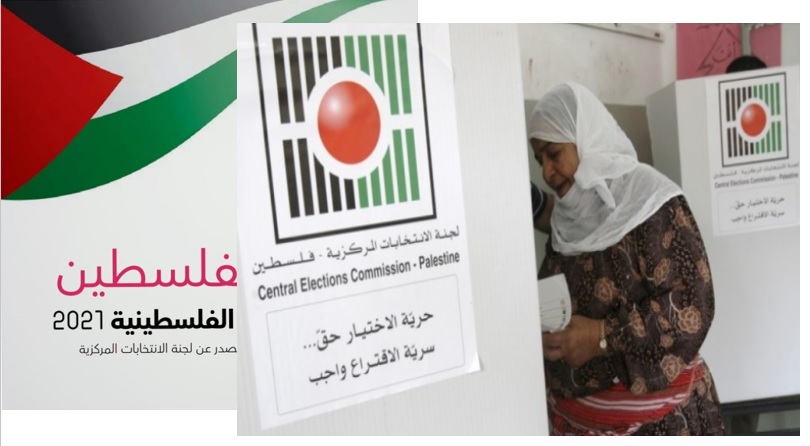
These are the results of the latest poll conducted by the Palestinian Center for Policy and Survey Research (PSR) in the West Bank and the Gaza Strip between 14-19 March 2021. The period before the conduct of the poll witnessed several developments including the announcement of a presidential decree to hold parliamentary elections on 22 May and presidential elections on 31 July 2021. It also witnessed a significant rise in number of coronavirus deaths and infections. The coronavirus vaccine was not made available in large numbers by the PA government during the period before the conduct of the poll. A limited vaccination process did however start using a small quantity that was made available to the PA. The process however was marred by accusations of favoritism and lack of transparency. The ICC issued a statement affirming jurisdiction over the occupied Palestinian territories. Joe Biden assumed his position as the new US president during this period. Israel announced the holding of new parliamentary elections to take place on 23 March. This press release addresses these issues and covers other matters such as the general conditions in the Palestinian territories, the peace process and the future possible directions for Palestinians in the absence of a viable peace process. Total size of the sample is 1200 adults interviewed face to face in 120 randomly selected locations. Margin of error is +/-3%.
For further details, contact PSR director, Dr. Khalil Shikaki, or Walid Ladadweh at tel. 02-296 4933 or email pcpsr@pcpsr.org.
Main Findings:
The focus of our poll for the first quarter of 2021 has been placed on the expected election process. Findings show that the overwhelming majority is still in favor of holding these elections and that the public is much more optimistic that these elections will indeed take place soon. This realization seems to have impacted attitudes and voting intentions, which are now probably more serious and calculated. The poll sought to explore public priorities and expectations in these elections. In particular, we sought to examine the likely consequences of the election results, particularly if Hamas wins and forms a government. The poll sought also to understand the implications of the emergence of rivals to Fatah, from within its own ranks, to the movement’s performance in the elections.
Findings show that the top priorities in these elections for the voters are four: the unification of the West Bank and the Gaza Strip, improving economic conditions, combating corruption, and the removal of the siege and blockade over the Gaza Strip. The largest percentage believes that a Hamas electoral victory would most likely have a negative impact on all these priorities except combating corruption where no negative impact is expected. These expectations might have affected voting intentions as the findings indicate a rise in the vote for Fatah and a decline in the willingness to vote for Hamas compared to our findings three months ago.
Fatah does have its own problems, particularly in the Gaza Strip, because of the probable competition over the likely Fatah’s votes from two independent electoral lists of Mohammad Dahlan and Naser al Qidwah. More seriously, if Marwan Barghouti decides to have his own electoral list, Fatah’s vote would split into two equivalent shares. As for other third parties outside Fatah and Hamas, such as those of the left, Salam Fayyad’s, Hasan Khraishah’s, and others, it is probably too early to reach definitive conclusions at this stage regarding the likelihood that most of these lists would pass the 1.5% electoral threshold. The findings do show that al Mubadarah, led by Mustafa Barghouti, and the Popular Front for the Liberation of Palestine would probably succeed in passing that threshold. For the presidency, the findings indicate a limited increase in public demand for Abbas’ resignation despite the fact that he is doing better than he did three months ago in a competition with Hamas’ leader Ismael Haniyyeh. The findings make it clear however that the public prefers to see Marwan Barghouti as the next president of the PA as he is preferred over all other potential candidates including Fatah’s Abbas and Hamas’ Haniyyeh.
In other domestic issues, public attitudes seem stable compared to three months ago. This applies to the perceptions of safety and security as well as corruption within the PA. There is however a limited rise in optimism regarding reconciliation and in the perception that people can criticize the PA without fear. Slightly less than what we found three months ago, a large segment of the public, almost half, is still reluctant or unwilling to be vaccinated.
On the peace process, findings show that support for the two-state solution remains unchanged. Similarly, public preference for armed struggle vs. negotiations remains almost unchanged. But findings do show that a majority is opposed to a return to an unconditional bi-lateral Palestinian-Israeli negotiation despite the optimism generated by the election of the new Biden Administration. On the other hand, despite its recent decision to assert jurisdiction over the occupied Palestinian territories, the public is not optimistic about the ability of the International Criminal Court, to restrict Israeli behavior in the occupied territories. In fact, a large majority thinks that no Israeli official will ever be prosecuted by the court.
(1) Legislative and presidential elections:
- 76% demand the holding of general legislative and presidential elections and 61% expect parliamentary elections to take place soon. Three months ago, only 32% expected the holding of Palestinian elections soon. If Israel refuses to allow elections to take place in the occupied City of East Jerusalem, 65% believe elections should nonetheless take place and that East Jerusalemites should be allowed to vote in places in the Jerusalem district just outside the city limits; 27% oppose that and demand the cancelation of elections if Israel does not allow East Jerusalemites to vote in their city. Three months ago, only 56% supported, and 39% opposed, the holding general elections if Israel does not allow them in East Jerusalem.
- But only 42% believe the elections will be free and fair and 48% think they will not be free and fair. Moreover, 69% believe that if Hamas wins the elections, Fatah will not accept the results and 60% say that if Fatah wins the elections, Hamas will not accept that outcome.
Legisl Legislative Elections:
- In an open-ended question, we asked the public to name the party or faction it nominates to lead the next PA government: 38% (40% in the West Bank and 34% in the Gaza Strip) nominated Fatah; 22% (15% in the West Bank and 33% in the Gaza Strip) nominated Hamas, 5% nominated an independent list, 2% nominated the Popular Front for the Liberation of Palestine (PFLP), 4% nominated other groups, and 29% did not nominate any party of faction. When asked about its expectations for the winner, 45% expected Fatah to win, 23% Hamas, 18% third or newly created parties.
- The poll sought to assess the role played by three prominent individuals associated with Fatah on the likely consequences for the movement if the three decide to run with their own independent lists:
| If Marwan Barghouti forms his own independent list, 28% of the public say they will vote for his list while 22% say they will vote for the official Fatah list formed by president Abbas. |
 | If Mohammad Dahlan forms his own independent list, 10% of the public say they will vote for his list while 29% say they will vote for the official Fatah list. |
| If Naser al Qidwah forms his own independent list, 7% of the public say they will vote for his list while 30% say they will vote for the official Fatah list. If Marwan Barghouti gives his support to al Qidwah’s list, support for it would rise to 11% and support for Fatah’s would drop to 28%. |
- A majority of 57% say they support and 38% say they oppose the formation of a joint Fatah-Hamas list to compete in the upcoming parliamentary elections.
- We asked the public which electoral list it will vote for in the upcoming elections. We sought to ascertain how respondents will vote in four different scenarios: (1) when the electoral lists are identical to those of 2006 elections, (2) when a joint Fatah-Hamas list is formed and Marwan Barghouti forms his own list, (3) when no joint list is created but Marwan Barghouti forms his own independent list, and (4) when no joint list is created and a Naser al Qidwah’s list replaces that of Marwan Barghouti’s. Here are the findings among those who say they intend to vote:
| 2006 lists: if new legislative elections were held today with the participation of all factions, 75% say they would participate in such elections. Of those who would participate, 30% say they will vote for Hamas and 43% say they will vote for Fatah, 8% will vote for all other third parties combined, and 18% are undecided. Three months ago, vote for Hamas stood at 34% and Fatah at 38%. Vote for Hamas in the Gaza Strip stands today at 36% (compared to 43% three months ago) and for Fatah at 32% (compared to 29% three months ago). In the West Bank, vote for Hamas stands at 25% (compared to 26% three months ago) and Fatah at 53% (compared to 45% three months ago). |
| Joint Fatah-Hamas list and a list for Marwan Barghouti: in this scenario, 78% indicate they will participate in the elections. Of those participating, 44% (41% in the West Bank and 48% in the Gaza Strip) say they will vote for the joint list, 28% (38% in the West Bank and 15% in the Gaza Strip) will vote for Marwan Barghouti’s list, 8% (2% in the West Bank and 15% in the Gaza Strip) will vote for Mohammad Dahlan’s list, 6% will vote for leftist and other lists, and 14% are undecided. |
| Independent Marwan Barghouti’s list and no joint list: in this scenario, 79% say they will participate in the elections. Of those who plan to participate, 27% (20% in the West Bank and 36% in the Gaza Strip) say they will vote for Hamas, 24% (27% in the West Bank and 19% in the Gaza Strip) intend to vote for Fatah, and 20% (29% in the West Bank and 9% in the Gaza Strip) intend to vote for the Marwan Barghouti’s list, 7% intend to vote for Dahlan’s, 5% for the National Initiative list (al Mobadarah) led by Mustafa Barghouti, 2% for the PFLP, 1% for Watan led by Hasan Khraisheh, and 1% for a list formed by Salam Fayyad, and 15% say they have not decided yet. |
| Independent list for Qidwah, no joint list, and no Marwan Barghouti’s list: In this scenario, 78% say they will participate and of those 32% (39% in the West Bank and 23% in the Gaza Strip) say they will vote for Fatah, 28% (21% in the West Bank and 36% in the Gaza Strip) say they will vote for Hamas, 6% for Dahlan’s, 5% for the National Initiative’s, 4% for Qidwah’s, 2% for the PFLP, 2% for Salam Fayyad, 1% for Watan led by Hasan Khraisheh, and 21% are undecided. |
- The largest percentage (28%) says that the top priority for Palestinian elections should be to restore unity between the West Bank and the Gaza Strip; 23% say it is improving economic conditions; 17% say it is to combat corruption; 12% say it is the removal of the siege and blockade over the Gaza Strip; 11% say it is the strengthening of resistance to occupation, 4% say it is to increase the prospects for peace, and 2% say it is to create a democratic political system. When asked who is the most able to deliver the top priority selected by the respondents, 31% selected Fatah, 22% Hamas, and 9% third parties. 15% say all the competing parties and factions can equally deliver on their priorities while 19% say none can deliver.
- We asked the public to speculate about the likely consequences of a Hamas victory on six issues: (1) the siege over the Gaza Strip, (2) Gaza-West Bank unity, (3) economic conditions, (4) corruption in the PA, (5) Hamas’s response to the Quartet conditions, and (6) Israel’s response to Hamas’ victory. These are the findings:
| Siege over Gaza: 49% say the siege will be tightened and 14% say it will be relaxed or removed and the rest said current conditions will remain unchanged. |
| West Bank-Gaza Strip unity: 36% say the split will be consolidated and 19% say the prospects for unity will increase. |
| Economic conditions: 45% say economic conditions will worsen and 17% say they will improve. |
| Corruption: 26% say corruption will decrease and 28% say it will increase |
| Quartet conditions: 62% say Hamas will not accept the conditions of the Quartet and 26% say it will accept them. |
| Israel’s reaction: a majority of 51% thinks that Israel will not allow Hamas to form a government in the West Bank, 28% think Israel will arrest Hamas’ members of the parliament, and only 11% think Israel will allow Hamas to form a government in the West Bank. |
- Similarly, we asked the public about the consequences of a Fatah victory for two issues: (1) corruption, and (2) West Bank-Gaza Strip unity. These are the findings:
| Corruption: 16% say corruption in the PA will decrease and 36% think it will increase. |
| Unity: 33% think separation will be consolidated while 22% think unity will be consolidated. |
Presl Presidential elections:
- In an open-ended question, we asked the public to state the name of the person it wants to be the next president of the PA. The largest percentage (22%) says Marwan Barghouti, 14% Ismail Haniyyeh, 9% Mahmoud Abbas, 7% Dahlan, 3% Khalid Mishal, 2% Mohammad Shtayyeh, 2% Mustafa Barghouti, and 1% Yahya Sinwar. About half of the public did not know or declined to mention a name.
- If Fatah nominates Abbas as its candidate for the presidential elections, a majority of 57% of the public would view him as the wrong choice believing Fatah has better candidates; only 23% of the public think Abbas is the best Fatah candidate. When asked to name a better candidate, 49% named Marwan Barghouti, 12% Mohammad Dahlan, 5% Mohammad Shtayyeh, and 4% Nasir al Qidwah.
- We asked, in a closed-ended question, about potential Abbas’ successors: If president Abbas does not nominate himself in a new presidential election, 40% prefer to see Marwan Barghouti replacing him, while 20% prefer Ismail Haniyeh. Mohammad Dahlan is preferred by 7% (1% in the West Bank and 16% in the Gaza Strip), Khalid Mishal and Mustafa Barghouti by 5% each, and Salam Fayyad by 2%.
- If new presidential elections were held today and only two were nominated, Mahmoud Abbas and Ismail Haniyeh, the former would receive 47% and the latter 46% of the votes (compared to 50% for Haniyeh and 43% for Abbas three months ago). In the Gaza Strip, Abbas receives 41% of the votes (compared to 32% three months ago) and Haniyeh receives 56% (compared to 64% three months ago). In the West Bank, Abbas receives 52% (compared to 52% three months ago) and Haniyeh 38% (compared to 38% three months ago). If the competition was between Marwan Barghouti and Ismail Haniyeh, Barghouti receives 63% and Haniyeh 33%. If the competition is between prime minister Mohammad Shtayyeh and Haniyyeh, the former receives 48% and the latter 44%. Three months ago, Shtayyeh received the support of 47% and Haniyyeh 47%.
- Level of satisfaction with the performance of president Abbas stands at 32% and dissatisfaction at 65%. Level of satisfaction with Abbas stands at 35% in the West Bank and 26% in the Gaza Strip. These figures are similar to those obtained three months ago. 68% of the public want president Abbas to resign while 26% want him to remain in office. Three months ago, 66% said they want Abbas to resign. Demand for Abbas’ resignation stands at 64% in the West Bank and 74% in the Gaza Strip.
(2) The Coronavirus vaccine and PA performance during the COVID-19 pandemic:
- A majority of 55% (65% in the Gaza Strip and 49% in the West Bank) says that it is willing to take the vaccine when available or has already received it; 43% (35% in the Gaza Strip and 49% in the West Bank) say they and their families are not willing to take the vaccine when it becomes available.
- 62% believe that the vaccination process in the West Bank has so far been lacking in transparency and justice while 33% believe the process has been transparent and just.
- 55% (36% in the Gaza Strip and 67% in the West Bank) are dissatisfied with the efforts made by the PA to obtain the vaccine and 43% (63% in the Gaza Strip and 30% in the West Bank) are satisfied.
- Half of the public (50%) are dissatisfied with the measures taken by the PA to contain the spread of the coronavirus while 47% are satisfied. Dissatisfaction in the West Bank stands at 61% and in the Gaza Strip at 34%.
- The majority is satisfied with the performance of the various actors involved in the management of the Coronavirus crisis: 60% express satisfaction with the performance of the security services deployed in their areas and 56% are satisfied with the performance of the ministry of health. Satisfaction with the performance of the prime minister stands at 45%.
(3) Domestic conditions and satisfaction with the Shtayyeh government:
- Positive evaluation of conditions in the Gaza Strip stands at 6% and positive evaluation of conditions in the West Bank stands at 19%.
- Nonetheless, perception of safety and security in the Gaza Strip stands at 68% and in the West Bank at 64%.
- 30% of the public say they want to emigrate due to political, security, and economic conditions. The percentage in the Gaza Strip stands at 40% and in the West Bank at 23%. Three months ago, 24% of West Bankers expressed a desire to emigrate and only 25% of Gazans expressed the same desire.
- Perception of corruption in PA institutions stands at 84%. When asked about institutions controlled by Hamas in the Gaza Strip, 70% indicated that there is corruption in these institutions.
- 43% of West Bankers think people in the West Bank can criticize the PA without fear while 53% think they cannot. In the Gaza Strip, 40% think people in the Strip can criticize Hamas’ authorities without fear and 58% think they cannot.
- The public is divided over its assessment of the PA: a slight majority of 51% views it as a burden on the Palestinian people while 44% view it as an asset for the Palestinian people. Three months ago, 41% viewed the PA as a burden.
- 58% oppose and 37% support making payments to the families of martyrs and prisoners based on need assessment and number of family members rather than on the act committed by the martyr or the number of years in jail.
- 34% are optimistic and 61% are pessimistic about the success of reconciliation. Three months ago, optimism stood at 29%.
- About two years since the formation of the Shtayyeh government, findings indicate persistent pessimism. Responding to a question about expectations regarding the ability of the Shtayyeh government to make progress in reconciliation and reunification, 61% expect failure; only 32% expect success. These results reflect a little increase in public expectations compared to three months ago when only 28% expected success. But when asked about the ability of the government to organize legislative or legislative and presidential elections in the West Bank and the Gaza Strip, half of the public expects success and 44% expects failure. Three months ago, 61% expected failure in holding elections. In another question about the ability of the new government to improve economic conditions, a majority of 60% expects failure and 32% expects success.
- We asked the public about its viewership habits in the last three months. Findings indicate that Palestine TV viewership has become the highest standing at 19%, followed by Al Jazeera TV, at 16%, followed by Maan, Al Aqsa TV, and Palestine Today TV at 11% each, Al Arabiya at 5%, al Manar at 3% and finally al Mayadeen at 1%.
(4) The Palestinian-Israeli Peace process, Israeli elections, and the implications of the recent ICC decision:
- Support for the concept of the two-state solution stands at 40% and opposition stands at 57%. No description or details were provided for the concept. Three months ago, support for the concept stood at 40%.
- A majority of 55% believes that the two-state solution is no longer practical or feasible due to the expansion of Israeli settlements while 38% believe that the solution remains practical. Moreover, 77% believe that the chances for the creation of a Palestinian state alongside the state of Israel in the next five years are slim or nonexistence while 20% believe the chances to be medium or high.
- The most preferred way out of the current status quo is “reaching a peace agreement with Israel” according to 36% of the public while 26% prefer waging “an armed struggle against the Israeli occupation.” 10% prefer “waging a non-violent resistance” and 21% prefer to keep the status quo. Three months ago, 38% said that they prefer reaching a peace agreement with Israel and 29% said they prefer waging an armed struggle.
- When asked about the most effective means of ending the Israeli occupation, the public split into three groups: 37% chose armed struggle, 36% negotiations, and 20% popular resistance. Three months ago, 39% chose armed struggle and 35% chose negotiations.
- Under current conditions, a majority of 58% opposes and 28% support an unconditional resumption of Palestinian-Israeli negotiations. But only 51% think the PA should not return to peace negotiations with Israel under the sponsorship of the Quartet, made up of the US, Russia, the EU, and the UN; 43% support such return to negotiations.
- When asked about support for specific policy choices, 66% supported joining more international organizations; 59% supported resort to non-violent resistance; 43% supported return to armed confrontations and intifada; 42% supported dissolving the PA; and 33% supported abandoning the two-state solution and embracing a one state solution for Palestinians and Israelis.
- In the upcoming Israeli elections, scheduled to take place today, 49% expect the Likud (under the leadership of Netanyahu) and its allies among the extreme right and the religious parties to win the elections while 23% expected victory to go to a coalition of right wing, center and leftist parties under the leadership of Saar, Gantz, Lapid, and others; 28% do not know.
- Two thirds (66%) of the public do not expect the decision of the International Criminal Court (ICC) confirming its jurisdiction over the occupied Palestinian territories to lead to restrictions on Israeli behavior in these territories while a quarter (25%) expects it to impose at least some restrictions.
- Similarly, a large majority of 73% believes that there will be no trials at the ICC for any Israeli officials; 21% think one or more Israeli officials might be prosecuted by that court.
(5) Expectations from the Biden Administration and attitudes regarding resumption of Palestinian-Israeli negotiations under its leadership:
- Now that Biden has won the US presidential elections, 50% expect, and 41% do not expect, the US to resume financial support to the PA.
- But a slight majority of 51% does not expect Biden’s policy toward the Palestinian-Israeli conflict to be more balanced and less biased in favor of Israel; 41% expect it to be more balanced and less biased compared to the previous US administration.
- 48% are opposed, and 44% are supportive, of a return to Palestinian-Israeli negotiations under the US leadership.
(6) Ten years after the Arab Spring:
- Ten years after the Arab Spring, 73% say they felt sympathy at the time with the Arab demonstrators while 18% say they did not feel sympathy.
- The public is divided into three groups in its evaluation of what the Arab demonstrators wanted: 33% say they wanted freedom from regime oppression, 28% say they wanted a way out of poverty and unemployment, and 20% say they wanted to combat corruption. Only 5% say they wanted to replace the existing regimes with Islamists and another 5% say they wanted to express opposition to pro-Western policies of their regimes.
- 37% believe the Arab Spring has left a negative impact on Palestinian conditions while 18% think it left a positive impact and 37% say it had neither negative nor positive impact.
- A majority of 56% indicates that it did not feel at the time that there was a need for similar demonstrations in Palestine while 36% say they felt such need at that time.
(7) Most vital Palestinian goals and the main problems confronting Palestinians today:
- 43% believe that the first most vital Palestinian goal should be to end Israeli occupation in the areas occupied in 1967 and build a Palestinian state in the West Bank and the Gaza Strip with East Jerusalem as its capital. By contrast, 31% believe the first most vital goal should be to obtain the right of return of refugees to their 1948 towns and villages, 14% believes it should be to establish a democratic political system that respects freedoms and rights of Palestinians, and 11% believe that the first and most vital goal should be to build a pious or moral individual and a religious society, one that applies all Islamic teachings.
- The most serious problem confronting Palestinian society today is poverty and unemployment in the eyes of 30%, the spread of corruption in public institutions in the eyes of 25%, the continuation of occupation and settlement activities in the eyes of 24%, the continued siege of the Gaza Strip and the closure of its crossings in the eyes of 13%, and the lack of national unity in the eyes of 6%.
While the popularity of Abbas and Fateh increases and the popularity of Ismail Haniyeh and Hamas decreases, and while the public shows some enthusiasm for a strong American role in the peace process and greater support for the Arab Peace Initiative, Palestinians are pessimistic about the chances for the reunification of the West Bank and the Gaza Strip and are less willing to accept concessions in a permanent settlement
13-15 August 2009
These are the results of the latest poll conducted by the Palestinian Center for Policy and Survey Research (PSR) in the West Bank and the Gaza Strip between 13 and 15 August 2009. The poll was conducted in the aftermath of the holding of Fateh’s Sixth Congress in Bethlehem and Hamas’s refusal to allow Fateh members to leave the Gaza Strip to participate in the Congress. The poll examines the following topics: domestic issues such as the balance of power, Fateh’s Sixth Congress, perceptions of corruption, safety and security, attitudes toward elections, confidence in the police, as well as the various issues of the peace process such as the perception of the Obama administration and views on permanent status. Total size of the sample is 1270 adults interviewed face to face in 127 randomly selected locations. Margin of error is 3%. For further details, contact PSR director, Dr. Khalil Shikaki, or WalidLadadweh at tel 02-296 4933 or email pcpsr@pcpsr.org.
Main Findings:
Findings of the third quarter of 2009 show an increase in the popularity of Fateh and president Mahmud Abbas and a decline in the popularity of Hamas and Ismail Haniyeh, the dismissed prime minister. The rise in the popularity of Fateh and Abbas might in part be the result of Fateh’s success in holding its long awaited Sixth Congress and electing a new leadership. The decline in support for Hamas might in part be the result of its refusal to allow Fateh members in the Gaza Strip to travel to Bethlehem to participate in Fateh’s Sixth Congress. Findings show additional and perhaps deeper reasons for the change in the balance of power between Fateh and Hamas. For example, they show considerable improvement in public perception of personal and family security and safety in the West Bank and a noticeable decrease in public perception of the existence of corruption in PA institutions under Abbas and Prime Minister Salam Fayyad. In this context, findings show some optimism about the future of Fateh in the aftermath of its Sixth Congress and about the ability of its newly elected leadership to fight corruption inside the movement and to deliver reconciliation with Hamas. But the public does not believe that the new leadership will be different from the previous one in its ability to work to end the Israeli occupation.
Findings also show public confusion regarding new presidential and parliamentary elections. A majority believes that reconciliation talks between Fateh and Hamas will fail. A majority also believes that PA president and parliament will lose their legitimacy next January when their terms end. Nonetheless, a wide majority opposes postponing the elections and a majority also opposes holding elections under the current status quo, with Haniyeh’s government supervising it in the Gaza Strip and Fayyad’s government supervising it in the West Bank, even if they were organized by a single unified election commission. Moreover, an overwhelming majority opposes holding separate elections in either the Gaza Strip, organized by theHaniyeh government, or in the West Bank, organized by the Fayyad government. In any case, findings show that the public has no confidence in the ability of the legislative and presidential elections to contribute to the re-unification of the West Bank and the Gaza Strip. An overwhelming majority believes that the two sides, Fateh and Hamas, or one of them, will reject the results of any new fair and free elections if those results were not in its favor.
Findings show an increase in the percentage of those who demand a stronger American intervention in the peace process compared to the situation about nine months ago, right after the Obama victory in the US presidential elections. They also show an increase in the level of optimism about the chances that the US intervention would help push the peace process forward along with an increase in support for the Arab Peace Initiative. But findings also show a decrease in the level of support for a permanent settlement along the lines of the Clinton Parameters and the Geneva Initiative. It is possible that the decrease represents a negative reaction to the various tough conditions attached by Israeli prime minister Benjamin Netanyahu to his acceptance of the two-states solution. This decrease represents a continuation of the decline in support for this solution which we registered around the end of 2008 which might have occurred at that time as a reaction to the failure of the negotiations unleashed by the Annapolis Conference.
(1) Domestic Palestinian Conditions
- Increase in support for Abbas and a decrease in support for Haniyeh with the gap between the two increasing from 5 percentage points (49% vs. 44%) to 14 percentage points (52% vs. 38%).
- A similar increase is registered in the vote for Fateh against Hamas from 8 percentage points (41% vs. 33%) to 16 percentage points (44% vs. 28%).
- Significant improvement in the perception of personal and family safety and security; improvement is particularly noticeable in the West Bank where it has increased from 43% to 58% in one year.
- A decrease in the belief that corruption exists in Abbas-controlled PA institutions from 72% a year ago to 68% today.
- 60% believe that Abbas loses his legitimacy when his term ends next January if no new elections are held and 59% believe the PLC too will lose its legitimacy on that date if no new elections are held.
- Overwhelming majority (72%) opposes holding separate elections in the West Bank alone and an even higher percentage (79%) opposes separate elections in the Gaza Strip alone; 54% oppose unified West Bank-Gaza Strip elections under the current split. Moreover, 70% believe that Fateh and Hamas will reject the outcome of any free and fair elections if it was unfavorable to them. 60% oppose postponing elections.
- A majority of 58% believes that the Cairo dialogue will fail and only 12% believe the unity between the West Bank and the Gaza Strip will resume soon.
- After Fateh’s Sixth Congress, percentage of optimists about the future of Fateh is higher than percentage of pessimists.
- Among those who were subject to attack or robbery, majority does not submit complaints to the police; among those who submit complaints, overwhelming majority (73%) says it is not satisfied with the police performance.
Findings indicate an increase in the percentage of those who would vote for Mahmud Abbas as president of the PA from 49% three months ago to 52% in this poll and a decrease in the vote for Ismail Haniyeh from 44% to 38%. 9% remain undecided in this poll and only 60% say they would participate in those elections. However, if the competition was between Marwan Barghouti and Ismail Haniyeh, the former would receive 62% of the vote and the latter 31%. 7% remain undecided and rate of participation increases to 71%. Findings also show an increase in the percentage of those who would vote for Fateh from 41% three months ago to 44% in this poll and a decrease in the percentage of those who would vote for Hamas from 33% to 28% during the same period. Vote for all other electoral lists reaches 11% and 17% remain undecided. Rate of election participation stands at 68%. Most popular figures selected by the public as possible vice president are Marwan Barghouti (selected by 37% of the public), Ismail Haniyeh (21%), Mustafa Barghouti (9%), Salam Fayyad (7%), andSaeb Erekat (4%).
Findings indicate a significant improvement in public perception of personal and family safety and security in the West Bank, standing today at 58% compared to 43% one year ago, 35% two years ago, and 25% four years ago (just few months before the last parliamentary elections in January 2006). Findings also show some improvement in the perception of personal and family safety and security in the Gaza Strip, standing today at 63% compared to 54% one year ago, 49% two years ago, and 55% four years ago (immediately after the Israeli withdrawal from the Gaza Strip and few months before the last parliamentary elections). Moreover, findings show a continued decline in the perception that corruption exists in PA institutions under the control of Abbas and Fayyad, standing today at 68% compared to 72% one year ago, 80% two years ago, and 87% four years ago (few months before the last parliamentary elections).
60% say PA president Abbas loses his legitimacy when his term ends next January if no new elections are organized and 30% say he does not. Similarly, 59% say the Palestinian Legislative Council loses its legitimacy next January when it too comes to the end of its term. While an overwhelming majority (72%) opposes the holding of separate elections in the West Bank alone and a larger majority (79%) opposes holding separate elections in the Gaza Strip alone, and while a majority of 58% believes that the Fateh-Hamas dialogue in Cairo will fail-- and about one third believes that unity between the West Bank and the Gaza Strip will not be resumed and two entities will be established while 12% say unity will resume soon and a majority of 53% says unity will resume but only after a long time-- a majority of 54% opposes the holding of election in all Palestinian territories next January under the current status quo of political split (assuming one is possible) with the presence of two separate governments, one in the West Bank and one in the Gaza Strip. 41% support such elections. In the meanwhile, a majority of 60% opposes the postponement of elections for a year or more and 36% support it. Support for conducting legislative and presidential elections jointly in the West Bank and the Gaza Strip, but under the current conditions of political split, increases among women (44%) compared to men (37%), among supporters of the peace process (44%) compared those who oppose the peace process (32%), and among illiterates (60%) compared to holders of a BA degree (40%).
In addition to public confusion regarding elections, the public has no confidence in the ability of elections to contribute to national unification. 70% believe that both Fateh and Hamas, or one of them, will reject the results of a fair and free elections if these results favored its opponent. Only 22% say the two sides will accept those results. However, the overwhelming majority of the respondents (83%) say they themselves would accept the results of a fair and free election even if they favored those whom they did not vote for.
53% say they are worried that they or a member of their family would be hurt by other Palestinians, from Fateh or Hamas, and 46% say they are not worried. Respondents in the Gaza Strip and the West Bank are equally worried. Three months ago, respondents in the Gaza Strip were more worried than respondents in the West Bank (65% to 50%) which means that the level of worry has dropped considerably in the Gaza Strip and increased slightly in the West Bank.
In the aftermath of Fateh’s Sixth Congress, 39% say Fateh will become stronger and more unified in the future and 22% say it will become weaker and more fragmented and 34% say it will remain unchanged. 40% say the newly elected Fateh leadership will be more able than the previous leadership in achieving reconciliation with Hamas and 22% say it will be less able to do so. Similarly, 43% say the new leadership will be more able than the pervious one to fight corruption within Fateh while 21% think the opposite. But only 27% say the new leadership will be more able to work toward ending occupation and 28% say it will be less able than the pervious leadership. Belief that Fateh will become stronger and more unified increases in the Gaza Strip (48%) compared to the West Bank (34%), among supporters of the peace process (47%) compared to those opposed to the peace process (16%), and among supporters of Fateh (72%) compared to supporters of Hamas (16%).
9% of the public say they have, and 91% say they have not, been victims of attacks or robbery by other Palestinians during the past year. Among those, 40% say they have submitted a complaint to the police and security services and 58% say they have not. 41% of those who did not submit a complaint say the reason they did not submit one is that they do not trust the police while 43% say the police can not do anything to help them and 11% say they did not want to make the issue public. 26% of those who did submit a complaint say they were satisfied with the police work in the investigation to uncover the circumstances of the crime while 73% say they were not satisfied. The percentage of those who submitted complaints is higher in the West Bank (52%) than in the Gaza Strip (25%). Among those who did not submit a complaint to the police, 57% in the Gaza Strip and 22% in the West Bank say the reason for this is the lack of trust in the police. The levels of satisfaction with the performance of the police among those who submitted a complaint stands at 21% in the Gaza Strip and 28% in the West Bank.
(2) Peace Process
- 49% accept and 49% reject a mutual recognition of Israel as the state for the Jewish people and Palestine as the state for Palestinian people after all issues of the conflict have been resolved.
- 69% believe that the chances for establishing an independent Palestinian state next to the state of Israel in the next five years are slim or non-existent
- Eight months after Obama became the president of the US, 64% say US policy favors Israel, 7% say it favors the Palestinians; but 61% want the US to play a stronger role in the peace process and 29% do not want the US to intervene in the peace process.
- If the US intervenes strongly in the peace process, 56% expect such intervention to lead to success and 26% expect it to fail to move the process forward.
- 64% support the Arab (or Saudi) Peace Initiative and 34% oppose it; 58% believe the Palestinian side should accept an American intervention to pressure both the Palestinians and the Israelis to accept and implement this initiative and 39% believe the Palestinians should reject such intervention.
- 38% support and 61% oppose a package containing the articles of a permanent status settlement along the lines of the Clinton parameters and the Geneva Initiative, but 45% believe the Palestinian side should accept an American intervention to pressure the two sides, the Israelis and the Palestinians, to accept and implement this solution.
- Only 35% believe that if the Arab countries offered confidence building measures to Israel, such measures would encourage it to offer concessions to Palestinians and 61% believe such Arab measures will have no impact.
- If it was shown that Arab confidence measures were needed to push Israel to offer concessions to the Palestinians, 41% agree and 56% disagree that Arabs should in this case adopt such confidence building measures.
Findings show conflicting trends among Palestinians regarding the peace process. For example, while support increases for the Arab peace initiative and while demand for a stronger American role in the peace process rises, support continues to drop for compromises entailed in a permanent settlement along the lines of the Clinton Parameters and the Geneva Initiative. Findings indicate continued even split regarding mutual recognition of Israel as the state for the Jewish people in return for recognition of Palestine as the state for the Palestinian people after resolving all issues of the conflict with 49% supporting it (compared to 50% in the last poll three months ago) and 49% opposing it. Findings also show continued pessimism about the chances for establishing an independent Palestinian state along side the state of Israel during the next five years with 69% believing that the chances are slim or nonexistence (compared to 69% three months ago) and 30% believing that the chances are medium to high.
Findings show rise in support for the Arab peace initiative from 57% in our last poll, three months ago, to 64% in this poll. Opposition to the initiative dropped from 40% to 34%. But support for a permanent settlement along the lines of the Clinton parameters and the Geneva initiative declines to 38%, with opposition standing at 61%. Support for this plan stood at 41% and opposition at 57% last December. As the table below indicates, support drops for five out of six items of the settlement. The table also show continued decline for the settlement, one that was recorded last December. Support for this permanent settlement had stabilized during the period between December 2005 and December 2007 after a big increase in December 2004.
Support for Clinton Parameters-Geneva Initiative Permanent Settlement 2003-2009
|
| ||||||
| Dec 03 | Dec 04 | Dec 05 | Dec 06 | Dec 07 | Dec 08 | Aug 09 | |
1) Borders and Territorial Exchange | 57% | 63% | 55% | 61% | 56% | 54% | 49% |
2) Refugees | 25% | 46% | 40% | 41% | 39% | 40% | 37% |
3) Jerusalem | 46% | 44% | 33% | 39% | 36% | 36% | 31% |
4) Demilitarized State | 36% | 27% | 20% | 28% | 23% | 27% | 24% |
5) Security Arrangements | 23% | 53% | 43% | 42% | 51% | 35% | 34% |
6) End of Conflict | 42% | 69% | 64% | 62% | 66% | 55% | 55% |
Overall Package | 39% | 54% | 46% | 48% | 47% | 41% | 38% |
Findings show that 49% support and 50% oppose the item related to borders whereby Israel withdraws from all the West Bank and the Gaza Strip with the exception of some settlement areas in less than 3% of the West Bank that would be swapped with an equal amount of territory from Israel. They also show that 37% support and 61% oppose the item related to refugees whereby refugees would be given five choices for permanent resettlement that would include an unlimited return to the Palestinian state and a limited return to Israel while providing compensation to all. They also show that 31% support and 68% oppose the item related to Jerusalem whereby East Jerusalem would be the capital of the Palestinian state with Arab neighborhoods coming under Palestinian sovereignty and Jewish neighborhoods coming under Israeli sovereignty and the Old City (including al Haram al Sharif) would come under Palestinian sovereignty with the exception of the Jewish Quarter and the Wailing Wall that would come under Israeli sovereignty. Support for the item related to the establishment of an independent Palestinian state that would have no army, but would have a strong security force and would have a multinational force deployed in it to ensure its security and safety reaches 24% and opposition 76%. Findings also show that 34% support and 64% oppose the item related to security arrangements whereby the Palestinian state would have sovereignty over its land, water, and airspace, but Israel would have the right to use the Palestinian airspace for training purposes, and would maintain two early warning stations in the West Bank for 15 years. A multinational force would remain in the Palestinian state and in its border crossings for an indefinite period of time. The task of the multinational force would be to monitor the implementation of the agreement, and to monitor territorial borders and coast of the Palestinian state including the presence at its international crossings. Finally, 55% support and 44% oppose the compromise on ending the conflict that would state that when the permanent status agreement is fully implemented, it will mean the end of the conflict and no further claims will be made by either side.
Despite continued decline in support for the permanent settlement described above, findings show a rise in the demand for stronger American role in the peace process from 57% last December to 61% in this poll and a decrease in the opposition to such intervention from 35% to 29%. The increased support for an American intervention comes despite the fact that 64% believe that eight months after the election of Obama as the US president, US policy remains more supportive of Israel and only 7% believe it is more supportive of the Palestinians. The reason for this might be due to the increase in the percentage of those who believe that such an intervention would be successful in pushing the peace process forward from 49% in December 2008 to 56% in this poll, while expectations of failure dropped from 30% to 26%.
Findings also show that a majority of 58% believes that the Palestinian side should accept an American intervention to push the Israeli and Palestinian sides to accept and implement the Arab peace initiative while 39% believe it should reject it. Moreover, 45% believe that the Palestinian side should accept an American intervention to push the Israeli and Palestinian sides to accept and implement a permanent settlement along the lines of the Clinton Parameters and the Geneva Initiative as described above.
The poll asked also about possible Arab normalization of relations with Israel. Only 35% believe that if Arab countries were to take confidence building steps (such as allowing commercial relations) this would encourage Israel to make concessions to Palestinians and 61% think such steps would have no impact on Israel. If it was proven that such steps were indeed needed in order to push Israel to make concessions to Palestinians, 41% agree and 56% disagree that in this case Arab countries should take those steps. Support for taking such steps increases among supporters of the peace process (44%) compared to those opposed to the peace process (29%) and among supporters of Fateh (53%) compared to supporters of Hamas (35%)..... Full Report
SPSS Data File: