
16 September 2019
While a majority is dissatisfied with the behavior of the PA and Palestinian factions in response to the Israeli demolition of homes in Wadi al Hommos, a greater majority believes that Abbas’ response, to stop implementation of agreements with Israel, is merely a media stunt and will not be implemented; and while support for two-state solution declines, support for armed attacks rises and an overwhelming majority rejects the US “deal of the century” and believes it will not end the occupation. In domestic matters, an overwhelming majority views “honor killing” as a heinous crime, a majority has no trust in the Palestinian judiciary, and more than 60% demand the resignation of president Abbas 
11-14 September 2019
This poll has been conducted in cooperation with the Konrad-Adenauer-Stiftung in Ramallah
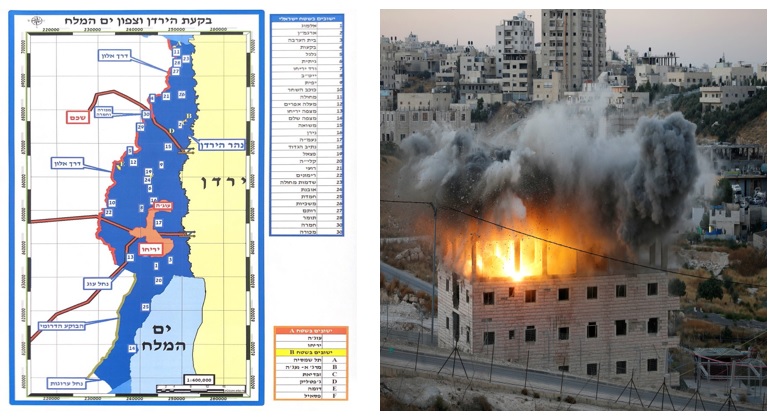
These are the results of the latest poll conducted by the Palestinian Center for Policy and Survey Research (PSR) in the West Bank and the Gaza Strip between 11-14 September 2019. The period before the conduct of the poll witnessed several developments including a presidential termination of the work of the Supreme Judicial Council and the formation of a transitional one, a presidential statement requiring former ministers, who illegally received salary increases, to return these funds, and a widespread internal debate over “honor killing” in the context of the death of a woman from Bethlehem in suspicious circumstances. In relations with Israel, five main developments occurred during this period: an Israeli demolition of a large built up area in Wadi Hommos which is located in an area under PA zoning control, responding to this incident, Abbas announced his intention to suspend the implementation of agreements with Israel, an explosive device was detonated in an area near the settlement of Dolev, west of Ramallah, killing an Israeli woman, Israeli prime minister Netanyahu announced his intentions to annex the Jordan Valley if he wins the Israeli elections scheduled for 17 September 2019, and finally, Israel transferred to the PA about two billion Shekels from the Palestinian custom revenues which the PA had previously announced it will not accept if it was not transferred in full. On Palestinian-American relations, US ambassador David Friedman stated that the US peace plan does not call for the creation of a Palestinian state but that it allows for Palestinian autonomy. This press release addresses many of these issues and covers other matters such as Palestinian parliamentary and presidential elections, general conditions in the Palestinian territories, the peace process and the future possible directions for Palestinians in the absence of a viable peace process. Total size of the sample is 1200 adults interviewed face to face in 120 randomly selected locations. Margin of error is +/-3%.
For further details, contact PSR director, Dr. Khalil Shikaki, or Walid Ladadweh at tel. 02-296 4933 or email pcpsr@pcpsr.org.
Main Findings:
Findings of the third quarter of 2019 show an overwhelming majority, reaching about three quarters, dissatisfied with the performance of the PA and the political factions in their response to the Israeli demolition of Palestinian homes in Wadi al Hommos, near Jerusalem. The majority views the response of president Abbas to the demolition—by declaring that the PA is stopping its implementation of the agreements with Israel— as inappropriate. Indeed, an overwhelming majority, exceeding three quarters of the public, believes that Abbas’ decision is merely a media stunt aiming at absorbing public anger with the PA leadership over its failure to prevent Israel from carrying out that demolition. Furthermore, public anger with the PA is probably driven by the belief of more than 80% that the Palestinian leadership will not implement the decision to stop implementing the agreements with Israel.
In domestic matters, findings show that the overwhelming majority of the public views “honor killing” of women as a heinous crime that must be punished severely. Only 10% think that this type of crimes is understandable and punishment should thereby be reduced. By contrast, findings show that almost half of the public, much more in the Gaza Strip, believes human beings can be possessed by Jinn or demons while a slightly smaller percentage believes this to be a superstition.
Findings also show that Shtayyeh’s government has failed so far in winning the trust of the public. Indeed, public trust in the ability of the government to perform better than the previous government has declined compared to the findings three months ago. Similarly, the public is dissatisfied with the performance of the judiciary, particularly the courts, with about two-thirds believing that its functioning is marred by corruption, lack of independence, or that it rules not according to the law but in accordance with whims and personal interests. But the public is evenly divided in its satisfaction with the decisions made by Abbas regarding the judiciary. Moreover, the largest percentage believes that the Transitional Judicial Council will not succeed in the next year or two in reforming the judiciary. Furthermore, trust in the presidency is also low as more than 60% demand the resignation of president Abbas; slightly more than a third wants him to stay in office. If Abbas runs in a presidential election against Ismail Haniyyeh, the votes would be very close.
In foreign affairs, findings show that the largest percentage of the Palestinians, particularly in the West Bank, does not view Iran as a friend or an ally of the Palestinians. Yet, a majority, in both the West Bank and the Gaza Strip, believes that if war breaks out between Iran and Israel, the former would be able to defeat the latter, as Iran is believed to have a stronger military force.
In light of prime minister Netanyahu’s statement announcing his intentions to annex the Jordan Valley, findings show a significant increase in the percentage of those who believe that the two-state solution is no longer feasible or practical. As in the past, feasibility is linked to support for the two-state solution. Findings show a significant decline in support for that solution accompanied by an increased support for armed attacks against Israelis. Moreover, public perception of the Trump peace plan continues to worsen, compared to attitudes two years ago, with two-thirds of the public demanding the Palestinian leadership to reject the plan out of hand even before reading the plan’s content, because it must be bad. More than 80% reject the idea presented by the US ambassador to Israel offering self-rule, rather than sovereign and independent statehood, to the Palestinians. More than 70% oppose resumption of the dialogue with the Trump Administration.
(1) Home demolition in Wadi al Hommos and Abbas’ response by suspending implementation of agreements with Israel:
- An overwhelming majority of 74% thinks that the PA and the political factions have not done all they could to prevent the Israeli demolition of buildings and homes in Wadi al Hommos near Jerusalem and 19% think they have done their best.
- Two thirds of the public (66%) believe that it was the duty of the PA and its security services and the police to protect the homes in Wadi al Hommos by serving as a buffer between the buildings and the Israeli bulldozers.
- 61% say that Abbas’ decision to suspend implementation of agreements with Israel was not the most appropriate response to the demolition of homes in Wadi al Hommos while 32% think it was the appropriate response.
- A large majority of 71% thinks that by suspending agreements with Israel, Abbas does not mean dissolving the PA and 18% think he does mean that.
- Similarly, a majority of 67% thinks that by suspending agreements with Israel, Abbas does not mean ending security coordination with Israel and 24% think he does mean that.
- A large majority of 69% thinks that by suspending agreements with Israel, Abbas does not mean ending civil coordination with Israel and 19% think he does mean that.
- A large majority of 69% thinks that by suspending agreements with Israel, Abbas does not mean annulling the PLO recognition of Israel and 20% think he does mean that.
- A large majority of 76% thinks that by suspending agreements with Israel, Abbas does not mean ending negotiations with Israel and returning to armed struggle and 15% think he does mean that.
- A large majority of 65% thinks that by suspending agreements with Israel, Abbas does not mean returning to Israel those VIP cards issued to senior PA officials and 22% think he does mean that.
- We asked the public if it thinks the PA is serious about implementing Abbas’ decision to suspend implementation of agreements with Israel. An overwhelming majority of 78% says the PA will not do that and only 16% say it will.
- Similarly, we asked the public about Abbas’ motivation behind making the decision to suspend implementation of agreements with Israel. A similar overwhelming majority (76%) indicates that the president’s decision is a media stunt or ploy and it will not be implemented while only 16% say the decision is serious and will be implemented.
(2) “Honor killing,” Jinn possession, economic conditions, the performance of the Shtayyeh government, and others:
- An overwhelming majority of 81% (90% in the West Bank and 66% in the Gaza Strip) say that “honor killing” is an dreadful crime that should be punished severely while 7% say that it is a normal crime that should be punished like any other crime. Only 10% (5% in the West Bank and 19% in the Gaza Strip) say that it is an understandable act that should be punished lightly.
- The public is divided on the issue of humans being possessed by Jinn or demons: 48% (37% in the West Bank and 67% in the Gaza Strip) say they believe it is real while 44% (56% in the West Bank and 24% in the Gaza Strip) believe it is superstition.
- 59% of the public say that their income has declined during the past six months due to the inability of the PA to pay the salary of the public sector in full; 35% say their income did not change and 4% say it has increased.
- A majority of 54% supports and 37% oppose the PA decision to refuse to accept a partial transfer of custom revenues. However, 43% say that they are worried that this decision could lead to the collapse of the PA while 50% indicate that it could not. Three months ago, 62% said they supported the PA decision to refuse to accept a partial transfer of custom revenues and 52% said they were worried that this decision could lead to PA collapse.
- Positive evaluation of conditions in the Gaza Strip stands at 8% and positive evaluation of conditions in the West Bank stands at 22%.
- Perception of safety and security in the Gaza Strip stands at 63% and in the West Bank at 52%. Three months ago, perception of safety and security in the Gaza Strip stood at 67% and in the West Bank at 59%.
- 31% of the public say they want to emigrate due to political, security, and economic conditions. The percentage rises in the Gaza Strip to 41% and declines in the West Bank to 24%.
- Only 36% of the West Bankers say that people can criticize the authority in their area without fear and 59% say that they cannot. Three months ago, 57% of West Bankers said they could not criticize the PA in the West Bank without fear. In the Gaza Strip, 43% say that people in the Gaza Strip can criticize Hamas authority without fear and 53% say they cannot.
- Perception of corruption in PA institutions stands at 80% while perception of corruption in the institutions controlled by Hamas in the Gaza Strip stands at 65%. When asked about Abbas decision mandating that ministers of the previous government return illegal pay raise they received, 80% said this measure was not sufficient.
- The public is divided over its assessment of the PA: 49% view it as a burden on the Palestinian people while 46% view it as an asset for the Palestinian people.
- With more than five months passing since the formation of the Shtayyeh government, findings indicate that a majority, or a plurality, of the public views its performance as similar to that of the previous government in matters of security (44%), the economy (37%), the reunification of the West Bank and the Gaza Strip (50%), the preparation to hold general elections (49%), and the protection of liberties and human rights (47%). But a percentage ranging between 50% and 32% indicates that it believes the performance to be worse than that of the previous government while a percentage ranging between 16% and 8% indicates that the performance of the Shtayyeh government is better than that of the previous government. These findings indicate a drop in public’s positive evaluation of the of the Shtayyeh government compared to our findings three months ago.
- Responding to a question about expectations regarding the ability of the Shtayyeh government to make progress in reconciliation and reunification, 61% expects failure; only 27% expects success.
- In a similar question about the ability of the new government to organize legislative or legislative and presidential elections in the West Bank and the Gaza Strip, a majority of 58% expects failure and 30% expects success.
- In another question about the ability of the new government to improve economic conditions, a majority of 60% expects failure and 28% expects success.
- We asked the public about its viewership habits in the last two months. Findings indicate that Al Jazeera TV viewership remains the highest, standing at 19%, followed by Al Aqsa TV and Maan TV (13% each), Palestine TV (12%), Palestine Today TV (11%), al Al Arabiya (5%), and al Mayadeen (4%).
3) Public evaluation of the judiciary and views on the president’s decisions regarding the judiciary:
- A majority of 60% (65% in the West Bank and 52% in the Gaza Strip) believes that it will not receive a fair trial if it finds itself in a Palestinian court while 32% (26% in the West Bank and 41% in the Gaza Strip) believe that will receive a fair trial.
- A majority of 63% (72% in the West Bank and 48% in the Gaza Strip) thinks that the Palestinian judiciary is marred by corruption, lacks independence, or rules according to whims and interests; 29% disagree and believe that it is has integrity, independence, or rules according to the law.
- The public makes a similar assessment of Palestinian layers: 66% (74% in the West Bank and 53% in the Gaza Strip) think lawyers’ work is marred by corruption and incompetence and that lawyers are untruthful with clients; 25% think lawyers’ work has integrity, competent, and lawyers are truthful with the clients.
- The public is divided in its view of Abbas’ decision to lower the retirement age for judges, to dismiss the Supreme Judicial Council, and to appoint a Transition Supreme Judicial Council: 42% are in favor, 42% are not in favor, and 16% are uncertain.
- 49% believe that the Transitional Judicial Council will not succeed in the next year or two in reforming the judiciary while 36% believe it will succeed.
- A plurality of 47% does not agree and 39% agree, with the view that the judicial matters are not part of jurisdiction of the PA president or that his decisions regarding the judiciary constitute an interference in the affairs of the judiciary.
- The public is divided on the view that Abbas’ decision regarding the judiciary was necessary in light of the fact that it has failed to reform itself: 43% agree and an identical percentage disagree with this statement.
(4) Presidential and parliamentary elections:
- Only 38% of the public expect elections, parliamentary or parliamentary and presidential, to take place in the Palestinian territories in the near future; 49% believe no elections will take place.
- An overwhelming majority (72%) wants elections to be for both, a parliament and a president, while only 12% want parliamentary elections only. 12% do not want any elections.
- If elections were held for a parliament and a president, 69% want Hamas to participate and to allow them in the Gaza Strip while 21% say they do not want Hamas to participate or allow elections in the Gaza Strip.
- 61% of the public want president Abbas to resign while 35% want him to remain in office. Three months ago, 57% said they want Abbas to resign. Demand for Abbas’ resignation stands at 55% in the West Bank and 73% in the Gaza Strip. Three months ago, demand for Abbas resignation stood at 49% in the West Bank and 71% in the Gaza Strip.
- Level of satisfaction with the performance of president Abbas stands at 37% and dissatisfaction at 60%. Level of satisfaction with Abbas stands at 43% in the West Bank and 29% in the Gaza Strip. Three months ago, satisfaction with Abbas stood at 38% (42% in the West Bank and 27% in the Gaza Strip).
- If new presidential elections were held today and only two were nominated, Mahmoud Abbas and Ismail Haniyeh, the former would receive 48% and the latter 46% of the vote (compared to 48% for Abbas and 42% for Haniyeh three months ago). In the Gaza Strip, Abbas receives 39% of the vote (compared to 43% three months ago) and Haniyeh receives 57% (compared to 52% three months ago). In the West Bank, Abbas receives 56% (compared to 52% three months ago) and Haniyeh 36% (compared to 36% three months ago). If the competition was between Marwan Barghouti and Ismail Haniyeh, Barghouti receives 62% and Haniyeh 34%.
- We asked about potential Abbas successors: If president Abbas does not nominate himself in a new election, 36% prefer to see Marwan Barghouti replacing him, while 19% prefer Ismail Haniyeh. Mohammad Dahlan is preferred by 8% (2% in the West Bank and 19% in the Gaza Strip), Mustafa Barghouti by 4%, and Khalid Mishal and Salam Fayyad by 3% each.
- If new legislative elections were held today with the participation of all factions, 66% say they would participate in such elections. Of those who would participate, 29% say they would vote for Hamas and 38% say they would vote for Fatah, 11% would vote for all other third parties combined, and 23% are undecided. Three months ago, vote for Hamas stood at 30% and Fatah at 39%. Vote for Hamas in the Gaza Strip stands today at 39% (compared to 38% three months ago) and for Fatah at 31% (compared to 33% three months ago). In the West Bank, vote for Hamas stands at 20% (compared to 25% three months ago) and Fatah at 43% (compared to 43% three months ago).
(5) Reconciliation, Hamas and Iran:
- 30% are optimistic and 67% are pessimistic about the success of reconciliation. Three months ago, optimism stood at 33%.
- Moreover, the overwhelming majority (72%) demands that the PA immediately lift all the measures taken against the Gaza Strip, such as public sector’s salary deductions and the reduction in access to electricity; only 23% say that such measures should be removed only after Hamas fully hands over control over the Strip to the PA government.
- A majority of 52% (down to 37% in the Gaza Strip) believes that the chances for a Hamas-Israel agreement on a long term hudna or cessation of violence are slim while 36% believe the chances are medium and only 9% believe the chances are high.
- In the context of the visit of a senior Hamas delegation to Iran, we asked the public to tell us how it views Iran: a plurality of 48% says Iran is not a friend or ally to the Palestinians and 40% (36% in the West Bank and 48% in the Gaza Strip) say it is a friend and ally.
- In the context of statements by Iran and its allies indicating that the Islamic republic has a military capacity to defeat Israel in war, we asked the public if it believes this to be true: 55% say they believe this to be true and 32% believe it to be untrue.
(6) The Trump peace plan:
- We asked the public if Palestinian acceptance of the Trump peace plan would lead to the end of the Israeli occupation of the West Bank: 83% say no; only 9% say yes it would.
- When asked if the Trump peace plan permits Israel to annex a large part of the West Bank, a large majority of 65% of the public says it does and only 27% say it does not.
- Two thirds (67%) believe that in response to a Palestinian rejection of the Trump peace plan, the US will impose further sanctions on the Palestinians; 23% say it will amend its plan in case of Palestinian rejection.
- A large majority of 69% believes that the Palestinian leadership should reject the US plan; 19% say it should accept it with reservations; and 5% believe it should accept it without reservation. Three months ago, 75% said the PA leadership should reject the plan.
- We asked this same question with a slightly different options: 64% indicate that the Palestinian leadership should reject out of hand the US “deal of the century” if the US presents its plan because it must be bad for the Palestinians; 21% want the PA to examine the substance of the plan before accepting or rejecting it; and 9% believe the leadership should accept the plan out of hand because it will certainly be better than the status quo. A year ago, only 50% said the PA should reject the plan out of hand.
- An overwhelming majority of 81% reject the proposed self-rule idea that deny Palestinian statehood that was proposed by US ambassador to Israel David Friedman while 9% say they accept it and 10% are uncertain.
- Similarly, 72% say that they are against, and 22% for, American ideas proposed to solve the refugee problem in which Palestinian refugees are offered full citizenship and rights in the host countries and in which the host countries receive billions of US dollars in assistance and investments.
- A majority of 68% is opposed and 20% is not opposed to a resumption of dialogue between the Palestinian leadership and the Trump Administration. Official contacts between the PA and the US government were suspended by the PA after the US, in December 2017, recognized Jerusalem as the capital of Israel.
7) The peace process:
- Support for the concept of the two-state solution stands at 42% and opposition at 56%. No description or details were provided for the concept. Three months ago, support for the concept stood at 47%. 37% of the public believe that a majority of the Palestinians supports this solution and 56% believe that the majority opposes it.
- A majority of 63% believes that the two-state solution is no longer practical or feasible due to the expansion of Israeli settlements while 34% believe that the solution remains practical. Moreover, 78% believe that the chances for the creation of a Palestinian state alongside the state of Israel in the next five years are slim or nonexistence while 21% believe the chances to be medium or high.
- The most preferred way out of the current status quo is “reaching a peace agreement with Israel” according to 32% of the public while 37% prefer waging “an armed struggle against the Israeli occupation.” Only 10% prefer “waging a non-violent resistance” and 17% prefer to keep the status quo. Three months ago, 36% said that they prefer reaching a peace agreement with Israel and 34% said they prefer waging an armed struggle.
- When asked about the most effective means of ending the Israeli occupation, the largest group (44%) chose armed struggle, 24% negotiations, and 22% popular resistance. Three months ago, 38% chose armed struggle and 31% chose negotiaitons.
- In light of the suspension of peace negotiations, Palestinians support various alternative directions: 62% support popular non-violent resistance; 50% support a return to an armed intifada; 40% support dissolving the PA; and 32% support abandoning the two-state solution and demanding the establishment of one state for Palestinians and Israelis. Three months ago, 47% said they prefer a return to armed intifada and 38% said they prefer to dissolve the PA.
- We asked about the armed attack that took place few weeks ago in an area west of Ramallah, near the settlement of Dolve, in which one Israeli woman was killed: 61% (49% in the West Bank and 80% in the Gaza Strip) supported it and 33% opposed it. A majority of 54% views the attack as a one-time, lone wolf, event while 39% think it is the beginning of the return to armed struggle.
- An overwhelming majority of 83% supports the local and international boycott movement against Israel while 15% are opposed to it. A majority of 52% say that they are currently boycotting non-essential Israeli products and those that have non-Israeli substitutes while 33% say they are not. 57% say the boycott of non-essential Israeli products and those that have non-Israeli substitutes will be effective in contributing to the end of occupation and 42% say it will not.
- About two-thirds of the public believe that the European countries will not boycott Israel or impose sanctions on it while 26% believe they will.
- An overwhelming majority of 74% says that Palestinians should condemn visits of Arab journalists to Israel while 7% say the visits should be encouraged.
- A majority of 52% expects the Israeli right wing led by Netanyahu to win the upcoming Israeli elections and 19% expect the center-left led by Gantz to win the elections; 29% do not know who is likely to win.
- About half of the public (48%) does not encourage the participation of the Joint Arab List in an Israeli government coalition led by the center and the left while 37% encourage such participation and 15% have no opinion.
- The public is divided in its position regarding the participation of the Palestinian citizens of Israel in the Knesset elections: 46% support and 42% oppose such participation.
8) Most vital Palestinian goals and the main problems confronting Palestinians today:
- 44% believe that the first most vital Palestinian goal should be to end Israeli occupation in the areas occupied in 1967 and build a Palestinian state in the West Bank and the Gaza Strip with East Jerusalem as its capital. By contrast, 33% believe the first most vital goal should be to obtain the right of return of refugees to their 1948 towns and villages, 13% believe that it should be to build a pious or moral individual and a religious society, one that applies all Islamic teachings, and 9% believe that the first and most vital goal should be to establish a democratic political system that respects freedoms and rights of Palestinians.
- The most serious problem confronting Palestinian society today in the eyes of 28% of the public is poverty and unemployment while 25% say it is the continuation of occupation and settlement activities; another 25% say it is the spread of corruption in public institutions; and 15% say it is the siege of the Gaza Strip and the closure of its crossings.
12 September 2018
As Fatah and Hamas lose popular support and more than 60% demand the resignation of president Abbas, and as half of the public views the PA as a burden on the Palestinian people, two-thirds reject a Palestinian-Jordanian confederation, three-quarters view conditions today as worse than those prevailing before the Oslo agreement, and 90% view the Trump Administration as biased in favor of Israel; and despite the ending of US aid to UNRWA and the PA, 60% oppose resumption of contacts with the Administration and a majority expects US efforts to fail in shutting down UNRWA 
5-8 September 2018
This poll has been conducted in cooperation with the Konrad-Adenauer-Stiftung in Ramallah
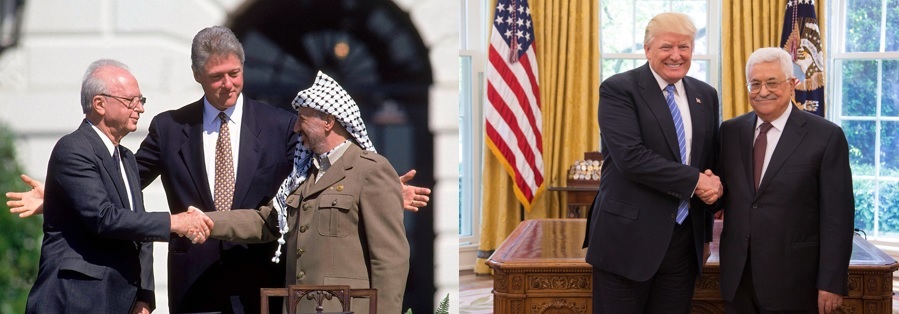
These are the results of the latest poll conducted by the Palestinian Center for Policy and Survey Research (PSR) in the West Bank and the Gaza Strip between 5-8 September 2018. The period before the conduct of the poll witnessed several developments including the convening of the PLO Central Council, the launch of an indirect Hamas-Israel negotiations for a long term quiet or tahdia, the resumption of Egyptian efforts to reconcile Fatah and Hamas and reunify the West Bank and the Gaza Strip, the US decision to stop all financial contributions to UNRWA and to suspend most aid to the PA, the Israeli adoption of a controversial nation-state law, and a leaked statement that President Abbas has reported that the Trump peace team had sought his views on the idea of Palestinian-Jordanian confederation. Moreover, this month of September coincides with the 25th anniversary of the Oslo agreement. This press release addresses all these issues and covers other matters such as parliamentary and presidential elections, general conditions in the Palestinian territories, the peace process and the future possible directions for Palestinians in the absence of a viable process. Total size of the sample is 1270 adults interviewed face to face in 127 randomly selected locations. Margin of error is +/-3%.
For further details, contact PSR director, Dr. Khalil Shikaki, or Walid Ladadweh at tel. 02-296 4933 or email pcpsr@pcpsr.org.
Main Findings:
The poll examines internal Palestinian conditions and those related to Israeli-Palestinian relations and Palestinian-American relations. Findings of the third quarter indicate a decline in the popularity of both Fatah and Hamas compared to our findings three months ago. The decline might be attributed to the tense power struggle between the two movements that was in clear display during the past two months in the aftermath of the failed reconciliation efforts and a pointless quarrel over who has the right to negotiate a long term quiet, tahdia, or cessation of violence in the Gaza Strip, Hamas or the PA and what comes first, reconciliation or tahdia. Findings show that more than 60% of the public want president Abbas to resign and that the public disagrees with some of the most important domestic policies of the Palestinian president. An overwhelming majority
opposes his decision to cut the salaries of PA employees in the Gaza Strip; two-thirds oppose his demand to disarm armed groups in the Strip; and a majority is opposed to his demand that Hamas hand over full control over the Gaza Strip to the reconciliation government. Moreover, a majority opposes Abbas’ position that tahdia between Hamas and Israel is the business of the PA and the PLO rather than that of Hamas. Indeed, a majority of the public supports Hamas’ efforts to reach an agreement with Israel on a long term Tahdia even in the absence of reconciliation. A larger percentage places the blame for the worsening conditions in the Gaza Strip on the president and the reconciliation government rather than on Hamas. Indeed, about half of the public believes that the PA has become a burden on the Palestinian people rather than an asset.
The public shows support for the convening of the PLO Central Council’s session in Ramallah last month and criticizes those factions that boycotted the meeting. Large majorities support the decisions taken by the Central Council regarding the suspension of Palestinian recognition of Israel, ending security coordination with the Israeli security services, and stopping all measures taken against PA employees in the Gaza Strip. Nonetheless, the majority has no confidence that the Palestinian leadership will implement any of these decisions.
In exploring attitudes regarding the peace process, we examined issues like public perception of the two-state and the one-state solutions, a Palestinian-Jordanian confederation, and attitudes toward the Oslo agreement. Findings show that a majority is opposed to the concept of two-state solution when that solution is presented without any description or details. But a majority supports that solution when it is defined as the creation of a Palestinian state along side the state of Israel on the basis of 1967 borders and with East Jerusalem as its capital. Only a quarter prefers a one-state solution, one in which Palestinians and Israeli Jews enjoy equality in all issues, over a two-state solution. Findings show that two-thirds of the public are opposed to the idea of a Palestinian-Jordanian confederation that, according to Abbas, was proposed by the US peace team. Furthermore, a larger majority of three quarters is opposed to a trilateral confederation between Palestine, Jordan and Israel. The great opposition to the Palestinian-Jordanian confederation is probably due to lack of trust in the US team and due to a Palestinian suspicion that the idea aims at preempting the goal of establishing a Palestinian state. Previous PSR findings during the past decade show support for such an idea exceeding 40%. On the occasion of the 25th anniversary of the Oslo agreement, two thirds of the public indicate that the agreement had damaged Palestinian national interests; indeed, almost three quarters of the public believe that the situation today is worse than the pre-Oslo conditions. This of course does not mean that the public wants the return to Israeli occupation; rather, it seems that public is comparing conditions before and after Oslo in several other dimensions such as the multiplication of the size of settlement enterprise, the current split between the West Bank and the Gaza Strip and conflict between Fatah and Hamas, the ending of the first intifada by Oslo and the absence today of any similar popular movement to end the Israeli occupation, that on-going security coordination with Israel despite the diminished chances for peace, and public belief that the Palestinian political system is becoming more and more authoritarian and lacking any accountability.
Finally, in light of the deterioration in relations between the Palestinian leadership and the Trump Administration, the US termination of most of its aid to the PA, and the US cancelation of its contributions to UNRWA, we asked the public about re-engagement with the US, the views on the “Deal of the Century,” and the chances that the US would succeed in ending UNRWA’s work. Findings show that a majority of Palestinians is opposed to the resumption of dialogue with the US or a return to negotiations with Israel. In fact, 90% expressed the belief that the US is biased in favor of Israel. Half of the public want the Palestinain leadership to reject the US “Deal of the Century” out of hand even before seeing it because it will certainly be bad for Palestinians while only a small minority of 14% thinks that the leadership sould accept the plan because it will certainly be better than the status quo. A majority believes that the Trump Administration will fail in its efforts to end the work of UNRWA but half is worried that if the US does succeed the outcome could contribute to ending the refugee issue.
(1) Presidential and parliamentary elections:
- 62% of the public want president Abbas to resign while 32% want him to remain in office. Three months ago, 61% said they want Abbas to resign. Demand for Abbas’ resignation stands at 52% in the West Bank and 78% in the Gaza Strip. Three months ago, demand for Abbas resignation stood at 54% in the West Bank and 73% in the Gaza Strip.
- If president Abbas does not nominate himself in a new election, 33% prefer to see Marwan Barghouti replacing him, while 20% prefer Ismail Haniyeh. Mohammad Dahlan is preferred by 6% (1% in the West Bank and 16% in the Gaza Strip). Rami al Hamdallah and Mustafa Barghouti are selected by 4% each, Khalid Mishal by 3%, and Salam Fayyad and Saeb Erikat by 2% each.
- Level of satisfaction with the performance of president Abbas stands at 35% and dissatisfaction at 61%. Level of satisfaction with Abbas stands at 42% in the West Bank and 23% in the Gaza Strip. Three months ago, satisfaction with Abbas stood at 37% (43% in the West Bank and 28% in the Gaza Strip).
- If new presidential elections were held today and only two were nominated, Mahmoud Abbas and Ismail Haniyeh, the former would receive 47% and the latter 45% of the vote (compared to 47% for Abbas and 46% for Haniyeh three months ago). In the Gaza Strip, Abbas receives 41% of the vote (compared to 40% three months ago) and Haniyeh receives 56% (compared to 62% three months ago). In the West Bank, Abbas receives 51% (compared to 52% three months ago) and Haniyeh 41% (compared to 41% three months ago). If the competition was between Marwan Barghouti and Ismail Haniyeh, Barghouti receives 58% and Haniyeh 37%.
- If new legislative elections were held today with the participation of all factions, 68% say they would participate in such elections. Of those who would participate, 27% say they would vote for Hamas and 36% say they would vote for Fatah, 10% would vote for all other third parties combined, and 28% are undecided. Three months ago, vote for Hamas stood at 32% and Fatah at 39%. Vote for Hamas in the Gaza Strip stands today at 34% (compared to 38% three months ago) and for Fatah at 32% (compared to 34% three months ago). In the West Bank, vote for Hamas stands at 21% (compared to 28% three months ago) and Fatah at 38% (compared to 43% three months ago).
(2) Domestic conditions:
- Positive evaluation of conditions in the Gaza Strip stands at 5% and positive evaluation of conditions in the West Bank stands at 19%. And, now that most US aid to the PA has been cut by the US Administration, an overwhelming majority of 77% is worried that the cut in aid could lead to increased unemployment and poverty and a deterioration in daily living conditions while 20% are not worried.
- In a close-ended question, we asked respondents to identify the party or side responsible for the worsening conditions in the Gaza Strip: Hamas, the PA and Abbas, Egypt, or others. The largest percentage (43%) blames the PA, president Abbas, and the reconciliation government; 24% blame Hamas, 8% blame Egypt, and 17% blame others. Responses of West Bankers differ from those of Gazans: 60% of Gazans, compared to 32% of West Bankers, blame the PA, Abbas and the reconciliation government; and 27% of Gazans, compared to 22% of West Bankers, blame Hamas.
- Perception of safety and security in the Gaza Strip stands at 45%. In the West Bank perception of safety and security stands at 48%. Three months ago, perception of safety and security in the Gaza Strip stood at 51% and in the West Bank at 52%.
- One third of the public says it wants to emigrate due to political, security, and economic conditions. The percentage rises in the Gaza Strip to half and declines in the West Bank to 22%.
- Only 35% of the Palestinian public say people in the West Bank can criticize the PA without fear; 59% of the public say that people cannot criticize the PA without fear.
- Perception of corruption in PA institutions stands at 77%.
- In light of repeated reports on finding and destroying narcotics plantations in West Bank areas, we asked the public about the implications of these reports: 57% said that it indicates a recent rise in planting narcotics while 36% believe that it means that the PA security services are becoming more able and more effective in fighting narcotics.
- Half of the public (50%) views the PA as a burden on the Palestinian people while 44% view it as an asset for the Palestinian people.
- We asked the public about its viewership habits in the last two months. Findings indicate that Al Jazeera TV viewership remains the highest, standing at 18%, followed by Maan TV (at 14%), Al Aqsa TV and Palestine TV (13% each), Filasteen al Youm/Palestine Today (at 12%), Al Arabiya (at 5%) and al Mayadeen and al Quds TV (4% each).
(3) Reconciliation and the reconciliation government:
- 22% are satisfied and 67% are dissatisfied with the performance of the reconciliation government. Three months ago, satisfaction stood at 30%.
- 28% optimistic and 65% are pessimistic about the success of reconciliation. Three months ago, optimism stood at 30%.
- The public is opposed to Abbas’ position that Hamas must fully hand over control over the Gaza Strip to the reconciliation government, including the ministries, the security sector, and the “arms:” only 31% agrees with Abbas’ demand but a majority of 62% disagrees. Three months ago, 40% said they agreed with Abbas.
- When the question of “arms” was further clarified by asking the public if it supports or opposes the continued existence of armed factional battalions in the Gaza Strip alongside the official PA security sector forces, two-thirds (66%) said that they prefer to keep the armed battalions in place and only 28% said that they oppose the continued existence of the armed battalions in the Gaza Strip. It is worth noting that on this matter, there are no differences between the attitudes of the West Bankers and Gazans.
- Moreover, an overwhelming majority (81%) demands that the PA immediately lift all the measures taken against the Gaza Strip, such as public sector’s salary deductions and the reduction in access to electricity; only 16% say that such measures should be removed only after Hamas fully hands over control over the Strip to the reconciliation government. It is worth mentioning that the demand for the immediate lifting of PA measures stands at 84% in the West Bank and 76% in the Gaza Strip.
4) Israel-Hamas long-term tahdia, or truce, negotiations
- A majority of 55% supports and 38% oppose a Hamas-Israel long-term tahdia, or cessation of violence, even in the absence of reconciliation between Fatah and Hamas. The agreement would entail the opening of the border crossing with Egypt and access to a seaport and an airport in a neighboring area in return for a Hamas enforcement of a long-term ceasefire as well as ending the Return Marches and the incendiary kites. Support for this long-term cessation of violence is higher in the Gaza Strip (63%) than in the West Bank (50%).
- The public is divided in its assessment of the probable consequences of such long-term agreement in the absence of reconciliation: 46% believe that it could transform the current split into a permanent separation leading to the establishment of an independent political entity in the Gaza Strip, while 44% believe no such separation would come out of that long-term agreement.
- Nonetheless, if permanent separation occurs, 40% believe that Hamas will be seen as more responsible for such development than any other Palestinian faction because it negotiated with Israel and agreed to a long-term cessation of violence without the participation of the PA and the Palestinian leadership. A similar percentage (38%) believes that the PA leadership will be seen as more responsible for that development because it imposed sanctions on the Gaza Strip and did not offer the needed concessions to facilitate reconciliation.
5) Decisions of the Palestinian Central Council of the PLO
- A majority of 54% disagrees with the decision of various factions to boycott the latest meeting of the PLO’s Central Council in Ramallah and believe it was a wrong decision while 30% think it was the right decision. A similar percentage (53%) believes that the boycott has damaged the legitimacy of the Central Council while a third believes it has not done that.
- Two thirds (66%) support and 26% oppose the Central Council’s decision to suspend Palestinian recognition of the state of Israel until Israel recognizes the state of Palestine. But a majority of 52% believes that the Palestinian leadership will not implement that decision and 35% believe it will implement it.
- Similarly, 68% support and 25% oppose the Central Council’s decision to stop security coordination with Israel; but more than two-thirds (69%) believe that the Palestinian leadership will not implement that decision and only 21% believe it will.
- Moreover, 76% support and 18% oppose the Central Council’s decision to immediately stop all measures taken against PA employees in the Gaza Strip; but 50% of the public believe that the Palestinian leadership will not implement that decision and only 37% believe it will.
6) Palestinian-Jordanian confederation
- We asked the public about the idea of a Jordanian-Palestinian confederation in the context of the statement made by president Abbas regarding an offer made by the US peace team and in light of Abbas’ statement that the he favors a trilateral confederation that includes Palestine, Jordan, and Israel. About two-thirds rejected and 29% accepted a Palestinian-Jordanian confederation.
- When asked about the trilateral confederation, Palestine, Jordan, and Israel, 75% rejected it and 18% accepted it.
7) 25 years after Oslo
- Twenty-five years after the signing of the Oslo agreement, we asked the public to tell us, based on personal experience, or based on what it had heard or read, if conditions today are better or worse than conditions before Oslo. Almost three quarter (73%) said conditions today are worse than those prevailing before Oslo; 13% said conditions today are better; and 10% said conditions today are the same as those before Oslo.
- We also asked the public about the most important reason for the failure of the Oslo agreement. More than one third (36%) said that Israel’s refusal to end its occupation and stop settlement construction was the main reason for the failure; 35% said that the lack of pressure on Israel from the international community was the main reason for the failure; and 27% said that it was the fault of the Palestinians themselves. In particular, the Palestinian contribution to the failure was divided as follows: 11% said the PA did not build strong public institutions that fights corruption and enforce the rule of law; 9% said that Fatah sought an exclusive control over that excluded the other factions; 6% said that Hamas and Islamic Jehad violated the agreement and carried out armed attacks against the Israelis; and 2% put the blame on the second intifada and the bombing attacks that targeted the Israelis.
- We asked the public to assess the impact of Oslo on Palestinian national interests: two thirds (65%) said it damaged the national interest, 16% said it served the national interest, and 16% said it neither damaged nor served the national interest.
8) The peace process
- Support for the concept of the two-state solution stands at 47% and opposition at 50%. No description or details were provided for the concept. Three months ago, 43% supported this concept.
- Yet, when we asked the public to choose between the two-state solution, the one-state solution, or any other third solution, 53% said they prefer the two-state solution, 24% said they prefer the one-state solution, and 14% preferred some other solution. It should be noted however that in this question we have defined the two-state solution to mean “a Palestinian state alongside Israel based on the 1967 borders and East Jerusalem as its capital.” The one-state solution was defined as “a state that includes Israel, the West Bank and the Gaza Strip in which Palestinians and Israeli Jews enjoy equal rights in all matters.”
- A majority of 56% believes that the two-state solution is no longer practical or feasible due to the expansion of Israeli settlements while 41% believe that the solution remains practical. Moreover, 72% believe that the chances for the creation of a Palestinian state alongside the state of Israel in the next five years are slim or nonexistence while 26% believe the chances to be medium or high.
- The most preferred way out of the current status quo is “reaching a peace agreement with Israel” according to 40% of the public while 30% prefer waging “an armed struggle against the Israeli occupation” and 12% prefer “waging a non-violent resistance.” A small minority of 14% prefer to keep the status quo.
- A large minority of 39% thinks that negotiation is the most effective means of establishing a Palestinian state next to the state of Israel while a third (33%) believes that armed resistance is the most effective means and 21% think non-violent resistance is the most effective.
- An overwhelming majority of 78% say they are worried that in their daily life they would be hurt by Israelis or that their land would be confiscated or homes demolished; 22% say they are worried.
- Three quarter (74%) say that the newly issued Israeli “nation state” law poses a threat to the rights and interests of Israeli Arabs and 84% believe that the passing of this law will lead to an increase in settlement construction in the West Bank and East Jerusalem.
- 80% believe that the Arab World is preoccupied with its problems and internal conflicts and that Palestine is not its primary cause; 19% believe that Palestine remains the primary cause of the Arab World. Moreover, 69% believe that an alliance already exists between Sunni Arabs and Israel against Iran despite the continued Israeli occupation; 22% disagrees with this assessment.
- 57% believe that Israel’s long-term aspiration is to expand the state of Israel to stretch from the Jordan River to the Mediterranean Sea and to expel the Palestinian population, and 23% think that Israel aims at annexing the occupied territories and deny the Palestinian citizens their rights. By contrast, only 18% think that Israel’s long-term aspiration is to insure its security and then withdraw from all or parts of the occupied territories.
- In light of the suspension of peace negotiations, Palestinians support various alternative directions: 76% support joining more international organizations; 65% support popular non-violence resistance; 46% support a return to an armed intifada; 42% support dissolving the PA; and 29% support abandoning the two-state solution and demanding the establishment of one state for Palestinians and Israelis.
- On the occasion of the International Day of Peace we asked the public about its expectations regarding the impact of a Palestinian-Israeli peace, when reached, on their living conditions. The largest percentage (45%) said it will improve its living conditions; 17% said it will worsen their living conditions; and 34% said peace will have no impact on their living conditions.
9) American-Palestinian relations, the “Deal of the Century,” and the future of UNRAWA
- A majority of 62% is opposed and 27% is not opposed to a resumption of dialogue between the Palestinian leadership and the Trump Administration. Official contacts between the PA and the US government were suspended by the PA after the US recognized Jerusalem as the capital of Israel. Moreover, 58% want the PA to reject US efforts to make it negotiate with Israel; 37% support the resumption of negotiations with Israel.
- Half of the public believes that the Palestinian leadership should reject out of hand the US “deal of the century” if the US presents its plan because it must be bad for the Palestinians; 31% want the PA to examine the substance of the plan before accepting or rejecting it; and 14% believe the leadership should accept the plan out of hand because it will certainly be better than the status quo.
- 90% of the public believe that if negotiations with Israel resumed under sponsorship of the Trump Administration, the US will be biased in favor of Israel and 6% think the US will be an honest broker.
- In light of US cut of most aid to the PA, we asked the public if it would be better if the PA changed its policy to insure continued US aid: 62% said they want the PA to maintain its current policies and 31% said they want the PA to change its current policies to please the Americans.
- When we asked the public about its expectations from the PA leadership regarding US pressure, 49% said the PA will indeed change its policy and 43% said it does not expect the PA to change its policy.
- We also asked the public about the US cancelation of its aid to UNRWA and what might happen if the US succeeds in shutting down this UN agency: 49% said that if UNRWA is closed down, the refugees’ cause will suffer and 46% said such a development will not end the refugee cause.
- When asked about the chances for a US success in shutting down UNRWA, 55% said the US will not succeed and 37% said it will succeed.
- When asked to speculate about the reasons that the US had the nerve to relocate its embassy to Jerusalem and to wage a campaign against UNRWA, 48% of the public said it was the weakness of and divisions in the Arab World, 28% said it was the result of the weakness of and divisions among the Palestinians, and 23% said it was due to the personality of Trump himself.
(10) Most vital Palestinian goals and the main problems confronting Palestinians today:
- 42% believe that the first most vital Palestinian goal should be to end Israeli occupation in the areas occupied in 1967 and build a Palestinian state in the West Bank and the Gaza Strip with East Jerusalem as its capital. By contrast, 32% believe the first most vital goal should be to obtain the right of return of refugees to their 1948 towns and villages, 14% believe that it should be to build a pious or moral individual and a religious society, one that applies all Islamic teachings, and 13% believe that the first and most vital goal should be to establish a democratic political system that respects freedoms and rights of Palestinians.
- The most serious problem confronting Palestinian society today in the eyes of 27% of the public is poverty and unemployment while 25% say it is the continuation of occupation and settlement activities; 22% say it is the spread of corruption in public institutions; 20% say it is the siege of the Gaza Strip and the closure of its crossings; and 3% say it is the absence of national unity.
Appointment of Prim Minister, Political Reform, Roadmap, War in Iraq, Arafat's Popularity, and Political Affiliation 

3-7 April 2003
These are the results of opinion poll # 7, conducted by the Palestinian Center for Policy and Survey Research (PSR) between 3-7 April 2003. The poll deals with the public attitudes toward the appointment of a Palestinian prime minister, political reform, the Quartet's roadmap, war in Iraq, the popularity of Yasir Arafat and political affiliation. The total sample size of this poll is 1315 from Palestinians 18 years and older, interviewed face-to-face, in 120 locations in the West Bank (821) and the Gaza Strip (494). The margin of error is 3%.
To obtain full information, explanation and results, please contact Dr. Khalil Shikaki, PSR – Ramallah, Tel: +972 2 296 4933, fax 02-296 4934, or e-mail: pcpsr@pcpsr.org
MAIN RESULTS:
The results indicate that despite the war in Iraq, the Palestinian public tends to be optimistic about the chances for a return to the peace process. The optimism is derived mainly from the appointment of Abu Mazin as a prime minister, an appointment that receives the support of a clear majority. The optimism may also reflect the fact that a clear majority supports a mutual cessation of violence. This majority may believe that once mutual violence stops, the two sides may find it easier to return to negotiations. At the same time however, the Palestinian public is concerned about the impact of the war in Iraq on the future of the peace process and does not show a great confidence in the ability of the Abu Mazin to control the security situation or even carry out political reforms. Despite the fact that half of the Palestinians sees in the appointment of Abu Mazin an erosion in the status and powers of Yasir Arafat, the popularity rate of both men remains unchanged compared to five months ago.
1) The appointment of Abu Mazin as a Prime Minister
- · A majority of Palestinians (64%) supports the creation of the position of a prime minister while 28% oppose it
- · Support for the appointment of Abu Mazin as a prime minister reaches 61% and opposition 32%
- · 50% sees in the appointment of Abu Mazin an erosion in Arafat's status and authority
- · A majority of 86% supports internal and external calls for fundamental political reforms, but only 44% support the call to change the political system to a parliamentary one in which power resides in the hands of a prime minister and the position of the president becomes ceremonial
The results show that a majority of Palestinians (64%) supports the creation of the position of a prime minister while 28% oppose that step. But support for Abu Mazin as a prime minister is slightly less at 61% and opposition slightly higher at 32%. Support for Abu Mazin as a prime minister increases in the Gaza Strip (64%) compared to the West Bank (59%), among the old (68%) compared to the young (53%), among the illiterates (67%) compared to holders of BA degree (52%), among the farmers and retired persons (71% and 68% respectively) compared to students (50%), and among supporters of Fateh (71%) compared to supporters of Hamas (56%).
While a majority of 70% believes that a government headed by Abu Mazin would be able to renew negotiations with Israel and 50% believe that it would improve economic conditions, only 39% believe that it would be able to control the security situation and enforce a ceasefire on all Palestinian factions and 53% believe that it would not. Moreover, only 43% believe that it would be able to carry out political reform and 44% believe that it would be able to fight corruption. It is worth noting that while the appointment of Abu Mazin has not changed Palestinian expectations regarding the prospect for combined cessation of violence and return to negotiations (standing at 18%, compared to 16% last November), a shift did occur in the expectations regarding the prospect for a combined continuation of armed confrontations and no return to negotiations. In this poll, only 27% (compared to 42% last November) believe that armed confrontations would not stop and the two sides would not return to negotiations.
Palestinians are also divided in two halves over the issue of whether Abu Mazin will be able to form a government that could win the confidence of the Palestinians, with 43% believing he would and 43% believing he would not. It is worth remembering that only 40% were willing in November 2002 to give confidence to Arafat's current government. Palestinians are also divided over the issue of whether the appointment of Abu Mazin represents erosion in the authority and status of Yasir Arafat with 50% agreeing with that and 43% disagreeing.
Belief that the appointment of Abu Mazin represents an erosion in Arafat's power increases in the West Bank (52%) compared to the Gaza Strip (48%), in cities and villages (51% and 52% respectively) compared to refugee camps (45%), among men (55%) compared to women (46%), among the young (52%) compared to the old (45%), among holders of BA degree (58%) compared to illiterates (37%), among students, merchants, and farmers (62%, 63%, and 71% respectively) compared to professionals, retired persons, and the unemployed (44% each), among middle income people —monthly earning between JD300-600 (55%) compared to low income people (48%), and among supporters of Hamas (54%) compared to supporters of Fateh (47%).
While a majority of 86% supports internal and external calls for wide and fundamental political reforms, only 44% support (and 50% oppose) the call for changing the Palestinian political system so that power would reside in the hands of the prime minister while the position of the president would become ceremonial. Support for this change in the political system stood at 47% last November and opposition at 49%. Support for changing the political system to make the office of the president ceremonial increases in the West Bank (46%) compared to the Gaza Strip (41%), in cities (47%) compared to refugee camps (38%), among men (48%) compared to women (41%), among the old (53%) compared to the young (35%), among non-refugees (48%) compared to refugees (39%), among retired persons, farmers, professionals, craftsmen, and laborers (68%, 65%, 56%, 50% and 51% respectively) compared to students, employees, and housewives (33%, 39%, and 40% respectively), among those working in the private sector (50%) compared to those working in the public sector (41%), among high income people (56%) compared to low income people (44%), and among national independents and the unaffiliated (58% and 47% respectively) compared to those who support Hamas and Fateh (39% and 41% respectively).
2) The Peace Process:
- · The roadmap receives the support of 55% and the opposition of 39%
- · 45% believe, and 46% do not believe, the US and other Quartet members will put great pressure on Israel and the Palestinian Authority to accept the read map
- · Support for American pressure on the Palestinian Authority to accept the roadmap does not exceed 17% while 79% oppose such pressure
- · 48% oppose the deployment of international forces in the West Bank and the Gaza Strip if it means pressuring the Palestinians and the Israelis to accept and implement the roadmap; support stands at 38%; additional 9% would support the deployment if it was European only, and less than 1% support a deployment of American forces
- · A majority of 71% supports mutual cessation of violence
Palestinian attitude toward the Quartet's roadmap has become slightly more positive with 55% supporting it and 39% opposing it. Last November, 54% supported and 42% opposed it. Support for the roadmap is reinforced with a strong support for a ceasefire. A majority of 71% (compared to 76% last November) supports a mutual cessation of violence while 27% (compared to 22% last November) oppose it. Under conditions of mutual ceasefire, 50% of all the public would support taking measures against those who would continue to carry out attacks against Israeli civilians while 45% would oppose doing so. Last November, support for such measures stood at 56% and opposition at 40%. Still, three quarters acknowledge that failure to take such measures would impede the revival of the peace process. On the other hand, 79% express concern that taking such measures may lead to civil war.
Support for taking measures against those who continue to attack Israeli civilians after a mutual cessation of violence increases among men (53%) compared to women (47%), among the old (54%) compared to the young (47%), among the illiterates (57%) compared to holders of BA degree (46%), among laborers, professionals, and craftsmen (59%, 56%, and 56% respectively) compared to students and employees (45% each), among those working in the private sector (57%) compared to those working in the public sector (46%), and among supporters of Fateh (64%) compared to supporters of Hamas (40%).
In the absence of a mutual cessation of violence, a majority of 57% (compared to 53% last November) continues to support armed attacks against Israeli civilians inside Israel and 40% oppose it. Support for attacks on soldiers and settlers remains very high (over 90%) as in the previous poll. As in November, two thirds continue to believe that armed confrontations have so far helped achieve Palestinian rights in ways that negotiations could not.
Palestinians are divided over whether the US and other members of the Quartet would put heavy pressure on Israel and the Palestinian Authority to accept the roadmap with 45% believing that they would and 46% that they would not. A clear majority of 79% would oppose such American and international pressure if it was put on the Palestinian Authority while only 17% would support it. Moreover, only 38% would support the deployment of international forces in the West Bank and the Gaza Strip in order to force the Palestinians and the Israelis to accept and implement the roadmap. An additional 9% would support such deployment only if the forces were European. Forty-eight percent would oppose any deployment of international forces, and less than one percent would support the deployment if the forces were made up of Americans only.
A majority of 65% (compared to 73% last November) supports reconciliation between Palestinians and Israelis after a peace agreement is reached and a Palestinians state is established and recognized by the state of Israel. In this context, 82% would support open borders between the two states, 65% would support building joint economic institutions and ventures, 26% would support building joint political institutions, and 30% would support adopting Palestinian laws that would prohibit incitement against Israel. However, only 7% would support changing the Palestinian curriculum so that it no longer call for the return of all of Palestine to Palestinians
3) War in Iraq
- 99% of the Palestinians oppose the war against Iraq, with 58% believing that its aim is to control the Iraqi oil
- 46% believe the war in Iraq will make it possible for Israel to carry out mass expulsion of Palestinians from the West Bank and the Gaza Strip while 44% believe that it will not
- A majority of 61% believes the war in Iraq will make it more difficult for Palestinians and Israelis to return to the peace process and a majority of 78% believes the war will strengthen Palestinian motivation to carry out armed attacks against Israelis
The results show that almost all Palestinians oppose the war on Iraq; with 58% of them believing that the primary motive of the US is to seize Iraqi oil, 32% believing the motive to be to help Israel, and only 2% believing it to be to disarm Iraq from weapons of mass destruction. While 78% of the respondents believe that the war in Iraq would strengthen Palestinian desire to carry out attacks on Israelis and 61% believe that it would take Israelis and Palestinians further away from the peace process, only 46% believe (and 44% do not believe) that Israel would be able to exploit the opportunity to carry out a mass expulsion of Palestinians from the West Bank and the Gaza Strip.
The belief that Israel will be able to exploit the war to carry out mass expulsion of Palestinians increases among residents of villages and towns (48%) compared to refugee camps (40%), among the old (50%) compared to the young (43%), among the illiterates (51%) compared to holders of BA degree (31%), among farmers, retired persons, and craftsmen (59% and 50% respectively) compared to professionals, laborers and students (33%, 40%, and 42% respectively), among those with low income (47%) compared to those with high income (22%), and among supporters of Fateh and Hamas (50% and 47% respectively) compared to the unaffiliated (40%).
Most Palestinians (61%) believe that Iraq of Saddam Hussein would win the war in Iraq while only 12% believe that the winner will be the US and its allies. Eighteen percent see all sides as losers. The results show that socio-economic factors (such as income and education), rather than political affiliation, determine beliefs regarding the outcome of the war. Belief that Iraq's Saddam would win increases among women (71%) compared to men (51%), among illiterates (73%) compared to holders of BA degree (44%), among housewives and farmers (72% and 65% respectively) compared to retired persons, professionals and employees (32%, 39%, and 47% respectively), and among low income persons (65%) compared to high income persons (33%). On the other hand, the results show that political affiliation plays no role in shaping beliefs regarding this matter.
4) Domestic Palestinian Issues
- · 81% believe there is corruption in the institutions of the Palestinian Authority
- · Arafat's popularity stands at 35%, as in our survey of last November, followed by Ahmad Yasin (15%), and Haidar Abdul Shafi (10%)
- · For a vice president, Marwan Barghouti receives the highest rating with 20% (compared to 21% last November)
- · Fateh receives the support of 26%, followed by Hamas with 17%
The poll shows that Arafat's popularity, at 35%, remains unchanged since last November. Marwan Barghouti is the second most popular Palestinian leader with 20% support. Despite his appointment as a prime minister, Abu Mazin's popularity remains unchanged at 3%. Fateh, at 26%, is still the most popular faction followed by Hamas at 17%. Fateh's support stood at 27% last November. Total support for Islamists (including Hamas, Islamic Jihad and independent Islamists) stands at 29% compared to 25% last November. The combined strength of all Palestinian opposition factions, Islamist and nationalist, stands at 32% while 41% remain undecided.
A majority of 81% believes that there is corruption in the Palestinian Authority and only 30% among those believe that corruption will decline in the future. Last November, 84% believed corruption existed in the PA. Palestinians are divided over the performance of the finance minister, Salam Fayyad, with 35% satisfied, 36% unsatisfied, and 29% unsure.
Fourteen percent, compared to 20% last November, say that conditions in the West Bank and the Gaza Strip lead them to seek permanent emigration. The desire to emigrate increases among men (19%) compared to women (9%), among the young 23%) compared to the old (5%), among the holders of BA degree (20%) compared to illiterates (3%), among professionals, students, and laborers (33%, 26%, and 22% respectively) compared to retired persons and housewives (6% and 8% respectively).
SPSS Data File:

27 September 2016
A majority rejects the high court decision to stop the local election process and views it as politically motivated and aimed at canceling the elections. On the political process, support for an armed intifada drops but the public is opposed to holding a meeting in Moscow between Abbas and Netanyahu and does not expect the French initiative to succeed
22-24 September 2016


These are the results of the latest poll conducted by the Palestinian Center for Policy and Survey Research (PSR) in the West Bank and the Gaza Strip between 22 and 24 September 2016. The period before the poll witnessed the suspension of the process of local elections as a result of a decision by the Palestinian high court. It also witnessed an increase in cases of security breakdown especially in the Nablus area, major disruptions in access to running water throughout the West Bank, continued debate on the French Initiative, an acceptance by President Abbas of a Russian invitation for a meeting in Moscow with Israeli Prime Minister Netanyahu, and others. This press release addresses many of these issues and covers attitudes regarding local elections, conditions in the West Bank and the Gaza Strip, the increase in cases of security breakdown, water shortages, reconciliation, the peace process, the French Initiative, and the Russian invitation. Total size of the sample is 1200 adults interviewed face to face in 120 randomly selected locations. Margin of error is 3%.
For further details, contact PSR director, Dr. Khalil Shikaki, or Walid Ladadweh at tel. 02-296 4933 or email pcpsr@pcpsr.org.
Main Findings:
In addition to the usual trend issues, this poll focused on three matters: local elections, the water crisis that affected West Bank residents during the summer, and the recent rise in the number of incidents of internal security breakdown. Findings show that a majority of the public is dissatisfied with the decision of the high court to suspend the local election process and views it as a political decision aiming at cancelling the elections. If local elections are held today, the public is certain that Hamas will win in the Gaza Strip but it expects Fatah to win in the West Bank. Findings also indicate that a clear majority of West Bankers have suffered from water shortages during this past summer and that most of those who experienced water shortages had to buy water in tanks. While a large percentage of the public blames Israel for the water crisis, because it reduced water allocation to the Palestinian territories, a larger percentage places the blame on the Palestinian side. With regard to recent internal security breakdowns, the public sees three drivers: weak and inconsistent performance by the PA security services, weak courts and justice system, and a surge in family and societal conflicts.
There is no doubt that a great part of the motivation for the public rejection of the high court decision regarding local elections, despite the fact that these elections will take place under conditions of national and territorial disunity, is related to a democratic impulse. This attitude appears at odd with past findings in which national unity impulses trumped democratic ones. It is clear from the findings that the public believes that a successful holding of local elections throughout the West Bank and the Gaza Strip will significantly improve the chances for holding presidential and parliamentary elections that have not been held for more than a decade. On the other hand, it is clear that the national unity impulse is not totally absent. About one third of the public is unhappy about the fact that local elections, if held, will take place under conditions of disunity. Indeed, a slight majority rejects the idea of holding parliamentary and presidential elections under the same conditions. It is worth noting that there are no significant differences between attitudes of the residents of the West Bank compared to those in the Gaza Strip regarding all the issues mentioned above, indicating perhaps that the motivation for both sides is not related to geography or region.
Compared to our findings three months ago, current findings indicate a strengthening of three developments found in the second quarter of 2016: (1) support for armed action continues to decline; (2) support for the French Initiative increases slightly; and (3) Fatah’s popularity improves somewhat compared to that of Hamas and demand for Abbas’ resignation decreases. Nonetheless, the current level of support for an armed intifada remains high and a majority opposes the Russian invitation for a meeting between Abbas and Netanyahu in Moscow. Moreover, the public remains highly pessimistic about the French Initiative’s chances of success. Finally, Hamas’ candidate for the presidency, Ismail Haniyeh remains more popular than Abbas.
(1) Local elections:
- 61% are dissatisfied with the high court’s decision to suspend the local elections process and 60% view it as politically motivated.
- If local elections are held, 50% say that the most important consideration for their vote is the ability of the electoral lists to deliver services; 31% say it is the ability to defend national rights.
- In local elections, 35% say that Fatah lists are the most able to deliver services and 17% say Hamas lists are the most able to do so.
- 28% say that Fatah local election lists, and 26% say Hamas local election lists, are the most able to defend national rights.
- 48% expect the cancelation of the local elections and 40% expect local elections to take place soon.
- The largest percentage expects Hamas to win in the Gaza Strip; in the West Bank, the largest percentage expects Fatah to win
A majority of 61% is displeased with the decision of the Supreme Court of Justice to temporarily suspend the local election process and 29% are pleased. Findings show that 60% believe that the decision was politically motivated and aimed at scuttling the election process while 31% believe that the decision was a legal one and aimed at correcting the election process. Dissatisfaction with the court’s decision is higher in the Gaza Strip (63%) than in the West Bank (60%); among t hose whose age is 50 and above (68%) compared to those whose age is between 18 and 22 years (52%); among Hamas supporters (77%) compared to supporters of Fatah and third parties (51% and 61% respectively); among residents of cities (64%) compared to residents of villages and refugee camps (48% and 53% respectively); among men (64%) compared to women (57%); among the religious (64%) compared to the non-religious and the somewhat religious (50% and 60% respectively).
54% say that not holding local elections in the occupied East Jerusalem is not a good reason to stop local elections in the rest of the Palestinian territories. Similarly, 57% say that the fact that courts in the Gaza Strip, under Hamas control, ruled on election cases submitted to them in the Strip is not a good reason to stop local elections. 35% believe that Fatah and Hamas together wish to cancel local elections while 23% believe that it is Fatah that wishes to cancel these elections; only 14% believe that it is Hamas who wishes to cancel the elections.
41% say they have not registered to participate in local elections while 50% say they have registered. Among those who have registered, 81% say they intend to participate in the elections if and when they are held. 50% of those who intend to participate in the local elections say that the most important voting consideration is the ability of the electoral list to deliver services such as water, electricity, roads and other matters of daily life; 31% say that the most important consideration is the ability of the list to defend the rights of the Palestinian people and to contribute to the ending of the Israeli occupation; 9% say it is to serve the interests of the family; and 9% say the most important consideration is the support of the political party they are affiliated with. When evaluating the ability of the various electoral lists to meet the various considerations, 35% believe that the list supported by Fatah is the most able to deliver services while 17% believe that the list supported by Hamas is the most able to deliver services; 15% say it is the list of independents and professionals while only 3% say it is the list supported by the Left. With regard to the ability to defend national rights and contribute to ending occupation, 28% believe that the list supported by Fatah is the most able to do that while 26% believe that the list supported by Hamas is the most able to do that; 11% say it is the list of independents and professionals while only 2% say it is the list supported by the Left.
The largest percentage (48%) believes that the local elections will be called off but 40% believe they will take place soon. If local elections do take place soon, the largest percentage (39%) believes they will assist in the process of reconciliation while 32% believe they will weaken the process of reconciliation and 25% think they will have no impact. If local elections are held soon, a majority of 56% expects Hamas lists or lists supported by Hamas, and 21% expect Fatah lists or lists supported by Fatah, to win in the Gaza Strip. With regard to election outcome in the West Bank, 44% expect Fatah lists or lists supported by Fatah, and 26% expect Hamas lists or lists supported by Hamas, to win. Expectations of election outcome differ in the Gaza Strip compared to the West Bank. For example, while 66% of West Bankers expect Hamas lists would win in the Gaza Strip, the percentage among Gazans drops to 37%. Moreover, while 36% of Gazans believe Fatah lists are likely to win in the local election in the Gaza Strip, the percentage drops to 14% among West Bankers. These differences diminish somewhat when predicting the outcome of the local elections in the West Bank: 34% of Gazans compared to 22% of West Bankers expect Hamas would win and 34% of Gazans and 49% of West Bankers expect Fatah would win. More than three quarters of the public (76%) support, and 18% oppose, the participation of West Bank refugee camps in the local elections.
(2) Presidential and parliamentary elections:
- Demand for Abbas’ resignation decreases from 65% t0 61%.
- In presidential elections between President Abbas and Ismail Haniyeh, the latter receives 48% and the former 45%.
- In presidential elections between Marwan Barghouti and Ismail Haniyeh, the latter receives 36% and the former 58%.
- In parliamentary elections, Hamas receives 32% and Fatah 37%.
- A majority of 51% rejects holding presidential and parliamentary elections under conditions of disunity identical to those under which local elections might, with public approval, be held.
- 42% believe that Fatah and president Abbas are the ones who impede the holding of presidential and parliamentary elections; only 22% put the blame on Hamas.
61% of the public want president Abbas to resign while 33% want him to remain in office. Three months ago, 65% said they want Abbas to resign. Demand for Abbas’ resignation stands at 58% in the West Bank and 65% in the Gaza Strip. If president Abbas does not nominate himself in a new election, 37% prefer to see Marwan Barghouti replacing him, while 19% prefer Ismail Haniyeh; Khalid Mishal and Mohammad Dahlan receive 5% each, Rami al Hamdallah receive and Mustapha Barghouti receive 4% each; Salam Fayyad receives 3%, and Saeb Erekat 1%.
Level of satisfaction with the performance of president Abbas stands at 37% today compared to 34% three months ago. Level of satisfaction with Abbas stands at 38% in the West Bank and 36% in the Gaza Strip. If new presidential elections were held today and only two were nominated, Ismail Haniyeh and Mahmoud Abbas, the former would receive 48% (compared to 48% three months ago) and the latter 45% (compared to 43% three months ago). In the Gaza Strip, Abbas receives 47% of the vote (compared to 41% three months ago) and Haniyeh receive 50% (compared to 49% three months ago). In the West Bank Abbas receives 43% (compared to 41% three months ago) and Haniyeh 46% (compared to 47% three months ago). If presidential elections were between three: Mahmud Abbas, Marwan Barghouti and Ismail Haniyeh, Abbas would receive 21%, Barghouti 41% and Haniyeh 33%. And if presidential elections were between two: Marwan Barghouti and Ismail Haniyeh, Barghouti receives 58% and Haniyeh 36%.
If new legislative elections were held today with the participation of all factions, 71% say they would participate in such elections. Of those who would participate, 32% say they would vote for Hamas and 37% say they would vote for Fatah, 7% would vote for all other third parties combined, and 24% are undecided. Three months ago, vote for Hamas stood at 31% and Fatah at 34%. Vote for Hamas in the Gaza Strip stands today at 37% (compared to 33% three months ago) and for Fatah at 39% (compared to 35% three months ago). In the West Bank, vote for Hamas stands at 29% (compared to 29% three months ago) and Fatah at 36% (compared to 34% three months ago).
Despite supporting the holding of local elections under current conditions in which Hamas has effective control over the Gaza Strip and in which the PA under Abbas and the Reconciliation Government controls the West Bank, a slim majority of 51% opposes, and 42% support, holding presidential and parliamentary elections under identical conditions. 59% believe, and 32% do not believe, that a successful holding of local elections would hasten the holding of parliamentary and presidential election. A plurality of 42% believes that Fatah and president Abbas are the ones who are impeding the holding of parliamentary and presidential elections in the Palestinian territories while only 22% believe that Hamas is the real impediment.
(3) Domestic and security conditions, Allenby Bridge terminal, and UNRWA:
- Perception of safety and security stands at 48% in the Gaza Strip and 42% in the West Bank.
- 46% of Gazans and 29% of West Bankers want to immigrate to other countries.
- The belief that there is corruption in the PA institutions stands at 79%; only 16% believe there is press freedom in the West Bank and 14% believe there is press freedom in the Gaza Strip.
- 47% believe that the PA is a burden on the Palestinian people and 46% believe it is an asset.
- 59% oppose and 26% support the return of Mohammad Dahlan to Fatah.
- 57% believe that the recent death of a detainee in Nablus due to beating by the PA security services was deliberate.
Positive evaluation of conditions in the Gaza Strip stands at 15% and positive evaluation of conditions in the West Bank stands at 26%. Perception of safety and security in the Gaza Strip stands at 48%. In the West Bank perception of safety and security stands at 42%. Three months ago, perception of safety and security in the Gaza Strip stood at 44% and in the West Bank at 44%. Findings show that the percentage of Gazans who say they seek to immigrate to other countries stands at 46%; in the West Bank, the percentage stands at 29%. Three months ago 45% of Gazans and 22% of West Bankers said they seek to emigrate.
We asked the public about its viewership habits in the last two months. Findings indicate that Maan TV viewership is the highest, standing at 19%, followed by al Jazeera TV (at 16%), Hamas’ al Aqsa TV (at 15%), Palestine TV at 14%, Filasteen al Youm (Palestine Today) at 11%, Al Arabiya at 6%, al Quds TV at 4%, and al Mayadeen at 2%.
Perception of corruption in PA institutions stands at 79%. 16% say there is press freedom in the West Bank and 14% say the same about the status of the press in the Gaza Strip. Only 33% of the Palestinian public say people in the West Bank can criticize the PA authority without fear.
47% view the Palestinian Authority as a burden on the Palestinians while 46% view it as an asset. In light of Arab pressure on Abbas to unify Fatah ranks, 59% oppose and 26% support the return of Mohammad Dahlan to Fatah. Support for Dahlan’s return to Fatah is higher in the Gaza Strip (41%) compared to the West Bank (19%); among Fatah supporters (46%) compared to supporters of Hamas and third parties (17% and 22% respectively); in refugee camps (37%) compared to cities and villages (25% each); among men (29%) compared to women (23%); among the somewhat religious (30%) compared to the religious (21%); among refugees (30%) compared to non-refugees (24%); and among those working in the public sector (36%) compared to those working in the private sector (28%).
47% believe that the goal of the security campaigns occasionally carried out by the Palestinian security services is to enforce law and order; but 41% believe that these campaigns aim at cracking down on those who are opposed to the PA. A majority of 57% believes that the recent death of a detainee from Nablus after being beaten by members of the PA security services was intentional while only 25% believe it was unintended mistake. The public is divided on the main factors behind the recent incidents of security breakdown in the West Bank: 36% of the public believe that the main reason is the weakness of the PA security establishment and its failure to enforce the law on a continuous basis; 30% believe the reason is the rise in family and societal conflicts; and 29% believe that a weak court and justice system is the main reason for it.
33% of the public support the new high school (Tawjihi) system and 25% do not support it; 17% neither support nor oppose it and 22% have not heard about it. 91% of the public would like to see the Allenby Bridge Crossing open on 24-hour basis; however, only 46% expect that to happen. An overwhelming majority of 79% is worried, and 19% are not worried, that recent reductions in the services provided by UNRWA to Palestinian refugees might lead to a gradual abandonment of its responsibilities to those refugees.
(4) Water Shortages:
- 58% of West Bankers indicate that their areas of residence have been affected by water shortages during this past summer and 64% of those affected indicate that they had to buy water by tanks.
- 45% blame Israel for the water shortages because it reduced the quantities of water made available to Palestinians; but 49% place the blame on the Palestinian side.
- 67% believe that there is no justice in water allocation between the various Palestinian localities and 48% believe there is no justice in water allocation to various neighborhoods in the area where they live.
- 55% believe that the PA should deal with the water crisis by digging more wells even if this measure leads to confrontations with the Israeli army.
46% of the public (58% in the West Bank and 22% in the Gaza Strip) indicate that the areas where they live have suffered from water shortages during this past summer as a result of a decrease in the quantity of water allocated to them; 50% indicate that their areas did not suffer shortages. Shortages have been reported highest among residents of villages and towns (65%) compared to cities and refugee camps (43% and 45% respectively). Shortages are very high in the governorates of Jenin (79%), Hebron (76%), and Nablus and Salfit (75% each) followed by Ramallah (64%), and Toubas and Bethlehem (59% each). Shortages seem lower in Tulkarm (12%), Qalqilia (18%), Jerusalem (33%), and Jericho (43%). A majority of 58% of those whose areas suffered from water shortages indicates that water did reach their homes at least once every week; 26% once every month; and 10% said water reached them only rarely. Moreover, 64% of those who suffered water shortages indicate that they were forced to buy water by the tank to compensate for the decrease in water availability; 34% indicate that they were not forced to buy water by the tank.
While 45% of the public blame Israel for reducing the water quantities allocated to Palestinian territories, 49% place the blame on the Palestinian side (29% say that the water crisis is caused by PA mismanagement; 12% say it is due to crumbling infrastructure; and 8% say that water theft by some Palestinians prevent water from reaching its intended consumers). Two thirds (67%) of the public believe that there is no justice or fairness in the allocation of water to the various areas of the Palestinian territories; 19% believe water allocation is fair. Moreover, 48% of the public believe that there is no justice or fairness in the allocation of water to various neighborhoods in their area of residence while 46% think allocation is fair. Given Israeli control over Palestinian water resources, a majority of 55% believes that the most effective means of addressing the recurring water crises is to dig more wells even if such a measure leads to confrontations with the Israeli army; 35% believe that water desalination is the most effective solution; and 4% believe that raising water rates on the consumers might reduce demand and help resolve the problem.
(5) Reconciliation and the reconciliation government:
- Optimism about reconciliation decreases from 36% to 31%.
- Only 28% are satisfied with the performance of the reconciliation government.
- 17% say that Hamas is responsible for the poor performance of the reconciliation government but 44% place the blame on the PA, President Abbas, and the prime minister.
Optimism about the success of reconciliation and the end of the split stands today at 31% and pessimism at 65%. Three months ago optimism stood at 36% and pessimism at 60%. 28% say they are satisfied and 61% say they are dissatisfied with the performance of the reconciliation government. In the Gaza Strip, dissatisfaction stands at 70% and in the West Bank at 57%. Belief that Hamas was responsible for hindering the functioning of the reconciliation government does not exceed 17% (8% in the West Bank and 35% in the Gaza Strip) while 30% believe that the PA and president Abbas were to blame for that and 14% blame the prime minister of the reconciliation government.
(6) The peace process:
- 49% support and 50% oppose the two-state solution.
- 34% believe that negotiation is the most effective means of establishing a Palestinian state and 34% think armed action is the most effective means.
- 31% support a one-state solution.
- 53% support the French Initiative but only 28% expect it to succeed.
- 55% reject the Russian invitation for a meeting between Abbas and Netanyahu in Moscow.
- 54% believe that Israel’s long term aspiration is to annex all lands occupied in 1967 and expel the Palestinian citizens.
- 75% support joining more international organization, 64% support popular non-violent resistance, and 48% support a return to an armed intifada.
On the two-state solution, the public is divided into almost equal halves: 49% support and 50% oppose it. Three months ago, 51% supported it. Palestinians are divided into three groups on the most effective means of building a Palestinian state next to the state of Israel: 34% believe that negotiation is the most effective; 34% think armed action is the most effective; and 27% think non-violent popular resistance is the most effective. Three months ago, 43% said armed action is the most effective means. A majority of 56% believes that the two-state solution is no longer viable due to settlement expansion while 40% believe that it is still viable. A minority of 31% supports a one-state solution in which Jews and Arabs enjoy equal rights; 67% oppose the one-state solution. Three months ago, support for the one-state solution stood at 34%. 73% believe that the chances for creating an independent Palestinian state alongside the state of Israel during the next five years are slim or non-existent while 25% believe the chances are medium or high.
54% support and 36% oppose abandoning the Oslo agreement. Three months ago, 56% of the public supported the abandonment of the Oslo agreement and 36% opposed it. Support for the abandonment of the Oslo agreement stands at 53% in the West Bank and 55% in the Gaza Strip. But 63% of the public believe that despite his statement to the contrary, president Abbas is not serious about abandoning Palestinian Oslo obligations and only 27% think he is serious. Three months ago, 67% expressed the view that the president is not serious.
We asked the public about its support for the French Initiative. The initiative we presented to respondents as one that “calls for the formation of an international support group for Palestinian-Israeli negotiations, the holding of an international peace conference that would seek a settlement based on the two-state solution and the Arab Peace Initiative in accordance with a specific time frame.” 53% of the respondents supported and 38% opposed the initiative. Support reached 51% in the West Bank compared to 57% in the Gaza Strip. We also asked respondents to indicate their expectations regarding the success or failure of the French Initiative in assisting the goal of reaching Palestinian-Israeli peace. 28% expected success and 59% expected failure. Here too there was a significant difference between residents of the West Bank compared to residents of the Gaza Strip: 42% of Gazans, compared to only 21% of West Bankers, expected success. A majority of 55% opposes and 36% support the acceptance of the Russian invitation to hold a meeting between President Abbas and Prime Minister Netanyahu.
The percentage of those who are worried that they would be hurt by Israel or that their land would be confiscated or homes demolished stands at 80%; 20% are not worried. Furthermore, a majority of 54% believes that Israel’s long term aspiration is to annex the lands occupied in 1967 and expel their population and 30% believe that Israel wants to annex the West Bank while denying the Palestinians their rights. 14% believe that Israel’s long term aspiration is to insure its security and withdraw from all or most of the territories occupied in 1967. When asked about the long term aspiration of the PA and the PLO, 64% said that it is to recover all or parts of the land occupied in 1967. By contrast, 12% said it is to conquer the state of Israel and 11% said it is to conquer the state of Israel and kill most of the Jews. An overwhelming majority believes that al Haram al Sharif is in grave danger: 52% believe that Israel intends to destroy al-Aqsa Mosque and the Dome of the Rock and replace them with a Jewish temple; 17% believe that it intends to divide the plateau on which the two mosques sit so that Jews would have a synagogue alongside the Muslim holy places. Only 11% believe that Israel is interested in maintaining the status quo without change.
44% support and 50% oppose the Saudi or Arab Peace Initiative. 39% support and 60% oppose the proposal that calls for mutual recognition of Israel as the homeland for the Jewish people and Palestine as the homeland for the Palestinian people in the aftermath of peace and after the establishment of a Palestinian state.
In the absence of peace negotiations, 75% support joining more international organizations, 64% support non-violent popular resistance, 48% support a return to an armed intifada, and 44% support the dissolution of the Palestinian Authority. Three months ago, support for a return to an armed intifada stood at 54%.
(7) The Arab World, Turkey, ISIS, and US elections:
- More than three quarters believe that Palestine is no longer the Arab’s primary cause and 60% believe that there is an Arab Sunni alliance with Israel against Iran.
- 39% believe that the Turkish-Israeli reconciliation agreement will contribute to reducing the siege and blockade on the Gaza Strip and 28% believe it will make it worse.
- 89% view ISIS as a radical group that does not represent true Islam and 83% support the war against it.
- 70% see no difference between the two US presidential candidates, Clinton and Trump.
76% say the Arab World is too preoccupied with its own concerns, internal conflicts, and the conflict with Iran and that Palestine is no longer the Arab’s principal or primary issue or cause. Only 24% think Palestine remains the Arab’s principle cause. 60% believe that there is an Arab Sunni alliance with Israel against Iran despite the continued Israeli occupation of Arab land while 27% believe that the Arabs would not ally themselves with Israel until it ends its occupation and allows the creation of a Palestinian state. A majority of 64% believes that the recent visit of Saudi academics to the Palestinian territories and Jerusalem and their meeting with Israeli officials is a signal of accord between the Saudis and the Israelis; 26% think the visit does not signal that.
39% of the public believe that the recent Turkish-Israeli reconciliation will have a positive impact by reducing the siege and blockade on the Gaza Strip; by contrast, 28% think it will have the opposite effect by intensifying the siege and blockade, and 29% think it will have no impact.
An overwhelming majority of 89% believes that ISIS is a radical group that does not represent true Islam and 5% believe it does represent true Islam. 6% are not sure or do not know. In the Gaza Strip, 9% (compared to 3% in the West Bank) say ISIS represents true Islam. 83% support and 14% oppose the war waged by Arab and Western countries against ISIS.
We asked the public about the US elections and which presidential candidate, Hilary Clinton or Donald Trump, is best for the Palestinians. A large majority (70%) believes that there is no difference between the two candidates, while 16% believe Clinton is better and 5% believe Trump is better.
(8) Most vital Palestinian goals and the main problems confronting Palestinians today:
- 46% believe that the most vital national goal should be the establishment of a Palestinian state and the ending of occupation and 30% believe it should be the gaining of the refugees’ right of return.
- The most serious problem confronting Palestinian society today is occupation, followed by corruption and poverty and unemployment.
46% believe that the first most vital Palestinian goal should be to end Israeli occupation in the areas occupied in 1967 and build a Palestinian state in the West Bank and the Gaza Strip with East Jerusalem as its capital. By contrast, 30% believe the first most vital goal should be to obtain the right of return of refugees to their 1948 towns and villages, 13% believe that it should be to build a pious or moral individual and a religious society, one that applies all Islamic teachings, and 11% believe that the first and most vital goal should be to establish a democratic political system that respects freedoms and rights of Palestinians.
The most serious problem confronting Palestinian society today is the continuation of occupation and settlement activities in the eyes of 29% of the pubic; 28% say it is the spread of corruption in public institutions; 22% say it is poverty and unemployment, and 15% say it is the siege of the Gaza Strip and the closure of its crossings.
3 July 2019
Ninety percent do not trust the US Administration, 80% supported the boycott of the Bahrain workshop, 80% view the participation of Arab countries as an abandonment of the Palestinian cause, three quarters want the PA to reject the US “Deal of the Century,” and the majority expects Israel to annex parts of the West Bank. Despite fears of PA collapse, the majority supports PA decision not to accept partial custom revenues. On domestic issues, Shtayyeh’s government has not yet earned public confidence, the leak about ministers’ salary raise deepens perceptions of PA corruption, and the majority rejects setting preconditions for reconciliation
27-30 June 2019
This poll has been conducted in cooperation with the Konrad-Adenauer-Stiftung in Ramallah

These are the results of the latest poll conducted by the Palestinian Center for Policy and Survey Research (PSR) in the West Bank and the Gaza Strip between 27-30 June 2019. The period before the conduct of the poll witnessed several developments including the formation of a new government led by Mohammad Shtayyeh, the intensification of the PA financial crisis as the PA was unable to provide full salary payment to its public sector, and the leaking of documents indicating illegal salary hikes for ministers by the previous government. It also witnessed the continued failure of reconciliation talks between Fatah and Hamas and the inability of Israel and Hamas to reach a long term hudna or cessation of violence. Jifna, a predominantly Christian town in the West Bank, came under attack from some Palestinian Muslims who had quarreled earlier with one of its residents. Despite the personal nature of the attack, it nonetheless generated concerns about Muslim-Christian tensions. In Israel, the right wing won the elections but could not form a government leading to the dissolution of the new parliament with new snap elections called for in September. This Israeli development led the Trump Administration to postpone the release of its long-awaited peace deal, the so-call “Deal of the Century.” This was followed by the holding of an economic workshop in Bahrain in which the US Administration unveiled the economic side of its peace plan. Finally, tensions escalated in the region after Iran downed a US unmanned drone, a further threat to the region as concerns grow about a possible war. This press release addresses many of these issues and covers other matters such as Palestinian parliamentary and presidential elections, general conditions in the Palestinian territories, the peace process and the future possible directions for Palestinians in the absence of a viable peace process. Total size of the sample is 1200 adults interviewed face to face in 120 randomly selected locations. Margin of error is +/-3%.
For further details, contact PSR director, Dr. Khalil Shikaki, or Walid Ladadweh at tel. 02-296 4933 or email pcpsr@pcpsr.org.
Main Findings:
Findings of the second quarter of 2019 show a widespread rejection of the US Administration, the “Deal of the Century,” and the Bahrain workshop: Ninety percent say that they do not believe or trust the US administration; about 80% supported the PA decision to boycott the Bahrain workshop; three quarters want the PA to reject the Trump peace plan when released; and more than three quarters believe that the US economic plan will not bring them economic prosperity. Similarly, an overwhelming majority reject the participation of Arab countries, like Saudi Arabia, Egypt and Jordan, in the Bahrain workshop and 80% view that participation as an abandonment of the Palestinian cause.
Findings also show that half of the public continues to oppose the two-state solution, a solution which is viewed by the majority as impractical or infeasible due to West Bank settlement expansion. The public is divided into three groups in its assessment of the most effective means of ending the Israeli occupation: armed action comes first followed by negotiations and then popular nonviolent resistance. Findings show that the majority expects the future Israeli government, that will be formed after the upcoming elections, to annex settlement areas in the West Bank, wage war against the Gaza Strip, and take measures that would bring about PA collapse.
On internal matters, the public is not yet willing to give the Shtayyeh government a passing grade, as most view its performance similar or worse than that of the previous government while a small number views positively that performance. Similarly, findings show that despite public support for the PA decision to refuse to accept the Israeli transfer of partial custom revenues, the majority is worried that this decision could lead to PA collapse. A large majority, more than two-thirds, views the sudden discovery that the former government has illegally increased the salaries of its ministers as an indication that PA corruption is deep rooted while only a quarter believes that PA corruption is limited and subject to accountability.
The majority of the public remains pessimistic about the prospects for reconciliation. A majority is opposed to those preconditions imposed on reconciliation by Fatah, i.e., the “one gun” demand, and Hamas, i.e., the demand to keep the “resistance arms.” Nonetheless, two thirds of those who oppose these two preconditions reject Abbas’s demand to disarm Hamas. Those who support preconditions are divided equally: one half sides with Hamas’s and the other with Fatah’s. As we found in previous polls, the overwhelming majority demands the immediate removal of sanctions imposed previously by Abbas against Hamas and the Gaza Strip.
Finally, findings show that the domestic balance of power remains largely stable compared to the first quarter. Fatah did manage to increase the gap in its popularity with Hamas slightly in its favor. But the gap in the vote for Abbas vs. Ismail Haniyyeh, in a presidential election, narrowed slightly in Haniyyeh’s favor. Moreover, the demand for Abbas’s resignation continues to decline despite the fact that it remains very high. The overwhelming majority of the public demands the holding of parliamentary and presidential elections and oppose elections restricted to the parliament.
(1) The Bahrain economic workshop and Trump peace plan:
- An overwhelming majority of the Palestinians (79%) supports the PA decision to boycott the Bahrain economic workshop while 15% are opposed.
- After describing the details of the economic part of the US peace plan, we asked public if it thinks the US Administration will succeed in implementing it: two thirds (68%) say it will not succeed and 22% say it will.
- Similarly, the overwhelming majority of the public (76%) says that based on what it has heard about the outcome of the Bahrain workshop, it does not expect the US economic plan to lead to Palestinian prosperity; 17% do expect it to do that.
- An overwhelming majority of 90% indicates that it does not trust the US Administration when it says that the goal of the Bahrain workshop is to improve Palestinian economic conditions; only 6% trust the US Administration.
- Similarly, 80% say that the participation of Arab countries, such as Saudi Arabia, Egypt, and Jordan, in the Bahrain workshop signifies an Arab abandonment of the Palestinians while 12% believe the participation of these countries signifies support for the Palestinians.
- When asked if it believes that the PA leadership will show willingness to accept the Trump peace plan in order to benefit from its economic dimension, about two thirds (65%) say it will not while 27% say it will.
- When asked to choose between economic prosperity and independence, the overwhelming majority (83%) opts for independence; only 15% chose economic prosperity.
- Can economic prosperity be achieved under Israeli occupation? 73% say it cannot, as restrictions imposed by the occupation impede prosperity, while 24% say that it is possible to have prosperity while still under occupation.
- When we shift to the political dimension of the Trump peace plan, the overwhelming majority (86%) says that based on what it has heard so far about the plan, it feels pessimistic about its content while only 9% express optimism.
- We asked the public if it thinks acceptance of the Trump peace plan by the PA would lead to the end of the Israeli occupation of the West Bank: 85% say no; only 10% say yes it would.
- When asked if it thinks the Trump peace plan permits Israel to annex a large part of the West Bank, a large majority of 72% says it does and only 22% say it does not.
- Almost three quarters (73%) believe that in response to Palestinian rejection of the Trump peace plan, the US will impose further sanctions on the Palestinians; 18% say it will amend its plan in case of Palestinian rejection.
- Nonetheless, three quarters believe that the Palestinian leadership should reject the US plan; 15% say it should accept it with reservations; and 4% believe it should accept it without reservation.
- Moreover, a majority of 66% is opposed and 24% is not opposed to a resumption of dialogue between the Palestinian leadership and the Trump Administration. Official contacts between the PA and the US government were suspended by the PA after the US, in December 2017, recognized Jerusalem as the capital of Israel.
(2) Presidential and parliamentary elections:
- Only 41% of the public expect elections, parliamentary or parliamentary and presidential, to take place in the Palestinian territories in the near future; 47% believe no elections will take place.
- An overwhelming majority (71%) wants elections to be for both, a parliament and a president, while only 11% want parliamentary elections only. 13% do not want any elections.
- If elections were held for a parliament and a president, 73% want Hamas to participate and to allow them in the Gaza Strip while 21% say they do not want Hamas to participate or allow elections in the Gaza Strip.
- 57% of the public want president Abbas to resign while 35% want him to remain in office. Three months ago, 60% said they want Abbas to resign. Demand for Abbas’ resignation stands at 49% in the West Bank and 71% in the Gaza Strip. Three months ago, demand for Abbas resignation stood at 55% in the West Bank and 68% in the Gaza Strip.
- Level of satisfaction with the performance of president Abbas stands at 37% and dissatisfaction at 58%. Level of satisfaction with Abbas stands at 42% in the West Bank and 27% in the Gaza Strip. Three months ago, satisfaction with Abbas stood at 34% (40% in the West Bank and 24% in the Gaza Strip).
- If new presidential elections were held today and only two were nominated, Mahmoud Abbas and Ismail Haniyeh, the former would receive 48% and the latter 42% of the vote (compared to 51% for Abbas and 41% for Haniyeh three months ago). In the Gaza Strip, Abbas receives 43% of the vote (compared to 47% three months ago) and Haniyeh receives 52% (compared to 51% three months ago). In the West Bank, Abbas receives 52% (compared to 55% three months ago) and Haniyeh 36% (compared to 33% three months ago). If the competition was between Marwan Barghouti and Ismail Haniyeh, Barghouti receives 59% and Haniyeh 34%.
- In an open-ended question, we ask about potential Abbas successors: If president Abbas does not nominate himself in a new election, 27% prefer to see Marwan Barghouti replacing him, while 18% prefer Ismail Haniyeh. Mohammad Dahlan is preferred by 4% (1% in the West Bank and 11% in the Gaza Strip) and Khalid Mishal, Salam Fayyad, and Mustafa Barghouti are selected after him by 2% each.
- If new legislative elections were held today with the participation of all factions, 67% say they would participate in such elections. Of those who would participate, 30% say they would vote for Hamas and 39% say they would vote for Fatah, 10% would vote for all other third parties combined, and 21% are undecided. Three months ago, vote for Hamas stood at 32% and Fatah at 39%. Vote for Hamas in the Gaza Strip stands today at 38% (compared to 39% three months ago) and for Fatah at 33% (compared to 32% three months ago). In the West Bank, vote for Hamas stands at 25% (compared to 26% three months ago) and Fatah at 43% (compared to 45% three months ago).
(3) A new government led by Mohammad Shtayyeh:
- With more than two months passing since the formation of the Shtayyeh government, findings indicate that a majority, or a plurality, of the public views its performance as similar to that of the previous government in matters of security (53%), the economy (44%), the reunification of the West Bank and the Gaza Strip (53%), the preparation to hold general elections (55%), and the protection of liberties and human rights (54%). But a percentage ranging between 45% and 24% indicates that it believes the performance to be worse than that of the previous government while a percentage ranging between 7% and 12% indicates that the performance of the Shtayyeh government is better than that of the previous government.
- Responding to a question about expectations regarding the ability of the Shtayyeh government to make progress in reconciliation and reunification, 59% expects failure; only 28% expects success.
- In a similar question about the ability of the new government to organize legislative or legislative and presidential elections in the West Bank and the Gaza Strip, a majority of 52% expects failure and 34% expects success.
- In another question about the ability of the new government to improve economic conditions, a majority of 57% expects failure and 30% expects success.
(3) Domestic conditions:
- A majority of 62% supports and 29% oppose the PA decision to refuse to accept a partial transfer of custom revenues. However, a majority of 52% says that it is worried that this decision could lead to the collapse of the PA while 39% indicat that it could not. A majority of 65% believes that the new Israeli government that will be formed after the upcoming elections will continue to deduct money from the Palestinian custom revenues while 25% expect it to stop this practice.
- Positive evaluation of conditions in the Gaza Strip stands at 5% and positive evaluation of conditions in the West Bank stands at 20%.
- Perception of safety and security in the Gaza Strip stands at 67%. In the West Bank perception of safety and security stands at 59%. Three months ago, perception of safety and security in the Gaza Strip stood at 64% and in the West Bank at 57%.
- 26% of the public say they want to emigrate due to political, security, and economic conditions. The percentage rises in the Gaza Strip to 42% and declines in the West Bank to 18%.
- Only 40% of the West Bankers say that people can criticize the authority in their area without fear and 57% say that they cannot. Three months ago, 65% of West Bankers said they could not criticize the PA in the West Bank without fear.
- Perception of corruption in PA institutions stands at 80%. When asked about the measures taken by the previous government in illegally raising the salaries of its ministers, 67% indicate that they believe that this kind of corruption is deep rooted in the PA while only 25% think it is partial and subject to accountability; 4% think that there is no corruption in the PA.
- The public is divided over its assessment of the PA: 48% view it as a burden on the Palestinian people while 46% view it as an asset for the Palestinian people.
- Asked about the implications of the incident in the predominantly Christian town of Jifna in the West Bank, in which a group of Palestinians attacked the town, 69% indicated that they believe Palestinian Christian-Muslim relations are normal, as one would expect from the people who belong to one nation; but 24% thought relations between the two communities might be heading to greater tensions.
- We asked the public about its viewership habits in the last two months. Findings indicate that Al Jazeera TV viewership remains the highest, standing at 21%, followed by Palestine TV (14%), Maan TV (13%), Al Aqsa TV (12%), Palestine TV (9%), and al Al Arabiya and al Mayadeen (4% each).
(4) Reconciliation and the reconciliation government:
- 33% are optimistic and 63% are pessimistic about the success of reconciliation. Three months ago, optimism stood at 30%.
- When asked about the preconditions imposed by Fatah (the demand for “one arm”) and Hamas (the demand for the preservation of the “arms of the resistance,”) on reconciliation and reunification, a majority of 53% of the public indicates that it opposes such preconditions and 38% indicate support.
- Among those who support the imposition of preconditions (i.e., the 38% of the public), the respondents are divided evenly between those who support Hamas’s precondition (42%) and those who supported Fatah’s (41%).
- However, among those who oppose the imposition of preconditions (i.e., the 53% of the public), the majority of the respondents (67%) indicates its opposition to disarming Hamas while only 29% express opposition to preserving party-affiliated armed groups alongside the PA security forces.
- Moreover, the overwhelming majority (79%) demands that the PA immediately lift all the measures taken against the Gaza Strip, such as public sector’s salary deductions and the reduction in access to electricity; only 17% say that such measures should be removed only after Hamas fully hands over control over the Strip to the PA government.
- A majority of 51% (down to 41% in the Gaza Strip) believes that the chances for a Hamas-Israel agreement on a long term hudna or cessation of violence are slim while 36% believe the chances are medium and only 8% believe the chances are high.
5) The peace process
- Support for the concept of the two-state solution stands at 47% and opposition at 50%. No description or details were provided for the concept. Three months ago, support for the concept stood at 48%. 44% of the public believe that a majority of the Palestinians supports this solution and 48% believe that the majority opposes it. Similarly, 48% support and 45% oppose the Arab Peace Initiative.
- A majority of 56% believes that the two-state solution is no longer practical or feasible due to the expansion of Israeli settlements while 40% believe that the solution remains practical. Moreover, 71% believe that the chances for the creation of a Palestinian state alongside the state of Israel in the next five years are slim or nonexistence while 26% believe the chances to be medium or high.
- The most preferred way out of the current status quo is “reaching a peace agreement with Israel” according to 36% of the public while 34% prefer waging “an armed struggle against the Israeli occupation.” Only 15% prefer “waging a non-violent resistance” and a minority of 10% prefers to keep the status quo. Three months ago, 39% said that they prefer reaching a peace agreement with Israel and 30% said they prefer waging an armed struggle.
- The public is divided over the role of negotiations and armed struggle in the establishment of a Palestinian state next to the state of Israel: 38% think armed struggle is the most effective means; 35% think that negotiation is the most effective means; and 23% believe that non-violent resistance is the most effective. Three months ago, 37% said negotiation is the most effective means and 36% said armed struggle is the most effective means.
- Similarly, when asked about the most effective means of ending the Israeli occupation, the public splits into three groups: 38% chose armed struggle, 31% negotiations, and 23% popular resistance.
- In light of the suspension of peace negotiations, Palestinians support various alternative directions: 62% support popular non-violent resistance; 47% support a return to an armed intifada; 38% support dissolving the PA; and 31% support abandoning the two-state solution and demanding the establishment of one state for Palestinians and Israelis. Three months ago, 47% said they prefer a return to armed intifada and 41% said they prefer to dissolve the PA.
- A majority of 57% expects the Israeli right wing led by Netanyahu to win the upcoming Israeli elections and 18% expect the center-left led by Gantz to win the elections.
- A majority of 59% expects the future Israeli government, that will be formed after the upcoming Israeli elections, to annex some West Bank settlements while 30% think the Israeli talk of annexation is merely an election campaign slogan.
- Similarly, 52% expect the future Israeli government to force the PA to collapse while 38% believe it will seek to maintain the PA.
- A majority of 56% believes the future Israeli government will wage a war against the Gaza Strip while 33% expects it to seek a long term hudna of cessation of violence with Hamas.
6) Most vital Palestinian goals and the main problems confronting Palestinians today:
- 44% believe that the first most vital Palestinian goal should be to end Israeli occupation in the areas occupied in 1967 and build a Palestinian state in the West Bank and the Gaza Strip with East Jerusalem as its capital. By contrast, 33% believe the first most vital goal should be to obtain the right of return of refugees to their 1948 towns and villages, 13% believe that it should be to build a pious or moral individual and a religious society, one that applies all Islamic teachings, and 10% believe that the first and most vital goal should be to establish a democratic political system that respects freedoms and rights of Palestinians.
- The most serious problem confronting Palestinian society today in the eyes of 32% of the public is poverty and unemployment while 29% say it is the continuation of occupation and settlement activities; 19% say it is the spread of corruption in public institutions; and 16% say it is the siege of the Gaza Strip and the closure of its crossings.
11 February 2020
94% of the Palestinians reject the “Deal of the Century;” large majorities support various responses to the plan including ending the WBGS split, the withdrawal of PA recognition of Israel, the ending of security coordination with Israel, the ending of the implementation of the Oslo agreement, and the resort to armed struggle; more than 80% believe the plan returns the conflict to its existential roots; support for the two-state solution drops to its lowest level since the signing of the Oslo agreement; and while about two-thirds endorse president Abbas’s policy against the plan, about 70% believe that he will not keep his word or follow through
5-8 February 2020
This poll has been conducted in cooperation with the Konrad-Adenauer-Stiftung in Ramallah

These are the results of the latest poll conducted by the Palestinian Center for Policy and Survey Research (PSR) in the West Bank and the Gaza Strip between 5-8 February 2020. The period before the conduct of the poll witnessed several developments including the release of the Trump’s “Deal of the Century” and its immediate rejection by the Palestinian leadership. The Arab foreign ministers met in Cairo few days later and unanimously rejected the plan. A similar rejection followed by representatives of the Islamic countries. Despite the consensus, some Arab countries expressed timid welcome of US efforts and three Arab countries sent their ambassadors to the event in the White House in which the plan was announced. Internally, Fatah and Hamas issued conciliatory statements calling for reconciliation but this was not followed by any concrete measures and efforts to hold Palestinian elections witnessed some serious setbacks. In Palestinian-Israeli relations, tensions rose significantly during the fieldwork period as popular confrontations developed in various cities and signs of an emerging trade crisis were visible. This press release addresses many of these issues and covers other matters such as Palestinian parliamentary and presidential elections, general conditions in the Palestinian territories, the peace process and the future possible directions for Palestinians in the absence of a viable peace process. Total size of the sample is 1270 adults interviewed face to face in 127 randomly selected locations. Margin of error is +/-3%.
For further details, contact PSR director, Dr. Khalil Shikaki, or Walid Ladadweh at tel. 02-296 4933 or email pcpsr@pcpsr.org.
Main Findings:
This quarterly poll was conducted one month earlier than planned in order to measure, in a timely manner, the immediate public response to the American plan known as the “Deal of the Century.” Findings show a
Palestinian consensus against the plan as a package and against each of its components, including the economic part if linked to acceptance of the political section of the plan. Moreover, more than 80% of the public believe that the plan has returned the Palestinian-Israeli conflict to its existential roots. The majority speculates that the Trump plan has been deliberately designed to ensure a Palestinian rejection in order for the US to allow Israel to unilaterally annex the Jordan valley and the Jewish settlements.
Findings also show that two-thirds of the public support president Abbas’ policy against the plan. But the majority, ranging between two-thirds and three quarters, does not trust the president’s word, as it believes he will not implement his own decision to end relations with Israel and the US. In response to the Trump plan, the overwhelming majority wants the president to end the split between the West Bank and the Gaza Strip, to withdraw PA recognition of Israel, to end security coordination, to stop the implementation of the Oslo agreement, and to even resort to armed struggle.
Findings also show unprecedented decline in support for the two-state solution to less than 40%, the lowest reported by PSR since the signing of the Oslo agreement. They also show a rise in the percentage of those who think that the most effective means of ending the occupation is armed struggle; they also show a decline in the percentage of those who think negotiation is the most effective means.
In domestic matters, finding show a decline in Abbas’ popularity and that of Fatah compared to our findings two-months ago. They also show a rise in the popularity of Hamas’ Ismael Haniyyeh during the same period. If presidential elections were to take place today, 50% would vote for Haniyyeh. Findings also show a drop in the level of optimism regarding the prospects of holding of parliamentary elections soon. But optimism about the prospects for reconciliation increases a little compared to two months ago and about half of the public indicates that if elections were to take place today, they would contribute to the reunification of the West Bank and the Gaza Strip.
(1) US “Deal of the Century”:
- We presented to the respondents the various components of the American plan, known as the “Deal of the Century,” one component after the other, and asked them if they support or oppose each. We then asked the public about the entire plan as one package. Opposition to the package stood at 94% and support at 4%. Opposition to the components ranged between 91%, for the item on the billions in economic support conditioned on accepting the political plan, and 95%, for the item on Jerusalem and the Palestinian capital and the one on holy places.
- Similarly, 94% believe that a majority of Palestinians is opposed to the plan and 3% believe a majority supports it.
- By contrast, 70% believe that a majority of Israeli Jews support the American plan while 23% think a Jewish majority is opposed to it.
- A majority of 65% expresses support and 27% express opposition for the policy outlined by president Abbas against the Trump plan in which he stated that he is ending relations with Israel and the US including security relations. But a majority of 68% believes that the PA president will not implement his decision to end security coordination with Israel and 73% believe that he will not actually turn conditions to where they were before the Oslo agreement. This seems to be the reason why despite supporting his policy, a majority of 58% is dissatisfied with the actual response of the PA leadership to the American plan; 38% are satisfied.
- In light of the terms of the US plan, an overwhelming majority of 82% believe the plan brings the conflict with Israel to where it originally was, as an existential conflict, while 7% think the plan makes peace more attainable.
- If the Palestinians accept the Deal of the Century, what are the chances that such acceptance would lead to the end of the Israeli occupation and to the building of a Palestinian state? 58% think the chances are zero; 21% think the chances are less than 50%; and 7% think that the chances are more than 50%.
- We proposed to the public 10 possible responses to the American plan and asked it about its support and opposition to each response; expectation regarding what the PA will adopt or allow as a response; and its expectations regarding what will actually happen on the ground:
|

- Nonetheless, a majority of 69% believes the “Deal of the Century” will fail due to Palestinian opposition while 26% think it will succeed despite that opposition.
- We asked the public about its view on why the Trump Administration designed this its plan in the manner it did: a majority of 60% said the Administration deliberately wanted the Palestinians to reject the plan so that Israel can annex the Jordan Valley and the settlements while 34% thought the US actually expected the Palestinian weakness to force them to accept the plan.
- We asked the public to speculate about the motivation of the three Arab countries (UAE, Bahrain, and Oman) that participated in the event in the White House in which the Trump plan was revealed: 83% said they wanted to demonstrate their support for Israel; 6% said they wanted to demonstrate support to Israel and the Palestinians, and only 3% said they wanted to demonstrate support for the Palestinians alone. The Arab League’s unanimous decision to reject the Trump plan notwithstanding, 83% of the Palestinians believe that the Palestinians must nonetheless rely only on themselves while 14% believe they can rely on the Arab countries.
- A majority of 76% is opposed and 11% are not opposed to a resumption of dialogue between the Palestinian leadership and the Trump Administration. Official contacts between the PA and the US government were suspended by the PA after the US, in December 2017, recognized Jerusalem as the capital of Israel. Two months ago 69% said they were opposed to the resumption of dialogue with the US.
- A majority of 59% expects president Trump to lose the next US presidential election and 35% expect him to win it. Similarly, a majority of 53% expects the indictment of Netanyahu in corruption charges to lead to his ouster from leadership in Israel soon while 41% expect him to succeed in staying in power despite the indictment. Two months ago, 58% expected Netanyahu to be removed from power.
(2) The peace process:
- Support for the concept of the two-state solution stands at 39% and opposition at 59%. No description or details were provided for the concept. Two months ago, support for the concept stood at 42%. 36% of the public believe that a majority of the Palestinians supports this solution and 57% believe that the majority opposes it.
- A majority of 61% believes that the two-state solution is no longer practical or feasible due to the expansion of Israeli settlements while 33% believe that the solution remains practical. Moreover, 76% believe that the chances for the creation of a Palestinian state alongside the state of Israel in the next five years are slim or nonexistence while 22% believe the chances to be medium or high.
- The most preferred way out of the current status quo is “reaching a peace agreement with Israel” according to 22% of the public while 45% prefer waging “an armed struggle against the Israeli occupation.” Only 15% prefer “waging a non-violent resistance” and 14% prefer to keep the status quo. Two months ago, 29% said that they prefer reaching a peace agreement with Israel and 39% said they prefer waging an armed struggle.
- When asked about the most effective means of ending the Israeli occupation, half of the public (50%) chose armed struggle, 21% negotiations, and 23% popular resistance. Two months ago, 47% chose armed struggle and 26% chose negotiations.
(3) Legislative and presidential election
- 62% of the public want president Abbas to resign while 33% want him to remain in office. Two months ago, 61% said they want Abbas to resign. Demand for Abbas’ resignation stands at 52% in the West Bank and 78% in the Gaza Strip. Two months ago, demand for Abbas resignation stood at 52% in the West Bank and 73% in the Gaza Strip.
- Level of satisfaction with the performance of president Abbas stands at 37% and dissatisfaction at 60%. Level of satisfaction with Abbas stands at 47% in the West Bank and 22% in the Gaza Strip. Two months ago, satisfaction with Abbas stood at 37% (43% in the West Bank and 27% in the Gaza Strip).
- Only 33% think president Abbas is the best Fatah candidate for the presidency while 43% think that Fatah has better candidates; 25% say they do not know or have no opinion on the matter.
- If new presidential elections were held today and only two were nominated, Mahmoud Abbas and Ismail Haniyeh, the former would receive 44% and the latter 49% of the vote (compared to 49% for Abbas and 44% for Haniyeh two months ago). In the Gaza Strip, Abbas receives 32% of the vote (compared to 37% two months ago) and Haniyeh receives 63% (compared to 56% two months ago). In the West Bank, Abbas receives 54% (compared to 58% two months ago) and Haniyeh 38% (compared to 34% two months ago). If the competition was between Marwan Barghouti and Ismail Haniyeh, Barghouti receives 57% and Haniyeh 38%.
- We asked about potential Abbas successors: If president Abbas does not nominate himself in a new election, 36% prefer to see Marwan Barghouti replacing him, while 24% prefer Ismail Haniyeh. Mohammad Dahlan is preferred by 6% (1% in the West Bank and 12% in the Gaza Strip), Mustafa Barghouti by 4%, and Khalid Mishal and Salam Fayyad by 3% each.
- We also asked the public about its willingness to participate in the upcoming elections and if so, to whom it will vote. If new legislative elections were held today with the participation of all factions, 68% say they would participate in such elections. Of those who would participate, 32% say they will vote for Hamas and 38% say they will vote for Fatah, 12% will vote for all other third parties combined, and 18% are undecided. Two months ago, vote for Hamas stood at 32% and Fatah at 40%. Vote for Hamas in the Gaza Strip stands today at 43% (compared to 41% two months ago) and for Fatah at 30% (compared to 32% two months ago). In the West Bank, vote for Hamas stands at 22% (compared to 24% two months ago) and Fatah at 45% (compared to 46% wo months ago).
- We asked the public about its expectations regarding the outcome of the upcoming elections: 39% (44% in the West Bank and 31% in the Gaza Strip) expect Fatah to win the upcoming legislative elections while only 26% (19% in the West Bank and 37% in the Gaza Strip) expect Hamas to win.
- A plurality of 45% of the public expects general elections to take place in the Palestinian territories in the near future; 43% believe no elections will take place. Two months ago, a majority of 52% expected elections to take place soon.
- 43% support the holding of simultaneous parliamentary and presidential elections and oppose a separation between the two, while 20% say they support the holding of parliamentary elections to be followed few months later by presidential elections, and 23% prefer simultaneous presidential and parliamentary elections but do not oppose separating them by few months.
- 46% (51% in the West Bank and 37% in the Gaza Strip) say that if Israel prevented Palestinian legislative elections in East Jerusalem, voting should be made possible for the residents in any polling station in the Jerusalem governorate or in the West Bank; 46% disagree and say that no election should take place if Israel prevents it in East Jerusalem. Two months ago, a majority of 56% said that if Israel prevented East Jerusalemites from voting in the city, they should be allowed to vote in any polling station in the Jerusalem governorate or in the West Bank.
- 51% trust and 42% do not trust the integrity of the Palestinian Election Commission in managing the election process. Similarly, only 45% believe, and 45% do not believe, that the upcoming parliamentary elections will be free and fair.
- Moreover, only 47% trust, and 47% do not trust, the ability of the West Bank Palestinian police to protect the election process and the ballot boxes with integrity and without bias. Similarly, only 49% trust, and 40% do not trust, the ability of the Gaza Strip police to protect the election process and the ballot boxes with integrity and without bias.
- A majority of 63% say that it will not be possible, and 32% say it will be possible, for all candidate lists, especially Hamas’, to conduct their election campaigns in the West Bank without restrictions or interference from the Palestinian security services. Similarly, a majority of 55% says that it will not be possible, and 39% say it will be possible, for all candidate lists, especially Fatah’s, to conduct their election campaigns in the Gaza Strip without restrictions or interference from the Gaza security services.
- 70% believe that if Hamas wins the upcoming elections, Fatah will not accept the results and will not allow it to form a government with full jurisdiction in the West Bank and the Gaza Strip; 24% think Fatah will indeed allow Hamas to do so. Similarly, 60% believe that if Fatah wins the upcoming elections, Hamas will not accept the results and will not allow it to form a government with full jurisdiction in the West Bank and the Gaza Strip; 34% think Hamas will indeed allow Fatah to do so.
(4) Domestic conditions:
- Positive evaluation of conditions in the Gaza Strip stands at 5% and positive evaluation of conditions in the West Bank stands at 21%.
- Nonetheless, perception of safety and security in the Gaza Strip stands at 74% and in the West Bank at 58%.
- 23% of the public say they want to emigrate due to political, security, and economic conditions. The percentage rises in the Gaza Strip to 28% and declines in the West Bank to 19%.
- Only 42% of the West Bankers say that people can criticize the authority in their area without fear and 54% say that they cannot. In the Gaza Strip, 55% say that people in the Gaza Strip can criticize Hamas authority without fear and 42% say they cannot.
- Perception of corruption in PA institutions stands at 85% while perception of corruption in the institutions controlled by Hamas in the Gaza Strip stands at 65%.
- The public is divided over its assessment of the PA: 47% view it as a burden on the Palestinian people while 46% view it as an asset for the Palestinian people.
- With more than ten months passing since the formation of the Shtayyeh government, findings indicate that a majority, or a plurality, of the public views its performance as similar to that of the previous government in matters of security (50%), the economy (41%), the reunification of the West Bank and the Gaza Strip (50%), the preparation to hold general elections (49%), and the protection of liberties and human rights (51%). But a percentage ranging between 26% and 42% indicates that it believes the performance to be worse than that of the previous government while a percentage ranging between 13% and 24% indicates that the performance of the Shtayyeh government is better than that of the previous government. These findings indicate a slight decline in public’s positive evaluation of the of the Shtayyeh government compared to our findings two months ago.
- Responding to a question about expectations regarding the ability of the Shtayyeh government to make progress in reconciliation and reunification, 55% expects failure; only 35% expects success. In a similar question about the ability of the new government to organize legislative or legislative and presidential elections in the West Bank and the Gaza Strip, a plurality of 48% expects failure and 41% expect success. In another question about the ability of the new government to improve economic conditions, a majority of 55% expects failure and 35% expects success.
- Half of the public (50%: 58% in the West Bank and 38% in the Gaza Strip) believes that it will not receive a fair trial if it finds itself in a Palestinian court while 42% (33% in the West Bank and 55% in the Gaza Strip) believe that will receive a fair trial.
- A majority of 54% (64% in the West Bank and 40% in the Gaza Strip) thinks that the Palestinian judiciary rules according to whims and interests; 41% disagree and believe that it rules according to the law.
- We asked the public about its viewership habits in the last two months. Findings indicate that Al Jazeera TV viewership remains the highest, standing at 20%, followed by Al Aqsa TV and Palestine TV (14% each), Maan TV at 13% each, Palestine Today TV at 10%, al Mayadeen at 5%, and Al Arabiya at 4%.
(5) Reconciliation:
- 40% are optimistic and 56% are pessimistic about the success of reconciliation. Two months ago, optimism stood at only 36%.
- 49% are optimistic, and 45% are not optimistic, that the upcoming legislative elections will contribute to the reunification of the West Bank and the Gaza Strip.
- A majority of 58% believes that the chances for a Hamas-Israel agreement on a long term hudna or cessation of violence are slim while 30% believe the chances are medium and only 8% believe the chances are high.
(6) Most vital Palestinian goals and the main problems confronting Palestinians today:
- 49% believe that the first most vital Palestinian goal should be to end Israeli occupation in the areas occupied in 1967 and build a Palestinian state in the West Bank and the Gaza Strip with East Jerusalem as its capital. By contrast, 30% believe the first most vital goal should be to obtain the right of return of refugees to their 1948 towns and villages, 10% believe that it should be to build a pious or moral individual and a religious society, one that applies all Islamic teachings, and 10% believe that the first and most vital goal should be to establish a democratic political system that respects freedoms and rights of Palestinians.
- The most serious problem confronting Palestinian society today in the eyes of 29% of the public is the continuation of occupation and settlement activities followed by poverty and unemployment in the eyes of 28%, and the spread of corruption in public institutions (25%); 14% say it is the siege of the Gaza Strip and the closure of its crossings.
94% of the Palestinians reject the “Deal of the Century;” large majorities support various responses to the plan including ending the WBGS split, the withdrawal of PA recognition of Israel, the ending of security coordination with Israel, the ending of the implementation of the Oslo agreement, and the resort to armed struggle; more than 80% believe the plan returns the conflict to its existential roots; support for the two-state solution drops to its lowest level since the signing of the Oslo agreement; and while about two-thirds endorse president Abbas’s policy against the plan, about 70% believe that he will not keep his word or follow through
5-8 February 2020

These are the results of the latest poll conducted by the Palestinian Center for Policy and Survey Research (PSR) in the West Bank and the Gaza Strip between 5-8 February 2020. The period before the conduct of the poll witnessed several developments including the release of the Trump’s “Deal of the Century” and its immediate rejection by the Palestinian leadership. The Arab foreign ministers met in Cairo few days later and unanimously rejected the plan. A similar rejection followed by representatives of the Islamic countries. Despite the consensus, some Arab countries expressed timid welcome of US efforts and three Arab countries sent their ambassadors to the event in the White House in which the plan was announced. Internally, Fatah and Hamas issued conciliatory statements calling for reconciliation but this was not followed by any concrete measures and efforts to hold Palestinian elections witnessed some serious setbacks. In Palestinian-Israeli relations, tensions rose significantly during the fieldwork period as popular confrontations developed in various cities and signs of an emerging trade crisis were visible. This press release addresses many of these issues and covers other matters such as Palestinian parliamentary and presidential elections, general conditions in the Palestinian territories, the peace process and the future possible directions for Palestinians in the absence of a viable peace process. Total size of the sample is 1270 adults interviewed face to face in 127 randomly selected locations. Margin of error is +/-3%.
For further details, contact PSR director, Dr. Khalil Shikaki, or Walid Ladadweh at tel. 02-296 4933 or email pcpsr@pcpsr.org.
Main Findings:
This quarterly poll was conducted one month earlier than planned in order to measure, in a timely manner, the immediate public response to the American plan known as the “Deal of the Century.” Findings show a Palestinian consensus against the plan as a package and against each of its components, including the economic part if linked to acceptance of the political section of the plan. Moreover, more than 80% of the public believe that the plan has returned the Palestinian-Israeli conflict to its existential roots. The majority speculates that the Trump plan has been deliberately designed to ensure a Palestinian rejection in order for the US to allow Israel to unilaterally annex the Jordan valley and the Jewish settlements.
Findings also show that two-thirds of the public support president Abbas’ policy against the plan. But the majority, ranging between two-thirds and three quarters, does not trust the president’s word, as it believes he will not implement his own decision to end relations with Israel and the US. In response to the Trump plan, the overwhelming majority wants the president to end the split between the West Bank and the Gaza Strip, to withdraw PA recognition of Israel, to end security coordination, to stop the implementation of the Oslo agreement, and to even resort to armed struggle.
Findings also show unprecedented decline in support for the two-state solution to less than 40%, the lowest reported by PSR since the signing of the Oslo agreement. They also show a rise in the percentage of those who think that the most effective means of ending the occupation is armed struggle; they also show a decline in the percentage of those who think negotiation is the most effective means.
In domestic matters, finding show a decline in Abbas’ popularity and that of Fatah compared to our findings two-months ago. They also show a rise in the popularity of Hamas’ Ismael Haniyyeh during the same period. If presidential elections were to take place today, 50% would vote for Haniyyeh. Findings also show a drop in the level of optimism regarding the prospects of holding of parliamentary elections soon. But optimism about the prospects for reconciliation increases a little compared to two months ago and about half of the public indicates that if elections were to take place today, they would contribute to the reunification of the West Bank and the Gaza Strip.
(1) US “Deal of the Century”:
- 94% oppose and 4% support the “deal of the century”
- Two-thirds support Abbas’ position in opposing the American deal, but between 68% and 73% believe that Abbas will not implement his own declared policy against the plan
- The overwhelming majority does not believe the US plan puts an end to the Israeli occupation
- 77% support ending security coordination, 69% support ending the implementation of the Oslo agreement, and 64% support resort to armed struggle as the means to fight against the US plan
- 69% are optimistic that the US plan will fail
- 83% believe that the Palestinians must rely on themselves while 14% think it is possible to rely on the Arab countries
- 76% oppose and 11% support resumption of Palestinian contacts with the US Administration
We presented to the respondents the various components of the American plan, known as the “Deal of the Century,” one component after the other, and asked them if they support or oppose each. We then asked the public about the entire plan as one package. Opposition to the package stood at 94% and support at 4%. Opposition to the components ranged between 91%, for the item on the billions in economic support conditioned on accepting the political plan, and 95%, for the item on Jerusalem and the Palestinian capital and the one on holy places. Similarly, 94% believe that a majority of Palestinians is opposed to the plan and 3% believe a majority supports it. By contrast, 70% believe that a majority of Israeli Jews support the American plan while 23% think a Jewish majority is opposed to it.
A majority of 65% expresses support and 27% express opposition for the policy outlined by president Abbas against the Trump plan in which he stated that he is ending relations with Israel and the US including security relations. But a majority of 68% believes that the PA president will not implement his decision to end security coordination with Israel and 73% believe that he will not actually turn conditions to where they were before the Oslo agreement. This seems to be the reason why despite supporting his policy, a majority of 58% is dissatisfied with the actual response of the PA leadership to the American plan; 38% are satisfied.
In light of the terms of the US plan, an overwhelming majority of 82% believe the plan brings the conflict with Israel to where it originally was, as an existential conflict, while 7% think the plan makes peace more attainable. If the Palestinians accept the Deal of the Century, what are the chances that such acceptance would lead to the end of the Israeli occupation and to the building of a Palestinian state? 58% think the chances are zero; 21% think the chances are less than 50%; and 7% think that the chances are more than 50%.
We proposed to the public 10 possible responses to the American plan and asked it about its support and opposition to each response; expectation regarding what the PA will adopt or allow as a response; and its expectations regarding what will actually happen on the ground:
Support for the return to armed struggle as a response to the Trump plan is higher in the Gaza Strip (81%) compared to the West Bank (53%), in refugee camps and cities (76% and 66% respectively) compared to villages/towns (51%), among the youth between the ages of 18 and 29 (63%) compared to those whose age is 50 years or higher (58%), among refugees (68%) compared to non-refugees (61%), among holders of BA degree (72%) compared to those who completed elementary school (50%), among employees and students (69% and 68% respectively) compared to retirees, professionals, and farmers (49%, 54%, and 57% respectively), among those who work in the public sector (72%) compared to those who work in the private and non-governmental sectors (61%), among those with the least income (73%) compared to those with the highest income (51%), among the religious (71%) compared to the unreligious and the somewhat religious (63% and 60% respectively), among those who are opposed to the peace process (73%) compared to those who support the peace process (58%), and among supporters of Hamas and the third parties (82% and 76% respectively) compared to supporters of Fatah (50%).
The belief that the PA leadership will not allow the termination of security coordination is higher in the Gaza Strip (69%) compared to the West Bank (63%), in refugee camps and cities (70% and 66% respectively) compared to villages/towns (61%), among men (68%) compared to women (64%), among the holders of BA degree (72%) compared to the illiterates (53%), among those with the highest income (77%) compared to those with the lowest income (66%), among the unreligious and the religious (74% and 68% respectively) compared to the somewhat religious (64%), among those who are opposed to the peace process (77%) compared to those who support the peace process (56%), and among supporters of Hamas and third parties (83% and 74% respectively) compared to supporters of Fatah (51%).
The percentage of those who expect the status quo to remain relatively unchanged is higher in the Gaza Strip (53%) compared to the West Bank (50%), in villages/towns (59%) compared to cities and refugee camps (50% and 48% respectively), among the illiterates (60%) compared to the holders of BA degree (50%), among those who work in the public sector (61%) compared to those who work in the private and non-governmental sectors (45%), among the religious (55%) compared to the somewhat religious and the unreligious (49% and 42% respectively), and among supporters of third parties and supporters of Fatah (66% and 54% respectively) compared to supporters of Hamas (44%).
|
Nonetheless, a majority of 69% believes the “Deal of the Century” will fail due to Palestinian opposition while 26% think it will succeed despite that opposition. We asked the public about its view on why the Trump Administration designed this its plan in the manner it did: a majority of 60% said the Administration deliberately wanted the Palestinians to reject the plan so that Israel can annex the Jordan Valley and the settlements while 34% thought the US actually expected the Palestinian weakness to force them to accept the plan. We also asked the public to speculate about the motivation of the three Arab countries (UAE, Bahrain, and Oman) that participated in the event in the White House in which the Trump plan was revealed: 83% said they wanted to demonstrate their support for Israel; 6% said they wanted to demonstrate support to Israel and the Palestinians, and only 3% said they wanted to demonstrate support for the Palestinians alone. The Arab League’s unanimous decision to reject the Trump plan notwithstanding, 83% of the Palestinians believe that the Palestinians must nonetheless rely only on themselves while 14% believe they can rely on the Arab countries.
A majority of 76% is opposed and 11% are not opposed to a resumption of dialogue between the Palestinian leadership and the Trump Administration. Official contacts between the PA and the US government were suspended by the PA after the US, in December 2017, recognized Jerusalem as the capital of Israel. Two months ago 69% said they were opposed to the resumption of dialogue with the US. A majority of 59% expects president Trump to lose the next US presidential election and 35% expect him to win it. Similarly, a majority of 53% expects the indictment of Netanyahu in corruption charges to lead to his ouster from leadership in Israel soon while 41% expect him to succeed in staying in power despite the indictment. Two months ago, 58% expected Netanyahu to be removed from power.
(2) The peace process:
- Support for the two-state solution drops in two months from 42% to 39%
- Support for armed struggle, as the means to change the status quo, rises in two months from 39% to 45%
- 50% believe that the best means to end the Israeli occupation is armed struggle, 21% say it is negotiations, and 23% pick non-violent popular resistance
Support for the concept of the two-state solution stands at 39% and opposition at 59%. No description or details were provided for the concept. Two months ago, support for the concept stood at 42%. 36% of the public believe that a majority of the Palestinians supports this solution and 57% believe that the majority opposes it. A majority of 61% believes that the two-state solution is no longer practical or feasible due to the expansion of Israeli settlements while 33% believe that the solution remains practical. Moreover, 76% believe that the chances for the creation of a Palestinian state alongside the state of Israel in the next five years are slim or nonexistence while 22% believe the chances to be medium or high.
The most preferred way out of the current status quo is “reaching a peace agreement with Israel” according to 22% of the public while 45% prefer waging “an armed struggle against the Israeli occupation.” Only 15% prefer “waging a non-violent resistance” and 14% prefer to keep the status quo. Two months ago, 29% said that they prefer reaching a peace agreement with Israel and 39% said they prefer waging an armed struggle. When asked about the most effective means of ending the Israeli occupation, half of the public (50%) chose armed struggle, 21% negotiations, and 23% popular resistance. Two months ago, 47% chose armed struggle and 26% chose negotiations.
(3) Legislative and presidential election
- 62% demand Abbas’ resignation and in presidential elections between Ismail Haniyyeh and Abbas, 49% vote for the former and 44% for the latter
- In parliamentary elections, Fatah receives 38% of the vote and Hamas 32%
- Optimism about the holding of elections declines in two months from 52% to 45%
- Support for holding elections if Israel prevents holding them in East Jerusalem drops in two months from 56% to 46%
- Trust in the integrity of the election commission stands at 51% and only 45% believe that the upcoming parliamentary elections will be free and fair
- 70% believe that Fatah will not accept a Hamas electoral victory and 60% think that Hamas will not accept a Fatah electoral victory
62% of the public want president Abbas to resign while 33% want him to remain in office. Two months ago, 61% said they want Abbas to resign. Demand for Abbas’ resignation stands at 52% in the West Bank and 78% in the Gaza Strip. Two months ago, demand for Abbas resignation stood at 52% in the West Bank and 73% in the Gaza Strip. Level of satisfaction with the performance of president Abbas stands at 37% and dissatisfaction at 60%. Level of satisfaction with Abbas stands at 47% in the West Bank and 22% in the Gaza Strip. Two months ago, satisfaction with Abbas stood at 37% (43% in the West Bank and 27% in the Gaza Strip). Only 33% think president Abbas is the best Fatah candidate for the presidency while 43% think that Fatah has better candidates; 25% say they do not know or have no opinion on the matter.
If new presidential elections were held today and only two were nominated, Mahmoud Abbas and Ismail Haniyeh, the former would receive 44% and the latter 49% of the vote (compared to 49% for Abbas and 44% for Haniyeh two months ago). In the Gaza Strip, Abbas receives 32% of the vote (compared to 37% two months ago) and Haniyeh receives 63% (compared to 56% two months ago). In the West Bank, Abbas receives 54% (compared to 58% two months ago) and Haniyeh 38% (compared to 34% two months ago). If the competition was between Marwan Barghouti and Ismail Haniyeh, Barghouti receives 57% and Haniyeh 38%. We asked about potential Abbas successors: If president Abbas does not nominate himself in a new election, 36% prefer to see Marwan Barghouti replacing him, while 24% prefer Ismail Haniyeh. Mohammad Dahlan is preferred by 6% (1% in the West Bank and 12% in the Gaza Strip), Mustafa Barghouti by 4%, and Khalid Mishal and Salam Fayyad by 3% each.
We also asked the public about its willingness to participate in the upcoming elections and if so, to whom it will vote. If new legislative elections were held today with the participation of all factions, 68% say they would participate in such elections. Of those who would participate, 32% say they will vote for Hamas and 38% say they will vote for Fatah, 12% will vote for all other third parties combined, and 18% are undecided. Two months ago, vote for Hamas stood at 32% and Fatah at 40%. Vote for Hamas in the Gaza Strip stands today at 43% (compared to 41% two months ago) and for Fatah at 30% (compared to 32% two months ago). In the West Bank, vote for Hamas stands at 22% (compared to 24% two months ago) and Fatah at 45% (compared to 46% wo months ago).
We asked the public about its expectations regarding the outcome of the upcoming elections: 39% (44% in the West Bank and 31% in the Gaza Strip) expect Fatah to win the upcoming legislative elections while only 26% (19% in the West Bank and 37% in the Gaza Strip) expect Hamas to win. A plurality of 45% of the public expects general elections to take place in the Palestinian territories in the near future; 43% believe no elections will take place. Two months ago, a majority of 52% expected elections to take place soon. 43% support the holding of simultaneous parliamentary and presidential elections and oppose a separation between the two, while 20% say they support the holding of parliamentary elections to be followed few months later by presidential elections, and 23% prefer simultaneous presidential and parliamentary elections but do not oppose separating them by few months. 46% (51% in the West Bank and 37% in the Gaza Strip) say that if Israel prevented Palestinian legislative elections in East Jerusalem, voting should be made possible for the residents in any polling station in the Jerusalem governorate or in the West Bank; 46% disagree and say that no election should take place if Israel prevents it in East Jerusalem. Two months ago, a majority of 56% said that if Israel prevented East Jerusalemites from voting in the city, they should be allowed to vote in any polling station in the Jerusalem governorate or in the West Bank.
51% trust and 42% do not trust the integrity of the Palestinian Election Commission in managing the election process. Similarly, only 45% believe, and 45% do not believe, that the upcoming parliamentary elections will be free and fair. Moreover, only 47% trust, and 47% do not trust, the ability of the West Bank Palestinian police to protect the election process and the ballot boxes with integrity and without bias. Similarly, only 49% trust, and 40% do not trust, the ability of the Gaza Strip police to protect the election process and the ballot boxes with integrity and without bias.
A majority of 63% say that it will not be possible, and 32% say it will be possible, for all candidate lists, especially Hamas’, to conduct their election campaigns in the West Bank without restrictions or interference from the Palestinian security services. Similarly, a majority of 55% says that it will not be possible, and 39% say it will be possible, for all candidate lists, especially Fatah’s, to conduct their election campaigns in the Gaza Strip without restrictions or interference from the Gaza security services. 70% believe that if Hamas wins the upcoming elections, Fatah will not accept the results and will not allow it to form a government with full jurisdiction in the West Bank and the Gaza Strip; 24% think Fatah will indeed allow Hamas to do so. Similarly, 60% believe that if Fatah wins the upcoming elections, Hamas will not accept the results and will not allow it to form a government with full jurisdiction in the West Bank and the Gaza Strip; 34% think Hamas will indeed allow Fatah to do so.
(4) Domestic conditions:
- Positive evaluation of conditions in the Gaza Strip stands at 5% and in the West Bank at 21%
- Belief that there is corruption in the PA stands at 85% and the belief that there is corruption in the public institutions controlled by Hamas in the Gaza Strip stands at 65%
- 47% view the PA as a burden on the Palestinian people and 46% view it as an asset
- The largest percentage views the performance of the Shtayyeh government as similar to that of the previous government while 13% to 24% see a better performance and 26% to 42% see it worse
- Evaluation of the judiciary is not high: 50% say they will not receive a fair trial if they find themselves in front of a Palestinian court
Positive evaluation of conditions in the Gaza Strip stands at 5% and positive evaluation of conditions in the West Bank stands at 21%. Nonetheless, perception of safety and security in the Gaza Strip stands at 74% and in the West Bank at 58%. 23% of the public say they want to emigrate due to political, security, and economic conditions. The percentage rises in the Gaza Strip to 28% and declines in the West Bank to 19%.
Only 42% of the West Bankers say that people can criticize the authority in their area without fear and 54% say that they cannot. In the Gaza Strip, 55% say that people in the Gaza Strip can criticize Hamas authority without fear and 42% say they cannot. Moreover, perception of corruption in PA institutions stands at 85% while perception of corruption in the institutions controlled by Hamas in the Gaza Strip stands at 65%. Generally speaking, the public is divided over its assessment of the PA: 47% view it as a burden on the Palestinian people while 46% view it as an asset for the Palestinian people.
With more than ten months passing since the formation of the Shtayyeh government, findings indicate that a majority, or a plurality, of the public views its performance as similar to that of the previous government in matters of security (50%), the economy (41%), the reunification of the West Bank and the Gaza Strip (50%), the preparation to hold general elections (49%), and the protection of liberties and human rights (51%). But a percentage ranging between 26% and 42% indicates that it believes the performance to be worse than that of the previous government while a percentage ranging between 13% and 24% indicates that the performance of the Shtayyeh government is better than that of the previous government. These findings indicate a slight decline in public’s positive evaluation of the of the Shtayyeh government compared to our findings two months ago. Responding to a question about expectations regarding the ability of the Shtayyeh government to make progress in reconciliation and reunification, 55% expects failure; only 35% expects success. In a similar question about the ability of the new government to organize legislative or legislative and presidential elections in the West Bank and the Gaza Strip, a plurality of 48% expects failure and 41% expect success. In another question about the ability of the new government to improve economic conditions, a majority of 55% expects failure and 35% expects success.
Half of the public (50%: 58% in the West Bank and 38% in the Gaza Strip) believes that it will not receive a fair trial if it finds itself in a Palestinian court while 42% (33% in the West Bank and 55% in the Gaza Strip) believe that will receive a fair trial. A majority of 54% (64% in the West Bank and 40% in the Gaza Strip) thinks that the Palestinian judiciary rules according to whims and interests; 41% disagree and believe that it rules according to the law.
We asked the public about its viewership habits in the last two months. Findings indicate that Al Jazeera TV viewership remains the highest, standing at 20%, followed by Al Aqsa TV and Palestine TV (14% each), Maan TV at 13% each, Palestine Today TV at 10%, al Mayadeen at 5%, and Al Arabiya at 4%.
(5) Reconciliation:
- Optimism about the chances for reconciliation rises in two months from 36% to 40% and 49% think elections could contribute to the reunification of the West Bank and the Gaza Strip
- A majority believes that the chances for a long term hudna or truce in the Gaza Strip is slim
40% are optimistic and 56% are pessimistic about the success of reconciliation. Two months ago, optimism stood at only 36%. But 49% are optimistic, and 45% are not optimistic, that the upcoming legislative elections will contribute to the reunification of the West Bank and the Gaza Strip. A majority of 58% believes that the chances for a Hamas-Israel agreement on a long term hudna or cessation of violence are slim while 30% believe the chances are medium and only 8% believe the chances are high.
(6) Most vital Palestinian goals and the main problems confronting Palestinians today:
- 49% view ending occupation and building a state as the most vital goal of the Palestinian people and 30% think it should be the protection of the right of return
- Continuation of the occupation is the most serious problem confronting Palestinians today in the eyes of 29% while 28% think it is poverty and unemployment
49% believe that the first most vital Palestinian goal should be to end Israeli occupation in the areas occupied in 1967 and build a Palestinian state in the West Bank and the Gaza Strip with East Jerusalem as its capital. By contrast, 30% believe the first most vital goal should be to obtain the right of return of refugees to their 1948 towns and villages, 10% believe that it should be to build a pious or moral individual and a religious society, one that applies all Islamic teachings, and 10% believe that the first and most vital goal should be to establish a democratic political system that respects freedoms and rights of Palestinians. The most serious problem confronting Palestinian society today in the eyes of 29% of the public is the continuation of occupation and settlement activities followed by poverty and unemployment in the eyes of 28%, and the spread of corruption in public institutions (25%); 14% say it is the siege of the Gaza Strip and the closure of its crossings.
17 December 2019
While optimism about the prospects for holding elections rises and a majority thinks that they should be held regardless of the Israeli position on East Jerusalem’s participation, half of the public thinks elections, if they were to take place, will neither be free nor fair; indeed, a majority does not have faith in the integrity or neutrality of the police forces, in both the West Bank and the Gaza Strip, in protecting the election process and a large majority believes that whoever loses the elections will reject the results. On the peace process, two thirds view the US announcement about the legality of Israeli settlements as destructive to the two-state solution and will lead to an Israeli annexation of parts of the West Bank
11-14 December 2019
This poll has been conducted in cooperation with the Konrad-Adenauer-Stiftung in Ramallah

These are the results of the latest poll conducted by the Palestinian Center for Policy and Survey Research (PSR) in the West Bank and the Gaza Strip between 11-14 December 2019. The period before the conduct of the poll witnessed several developments including the announcement by the Palestinian Election Commission and President Abbas that all factions have agreed to the holding of legislative elections in the West Bank and the Gaza Strip. But no decree was issued by Abbas during the period of the data collection. The period also witnessed a debate among Palestinians over the decision of the PA Attorney General to ask the court to block public access to more than 50 Palestinian media websites. Hamas allowed the construction of an American field hospital on the borders of the Gaza Strip with Israel. Power was cut by the Israeli Electric Corporation to central West Bank for two hours every day in many locations served by the Jerusalem District Electricity Company due to unpaid bills. On the Israeli side, prime minister Netanyahu was indicted for corruption and Israeli political parties failed to form a government coalition leading to a decision to hold a third parliamentary election in a single year. The US government declared a new position regarding Israeli settlements in which it disputed the illegality of these settlements from an international law standpoint. In the meanwhile, the US Congress started an on-going effort to impeach president Trump for the use of the presidency to attain personal gains. This press release addresses many of these issues and covers other matters such as Palestinian parliamentary and presidential elections, general conditions in the Palestinian territories, the peace process and the future possible directions for Palestinians in the absence of a viable peace process. Total size of the sample is 1200 adults interviewed face to face in 120 randomly selected locations. Margin of error is +/-3%.
For further details, contact PSR director, Dr. Khalil Shikaki, or Walid Ladadweh at tel. 02-296 4933 or email pcpsr@pcpsr.org.
Main Findings:
Findings of the fourth quarter of 2019 show a small majority indicating optimism about the holding of legislative elections in the near future. Moreover, the poll shows that majority is in favor of holding these elections even if Israel does not allow them in East Jerusalem; in case of Israeli opposition, the public says that East Jerusalemites should vote wherever they can, in Jerusalem and outside it. The bad news however, is that half of the public believes that these upcoming elections will not be free or fair. Furthermore, only half of the public trusts the ability of the Palestinian Election Commission (PEC) to manage the election process with integrity and less than half has confidence in the ability of the police, whether in West Bank and the PA or in the Gaza Strip under Hamas, to provide protection to the election process and the ballot boxes with integrity and without bias. Indeed, a majority believes that Hamas will not be able to conduct its election campaign in the West Bank, and Fatah in the Gaza Strip, without restrictions and interference. These findings indicate a diminished public trust in the entire election process, due probably in part to a distrust in PEC, as indeed supported by the findings, and in the PA public institutions in both areas of the West Bank and the Gaza Strip. Worst of all, a large majority believes that if Hamas wins the elections, Fatah, in the West Bank, will not accept the outcome and if Fatah wins the elections, Hamas, in the Gaza Strip, will not accept the outcome. This finding demonstrates beyond any doubt the absence of public confidence in the democratic credentials of the two major political parties, Fatah and Hamas, and raise a big question about the extent of the damage and political corruption that have been generated by the absence of democratic life and by the split between the West Bank and the Gaza Strip since 2007.
On the ability of a newly elected legitimate government to dissolve the armed groups in the Gaza Strip and collect their arms, a large majority indicates opposition to such measure. Indeed, the majority believes that protecting or keeping the arms of the armed groups has greater legitimacy than that of the electoral legitimacy of the government. These findings reveal that the public does not take the election and its legitimacy seriously (which might be an outcome of the problems identified above) and that in the absence of a viable peace process, the public puts its trust, first and foremost, in armed struggle.
Findings show that if elections take place today, Fatah would receive the biggest share of the vote, followed by Hamas, existing third parties, newly created third parties, and finally an electoral list loyal to Mohammad Dahlan. With this range of options, only a small percentage of participating votes remains undecided. Needless to say, the formation of an electoral list loyal to Dahlan will significantly weaken the size of Fatah’s share of the vote and might threaten its ability to emerge as the biggest party. This problem, unique to Fatah, can be exacerbated by its persistent lack of discipline, as demonstrated by the elections of 1996 and 2006, if, for example, other unofficial Fatah lists were formed by disgruntled senior party members who fail to make it to a realistic spot in the party’s election list. This means that Fatah might find itself competing against itself thereby ending up with greater fragmentation and great many lost votes. But the greatest threat to a Fatah electoral victory would be its failure to integrate Marwan Barghouti and his supporters in its electoral list. In such a case, as temporarily happened in the 2006 elections, he might form his own electoral list thereby splitting Fatah’s vote and insuring that Hamas would receive the greatest share of the vote.
On other domestic political issues, findings indicate that a plurality in the West Bank thinks that Hamas should have participated in the recent exchange of rocket fire between Israel and Islamic Jihad. But the situation in the Gaza Strip is different as a greater plurality thinks that Hamas’ decision of refraining from participation has been the correct decision. We also found a large majority views the decision of the PA Attorney General to seek court authorization to block Palestinian media websites as an attack on freedom of speech and therefore he should not stay in his office because he apparently does not believe in free speech. We also found an overwhelming majority supporting the PA government decision to raise the marriage age to 18 years.
Two thirds of the public view the US decision recognizing the legality of Israeli settlements in the occupied Palestinian territories in the West Bank and East Jerusalem as destructive the two-state solution. A majority views the decision as destructive also to the one-state solution and that one of its outcomes will be to push Israel to annex parts of the West Bank, such as the Jordan Valley. This American position led to a significant increase in the percentage of Palestinians, standing today at three quarters, who demand that the Palestinian leadership reject the American peace plan, or the Deal of the Century, out of hand, without even looking at its substance while 70% indicate opposition to a restoration of PA dialogue with the Trump Administration.
Finally, findings show that a majority is opposed to the two-state solution, but support for it remains higher than the support for the one-state solution. They also indicate a slight increase in support for armed struggle or a return to armed intifada. It is noticeable however that a majority of the public thinks that the indictment of Israeli prime minister Netanyahu will soon lead to his removal from power. Similarly, a majority is optimistic about the ability of the US Congress to impeach President Trump and a similar majority is optimistic that he will lose the upcoming US presidential elections. This public betting on the dynamics of domestic Israeli politics and on the workings of the US Congress might be one of the reasons why we still find more public support for the two-state solution compared to other alternative solutions to the conflict with Israel.
(1) A new legislative election?
- A majority of 52% of the public expects general elections to take place in the Palestinian territories in the near future; 37% believe no elections will take place. Three months ago, only 38% expected that elections will take place soon.
- 44% support the holding of simultaneous parliamentary and presidential elections and oppose a separation between the two, while 23% say they support the holding of parliamentary elections to be followed few months later by presidential elections, and 22% want simultaneous presidential and parliamentary elections but do not oppose separating them by few months.
- A majority of 56% (65% in the West Bank and 41% in the Gaza Strip) says that if Israel prevented Palestinian legislative elections in East Jerusalem, voting should be made possible for the residents in any polling station in the West Bank; 35% disagree and say that no election should take place if Israel prevents it in East Jerusalem.
- Only 50% trust and 44% do not trust the integrity and capacity of the Palestinian Election Commission to successfully manage the election process.
- Moreover, only 48% trust, and 46% do not trust, the ability of the West Bank Palestinian police to protect the election process and the ballot boxes with integrity and without bias. Similarly, only 47% trust, and 41% do not trust, the ability of the Gaza Strip police to protect the election process and the ballot boxes with integrity and without bias.
- A majority of 64% say that it will not be possible, and 29% say it will be possible, for all candidate lists, especially Hamas’, to conduct their election campaigns in the West Bank without restrictions or interference from the Palestinian security services. Similarly, a majority of 56% says that it will not be possible, and 37% say it will be possible, for all candidate lists, especially Fatah’s, to conduct their election campaigns in the Gaza Strip without restrictions or interference from the Gaza security services.
- Only 42% believe, and 50% do not believe, that the upcoming parliamentary elections will be free and fair.
- The public is divided into two equal halves (43% each) in calling for taking away the jurisdiction of Palestinian courts, especially the Constitutional Court, in annulling the outcome of the legislative elections because of the fear that these courts might do so if the opposition to Abbas and Fatah were to win the elections.
- We asked the public about its expectations regarding the outcome of the upcoming elections: 40% (47% in the West Bank and 30% in the Gaza Strip) expect Fatah to win the upcoming legislative elections while only 25% (19% in the West Bank and 35% in the Gaza Strip) expect Hamas to win.
- We also asked the public about its willingness to participate in the upcoming elections and if so, to whom it will vote. If new legislative elections were held today with the participation of all factions, 68% say they would participate in such elections. Of those who would participate, 32% say they will vote for Hamas and 40% say they will vote for Fatah, 10% will vote for all other third parties combined, and 20% are undecided. Three months ago, vote for Hamas stood at 29% and Fatah at 38%. Vote for Hamas in the Gaza Strip stands today at 41% (compared to 39% three months ago) and for Fatah at 32% (compared to 31% three months ago). In the West Bank, vote for Hamas stands at 24% (compared to 20% three months ago) and Fatah at 46% (compared to 43% three months ago). It should be noted that among Fatah voters, as we see in another question, some are loyalists to Mohammad Dahlan, a former senior Fatah official. If these Dahlan loyalists are removed from Fatah’s share, it would drop to 35%.
- We asked again about the voting intentions, but this time with the assumption that other newly created electoral lists, ones that have not participated in the previous elections in 2006, added to the list of candidates. In this case, the participation rate would increase from 68% to 72% and the share of the undecided would drop from 20% to only 6%; Fatah share would rise from 40% to 44% (including Dahlan loyalists); Hamas share (32%) would remain unchanged; share of third parties (10%) would also remain unchanged; and 8% would vote for the newly created electoral lists. If Dahlan loyalists are removed from Fatah’s share, it would drop to 39%.
- More than two thirds (68%) believe that if Hamas wins the upcoming elections, Fatah will not accept the results and will not allow it to form a government with full jurisdiction in the West Bank and the Gaza Strip; 25% think Fatah will indeed allow Hamas to do so. Similarly, 59% believe that if Fatah wins the upcoming elections, Hamas will not accept the results and will not allow it to form a government with full jurisdiction in the West Bank and the Gaza Strip; 34% think Hamas will indeed allow Fatah to do so.
- A majority of 59% say that after the upcoming elections and the formation of a new government, such a government does not have the right to dissolve existing armed groups in the Gaza Strip and collect their arms because maintain the arms of these groups is more important than electoral legitimacy; 33% say that the newly elected government does indeed have the legitimacy to do so. Regardless of the policy of a newly elected government on the armed groups, two-thirds (67%) say that it would be wrong, and 26% say it would correct, to dissolve Gaza’s armed groups and collect their arms.
- If new parties or movements were to be created to take part in the upcoming elections, 13% of the participants say that while they have not yet made up their mind, they will be willing to consider supporting a new party or movement. Also, 12% of committed voters are willing to shift support to a new party or movement. Nonetheless, the largest percentage of participating voters says they will not shift vote to a new party or movement.
- The overwhelming majority (79%) encourages, and 18% discourage, the participation of independent youth lists in the upcoming elections.
- The top priority that should be the aim of the upcoming elections is the unification the West Bank and the Gaza Strip in the eyes of 36% of the public while 18% think it is the improvement of economic conditions, 17% say the ending of Gazan blockade and siege, 13% say fighting corruption, 7% say creating a democratic political system, and 6% say strengthening the resistance to occupation and settlements.
- The largest percentage (32%) believes that Fatah is the most able of all factions to succeed in realizing the top priority it has selected; 24% say Hamas is the most able, and 20% believe that none of the existing or newly created factions will be able to succeed in achieving the top priority they have selected.
(2) Presidential elections:
- 61% of the public want president Abbas to resign while 34% want him to remain in office. Three months ago, 61% said they want Abbas to resign. Demand for Abbas’ resignation stands at 52% in the West Bank and 73% in the Gaza Strip. Three months ago, demand for Abbas resignation stood at 49% in the West Bank and 74% in the Gaza Strip.
- Level of satisfaction with the performance of president Abbas stands at 37% and dissatisfaction at 59%. Level of satisfaction with Abbas stands at 43% in the West Bank and 27% in the Gaza Strip. Three months ago, satisfaction with Abbas stood at 37% (43% in the West Bank and 29% in the Gaza Strip).
- Only 31% think president Abbas is the best Fatah candidate for the presidency while 41% think that Fatah has better candidates; 29% say they do not know or have no opinion on the matter.
- If new presidential elections were held today and only two were nominated, Mahmoud Abbas and Ismail Haniyeh, the former would receive 49% and the latter 44% of the vote (compared to 48% for Abbas and 46% for Haniyeh three months ago). In the Gaza Strip, Abbas receives 37% of the vote (compared to 39% three months ago) and Haniyeh receives 56% (compared to 57% three months ago). In the West Bank, Abbas receives 58% (compared to 56% three months ago) and Haniyeh 34% (compared to 36% three months ago). If the competition was between Marwan Barghouti and Ismail Haniyeh, Barghouti receives 62% and Haniyeh 34%.
- We asked about potential Abbas successors: If president Abbas does not nominate himself in a new election, 37% prefer to see Marwan Barghouti replacing him, while 21% prefer Ismail Haniyeh. Mohammad Dahlan is preferred by 6% (2% in the West Bank and 12% in the Gaza Strip), Mustafa Barghouti by 5%, and Khalid Mishal and Salam Fayyad by 4% each.
(3) Blocking websites, the justice system, the electricity crisis, the American field hospital, the Shtayyeh government, and other domestic conditions:
- 60% of the public view the decision by the attorney general to ask the court to block access to more than 50 Palestinian media websites as imposing restrictions on free speech, a right guaranteed by the Basic Law; but 33% think the decision to do so is correct as it seeks to implement the law.
- In light of his decision to block more than 50 media websites, 53% think the attorney general should not stay in his position because he apparently does not believe in free speech. But 38% think that he should stay in his position because he simply implemented the law.
- A majority of 54% (59% in the West Bank and 45% in the Gaza Strip) believes that it will not receive a fair trial if it finds itself in a Palestinian court while 39% (34% in the West Bank and 48% in the Gaza Strip) believe that will receive a fair trial.
- A majority of 55% (60% in the West Bank and 48% in the Gaza Strip) thinks that the Palestinian judiciary is rules according to whims and interests; 42% disagree and believe that it rules according to the law.
- In light of the current electricity crisis in central West Bank, 61% think that refugee camps should be exempted from paying their electricity bill and the PA should cover the cost; 35% disagree and think that refugee camps should pay their bills like everybody else.
- If refugee camps are indeed exempted from paying for their electricity, 89% want the PA to cover the cost while only 5% think that other paying customers should cover the cost.
- The largest percentage (36%) says that it supports, and 32% say they oppose, the construction of the American field hospital on the borders of the Gaza Strip with Israel; 28% say they have not heard about it.
- Positive evaluation of conditions in the Gaza Strip stands at 6% and positive evaluation of conditions in the West Bank stands at 25%.
- Perception of safety and security in the Gaza Strip stands at 70% and in the West Bank at 60%. Three months ago, perception of safety and security in the Gaza Strip stood at 65% and in the West Bank at 52%.
- 24% of the public say they want to emigrate due to political, security, and economic conditions. The percentage rises in the Gaza Strip to 31% and declines in the West Bank to 20%.
- Only 35% of the West Bankers say that people can criticize the authority in their area without fear and 62% say that they cannot. In the Gaza Strip, 51% say that people in the Gaza Strip can criticize Hamas authority without fear and 46% say they cannot.
- Perception of corruption in PA institutions stands at 82% while perception of corruption in the institutions controlled by Hamas in the Gaza Strip stands at 67%.
- The public is divided over its assessment of the PA: 50% view it as a burden on the Palestinian people while 45% view it as an asset for the Palestinian people.
- With more than eight months passing since the formation of the Shtayyeh government, findings indicate that a majority, or a plurality, of the public views its performance as similar to that of the previous government in matters of security (49%), the economy (39%), the reunification of the West Bank and the Gaza Strip (53%), the preparation to hold general elections (47%), and the protection of liberties and human rights (51%). But a percentage ranging between 24% and 45% indicates that it believes the performance to be worse than that of the previous government while a percentage ranging between 12% and 24% indicates that the performance of the Shtayyeh government is better than that of the previous government. These findings indicate a slight improvement in public’s positive evaluation of the of the Shtayyeh government compared to our findings three months ago.
- Responding to a question about expectations regarding the ability of the Shtayyeh government to make progress in reconciliation and reunification, 58% expects failure; only 33% expects success.
- In a similar question about the ability of the new government to organize legislative or legislative and presidential elections in the West Bank and the Gaza Strip, a plurality of 48% expects failure and 44% expect success.
- In another question about the ability of the new government to improve economic conditions, a majority of 55% expects failure and 37% expects success.
- An overwhelming majority of 77% supports, and 22% oppose, the government decision to raise the marriage age to 18 years.
- We asked the public about its viewership habits in the last two months. Findings indicate that Al Jazeera TV viewership remains the highest, standing at 19%, followed by Al Aqsa TV (15%), Palestine TV and Maan TV (13% each), Palestine Today TV (9%), al Al Arabiya and al Mayadeen (4% each).
(4) Reconciliation, Hamas and Islamic Jihad:
- 36% are optimistic and 59% are pessimistic about the success of reconciliation. Three months ago, optimism stood at only 30%.
- 44% are optimistic, and 51% are not optimistic, that the upcoming legislative elections will contribute to the reunification of the West Bank and the Gaza Strip.
- An overwhelming majority (78%) demands that the PA immediately lift all the measures taken against the Gaza Strip, such as public sector’s salary deductions and the reduction in access to electricity; only 20% say that such measures should be removed only after Hamas fully hands over control over the Strip to the PA government.
- A majority of 52% (down to 44% in the Gaza Strip) believes that the chances for a Hamas-Israel agreement on a long term hudna or cessation of violence are slim while 36% believe the chances are medium and only 10% believe the chances are high.
- Given Hamas’ position during the latest round of fire exchange in the Gaza Strip between Israel and Islamic Jihad, the largest percentage, standing at 39% (43% in the West Bank and 34% in the Gaza Strip), believes that Hamas should have participated in the exchange of rocket fire against Israel while 32% (22% in the West Bank and 46% in the Gaza Strip) think Hamas made the correct decision by not participating, and 16% think that Hamas did in fact participate.
(5) US declaration of settlements’ legality, the Trump peace plan, and Trump impeachment:
- 66% view the US declaration of the legality of Israeli settlements according to international law as destructive to the two-state solution while 18% think it will have no impact and 10% think that it will in fact strengthen the two-state solution.
- Similarly, 57% view the same decision as have a weakening impact on the one-state solution while 23% think it will have no impact and 9% think it will in fact strengthen the one-state solution.
- Almost three quarters (74%) think the US decision will lead to an Israeli annexation of parts of the West Bank, such as the Jordan Valley, while 20% think it will have no such impact
- We asked the public if Palestinian acceptance of the Trump peace plan would lead to the end of the Israeli occupation of the West Bank: 85% say no; only 10% say yes it would.
- When asked if the Trump peace plan permits Israel to annex a large part of the West Bank, a large majority of 75% of the public says it does and only 21% say it does not.
- We asked the public what should the Palestinian leadership do about the US peace plan: 74% indicate that the Palestinian leadership should reject out of hand the US “deal of the century” if the US presents its plan because it must be bad for the Palestinians; 16% want the PA to examine the substance of the plan before accepting or rejecting it; and 6% believe the leadership should accept the plan out of hand because it will certainly be better than the status quo. Three months ago, 69% said the PA should reject the plan out of hand.
- A majority of 69% is opposed and 19% is not opposed to a resumption of dialogue between the Palestinian leadership and the Trump Administration. Official contacts between the PA and the US government were suspended by the PA after the US, in December 2017, recognized Jerusalem as the capital of Israel.
- A majority of 60% expects US president Trump to lose the next US presidential election and 53% expect the US Congress to succeed in impeaching him.
(6) The peace process:
- Support for the concept of the two-state solution stands at 42% and opposition at 55%. No description or details were provided for the concept. Three months ago, support for the concept stood at 42%. 38% of the public believe that a majority of the Palestinians supports this solution and 54% believe that the majority opposes it.
- A majority of 61% believes that the two-state solution is no longer practical or feasible due to the expansion of Israeli settlements while 35% believe that the solution remains practical. Moreover, 75% believe that the chances for the creation of a Palestinian state alongside the state of Israel in the next five years are slim or nonexistence while 24% believe the chances to be medium or high.
- The most preferred way out of the current status quo is “reaching a peace agreement with Israel” according to 29% of the public while 39% prefer waging “an armed struggle against the Israeli occupation.” Only 14% prefer “waging a non-violent resistance” and 15% prefer to keep the status quo. Three months ago, 32% said that they prefer reaching a peace agreement with Israel and 37% said they prefer waging an armed struggle.
- When asked about the most effective means of ending the Israeli occupation, the largest group (47%) chose armed struggle, 26% negotiations, and 20% popular resistance. Three months ago, 44% chose armed struggle and 24% chose negotiations.
- In light of the suspension of peace negotiations, Palestinians support various alternative directions: 60% support popular non-violent resistance; 52% support a return to an armed intifada; 42% support dissolving the PA; and 28% support abandoning the two-state solution and demanding the establishment of one state for Palestinians and Israelis. Three months ago, 50% said they prefer a return to armed intifada and 40% said they prefer to dissolve the PA.
- A majority of 58% expects the indictment of Netanyahu in corruption charges to his ouster from leadership in Israel soon while 34% expect him to succeed in staying in power despite the indictment.
(7) Arab uprisings, Turkish incursion into Syria, and visit of Saudi football team:
- 57% of the public are in favor and 37% are not in favor of the current uprisings in the Arab world, in Algeria, Sudan, Lebanon, and Iraq.
- But 65% do not expect, and only 31% expect, these uprisings to spread to Palestine.
- Similarly, 65% do not wish to see these uprisings spreading to the West Bank and a little more (70%) do not wish to see them spreading to the Gaza Strip.
- Nonetheless, 63% reject, and 26% accept, Hizbollah’s position which is opposed to the Lebanese uprising.
- A majority of 51% (60% in the West Bank and 38% in the Gaza Strip) views the Turkish incursion into the northern border area of Syria as unacceptable aggression while 40% (31% in the West Bank and 53% in the Gaza Strip) view it as a legitimate temporary incursion.
- A majority of 63% say that visits from Arab countries, such as that of the Saudi football team, should be encouraged while 34% say such visits should not be encouraged.
(8) Most vital Palestinian goals and the main problems confronting Palestinians today:
- 44% believe that the first most vital Palestinian goal should be to end Israeli occupation in the areas occupied in 1967 and build a Palestinian state in the West Bank and the Gaza Strip with East Jerusalem as its capital. By contrast, 33% believe the first most vital goal should be to obtain the right of return of refugees to their 1948 towns and villages, 13% believe that it should be to build a pious or moral individual and a religious society, one that applies all Islamic teachings, and 9% believe that the first and most vital goal should be to establish a democratic political system that respects freedoms and rights of Palestinians.
- The most serious problem confronting Palestinian society today in the eyes of 28% of the public is the continuation of occupation and settlement activities followed by poverty and unemployment and the spread of corruption in public institutions (26% each); 17% say it is the siege of the Gaza Strip and the closure of its crossings.
23 June 2020
Two-thirds of the public expect Israel to annex the Jordan Valley and the settlement areas in the West Bank and the majority expresses support for the PA policy of ceasing to implement the Oslo agreement and to sever relations with Israel. But large majorities express worry about the likely consequences of the PA policy on them and on their daily lives. Findings also show that despite a decrease in the popularity of president Abbas and Fatah movement in this poll, large majorities of the pubic are satisfied with the performance of the government in managing the Corona crisis.
17-20 June 2020
This poll has been conducted in cooperation with the Konrad-Adenauer-Stiftung in Ramallah

These are the results of the latest poll conducted by the Palestinian Center for Policy and Survey Research (PSR) in the West Bank and the Gaza Strip between 17-20 June 2020. The period before the conduct of the poll witnessed several developments including the spread of the Corona virus throughout the world and in the Palestinian territories leading the Palestinian Authority to impose a lockdown throughout the Palestinian territories which brought to a standstill many economic activities. It also witnessed the formation of a new Israeli government lead by prime minister Netanyahu and the announcement of the government intentions to annex the Jordan Valley and the settlement areas in the occupied West Bank. In response, the PA announced ending its commitment to the Oslo agreement and severed relations with Israel in security and civil realms. This was followed by ending Palestinian-Israeli security coordination and Israel stopped the transfer of Palestinian clearance funds thereby negatively affecting the PA’s ability to pay salaries for the month of May 2020. This press release addresses these issues and covers other matters such as Palestinian parliamentary and presidential elections, general conditions in the Palestinian territories, the peace process and the future possible directions for Palestinians in the absence of a viable peace process. Total size of the sample is 1200 adults interviewed face to face in 120 randomly selected locations. Margin of error is +/-3%.
For further details, contact PSR director, Dr. Khalil Shikaki, or Walid Ladadweh at tel. 02-296 4933 or email pcpsr@pcpsr.org.
Main Findings:
This quarterly poll was conducted during a period in which the spread of the Corona virus was believed to have been brought under control thereby allowing us to conduct face-to-face interviews throughout the West Bank, including East Jerusalem, and the Gaza Strip. The poll covered various
Issues, most importantly the intention of the Israeli government to annex Palestinian territories and the Palestinian response to the Israeli plans which amounted to a decision to stop implementation of the Oslo agreement and to sever relations with the Israeli government. We also focused on public perception of the PA government and its performance during the Coronavirus pandemic.
Findings show that two-thirds of the public believe that the new Israeli government led by prime minister Netanyahu will indeed annex Palestinian territories. This realization created a great deal of public concern and worry about the future. Public worry focused on the salary payment to the public sector, access to medical treatment, shortages in water and electricity supplies, eruption of armed clashes, return of security chaos and anarchy, PA collapse, and inability to travel to Jordan.
A large majority supports a Palestinian response to annexation that involves stopping the implementation of the agreements with Israel and severing all relations with it. But the public has doubts about the sincerity of the PA in stopping security coordination with Israel. Despite the fact that a slim majority supports responding to the plan by returning to armed struggle, the findings of this poll in fact show a decrease in supporting armed struggle compared to the findings of our last poll which was conducted four months ago. Moreover, despite the fact that two-thirds are worried about the likely collapse of the PA, only one third thinks that Israel will bring back its military rule and civil administration to the Palestinian territories; three quarters express rejection of such return, if it were to happen.
With regard to the government performance in managing the Coronavirus pandemic, a large majority expresses satisfaction with the performance of the PA and with the various measures taken by the PA government. More than three quarters indicate that they trust that the government has been working to protect the interests of public. But two-thirds say that their income or salary has been reduced and a majority indicates that it has stopped working or has become unemployed during that period. Moreover, more than three quarters express the view that the PA government did not do its best to compensate those who suffered the most due to the closure and lockdown. It is interesting that despite the tense relations between the PA and Israel, two-thirds of the public express agreement with Palestinian-Israeli cooperation and coordination in the health sector that took place during the period of the pandemic.
Findings show a rise in favor of the two-state solution but half of the public remains opposed to this solution. Findings also show a consensus against the Trump plan, or the deal of the century, with a prevailing perception that the plan does not end the Israeli occupation and does not lead to the creation of a Palestinian state. Indeed, most of the public believe now that the plan has returned the conflict to its original existential roots. For all of this, a large majority is opposed to a resumption of dialogue with the US.
Finally, despite a decline in the demand for the resignation of president Abbas, findings indicate that he would lose a presidential election in which he competes against Ismail Haniyyeh. Findings also show that the gap between Fatah and Hamas, which stood at 6 points four months ago in Fatah’s favor, has now narrowed to 2 points in its favor.
(1) Israeli annexation of Palestinian territories and its potential consequences:
- Two-thirds (66%) believe that the new Israeli government will indeed annex the Jordan Valley and the settlement areas in the occupied West Bank while 28% think it will not do so.
- However, the majority (59%) does not expect the new Israeli government to reach a prisoners’ exchange deal with Hamas; in fact, 56% expect Israel to wage war against the Gaza Strip while 36% do not expect it to do so.
- Similarly, the majority (57%) does not expect the new Israeli government to reach peace arrangements with the PA in the West Bank while the largest percentage (48%) expects, and 43% do not expect, Israel to wage war against the PA to force it to collapse.
- However, a large majority of 73% expects the new Israeli government to deepen the normalization steps with some of the Arab Gulf countries but 53% do not expect, and only 30% expect, Israel to wage war against Iran.
- When asked what the PA should do in response to an Israeli annexation of Palestinian territories: (1) the largest majority (71%) said it should, and 21% said it should not, stop implementing the Oslo agreement and should sever all relations with Israel; (2) 61% said Palestinians should resort to peaceful resistance and 35% disagreed with that; (3) 52% said they support and 42% oppose a return to armed struggle; (4) 37% said they support the abandonment of the two-state solution in favor of a one-state solution; and (5) 36% said they support, and 53% said they oppose, a return to the negotiation with Israel and the US based on a detailed Palestinian peace plan that can serve as a counter proposal to the Trump plan.
- When forced to choose only one of these five possible responses, the largest percentage (31%) says that it prefers a return to armed struggle, 23% prefer resumption of negotiations based on a detailed Palestinian counter proposal, 18% prefer non-violent resistance, 15% prefer abandoning the Oslo agreement and the severing of relations with Israel, and 6% prefer to abandon the two-state solution in favor of a one-state solution.
- We asked the public about its expectations regarding the likely responses of external actors to an Israeli annexation, if one is to actually take place. A majority expresses pessimism with 63% indicating that they do not expect Jordan to abandon its peace agreement with Israel; 70% do not expect Jordan or Egypt to recall their ambassadors from Israel; 78% do not expect European countries to impose sanctions on Israel; and another 78% do not expect Arab countries in the Gulf, or some of them, to end normalization measures with Israel.
- Twice we asked the public about its support for the PA leadership’s declared policy of stopping the implementation of the Oslo agreement, stopping security coordination, and severing relations with Israel, once before detailing possible consequences of such a policy and once again after going over these details. The initial response showed that a majority of 59% support and 31% oppose the leadership’s decision.
- When the questions turns to the details and possible consequences, the public indicates great worries about the future. For example, 81% say they are worried that Israel will stop transfer of clearance revenues, which would mean that the PA would not be able to pay the public sector. 73% say they are worried that patients would not be able to travel from the Gaza Strip to the West Bank or Israel for medical treatment. 70% are worried that they would soon witness shortages or complete cut-off in supplies of water and electricity from Israel. 65% are worried that armed clashes would erupt with Israel. Another 65% are worried that the PA would collapse or fail to deliver services. 63% are worried that security chaos and anarchy would return to Palestinian life. Finally, 62% say they are worried that they would not be able to travel abroad via Jordan.
- Despite all these concerns, in answer to the second question about support/opposition to the PA leadership decision to sever relations with Israel, a larger majority of 63% says it supports the decision and only 29% say they oppose it. Yet, the level of support for the PA decision in response to both questions is lower than the support the public is willing to grant to the policy itself, which, as we indicated above, stood at 71%.
- It is interesting to note that despite the great worry, a majority of the public (57%) does not believe that the PA has in fact ended security coordination with Israel and only 32% believe it indeed did.
- A majority of 55% does not expect Israel to resume its military rule and that of its civil administration now after Abbas’ decision to sever relations with Israel and his invitation to Israel to assume full responsibility for the occupied territories. One third (33%) expects Israel to do so.
- A large majority of 74% says it does not prefer the return of Israeli military rule or civil administration while only 18% say they do prefer that.
- 50% of the public believe that the PA will back down and resume relations with Israel if the latter declares its intention to resume its direct military rule over the Palestinian territories while 37% believe the PA will not back down.
(2) PA performance during the COVID-19 pandemic:
- Large majorities are satisfied with the measures taken by the PA to contain the Coronavirus pandemic. But the level of satisfaction differs from one measure to the other. For example, 88% are satisfied with the closure of areas that witnessed the spread of the virus; 80% are satisfied with the closure of schools and universities; 77% are satisfied with the cessation of transportation between the various governorates; 73% are satisfied with the ban on laborers working in Israeli settlements; 60% are satisfied with the closure of mosques and churches; and 57% are satisfied with the ban on Friday prayers and Sunday mass.
- Similarly, the findings show that the majority is satisfied with the performance of the various entities and individuals involved in the management of the Coronavirus crisis. For example, 82% express satisfaction with the ministry of health; 75% are satisfied with the performance of the security services deployed in their areas; 67% are satisfied with the performance of the “emergency committee” in their area; 65% are satisfied with the performance of the government spokesperson, Mr. Ibrahim Milhem; 64% are satisfied with the performance of the local municipalities or councils; 62% are satisfied with the performance of the prime minister Mohammad Shtayyeh; and 61% are satisfied with the performance of the governor in their area.
- Similarly, 76% say they have trust, and 22% say they have no trust, that the government, in taking the measures it took, has been working for the interest of the people.
- We asked about the amount of donations made to the “dignity fund:” 48% are satisfied and 44% are dissatisfied. But an overwhelming majority of 77% says that it is not certain that the donation would reach those who truly need it.
- Public trust in the government is also evident in the fact that 56% believe the announcements regarding the number of infections and deaths while 36% believe that the government has not been transparent. Similarly, 57% express the belief that the measures taken by the PA have been adequate, while 23% believe them to be inadequate, and 18% believe they were exaggerated.
- The majority indicates that it has been harmed economically as a result of the pandemic: 67% say their income or salary has been reduced; 61% say their income or salary has been stopped; and 55% say they stopped working or became unemployed.
- When asked about its impression about of people’s implementation of social distancing, the largest percentage (45%) say it believes the implementation was medium, 18% say it was high, and 36% say it was low.
- A majority of 69% indicates that the closure and lockdown did not cause domestic problems within their own families while 29% indicates that they did have such problems.
- 57% think that remote education has not been useful while 37% think it has been.
- 65% believe that it was not appropriate to allow laborers to continue to work in Israel during the closure and lockdown while 31% think it was appropriate.
- A small majority of 54% believes the pandemic is a divine punishment for people and states for their corruption and injustice while 37% believe it is not. However, the largest percentage (45%) thinsk the virus is manmade and not natural while a similar percentage of 43% thinks it is a product of nature.
- A two-third majority (67%) agrees with the cooperation and coordination in the health sector which took place between the PA and Israel during the period in which the Coronavirus was spreading while 25% say they disagreed with that.
- 44% say popular social solidarity, such as debt forgiveness, increased during the pandemic while 31% say the level of solidarity did not change and 23% think it decreased.
- More than three quarters of the public (77%) believe that the government has not done all it could to compensate those who suffered the most from the closure and lockdown, such as laborers, farmers, cattle breeders, and others, and only 16% believe it did all it could.
(3) The Peace process and the US “Deal of the Century”:
- Support for the concept of the two-state solution rises to 45% and opposition stands at 50%. No description or details were provided for the concept. Four months ago, support for the concept stood at 39%. 38% of the public believe that a majority of the Palestinians supports this solution and 51% believe that the majority opposes it.
- A majority of 63% believes that the two-state solution is no longer practical or feasible due to the expansion of Israeli settlements while 27% believe that the solution remains practical. Moreover, 77% believe that the chances for the creation of a Palestinian state alongside the state of Israel in the next five years are slim or nonexistence while 21% believe the chances to be medium or high.
- The most preferred way out of the current status quo is “reaching a peace agreement with Israel” according to 28% of the public while 38% prefer waging “an armed struggle against the Israeli occupation.” Only 15% prefer “waging a non-violent resistance” and 13% prefer to keep the status quo. Four months ago, 22% said that they prefer reaching a peace agreement with Israel and 45% said they prefer waging an armed struggle.
- When asked about the most effective means of ending the Israeli occupation, 45% chose armed struggle, 24% negotiations, and 22% popular resistance. Four months ago, 50% chose armed struggle and 21% chose negotiations.
- We asked the public about the Trump plan, known as the “deal of the century:” 88% say they oppose it and 5% say they support it. Four months ago, 94% expressed opposition to the plan when presented to them in its full details.
- Similarly, 87% believe that a majority of Palestinians is opposed to the plan and 8% believe a majority supports it. By contrast, 66% believe that a majority of Israeli Jews supports the American plan while 23% think a Jewish majority is opposed to it.
- In light of the terms of the US plan, a majority of 70% believes the plan brings the conflict with Israel to where it originally was, as an existential conflict, while 5% think the plan makes peace more attainable.
- If the Palestinians accept the Deal of the Century, what are the chances that such acceptance would lead to the end of the Israeli occupation and to the building of a Palestinian state? 57% think the chances are zero; 22% think the chances are less than 50%; and only 16% think that the chances are 50% or more.
- A majority of 69% is opposed and 16% are not opposed to a resumption of dialogue between the Palestinian leadership and the Trump Administration. Official contacts between the PA and the US government were suspended by the PA after the US, in December 2017, recognized Jerusalem as the capital of Israel. Four months ago 76% said they were opposed to the resumption of dialogue with the US.
- A majority of 68% expects president Trump to lose the next US presidential election and 24% expect him to win it.
(4) Legislative and presidential election
- 58% of the public want president Abbas to resign while 34% want him to remain in office. Four months ago, 62% said they want Abbas to resign. Demand for Abbas’ resignation stands at 48% in the West Bank and 74% in the Gaza Strip.
- Level of satisfaction with the performance of president Abbas stands at 36% and dissatisfaction at 60%. Level of satisfaction with Abbas stands at 44% in the West Bank and 24% in the Gaza Strip. Four months ago, satisfaction with Abbas stood at 37% (47% in the West Bank and 22% in the Gaza Strip).
- If new presidential elections were held today and only two were nominated, Mahmoud Abbas and Ismail Haniyeh, the former would receive 42% and the latter 49% of the vote (compared to 44% for Abbas and 49% for Haniyeh four months ago). In the Gaza Strip, Abbas receives 32% of the vote (compared to 32% four months ago) and Haniyeh receives 61% (compared to 63% four months ago). In the West Bank, Abbas receives 51% (compared to 54% four months ago) and Haniyeh 38% (compared to 38% four months ago). If the competition was between Marwan Barghouti and Ismail Haniyeh, Barghouti receives 57% and Haniyeh 36%. If the competition is between prime minister Mohammad Shtayyeh and Haniyyeh, the former receives 48% and the latter 45%.
- We asked about potential Abbas successors: If president Abbas does not nominate himself in a new election, 35% prefer to see Marwan Barghouti replacing him, while 22% prefer Ismail Haniyeh. Mohammad Dahlan is preferred by 6% (1% in the West Bank and 13% in the Gaza Strip), Khalid Mishal by 4%, and Mustafa Barghouti and Salam Fayyad by 2% each.
- We also asked the public about its willingness to participate in the upcoming elections and if so, to whom it will vote. If new legislative elections were held today with the participation of all factions, 66% say they would participate in such elections. Of those who would participate, 34% say they will vote for Hamas and 36% say they will vote for Fatah, 8% will vote for all other third parties combined, and 23% are undecided. Four months ago, vote for Hamas stood at 32% and Fatah at 38%. Vote for Hamas in the Gaza Strip stands today at 47% (compared to 43% four months ago) and for Fatah at 28% (compared to 30% four months ago). In the West Bank, vote for Hamas stands at 23% (compared to 22% four months ago) and Fatah at 42% (compared to 45% four months ago).
(5) Domestic conditions:
- Positive evaluation of conditions in the Gaza Strip stands at 5% and positive evaluation of conditions in the West Bank stands at 20%.
- Nonetheless, perception of safety and security in the Gaza Strip stands at 74% and in the West Bank at 65%.
- 24% of the public say they want to emigrate due to political, security, and economic conditions. The percentage rises in the Gaza Strip to 34% and declines in the West Bank to 18%.
- Perception of corruption in PA institutions stands at 81%. Four months ago, 85% expressed a similar view.
- The public is divided over its assessment of the PA: a majority of 52% view it as a burden on the Palestinian people while 44% view it as an asset for the Palestinian people.
- With more than a year passing since the formation of the Shtayyeh government, findings indicate persistent pessimism. Responding to a question about expectations regarding the ability of the Shtayyeh government to make progress in reconciliation and reunification, 56% expect failure; only 33% expect success. In a similar question about the ability of the new government to organize legislative or legislative and presidential elections in the West Bank and the Gaza Strip, a majority of 52% expects failure and 34% expect success. In another question about the ability of the new government to improve economic conditions, a majority of 57% expects failure and 34% expects success.
- We asked the public about its reaction to the PA decision not to accept medical supplies sent by the UAE via two planes that landed at Ben Gurion airport. About half (49%) of the public indicated approval of the decision but 41% expressed disapproval.
- We asked the public about its viewership habits in the last four months. Findings indicate that Al Jazeera TV viewership remains the highest, standing at 19%, followed by Palestine TV (15%), Al Aqsa TV (14%), Maan TV at 13%, Palestine Today TV at 10%, Al Arabiya at 4%, and finally al Mayadeen at 3%.
(6) Reconciliation:
- Only 29% are optimistic and 64% are pessimistic about the success of reconciliation. Four months ago, optimism stood at 40%.
- Similarly, 41% believe that unity will not be resumed and that two separate entities will evolve in the West Bank and the Gaza Strip while 40% believe unity will eventually return but only after a long time and only 12% believe unity will return soon.
- While waiting for reunification, we asked the public if it would meanwhile support some form of confederation between the two areas. A majority of 60% expressed opposition while 31% supported this type of relationship.
(7) Most vital Palestinian goals and the main problems confronting Palestinians today:
- 44% believe that the first most vital Palestinian goal should be to end Israeli occupation in the areas occupied in 1967 and build a Palestinian state in the West Bank and the Gaza Strip with East Jerusalem as its capital. By contrast, 31% believe the first most vital goal should be to obtain the right of return of refugees to their 1948 towns and villages, 12% believe that the first and most vital goal should be to establish a democratic political system that respects freedoms and rights of Palestinians, and 11% believe that it should be to build a pious or moral individual and a religious society, one that applies all Islamic teachings.
- The most serious problem confronting Palestinian society today in the eyes of 33% of the public is the continuation of occupation and settlement activities followed by poverty and unemployment in the eyes of 27%, and the spread of corruption in public institutions (27%); 6% say see lack of national unity as the most serious problem and 5% say it is the siege of the Gaza Strip and the closure of its crossings.
While optimism about the prospects for holding elections rises and a majority thinks that they should be held regardless of the Israeli position on East Jerusalem’s participation, half of the public thinks elections, if they were to take place, will neither be free nor fair; indeed, a majority does not have faith in the integrity or neutrality of the police forces, in both the West Bank and the Gaza Strip, in protecting the election process and a large majority believes that whoever loses the elections will reject the results. On the peace process, two thirds view the US announcement about the legality of Israeli settlements as destructive to the two-state solution and will lead to an Israeli annexation of parts of the West Bank
11-14 December 2019

These are the results of the latest poll conducted by the Palestinian Center for Policy and Survey Research (PSR) in the West Bank and the Gaza Strip between 11-14 December 2019. The period before the conduct of the poll witnessed several developments including the announcement by the Palestinian Election Commission and President Abbas that all factions have agreed to the holding of legislative elections in the West Bank and the Gaza Strip. But no decree was issued by Abbas during the period of the data collection. The period also witnessed a debate among Palestinians over the decision of the PA Attorney General to ask the court to block public access to more than 50 Palestinian media websites. Hamas allowed the construction of an American field hospital on the borders of the Gaza Strip with Israel. Power was cut by the Israeli Electric Corporation to central West Bank for two hours every day in many locations served by the Jerusalem District Electricity Company due to unpaid bills. On the Israeli side, prime minister Netanyahu was indicted for corruption and Israeli political parties failed to form a government coalition leading to a decision to hold a third parliamentary election in a single year. The US government declared a new position regarding Israeli settlements in which it disputed the illegality of these settlements from an international law standpoint. In the meanwhile, the US Congress started an on-going effort to impeach president Trump for the use of the presidency to attain personal gains. This press release addresses many of these issues and covers other matters such as Palestinian parliamentary and presidential elections, general conditions in the Palestinian territories, the peace process and the future possible directions for Palestinians in the absence of a viable peace process. Total size of the sample is 1200 adults interviewed face to face in 120 randomly selected locations. Margin of error is +/-3%.
For further details, contact PSR director, Dr. Khalil Shikaki, or Walid Ladadweh at tel. 02-296 4933 or email pcpsr@pcpsr.org.
Main Findings:
Findings of the fourth quarter of 2019 show a small majority indicating optimism about the holding of legislative elections in the near future. Moreover, the poll shows that majority is in favor of holding these elections even if Israel does not allow them in East Jerusalem; in case of Israeli opposition, the public says that East Jerusalemites should vote wherever they can, in Jerusalem and outside it. The bad news however, is that half of the public believes that these upcoming elections will not be free or fair. Furthermore, only half of the public trusts the ability of the Palestinian Election Commission (PEC) to manage the election process with integrity and less than half has confidence in the ability of the police, whether in West Bank and the PA or in the Gaza Strip under Hamas, to provide protection to the election process and the ballot boxes with integrity and without bias. Indeed, a majority believes that Hamas will not be able to conduct its election campaign in the West Bank, and Fatah in the Gaza Strip, without restrictions and interference. These findings indicate a diminished public trust in the entire election process, due probably in part to a distrust in PEC, as indeed supported by the findings, and in the PA public institutions in both areas of the West Bank and the Gaza Strip. Worst of all, a large majority believes that if Hamas wins the elections, Fatah, in the West Bank, will not accept the outcome and if Fatah wins the elections, Hamas, in the Gaza Strip, will not accept the outcome. This finding demonstrates beyond any doubt the absence of public confidence in the democratic credentials of the two major political parties, Fatah and Hamas, and raise a big question about the extent of the damage and political corruption that have been generated by the absence of democratic life and by the split between the West Bank and the Gaza Strip since 2007.
On the ability of a newly elected legitimate government to dissolve the armed groups in the Gaza Strip and collect their arms, a large majority indicates opposition to such measure. Indeed, the majority believes that protecting or keeping the arms of the armed groups has greater legitimacy than that of the electoral legitimacy of the government. These findings reveal that the public does not take the election and its legitimacy seriously (which might be an outcome of the problems identified above) and that in the absence of a viable peace process, the public puts its trust, first and foremost, in armed struggle.
Findings show that if elections take place today, Fatah would receive the biggest share of the vote, followed by Hamas, existing third parties, newly created third parties, and finally an electoral list loyal to Mohammad Dahlan. With this range of options, only a small percentage of participating votes remains undecided. Needless to say, the formation of an electoral list loyal to Dahlan will significantly weaken the size of Fatah’s share of the vote and might threaten its ability to emerge as the biggest party. This problem, unique to Fatah, can be exacerbated by its persistent lack of discipline, as demonstrated by the elections of 1996 and 2006, if, for example, other unofficial Fatah lists were formed by disgruntled senior party members who fail to make it to a realistic spot in the party’s election list. This means that Fatah might find itself competing against itself thereby ending up with greater fragmentation and great many lost votes. But the greatest threat to a Fatah electoral victory would be its failure to integrate Marwan Barghouti and his supporters in its electoral list. In such a case, as temporarily happened in the 2006 elections, he might form his own electoral list thereby splitting Fatah’s vote and insuring that Hamas would receive the greatest share of the vote.
On other domestic political issues, findings indicate that a plurality in the West Bank thinks that Hamas should have participated in the recent exchange of rocket fire between Israel and Islamic Jihad. But the situation in the Gaza Strip is different as a greater plurality thinks that Hamas’ decision of refraining from participation has been the correct decision. We also found a large majority views the decision of the PA Attorney General to seek court authorization to block Palestinian media websites as an attack on freedom of speech and therefore he should not stay in his office because he apparently does not believe in free speech. We also found an overwhelming majority supporting the PA government decision to raise the marriage age to 18 years.
Two thirds of the public view the US decision recognizing the legality of Israeli settlements in the occupied Palestinian territories in the West Bank and East Jerusalem as destructive the two-state solution. A majority views the decision as destructive also to the one-state solution and that one of its outcomes will be to push Israel to annex parts of the West Bank, such as the Jordan Valley. This American position led to a significant increase in the percentage of Palestinians, standing today at three quarters, who demand that the Palestinian leadership reject the American peace plan, or the Deal of the Century, out of hand, without even looking at its substance while 70% indicate opposition to a restoration of PA dialogue with the Trump Administration.
Finally, findings show that a majority is opposed to the two-state solution, but support for it remains higher than the support for the one-state solution. They also indicate a slight increase in support for armed struggle or a return to armed intifada. It is noticeable however that a majority of the public thinks that the indictment of Israeli prime minister Netanyahu will soon lead to his removal from power. Similarly, a majority is optimistic about the ability of the US Congress to impeach President Trump and a similar majority is optimistic that he will lose the upcoming US presidential elections. This public betting on the dynamics of domestic Israeli politics and on the workings of the US Congress might be one of the reasons why we still find more public support for the two-state solution compared to other alternative solutions to the conflict with Israel.
(1) A new legislative election?
- The majority supports holding elections even if Israel does not allow them in East Jerusalem
- Only half of the public has confidence in the ability of the Palestinian Election Commission to manage the election process successfully
- Only about half trusts the police force in the West Bank and in the Gaza Strip to protect to the election process with integrity and neutrality
- About two-thirds believe that opposition parties are unable to conduct election campaigns without restrictions and interferences
- Only 42% believe the upcoming elections will be fair and free
- 40% expect Fatah to win and 25% expect Hamas to win the upcoming elections
- But a large majority expects the losing party to reject the outcome of the elections
- The majority believes that the legitimately-elected government has no right to dissolve the armed groups currently in the Gaza Strip and about two thirds do not support such a decision if one is made
- The top priority for the elections, in the eyes of more than a third, is to unify the West Bank and the Gaza Strip
A majority of 52% of the public expects general elections to take place in the Palestinian territories in the near future; 37% believe no elections will take place. Three months ago, only 38% expected that elections will take place soon. 44% support the holding of simultaneous parliamentary and presidential elections and oppose a separation between the two, while 23% say they support the holding of parliamentary elections to be followed few months later by presidential elections, and 22% want simultaneous presidential and parliamentary elections but do not oppose separating them by few months. Moreover, a majority of 56% (65% in the West Bank and 41% in the Gaza Strip) says that if Israel prevented Palestinian legislative elections in East Jerusalem, voting should be made possible for the residents in any polling station in the West Bank; 35% disagree and say that no election should take place if Israel prevents it in East Jerusalem. Opposition for holding elections if Israel does not allow them in East Jerusalem’s post offices is higher in the Gaza Strip (47%) compared to the West Bank (27%), among those who work in the public sector (45%) compared to those who work in the private and non-governmental sectors (34%), among those who oppose the peace process (52%) compared to those who support the peace process (25%), and among supporters of Hamas and third parties (60% and 44% respectively) compared to supporters of Fatah (25%).
On the other hand, only 50% trust and 44% do not trust the integrity and capacity of the Palestinian Election Commission to successfully manage the election process. Trust in the integrity and capacity of the election commission is higher in the Gaza Strip (52%) compared to the West Bank (49%), in refugee camps (56%) compared to cities and villages/towns (50% and 49% respectively), among men (54%) compared to women (46%), among those whose age is over 49 years (53%) compared to those whose age is between 18 and 22 years (46%), and among those who support Fatah, Hamas, and third parties (62%, 54%, and 54% respectively) compared to those who do not intend to participate in the elections (36%).
Moreover, only 48% trust, and 46% do not trust, the ability of the West Bank Palestinian police to protect the election process and the ballot boxes with integrity and without bias. Similarly, only 47% trust, and 41% do not trust, the ability of the Gaza Strip police force to protect the election process and the ballot boxes with integrity and without bias. Trust in the integrity and neutrality of the police force deployed in the West Bank is higher in that same area, i.e., the West Bank (56%) compared to the Gaza Strip (38%), in villages/towns (58%) compared to cities and refugee camps (47% and 45% respectively), among men (51%) compared to women (46%), among those whose age is over 49 years (50%) compared to those whose age is between 18 and 22 years (40%), among the married (50%) compared to the unmarried (45%), among those whose income is much higher than the average income (58%) compared to those whose income is much lower than the average (39%), among the non-religious and the somewhat religious (55% and 51% respectively) compared to the religious (43%), among those who support the peace process (56%) compared to those who oppose the peace process (33%), and among supporters of Fatah (75%) compared to those who support Hamas and third parties and those who will not participate in the elections (27%, 41%, and 40% respectively
Trust in the integrity and neutrality of the police force deployed in the Gaza Strip is higher in that same area, i.e., the Gaza Strip (60%) compared to the West Bank (39%), in refugee camps and cities (55% and 48% respectively) compared to villages/towns (42%), among men (50%) compared to women (44%), among those whose age is over 49 years (52%) compared to those whose age is between 18 and 22 years (38%), among those who work in the public sector (54%) compared to those who work in the private and non-governmental sectors (46%), among the married (48%) compared to the unmarried (39%), among those whose income is much less than the average income (61%) compared to those whose income is much higher than the average income (42%), among the religious (54%) compared to the somewhat religious and the non-religious (44% and 43% respectively), among those who oppose the peace process (56%) compared to those who support the peace process (43%), and among supporters of Hamas (75% compared to supporters of third parties, Fatah, and those who will not participate in the election (29%, 39%, and 39% respectively).
A majority of 64% say that it will not be possible, and 29% say it will be possible, for all candidate lists, especially Hamas’, to conduct their election campaigns in the West Bank without restrictions or interference from the Palestinian security services. Similarly, a majority of 56% says that it will not be possible, and 37% say it will be possible, for all candidate lists, especially Fatah’s, to conduct their election campaigns in the Gaza Strip without restrictions or interference from the Gaza security services. On top of that, only 42% believe, and 50% do not believe, that the upcoming parliamentary elections will be free and fair. The belief that the elections will be fair and free is higher in the West Bank (45%) compared to the West Bank (40%), among men (45%) compared to women (39%), among those who work in the public sector (45%) compared to those who work in the private and non-governmental sectors (40%), among supporters of the peace process (46%) compared to those who oppose the peace process (36%), among supporters of Fatah (56%) compared to those who will not participate in the elections and the supporters of third parties and supporters of Hamas (27%, 36%, and 44% respectively).
The public is divided into two equal halves (43% each) in calling for taking away the jurisdiction of Palestinian courts, especially the Constitutional Court, in annulling the outcome of the legislative elections because of the fear that these courts might do so if the opposition to Abbas and Fatah were to win the elections.
We asked the public about its expectations regarding the outcome of the upcoming elections: 40% (47% in the West Bank and 30% in the Gaza Strip) expect Fatah to win the upcoming legislative elections while only 25% (19% in the West Bank and 35% in the Gaza Strip) expect Hamas to win. We also asked the public about its willingness to participate in the upcoming elections and if so, to whom it will vote. If new legislative elections were held today with the participation of all factions, 68% say they would participate in such elections. Of those who would participate, 32% say they will vote for Hamas and 40% say they will vote for Fatah, 10% will vote for all other third parties combined, and 20% are undecided. Three months ago, vote for Hamas stood at 29% and Fatah at 38%. Vote for Hamas in the Gaza Strip stands today at 41% (compared to 39% three months ago) and for Fatah at 32% (compared to 31% three months ago). In the West Bank, vote for Hamas stands at 24% (compared to 20% three months ago) and Fatah at 46% (compared to 43% three months ago). It should be noted that among Fatah voters, as we see in another question, some are loyalists to Mohammad Dahlan, a former senior Fatah official. If these Dahlan loyalists are removed from Fatah’s share, it would drop to 35%.
We asked again about the voting intentions, but this time with the assumption that other newly created electoral lists, ones that have not participated in the previous elections in 2006, added to the list of candidates. In this case, the participation rate would increase from 68% to 72% and the share of the undecided would drop from 20% to only 6%; Fatah share would rise from 40% to 44% (including Dahlan loyalists); Hamas share (32%) would remain unchanged; share of third parties (10%) would also remain unchanged; and 8% would vote for the newly created electoral lists. If Dahlan loyalists are removed from Fatah’s share, it would drop to 39%.
More than two thirds (68%) believe that if Hamas wins the upcoming elections, Fatah will not accept the results and will not allow it to form a government with full jurisdiction in the West Bank and the Gaza Strip; 25% think Fatah will indeed allow Hamas to do so. Similarly, 59% believe that if Fatah wins the upcoming elections, Hamas will not accept the results and will not allow it to form a government with full jurisdiction in the West Bank and the Gaza Strip; 34% think Hamas will indeed allow Fatah to do so. It is worth mentioning that among those who intend to vote for Fatah, only 38% think that if Hamas wins the elections, Fatah would accept the results while 58% think that Fatah will not accept the results and will not allow Hamas to form a government with jurisdiction in both the West Bank and the Gaza Strip. Among Hamas voters, only 20% think that Fatah will accept the result in case Hamas wins. By contrast, a large percentage of 69% of Hamas voters believe that if Fatah wins the elections, Hamas will accept the results while only 25% believe Hamas will not accept the results in this case. Among Fatah supporters however, only 26% believe Hamas will accept the result if Fatah wins the election.
A majority of 59% say that after the upcoming elections and the formation of a new government, such a government does not have the right to dissolve existing armed groups in the Gaza Strip and collect their arms because maintain the arms of these groups is more important than electoral legitimacy; 33% say that the newly elected government does indeed have the legitimacy to do so. Regardless of the policy of a newly elected government on the armed groups, two-thirds (67%) say that it would be wrong, and 26% say it would correct, to dissolve Gaza’s armed groups and collect their arms. The belief that a new legitimate government can dissolve the Gazan armed groups is higher in the West Bank (34%) compared to the Gaza Strip (31%), among the non-religious and the somewhat religious (45% and 34% respectively) compared the religious (28%), among supporters of the peace process (38%) compared to those opposed to the peace process (26%), among supporters of Fatah (47%) compared to supporters of Hamas, third parties, and those who will not participate in the elections (24%, 28%, and 31% respectively).
If new parties or movements were to be created to take part in the upcoming elections, 13% of the participants say that while they have not yet made up their mind, they will be willing to consider supporting a new party or movement. Also, 12% of committed voters are willing to shift support to a new party or movement. Nonetheless, the largest percentage of participating voters says they will not shift vote to a new party or movement. Furthermore, the overwhelming majority (79%) encourages, and 18% discourage, the participation of independent youth lists in the upcoming elections.
The top priority that should be the aim of the upcoming elections is the unification the West Bank and the Gaza Strip in the eyes of 36% of the public while 18% think it is the improvement of economic conditions, 17% say the ending of Gazan blockade and siege, 13% say fighting corruption, 7% say creating a democratic political system, and 6% say strengthening the resistance to occupation and settlements. The largest percentage (32%) believes that Fatah is the most able of all factions to succeed in realizing the top priority it has selected; 24% say Hamas is the most able, and 20% believe that none of the existing or newly created factions will be able to succeed in achieving the top priority they have selected.
(2) Presidential elections:
- 61% want Abbas to resign and only 37% are satisfied with his performance
- Only 31% believe Abbas is the right presidential candidate for Fatah
- In a presidential election, Abbas receives 49% of the vote and Haniyyeh receives 44%
- Marwan Barghouti is the most popular: he receives 62% compared to Haniyyeh’s 34% of the popular vote
61% of the public want president Abbas to resign while 34% want him to remain in office. Three months ago, 61% said they want Abbas to resign. Demand for Abbas’ resignation stands at 52% in the West Bank and 73% in the Gaza Strip. Three months ago, demand for Abbas resignation stood at 49% in the West Bank and 74% in the Gaza Strip. Level of satisfaction with the performance of president Abbas stands at 37% and dissatisfaction at 59%. Level of satisfaction with Abbas stands at 43% in the West Bank and 27% in the Gaza Strip. Three months ago, satisfaction with Abbas stood at 37% (43% in the West Bank and 29% in the Gaza Strip). Only 31% think president Abbas is the best Fatah candidate for the presidency while 41% think that Fatah has better candidates; 29% say they do not know or have no opinion on the matter. The belief that Abbas is the best Fatah candidate is higher in the West Bank (34%) c0mpared to the Gaza Strip (27%), among supporters of the peace process (40%) compared to those who oppose the peace process (18%), among supporters of Fatah (65%) compared to supporters of Hamas, third parties, and those who will not participate in the elections (7%, 21%, and 24% respectively).
If new presidential elections were held today and only two were nominated, Mahmoud Abbas and Ismail Haniyeh, the former would receive 49% and the latter 44% of the vote (compared to 48% for Abbas and 46% for Haniyeh three months ago). In the Gaza Strip, Abbas receives 37% of the vote (compared to 39% three months ago) and Haniyeh receives 56% (compared to 57% three months ago). In the West Bank, Abbas receives 58% (compared to 56% three months ago) and Haniyeh 34% (compared to 36% three months ago). If the competition was between Marwan Barghouti and Ismail Haniyeh, Barghouti receives 62% and Haniyeh 34%. We asked about potential Abbas successors: If president Abbas does not nominate himself in a new election, 37% prefer to see Marwan Barghouti replacing him, while 21% prefer Ismail Haniyeh. Mohammad Dahlan is preferred by 6% (2% in the West Bank and 12% in the Gaza Strip), Mustafa Barghouti by 5%, and Khalid Mishal and Salam Fayyad by 4% each.
(3) Blocking websites, the justice system, the electricity crisis, the American field hospital, the Shtayyeh government, and other domestic conditions:
- 60% of the public reject the decision of the Palestinian Attorney General to block some media website and 53% demand his resignation
- 54% say they are not likely to receive a fair trial in a Palestinian court and 55% think the Palestinian judiciary rules in accordance with whims and interests
- 61% are in favor of exempting refugee camps from paying the electricity bills and want the PA to cover the cost
- 36% support the building of the American field hospital along the Gaza borders with Israel
- 31% are interested in emigrating from the Gaza Strip and 20% from the West Bank
- The overwhelming majority supports the government decision to raise the marriage age to 18 years
A majority of 60% of the public views the decision by the attorney general to ask the court to block access to more than 50 Palestinian media websites as an imposition of restrictions on free speech, a right guaranteed by the Basic Law; but 33% think the decision to do so is correct as it seeks to implement the law. In light of his decision to block more than 50 media websites, 53% think the attorney general should not stay in his position because he apparently does not believe in free speech. But 38% think that he should stay in his position because he simply implemented the law. The belief that blocking access to the sites is an imposition of restrictions on free speech is higher in the Gaza Strip (62%) compared to the West Bank (58%), among men (64%) compared to women (56%), among the youth, between 18 and 22 years (65%) compared to those whose age is over 49 years (61%), among those who work in the public sector (63%) compared to those who work in the private and non-governmental sectors (57%), among the unmarried (66%) compared to the married (59%), among those who are opposed to the peace process (73%) compared to those who support the peace process (51%), among supporters of Hamas, third parties, and those who will not participate in the elections (67%, 63%, and 60% respectively) compared to supporters of Fatah (47%).
A majority of 54% (59% in the West Bank and 45% in the Gaza Strip) believes that it will not receive a fair trial if it finds itself in a Palestinian court while 39% (34% in the West Bank and 48% in the Gaza Strip) believe that will receive a fair trial. A majority of 55% (60% in the West Bank and 48% in the Gaza Strip) thinks that the Palestinian judiciary is rules according to whims and interests; 42% disagree and believe that it rules according to the law.
In light of the current electricity crisis in central West Bank, 61% think that refugee camps should be exempted from paying their electricity bill and the PA should cover the cost; 35% disagree and think that refugee camps should pay their bills like everybody else. If refugee camps are indeed exempted from paying for their electricity, 89% want the PA to cover the cost while only 5% think that other paying customers should cover the cost.
The largest percentage (36%) says that it supports, and 32% say they oppose, the construction of the American field hospital on the borders of the Gaza Strip with Israel; 28% say they have not heard about it. Support for the construction of the hospital is higher in the Gaza Strip (51%) compared to the West Bank (26%), in refugee camps and cities (46% and 40% respectively) compared to villages/towns (13%), among men (41%) compared to women (31%), among those whose income is much lower the average income (43%) compared to those whose income is much higher the average income (33%), among the religious (40%) compared to the somewhat religious and the non-religious (34% each), among those who are opposed to the peace process (51%) compared to those who support the peace process (30%), among supporters of Hamas (67%) compared to supporters of Fatah, third parties, and those who will not participate in the election (23%, 34%, and 28% respectively).
Positive evaluation of conditions in the Gaza Strip stands at 6% and positive evaluation of conditions in the West Bank stands at 25%. Perception of safety and security in the Gaza Strip stands at 70% and in the West Bank at 60%. Three months ago, perception of safety and security in the Gaza Strip stood at 63% and in the West Bank at 52%. 24% of the public say they want to emigrate due to political, security, and economic conditions. The percentage rises in the Gaza Strip to 31% and declines in the West Bank to 20%.
Only 35% of the West Bankers say that people can criticize the authority in their area without fear and 62% say that they cannot. In the Gaza Strip, 51% say that people in the Gaza Strip can criticize Hamas authority without fear and 46% say they cannot. Perception of corruption in PA institutions stands at 82% while perception of corruption in the institutions controlled by Hamas in the Gaza Strip stands at 67%. The public is divided over its assessment of the PA: 50% view it as a burden on the Palestinian people while 45% view it as an asset for the Palestinian people.
With more than eight months passing since the formation of the Shtayyeh government, findings indicate that a majority, or a plurality, of the public views its performance as similar to that of the previous government in matters of security (49%), the economy (39%), the reunification of the West Bank and the Gaza Strip (53%), the preparation to hold general elections (47%), and the protection of liberties and human rights (51%). But a percentage ranging between 24% and 45% indicates that it believes the performance to be worse than that of the previous government while a percentage ranging between 12% and 24% indicates that the performance of the Shtayyeh government is better than that of the previous government. These findings indicate a slight improvement in public’s positive evaluation of the of the Shtayyeh government compared to our findings three months ago. Responding to a question about expectations regarding the ability of the Shtayyeh government to make progress in reconciliation and reunification, 58% expects failure; only 33% expects success. In a similar question about the ability of the new government to organize legislative or legislative and presidential elections in the West Bank and the Gaza Strip, a plurality of 48% expects failure and 44% expect success. In another question about the ability of the new government to improve economic conditions, a majority of 55% expects failure and 37% expects success.
An overwhelming majority of 77% supports, and 22% oppose, the government decision to raise the marriage age to 18 years.
We asked the public about its viewership habits in the last two months. Findings indicate that Al Jazeera TV viewership remains the highest, standing at 19%, followed by Al Aqsa TV (15%), Palestine TV and Maan TV (13% each), Palestine Today TV (9%), al Al Arabiya and al Mayadeen (4% each).
(4) Reconciliation, Hamas and Islamic Jihad:
- 59% are pessimistic about the prospects for reconciliation but 44% think the holding of new elections might contribute to reunifying the West Bank and the Gaza Strip
- 46% believe that chances for a Hamas-Israel long term cessation of violence or hudna is medium or high
- 39% believe that Hamas should have participated in the rocket exchange against Israel in the latest wave of violence in the Gaza Strip
36% are optimistic and 59% are pessimistic about the success of reconciliation. Three months ago, optimism stood at only 30%. 44% are optimistic, and 51% are not optimistic, that the upcoming legislative elections will contribute to the reunification of the West Bank and the Gaza Strip. An overwhelming majority (78%) demands that the PA immediately lift all the measures taken against the Gaza Strip, such as public sector’s salary deductions and the reduction in access to electricity; only 20% say that such measures should be removed only after Hamas fully hands over control over the Strip to the PA government.
A majority of 52% (down to 44% in the Gaza Strip) believes that the chances for a Hamas-Israel agreement on a long term hudna or cessation of violence are slim while 36% believe the chances are medium and only 10% believe the chances are high. Given Hamas’ position during the latest round of fire exchange in the Gaza Strip between Israel and Islamic Jihad, the largest percentage, standing at 39%, believes that Hamas should have participated in the exchange of rocket fire against Israel while 32% think Hamas made the correct decision by not participating, and 16% think that Hamas did in fact participate. The percentage of those who think Hamas’ decision was the right one is higher in the Gaza Strip (46%) compared to the West Bank (23%), in refugee camps (38%) compared to villages/towns and cities (21% and 33% respectively), among those youth whose 18 and 22 years (39%) compared to those whose age is over 49 years (30%), among those who work in the public sector (42%) compared to those who work in the private and non-governmental sectors (29%), among those whose income is much lower than the average income (50%) compared to those whose income is much higher than the average income (27%), among the religious (38%) compared to the somewhat religious and the non-religious (29% and 30% respectively), among those who are opposed to the peace process (44%) compared to the supporters of the peace process (27%), and among supporters of Hamas (56%) compared to supporters of Fatah, third parties, and those who will not participate in the elections (22%, 29%, and 28% respectively).
(5) US declaration of settlements’ legality, the Trump peace plan, and Trump impeachment:
- Two thirds believe the US decision declaring Israeli settlements legal under international law will destroy the two-state solution and three quarters believe it will lead to an Israeli annexation of Palestinian territories
- 85% believe the Trump peace plan will not end the Israeli occupation and allows the annexation of Palestinian territories
- About three quarters reject the Trump peace plan regardless of its content
- 69% oppose the resumption of Palestinian-American dialogue and 60% expect Trump to lose the upcoming American presidential elections
66% view the US declaration of the legality of Israeli settlements according to international law as destructive to the two-state solution while 18% think it will have no impact and 10% think that it will in fact strengthen the two-state solution. Similarly, 57% view the same decision as have a weakening impact on the one-state solution while 23% think it will have no impact and 9% think it will in fact strengthen the one-state solution.
Almost three quarters (74%) think the US decision will lead to an Israeli annexation of parts of the West Bank, such as the Jordan Valley, while 20% think it will have no such impact
We asked the public if Palestinian acceptance of the Trump peace plan would lead to the end of the Israeli occupation of the West Bank: 85% say no; only 10% say yes it would. When asked if the Trump peace plan permits Israel to annex a large part of the West Bank, a large majority of 75% of the public says it does and only 21% say it does not. We asked the public what should the Palestinian leadership do about the US peace plan: 74% indicate that the Palestinian leadership should reject out of hand the US “deal of the century” if the US presents its plan because it must be bad for the Palestinians; 16% want the PA to examine the substance of the plan before accepting or rejecting it; and 6% believe the leadership should accept the plan out of hand because it will certainly be better than the status quo. Three months ago, 69% said the PA should reject the plan out of hand.
A majority of 69% is opposed and 19% is not opposed to a resumption of dialogue between the Palestinian leadership and the Trump Administration. Official contacts between the PA and the US government were suspended by the PA after the US, in December 2017, recognized Jerusalem as the capital of Israel. A majority of 60% expects US president Trump to lose the next US presidential election and 53% expect the US Congress to succeed in impeaching him.
(6) The peace process:
- 42% support the two-state solution but 61% view it as unfeasible due to Israeli settlement expansion
- To end the occupation, 47% view armed struggle as the most effective means, but 26% select negotiations and 20% select non-violent resistance
Support for the concept of the two-state solution stands at 42% and opposition at 55%. No description or details were provided for the concept. Three months ago, support for the concept stood at 42%. 38% of the public believe that a majority of the Palestinians supports this solution and 54% believe that the majority opposes it. A majority of 61% believes that the two-state solution is no longer practical or feasible due to the expansion of Israeli settlements while 35% believe that the solution remains practical. Moreover, 75% believe that the chances for the creation of a Palestinian state alongside the state of Israel in the next five years are slim or nonexistence while 24% believe the chances to be medium or high.
The most preferred way out of the current status quo is “reaching a peace agreement with Israel” according to 29% of the public while 39% prefer waging “an armed struggle against the Israeli occupation.” Only 14% prefer “waging a non-violent resistance” and 15% prefer to keep the status quo. Three months ago, 32% said that they prefer reaching a peace agreement with Israel and 37% said they prefer waging an armed struggle. When asked about the most effective means of ending the Israeli occupation, the largest group (47%) chose armed struggle, 26% negotiations, and 20% popular resistance. Three months ago, 44% chose armed struggle and 24% chose negotiations.
In light of the suspension of peace negotiations, Palestinians support various alternative directions: 60% support popular non-violent resistance; 52% support a return to an armed intifada; 42% support dissolving the PA; and 28% support abandoning the two-state solution and demanding the establishment of one state for Palestinians and Israelis. Three months ago, 50% said they prefer a return to armed intifada and 40% said they prefer to dissolve the PA.
A majority of 58% expects the indictment of Netanyahu in corruption charges to his ouster from leadership in Israel soon while 34% expect him to succeed in staying in power despite the indictment.
(7) Arab uprisings, Turkish incursion into Syria, and visit of Saudi football team:
- The majority looks positively as the uprisings in the Arab world today but the majority is opposed to spreading it to Palestine
- 63% encourage Arab visits, such as the visit of the Saudi football team to Palestine
57% of the public are in favor and 37% are not in favor of the current uprisings in the Arab world, in Algeria, Sudan, Lebanon, and Iraq. Moreover, 63% reject, and 26% accept, Hizbollah’s position which is opposed to the Lebanese uprising. But 65% do not expect, and only 31% expect, these uprisings to spread to Palestine. Similarly, 65% do not wish to see these uprisings spreading to the West Bank and a little more (70%) do not wish to see them spreading to the Gaza Strip. Support for the spread of the uprisings to the areas of the West Bank is higher in the Gaza Strip (45%) compared to West Bank (22%), in refugee camps and cities (40% and 33% respectively) compared to villages/towns (19%), among men (34%) compared to women (28%), among the youth whose age is between 18 and 22 years (33%) compared to those whose age is over 49 years (28%), among those whose income is much lower than the average income (39%) compared to those whose income is much higher than the average income (32%), among the religious (35%) compared to the somewhat religious (28%), among those who are opposed to the peace process (44%) compared to those who support the peace process (26%), and among supporters of Hamas and third parties (43% and 35% respectively) compared to supporters of Fatah and those who will not participate in the elections (25% and 26% respectively).
On the other hand, support for the spread of the Arab uprisings to the Gaza Strip is higher among Gazans (32%) compared to West Bankers (22%), in refugee camps (38%) compared to villages/towns and cities (16% and 27% respectively), among men (29%) compared to women (23%), among those who work in the private and the non-governmental sectors (30%) compared to those who work in the public sector (25%), among the unmarried (32%) compared to the married (26%), and among supporters of Fatah (32%) compared to supporters of Hamas, third parties, and those who will not participate in the elections (20%, 26%, and 23% respectively).
A majority of 51% (60% in the West Bank and 38% in the Gaza Strip) views the Turkish incursion into the northern border area of Syria as unacceptable aggression while 40% (31% in the West Bank and 53% in the Gaza Strip) view it as a legitimate temporary incursion.
A majority of 63% say that visits from Arab countries, such as that of the Saudi football team, should be encouraged while 34% say such visits should not be encouraged.
(8) Most vital Palestinian goals and the main problems confronting Palestinians today:
- 44% believe that that the top Palestinian goal should be ending the 1967 occupation and building a Palestinian state in the West Bank and the Gaza Strip
- The continuation of the Israeli occupation is seen by 28% as the most serious problem confronting Palestinian society today
44% believe that the first most vital Palestinian goal should be to end Israeli occupation in the areas occupied in 1967 and build a Palestinian state in the West Bank and the Gaza Strip with East Jerusalem as its capital. By contrast, 33% believe the first most vital goal should be to obtain the right of return of refugees to their 1948 towns and villages, 13% believe that it should be to build a pious or moral individual and a religious society, one that applies all Islamic teachings, and 9% believe that the first and most vital goal should be to establish a democratic political system that respects freedoms and rights of Palestinians. The most serious problem confronting Palestinian society today in the eyes of 28% of the public is the continuation of occupation and settlement activities followed by poverty and unemployment and the spread of corruption in public institutions (26% each); 17% say it is the siege of the Gaza Strip and the closure of its crossings.