
26 June 2024
Report IV: Emigration
On the eve of October 7, about a third of Gazans and about a fifth of West Bankers said they were considering emigrating from Palestine. The main drivers seem economic, political, educational, security and concerns about corruption. The most preferred destination for immigration is Turkey, followed by Germany, Canada, the United States and Qatar. The vast majority of Palestinians reported receiving no remittances from relatives in the diaspora. The vast majority supports the right of foreign domestic workers in Palestine to always have their passports, to a day off a week, and to a bank account in which they receive their salaries. 
28 September and 8 October 2023
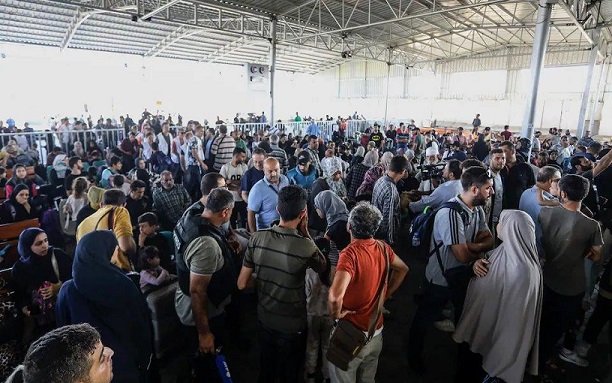
These are the results of the latest wave of the Arab Barometer (AB) poll in Palestine, the 8th to be conducted since the start of these polls in the Arab World. This report is restricted to findings related to Palestinian perception of migration. The poll was conducted by the Palestinian Center for Policy and Survey Research (PSR) in the West Bank and the Gaza Strip essentially during the period immediately before the start of the October the 7th war in the Gaza Strip and its envelop on the Israeli side.
The period leading up to the poll witnessed a number of important developments, including the 30th anniversary of the signing of the Oslo Accords. The period saw a rise in the number of Israeli incursions into Palestinian cities and refugee camps, particularly in the northern parts of the West Bank. During this period, Palestinian factional leaders met in City of El Alamein in Egypt in the presence of President Abbas but failed to agree on a joint statement. During this period, settler terrorist acts in Palestinian areas of the West Bank increased, as did armed attacks by Palestinians against settlers and Israelis. Finally, there have been press reports that there are US-Saudi negotiations to reach an agreement to normalize Saudi-Israeli relations and that Palestinian-Saudi and Palestinian-American meetings have been held to set Palestinian conditions for this normalization agreement.
This report is the fourth in a series covering the results of the current eighth wave of the Arab Barometer in Palestine (AB8). The first report reviewed the findings regarding the internal balance of power and Palestinian-Israeli relations before and after October 7. The second report reviewed Palestinian perceptions and beliefs regarding various international and regional actors and other international issues. The Third report addressed Palestinian perception of governance. The current report is focus on perception of emigration. While the focus is placed on the findings of AB8 regarding this topic, the report sets to compare these findings with those obtained by PSR in AB7, conducted two years earlier.
Methodology: |
The Arab Barometer interviews were conducted face-to-face during the period between 28 September and 8 October 2023 with a random sample of 1,189 adults in 120 residential locations in the West Bank, Gaza Strip and East Jerusalem. The interviews in the Gaza Strip were completed on October 6, one day before the start of Hamas's offensive on the Gaza periphery, which Hamas called the "Al-Aqsa Flood." The sample size in the Gaza Strip is 399 people and in the West Bank 790, and the margin of error is +/-3%. The other survey cited in this report for comparative purposes is AB7, which was conducted in November 2021. Palestine report on AB7 can be accessed here: https://www.arabbarometer.org/wp-content/uploads/Arab-Barometer-VII_Palestine-Report-2021-2022.pdf |
Main Findings: |
This fourth report of the eighth round of the Arab Barometer in Palestine, which was conducted in the last few days of September 2023 and the first week of October 2023 and was completed in the Gaza Strip just one day before October 7, addresses five issues, all related to migration:
Demand for emigration: On the eve of October 7, 2023, a quarter of Palestinians, 31% in the Gaza Strip and 21% in the West Bank, said they were considering emigrating from Palestine. Among those considering emigrating, 30% say they would do so even if they don't have the required papers.
Reasons driving emigration: When asked about the reasons for migration, the largest percentage said that they were economic reasons, while the second and third reasons are "political" reasons or educational opportunities. The fourth reason is security, and the fifth is corruption.
Top five destinations for emigration: The most preferred destination for immigration is Turkey, followed by Germany, Canada, the United States and Qatar
Remittances from family members living abroad: The vast majority of Palestinians reported receiving no remittances from relatives in the diaspora, while a small percentage said they received remittances monthly or annually.
Support for the rights of foreign domestic workers in Palestine: The poll found that more than three quarters of Palestinians strongly support or somewhat support a law that guarantees the right of foreign domestic workers in Palestine to always have their passports, and an even larger percentage supports the right of foreign domestic workers in Palestine to a day off a week, and the right of these workers to a bank account in which they receive their salaries.
1) Thinking about emigration from Palestine: |
A quarter of Palestinians say they have thought about emigrating. For obvious reasons related to economic and political conditions, demand for emigration is higher in the Gaza Strip than in the West Bank, 31% and 21% respectively. The total findings are identical to those recorded in AB7 in 2021 despite minor differences when looking at the West Bank and the Gaza Strip separately, as shown in the figure below.

As we found in previous waves, demand for emigration is highest among men and the youth. It is worth noting that while the gap between the totals in the West Bank and the Gaza Strip stands at 10 percentage points, it grows considerably when looking at specific groups in the two areas
Gender: As the table blow illustrates, males in the Gaza Strip are much more likely than males in the West Bank to seek emigration, 38% and 21% respectively, a 17-point gap. Age: Similarly, the youth in the Gaza Strip are much more likely than the youth in the West Bank to seek emigration, 44% to 28% respectively, a gap of 16 points. Education: Surprisingly, while education matters in the West Bank, it is much less important in the Gaza Strip. Among West Bankers, the higher the education, the higher the demand for emigration, 29% among those with a high level of education beyond high school and 17% among those with a high school education or less. In the Gaza Strip, by contrast, the less educated are more interested in emigrating than the more educated, 33% and 28% respectively. Vote in elections: It is also worth noting that those who intend to vote for third parties are more likely than others to seek to emigrate. Moreover, in the West Bank, those intending to vote for Hamas are slightly more likely than those who intend to vote for Fatah to seek emigration. The opposite in true in the Gaza Strip, as those who intend to vote for Fatah are a lot more likely to seek emigration compared to those who intend to vote for Hamas, 31% and 14% respectively. Finally, Gazans who say they will not vote for any electoral list and those who say they will not take part in the elections, are much more likely to seek emigration than those who intend to vote for Hamas or Fatah. |
Table (1): Demand for emigration in the West Bank and the Gaza Strip based on selected indicators
Age | Gender | Education | Vote intentions | ||||||||
18-29 years | 30 years and over | Male | Female | Tawjihi (high school) or less | Above Tawjihi | Fatah | Hamas | Third parties | None | Will not participate in elections | |
West Bank | 28% | 17% | 21% | 20% | 17% | 29% | 16% | 19% | 48% | 22% | 20% |
Gaza Strip | 44% | 23% | 38% | 24% | 33% | 28% | 31% | 14% | 45% | 43% | 34% |
As shown in the following figure, the current finding indicates a slight decline compared to the period between 2012 and 2019 but it is higher than the demand for emigration in the first and second waves of the Arab Barometer in 2006 and 2010 respectively.

Among those who have considered emigrating, 30% say they would do so even if they did not have the required papers. Here too, the percentage is much higher in the Gaza Strip than in the West Bank, 43% and 16% respectively. The current total figure is identical to the one we found two years ago in AB7.
2) Reasons for emigration: |
When asked about the reasons for wanting to emigrate, the largest percentage (45%) indicated economic reasons, with a majority of Gazans (54%) compared to only 37% of West Bankers providing that answer. The second and third responses received the same percentage (13% each) mentioned “political” reasons or education opportunities. The second reason for West Bankers were political, indicated by 19%. But only 5% of Gazans indicated the same reason. The education opportunities was stated by Gazans more than West Bankers, 18% and 9% respectively. The fourth reason stated is security, indicated by 12% of all Palestinians, but with a higher percentage in the West Bank compared to the Gaza Strip, 16% and 7% respectively. The West Bankers at the time of the survey were suffering from Israeli settler violence that gained significant momentum in 2023 after the formation of one of Israel’s most extreme and nationalist religious governments in its entire history. The fifth reason indicated by 10% of people was corruption, with West Bankers stating it more often than Gazans, 12% and 7% respectively.

It is worth noting that in AB7, in November 2021, a majority of 56% stated that they were thinking about emigration for economic reasons followed by 14% stating “political” reasons. Only 9% gave educational reasons, 8% gave security reasons, and 4% referred to concerns about corruption.
3) Top five destinations for emigration: |
When asked about the most preferred destination for emigration, the top country selected was Turkey, as was the case in AB7, followed by Germany, Canada, the US, and Qatar. Two years earlier, the US came second followed by Canada, the UAE, and Qatar. Other countries selected in the current wave included the UAE, Saudi Arabia, Australia, and several West European countries. It is worth noting, as indicated in the figure below, that Gazans were more likely than West Bankers to select Turkey and Germany while West Bakers were more likely to select the US.

4) Remittance from family member living abroad: |
When asked if their family receive remittances from any immediate or extended family member living abroad, the vast majority of Palestinians, 88%, exactly as the case was in 2021, reported that they receive none. All other 2023 findings are almost identical to those reported in 2021: 3% reported receiving remittances on monthly basis, 5% few times a year, and 4% once a year. Findings show that in total, Gazans are more likely to receive remittances than West Bankers, 20% and 6% respectively.
5) Support for rights of foreign domestic workers in Palestine: |
We asked the respondents about the rights of foreign domestic workers in Palestine. More than three quarters of Palestinians strongly support or somewhat support a law that would guarantee the right of foreign domestic workers in Palestine to always have possession of their passports; 20% somewhat oppose or strongly oppose that. Support for such law is a little higher in the Gaza Strip than in the West Bank, 80% to 74% respectively.
Similarly, 90% of the public somewhat support or strongly support a law that would guarantee the right of foreign domestic workers in Palestine to have one day off per week; 8% are opposed. West Bankers are more likely than Gazans to strongly support such a law, 64% and 45% respectively.
A similar percentage (88%) somewhat or strongly support a law that would guarantee the right of these workers to have a bank account where they can receive their salaries; 9% are opposed. Here too, West Bankers are more likely than Gazans to strongly support this law, 61% and 47% respectively.

16 September 2019
While a majority is dissatisfied with the behavior of the PA and Palestinian factions in response to the Israeli demolition of homes in Wadi al Hommos, a greater majority believes that Abbas’ response, to stop implementation of agreements with Israel, is merely a media stunt and will not be implemented; and while support for two-state solution declines, support for armed attacks rises and an overwhelming majority rejects the US “deal of the century” and believes it will not end the occupation. In domestic matters, an overwhelming majority views “honor killing” as a heinous crime, a majority has no trust in the Palestinian judiciary, and more than 60% demand the resignation of president Abbas 
11-14 September 2019
This poll has been conducted in cooperation with the Konrad-Adenauer-Stiftung in Ramallah
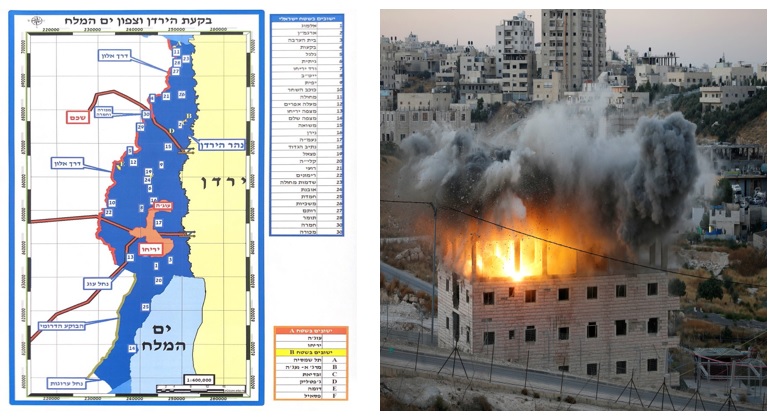
These are the results of the latest poll conducted by the Palestinian Center for Policy and Survey Research (PSR) in the West Bank and the Gaza Strip between 11-14 September 2019. The period before the conduct of the poll witnessed several developments including a presidential termination of the work of the Supreme Judicial Council and the formation of a transitional one, a presidential statement requiring former ministers, who illegally received salary increases, to return these funds, and a widespread internal debate over “honor killing” in the context of the death of a woman from Bethlehem in suspicious circumstances. In relations with Israel, five main developments occurred during this period: an Israeli demolition of a large built up area in Wadi Hommos which is located in an area under PA zoning control, responding to this incident, Abbas announced his intention to suspend the implementation of agreements with Israel, an explosive device was detonated in an area near the settlement of Dolev, west of Ramallah, killing an Israeli woman, Israeli prime minister Netanyahu announced his intentions to annex the Jordan Valley if he wins the Israeli elections scheduled for 17 September 2019, and finally, Israel transferred to the PA about two billion Shekels from the Palestinian custom revenues which the PA had previously announced it will not accept if it was not transferred in full. On Palestinian-American relations, US ambassador David Friedman stated that the US peace plan does not call for the creation of a Palestinian state but that it allows for Palestinian autonomy. This press release addresses many of these issues and covers other matters such as Palestinian parliamentary and presidential elections, general conditions in the Palestinian territories, the peace process and the future possible directions for Palestinians in the absence of a viable peace process. Total size of the sample is 1200 adults interviewed face to face in 120 randomly selected locations. Margin of error is +/-3%.
For further details, contact PSR director, Dr. Khalil Shikaki, or Walid Ladadweh at tel. 02-296 4933 or email pcpsr@pcpsr.org.
Main Findings:
Findings of the third quarter of 2019 show an overwhelming majority, reaching about three quarters, dissatisfied with the performance of the PA and the political factions in their response to the Israeli demolition of Palestinian homes in Wadi al Hommos, near Jerusalem. The majority views the response of president Abbas to the demolition—by declaring that the PA is stopping its implementation of the agreements with Israel— as inappropriate. Indeed, an overwhelming majority, exceeding three quarters of the public, believes that Abbas’ decision is merely a media stunt aiming at absorbing public anger with the PA leadership over its failure to prevent Israel from carrying out that demolition. Furthermore, public anger with the PA is probably driven by the belief of more than 80% that the Palestinian leadership will not implement the decision to stop implementing the agreements with Israel.
In domestic matters, findings show that the overwhelming majority of the public views “honor killing” of women as a heinous crime that must be punished severely. Only 10% think that this type of crimes is understandable and punishment should thereby be reduced. By contrast, findings show that almost half of the public, much more in the Gaza Strip, believes human beings can be possessed by Jinn or demons while a slightly smaller percentage believes this to be a superstition.
Findings also show that Shtayyeh’s government has failed so far in winning the trust of the public. Indeed, public trust in the ability of the government to perform better than the previous government has declined compared to the findings three months ago. Similarly, the public is dissatisfied with the performance of the judiciary, particularly the courts, with about two-thirds believing that its functioning is marred by corruption, lack of independence, or that it rules not according to the law but in accordance with whims and personal interests. But the public is evenly divided in its satisfaction with the decisions made by Abbas regarding the judiciary. Moreover, the largest percentage believes that the Transitional Judicial Council will not succeed in the next year or two in reforming the judiciary. Furthermore, trust in the presidency is also low as more than 60% demand the resignation of president Abbas; slightly more than a third wants him to stay in office. If Abbas runs in a presidential election against Ismail Haniyyeh, the votes would be very close.
In foreign affairs, findings show that the largest percentage of the Palestinians, particularly in the West Bank, does not view Iran as a friend or an ally of the Palestinians. Yet, a majority, in both the West Bank and the Gaza Strip, believes that if war breaks out between Iran and Israel, the former would be able to defeat the latter, as Iran is believed to have a stronger military force.
In light of prime minister Netanyahu’s statement announcing his intentions to annex the Jordan Valley, findings show a significant increase in the percentage of those who believe that the two-state solution is no longer feasible or practical. As in the past, feasibility is linked to support for the two-state solution. Findings show a significant decline in support for that solution accompanied by an increased support for armed attacks against Israelis. Moreover, public perception of the Trump peace plan continues to worsen, compared to attitudes two years ago, with two-thirds of the public demanding the Palestinian leadership to reject the plan out of hand even before reading the plan’s content, because it must be bad. More than 80% reject the idea presented by the US ambassador to Israel offering self-rule, rather than sovereign and independent statehood, to the Palestinians. More than 70% oppose resumption of the dialogue with the Trump Administration.
(1) Home demolition in Wadi al Hommos and Abbas’ response by suspending implementation of agreements with Israel:
- An overwhelming majority of 74% thinks that the PA and the political factions have not done all they could to prevent the Israeli demolition of buildings and homes in Wadi al Hommos near Jerusalem and 19% think they have done their best.
- Two thirds of the public (66%) believe that it was the duty of the PA and its security services and the police to protect the homes in Wadi al Hommos by serving as a buffer between the buildings and the Israeli bulldozers.
- 61% say that Abbas’ decision to suspend implementation of agreements with Israel was not the most appropriate response to the demolition of homes in Wadi al Hommos while 32% think it was the appropriate response.
- A large majority of 71% thinks that by suspending agreements with Israel, Abbas does not mean dissolving the PA and 18% think he does mean that.
- Similarly, a majority of 67% thinks that by suspending agreements with Israel, Abbas does not mean ending security coordination with Israel and 24% think he does mean that.
- A large majority of 69% thinks that by suspending agreements with Israel, Abbas does not mean ending civil coordination with Israel and 19% think he does mean that.
- A large majority of 69% thinks that by suspending agreements with Israel, Abbas does not mean annulling the PLO recognition of Israel and 20% think he does mean that.
- A large majority of 76% thinks that by suspending agreements with Israel, Abbas does not mean ending negotiations with Israel and returning to armed struggle and 15% think he does mean that.
- A large majority of 65% thinks that by suspending agreements with Israel, Abbas does not mean returning to Israel those VIP cards issued to senior PA officials and 22% think he does mean that.
- We asked the public if it thinks the PA is serious about implementing Abbas’ decision to suspend implementation of agreements with Israel. An overwhelming majority of 78% says the PA will not do that and only 16% say it will.
- Similarly, we asked the public about Abbas’ motivation behind making the decision to suspend implementation of agreements with Israel. A similar overwhelming majority (76%) indicates that the president’s decision is a media stunt or ploy and it will not be implemented while only 16% say the decision is serious and will be implemented.
(2) “Honor killing,” Jinn possession, economic conditions, the performance of the Shtayyeh government, and others:
- An overwhelming majority of 81% (90% in the West Bank and 66% in the Gaza Strip) say that “honor killing” is an dreadful crime that should be punished severely while 7% say that it is a normal crime that should be punished like any other crime. Only 10% (5% in the West Bank and 19% in the Gaza Strip) say that it is an understandable act that should be punished lightly.
- The public is divided on the issue of humans being possessed by Jinn or demons: 48% (37% in the West Bank and 67% in the Gaza Strip) say they believe it is real while 44% (56% in the West Bank and 24% in the Gaza Strip) believe it is superstition.
- 59% of the public say that their income has declined during the past six months due to the inability of the PA to pay the salary of the public sector in full; 35% say their income did not change and 4% say it has increased.
- A majority of 54% supports and 37% oppose the PA decision to refuse to accept a partial transfer of custom revenues. However, 43% say that they are worried that this decision could lead to the collapse of the PA while 50% indicate that it could not. Three months ago, 62% said they supported the PA decision to refuse to accept a partial transfer of custom revenues and 52% said they were worried that this decision could lead to PA collapse.
- Positive evaluation of conditions in the Gaza Strip stands at 8% and positive evaluation of conditions in the West Bank stands at 22%.
- Perception of safety and security in the Gaza Strip stands at 63% and in the West Bank at 52%. Three months ago, perception of safety and security in the Gaza Strip stood at 67% and in the West Bank at 59%.
- 31% of the public say they want to emigrate due to political, security, and economic conditions. The percentage rises in the Gaza Strip to 41% and declines in the West Bank to 24%.
- Only 36% of the West Bankers say that people can criticize the authority in their area without fear and 59% say that they cannot. Three months ago, 57% of West Bankers said they could not criticize the PA in the West Bank without fear. In the Gaza Strip, 43% say that people in the Gaza Strip can criticize Hamas authority without fear and 53% say they cannot.
- Perception of corruption in PA institutions stands at 80% while perception of corruption in the institutions controlled by Hamas in the Gaza Strip stands at 65%. When asked about Abbas decision mandating that ministers of the previous government return illegal pay raise they received, 80% said this measure was not sufficient.
- The public is divided over its assessment of the PA: 49% view it as a burden on the Palestinian people while 46% view it as an asset for the Palestinian people.
- With more than five months passing since the formation of the Shtayyeh government, findings indicate that a majority, or a plurality, of the public views its performance as similar to that of the previous government in matters of security (44%), the economy (37%), the reunification of the West Bank and the Gaza Strip (50%), the preparation to hold general elections (49%), and the protection of liberties and human rights (47%). But a percentage ranging between 50% and 32% indicates that it believes the performance to be worse than that of the previous government while a percentage ranging between 16% and 8% indicates that the performance of the Shtayyeh government is better than that of the previous government. These findings indicate a drop in public’s positive evaluation of the of the Shtayyeh government compared to our findings three months ago.
- Responding to a question about expectations regarding the ability of the Shtayyeh government to make progress in reconciliation and reunification, 61% expects failure; only 27% expects success.
- In a similar question about the ability of the new government to organize legislative or legislative and presidential elections in the West Bank and the Gaza Strip, a majority of 58% expects failure and 30% expects success.
- In another question about the ability of the new government to improve economic conditions, a majority of 60% expects failure and 28% expects success.
- We asked the public about its viewership habits in the last two months. Findings indicate that Al Jazeera TV viewership remains the highest, standing at 19%, followed by Al Aqsa TV and Maan TV (13% each), Palestine TV (12%), Palestine Today TV (11%), al Al Arabiya (5%), and al Mayadeen (4%).
3) Public evaluation of the judiciary and views on the president’s decisions regarding the judiciary:
- A majority of 60% (65% in the West Bank and 52% in the Gaza Strip) believes that it will not receive a fair trial if it finds itself in a Palestinian court while 32% (26% in the West Bank and 41% in the Gaza Strip) believe that will receive a fair trial.
- A majority of 63% (72% in the West Bank and 48% in the Gaza Strip) thinks that the Palestinian judiciary is marred by corruption, lacks independence, or rules according to whims and interests; 29% disagree and believe that it is has integrity, independence, or rules according to the law.
- The public makes a similar assessment of Palestinian layers: 66% (74% in the West Bank and 53% in the Gaza Strip) think lawyers’ work is marred by corruption and incompetence and that lawyers are untruthful with clients; 25% think lawyers’ work has integrity, competent, and lawyers are truthful with the clients.
- The public is divided in its view of Abbas’ decision to lower the retirement age for judges, to dismiss the Supreme Judicial Council, and to appoint a Transition Supreme Judicial Council: 42% are in favor, 42% are not in favor, and 16% are uncertain.
- 49% believe that the Transitional Judicial Council will not succeed in the next year or two in reforming the judiciary while 36% believe it will succeed.
- A plurality of 47% does not agree and 39% agree, with the view that the judicial matters are not part of jurisdiction of the PA president or that his decisions regarding the judiciary constitute an interference in the affairs of the judiciary.
- The public is divided on the view that Abbas’ decision regarding the judiciary was necessary in light of the fact that it has failed to reform itself: 43% agree and an identical percentage disagree with this statement.
(4) Presidential and parliamentary elections:
- Only 38% of the public expect elections, parliamentary or parliamentary and presidential, to take place in the Palestinian territories in the near future; 49% believe no elections will take place.
- An overwhelming majority (72%) wants elections to be for both, a parliament and a president, while only 12% want parliamentary elections only. 12% do not want any elections.
- If elections were held for a parliament and a president, 69% want Hamas to participate and to allow them in the Gaza Strip while 21% say they do not want Hamas to participate or allow elections in the Gaza Strip.
- 61% of the public want president Abbas to resign while 35% want him to remain in office. Three months ago, 57% said they want Abbas to resign. Demand for Abbas’ resignation stands at 55% in the West Bank and 73% in the Gaza Strip. Three months ago, demand for Abbas resignation stood at 49% in the West Bank and 71% in the Gaza Strip.
- Level of satisfaction with the performance of president Abbas stands at 37% and dissatisfaction at 60%. Level of satisfaction with Abbas stands at 43% in the West Bank and 29% in the Gaza Strip. Three months ago, satisfaction with Abbas stood at 38% (42% in the West Bank and 27% in the Gaza Strip).
- If new presidential elections were held today and only two were nominated, Mahmoud Abbas and Ismail Haniyeh, the former would receive 48% and the latter 46% of the vote (compared to 48% for Abbas and 42% for Haniyeh three months ago). In the Gaza Strip, Abbas receives 39% of the vote (compared to 43% three months ago) and Haniyeh receives 57% (compared to 52% three months ago). In the West Bank, Abbas receives 56% (compared to 52% three months ago) and Haniyeh 36% (compared to 36% three months ago). If the competition was between Marwan Barghouti and Ismail Haniyeh, Barghouti receives 62% and Haniyeh 34%.
- We asked about potential Abbas successors: If president Abbas does not nominate himself in a new election, 36% prefer to see Marwan Barghouti replacing him, while 19% prefer Ismail Haniyeh. Mohammad Dahlan is preferred by 8% (2% in the West Bank and 19% in the Gaza Strip), Mustafa Barghouti by 4%, and Khalid Mishal and Salam Fayyad by 3% each.
- If new legislative elections were held today with the participation of all factions, 66% say they would participate in such elections. Of those who would participate, 29% say they would vote for Hamas and 38% say they would vote for Fatah, 11% would vote for all other third parties combined, and 23% are undecided. Three months ago, vote for Hamas stood at 30% and Fatah at 39%. Vote for Hamas in the Gaza Strip stands today at 39% (compared to 38% three months ago) and for Fatah at 31% (compared to 33% three months ago). In the West Bank, vote for Hamas stands at 20% (compared to 25% three months ago) and Fatah at 43% (compared to 43% three months ago).
(5) Reconciliation, Hamas and Iran:
- 30% are optimistic and 67% are pessimistic about the success of reconciliation. Three months ago, optimism stood at 33%.
- Moreover, the overwhelming majority (72%) demands that the PA immediately lift all the measures taken against the Gaza Strip, such as public sector’s salary deductions and the reduction in access to electricity; only 23% say that such measures should be removed only after Hamas fully hands over control over the Strip to the PA government.
- A majority of 52% (down to 37% in the Gaza Strip) believes that the chances for a Hamas-Israel agreement on a long term hudna or cessation of violence are slim while 36% believe the chances are medium and only 9% believe the chances are high.
- In the context of the visit of a senior Hamas delegation to Iran, we asked the public to tell us how it views Iran: a plurality of 48% says Iran is not a friend or ally to the Palestinians and 40% (36% in the West Bank and 48% in the Gaza Strip) say it is a friend and ally.
- In the context of statements by Iran and its allies indicating that the Islamic republic has a military capacity to defeat Israel in war, we asked the public if it believes this to be true: 55% say they believe this to be true and 32% believe it to be untrue.
(6) The Trump peace plan:
- We asked the public if Palestinian acceptance of the Trump peace plan would lead to the end of the Israeli occupation of the West Bank: 83% say no; only 9% say yes it would.
- When asked if the Trump peace plan permits Israel to annex a large part of the West Bank, a large majority of 65% of the public says it does and only 27% say it does not.
- Two thirds (67%) believe that in response to a Palestinian rejection of the Trump peace plan, the US will impose further sanctions on the Palestinians; 23% say it will amend its plan in case of Palestinian rejection.
- A large majority of 69% believes that the Palestinian leadership should reject the US plan; 19% say it should accept it with reservations; and 5% believe it should accept it without reservation. Three months ago, 75% said the PA leadership should reject the plan.
- We asked this same question with a slightly different options: 64% indicate that the Palestinian leadership should reject out of hand the US “deal of the century” if the US presents its plan because it must be bad for the Palestinians; 21% want the PA to examine the substance of the plan before accepting or rejecting it; and 9% believe the leadership should accept the plan out of hand because it will certainly be better than the status quo. A year ago, only 50% said the PA should reject the plan out of hand.
- An overwhelming majority of 81% reject the proposed self-rule idea that deny Palestinian statehood that was proposed by US ambassador to Israel David Friedman while 9% say they accept it and 10% are uncertain.
- Similarly, 72% say that they are against, and 22% for, American ideas proposed to solve the refugee problem in which Palestinian refugees are offered full citizenship and rights in the host countries and in which the host countries receive billions of US dollars in assistance and investments.
- A majority of 68% is opposed and 20% is not opposed to a resumption of dialogue between the Palestinian leadership and the Trump Administration. Official contacts between the PA and the US government were suspended by the PA after the US, in December 2017, recognized Jerusalem as the capital of Israel.
7) The peace process:
- Support for the concept of the two-state solution stands at 42% and opposition at 56%. No description or details were provided for the concept. Three months ago, support for the concept stood at 47%. 37% of the public believe that a majority of the Palestinians supports this solution and 56% believe that the majority opposes it.
- A majority of 63% believes that the two-state solution is no longer practical or feasible due to the expansion of Israeli settlements while 34% believe that the solution remains practical. Moreover, 78% believe that the chances for the creation of a Palestinian state alongside the state of Israel in the next five years are slim or nonexistence while 21% believe the chances to be medium or high.
- The most preferred way out of the current status quo is “reaching a peace agreement with Israel” according to 32% of the public while 37% prefer waging “an armed struggle against the Israeli occupation.” Only 10% prefer “waging a non-violent resistance” and 17% prefer to keep the status quo. Three months ago, 36% said that they prefer reaching a peace agreement with Israel and 34% said they prefer waging an armed struggle.
- When asked about the most effective means of ending the Israeli occupation, the largest group (44%) chose armed struggle, 24% negotiations, and 22% popular resistance. Three months ago, 38% chose armed struggle and 31% chose negotiaitons.
- In light of the suspension of peace negotiations, Palestinians support various alternative directions: 62% support popular non-violent resistance; 50% support a return to an armed intifada; 40% support dissolving the PA; and 32% support abandoning the two-state solution and demanding the establishment of one state for Palestinians and Israelis. Three months ago, 47% said they prefer a return to armed intifada and 38% said they prefer to dissolve the PA.
- We asked about the armed attack that took place few weeks ago in an area west of Ramallah, near the settlement of Dolve, in which one Israeli woman was killed: 61% (49% in the West Bank and 80% in the Gaza Strip) supported it and 33% opposed it. A majority of 54% views the attack as a one-time, lone wolf, event while 39% think it is the beginning of the return to armed struggle.
- An overwhelming majority of 83% supports the local and international boycott movement against Israel while 15% are opposed to it. A majority of 52% say that they are currently boycotting non-essential Israeli products and those that have non-Israeli substitutes while 33% say they are not. 57% say the boycott of non-essential Israeli products and those that have non-Israeli substitutes will be effective in contributing to the end of occupation and 42% say it will not.
- About two-thirds of the public believe that the European countries will not boycott Israel or impose sanctions on it while 26% believe they will.
- An overwhelming majority of 74% says that Palestinians should condemn visits of Arab journalists to Israel while 7% say the visits should be encouraged.
- A majority of 52% expects the Israeli right wing led by Netanyahu to win the upcoming Israeli elections and 19% expect the center-left led by Gantz to win the elections; 29% do not know who is likely to win.
- About half of the public (48%) does not encourage the participation of the Joint Arab List in an Israeli government coalition led by the center and the left while 37% encourage such participation and 15% have no opinion.
- The public is divided in its position regarding the participation of the Palestinian citizens of Israel in the Knesset elections: 46% support and 42% oppose such participation.
8) Most vital Palestinian goals and the main problems confronting Palestinians today:
- 44% believe that the first most vital Palestinian goal should be to end Israeli occupation in the areas occupied in 1967 and build a Palestinian state in the West Bank and the Gaza Strip with East Jerusalem as its capital. By contrast, 33% believe the first most vital goal should be to obtain the right of return of refugees to their 1948 towns and villages, 13% believe that it should be to build a pious or moral individual and a religious society, one that applies all Islamic teachings, and 9% believe that the first and most vital goal should be to establish a democratic political system that respects freedoms and rights of Palestinians.
- The most serious problem confronting Palestinian society today in the eyes of 28% of the public is poverty and unemployment while 25% say it is the continuation of occupation and settlement activities; another 25% say it is the spread of corruption in public institutions; and 15% say it is the siege of the Gaza Strip and the closure of its crossings.
The Peace Process, Evaluation of PA and NGOs performance, Corruption in PA institutions, the PLC and NGOs, Status of democracy and human rights, Elections for the president and vice-president and political affiliation
15-17 July 1999
These are the results of opinion poll # 42, conducted by the Center for Palestine Research & Studies, between 15-17 July 1999. The poll deals with the peace process, evaluation of PA and NGOs performance, corruption in PA institutions, the PLC and NGOs, status of democracy and human rights, elections for the president and vice-president and political affiliation
The total sample size of this poll is 1330 from Palestinians 18 years and older, of which 824 in the West Bank and 506 in the Gaza Strip. The margin of error is + 3% and the non-response rate is 3%.
1. The Peace Process
- Support for the peace process rises from 70% to 75% in one month
- Support for armed attacks against Israelis drops from 45% to 39% in one month
- Trust in the intentions of the new Israeli government led by Barak rises from 23% to 29%
The results of this survey indicate an increase in public support for the peace process. Support for the process stands today at 75% compared to 70% in June 1999. Similarly, trust in the peaceful intentions of the Israeli prime minister and his new government rose from 23% to 29%. Moreover, support for armed attacks against Israelis dropped from 45% to 39% during the same period. These results indicate that more than 5% of the total population have shifted positions toward supporting and trusting the peace process.
Despite the fact that support for violence against Israelis is still relatively high and despite the fact that 58% of the Palestinians remain unconvinced of Barak's peaceful intentions, the change in the public perception of the peace process remains politically significant given the fact that it comes immediately after the establishment of the new Israeli government but before the implementation of any of the Israeli commitments in the Wye River Memorandum. The change in public opinion may reflect rising expectations in the street from both Barak and the peace process.
Support for violence is high among supporters of Hamas (62%) and PFLP (53%), holders of BA degrees (52%), and students (46%) and low among supporters of Fateh (33%), those with elementary education (34%), workers (31%) and the retired (17%). Trust in the intentions of the Barak government increases among supporters of Fateh (42%), the illiterates (39%), farmers (41%), and the retired (39%). It decreases among supporters of Hamas (25%), holders of BA degrees (12%), students (15%), and specialists (9%).
2. Evaluation of PA and NGOs performance
- Positive evaluation of the PLC performance reaches 40%
- Positive evaluation of performance of the cabinet reaches 47%, security and police 56%, and the presidency 58%
- Positive evaluation of the performance of the judicial and court system reaches 42%
- Positive evaluation of the performance of the opposition parties reaches 32%
- Positive evaluation of the performance of Palestinian NGOs reaches 59%
The results show that the performance of the Palestinian opposition parties and factions receives the lowest positive evaluation (32%) among all institutions listed in the survey while the performance of the Palestinian NGOs receives the highest (59%) followed by the performance of the presidency (58%), the police and security services (56%), the cabinet (47%), the judicial and court system (42%), and finally, the PLC (40%).
These results indicate a limited rise in the positive evaluation of the performance of the presidency and the security services and a decline in the positive evaluation of the PLC, while the evaluation of the judicial system, the cabinet, and the opposition factions remain the same as it was three months ago.
This is the first time in which a question has been asked about the performance of the Palestinian NGOs. The survey was conducted during the campaign that was waged by certain official Palestinian circles and groups against the NGOs. Positive evaluation of the performance of the NGOs increases among residents of the Ramallah, Hebron and Rafah areas, those between the ages of 23-27 (70%), students (74%) workers (67%), and farmers (64%). It decreases among residents of the Deir al Balah area in the Gaza Strip (46%), those over 52 years old (44%), the retired (26%), and the unemployed (47%). No significant differences exist in the evaluation of the performance of the NGOs by supporters of the different factions. The NGOs received 65% positive evaluation from the supporters of Fateh and 68% from the supporters of Hamas. This result indicates that the street's evaluation of the performance of the NGOs does not necessarily reflect a certain political bias or a political-ideological position. Moreover, it seems that the campaign against the NGOs left little impact on the street.
Figure (42.1):Positive Evaluation of the Performance of Selected Palestinian Institutions
3. Corruption in PA institutions, the PLC and NGOs
- Belief that corruption exists in PA institutions drops from 71% to 64%; 58% believe that corruption will increase or remain the same in the future
- 81% believe that corruption exists in ministries and governmental offices and 76% believe it exists in the security services and police
- 51% believe that corruption exists in the PLC and 43% believe it exists in the office of the presidency
- 43% believe that corruption exists in NGOs
The results show a decrease in the percentage of those who believe that corruption exists in the institutions of the Palestinian Authority from 71% in June 1999 to 64% today. The results also show that the percentage of those who believe in the existence of corruption in the ministries and governmental offices is the highest reaching 81%, followed by the security services (76%), the PLC (51%), and finally, the office of the presidency and the NGOs (43% each).
The results indicate that while a decrease has indeed taken place in the percentage of those who believe in the existence of corruption in the PA institutions in general, an increase has taken place in the percentage of those who believe in its existence in ministries and governmental offices, in the office of the presidency, and in the PLC. The percentage of those who believe that corruption exists in the security services has remained almost the same as it was a month ago.
This is the first time in which a question about public perception of corruption in Palestinian NGOs has been asked. As mentioned earlier, the survey was conducted during the campaign that was directed against the NGOs. It seems from the results that the campaign has not been highly successful in negatively affecting public perception of the spread of corruption in the NGOs. The percentage of those who believed in the existence of corruption in these organizations was the lowest (along with the office of the presidency). Belief in the existence of corruption in the NGOs increases in the West Bank (48%), Tulkarm, Hebron, Jerusalem, and Bethlehem areas (48%, 57%, 59%, and 60% respectively), among men (49%), holders of BA degrees (63%), professionals (74%), merchants (54%), and those with the highest income (74%). It decreases in the Gaza Strip (36%), Khanyounis (28%), Deir al Balah and Rafah (32% each), Nablus (36%) and Jabalia (39%), and among women (37%), illiterates (30%), housewives (36%), and those with the lowest income (38%). Political affiliation has no impact on the belief of the existence of corruption in the NGOs. The percentage of Fateh supporters who believe in the existence of corruption in the NGOs is 42% while that of Hamas is 40%.
Figure (42.2): Belief in the Existence of Corruption in Selected Institutions
4. Status of democracy and human rights
- Positive evaluation of Palestinian democracy rises from 27% to 31%
- A majority of 58% believes that people can not criticize the PA without fear
- Positive evaluation of democracy and human rights in Israel reaches 70%, in the US 60%, in France 51%, in Jordan 38%, ain Egypt 33%
The resulindicate a rise in the positive evaluation of the status of democracy and human rights in the Palestinian areas from 27% in June 1999 to 31% today. But the percentage of those who believe that people can not criticize the PA without fear has increased slightly from 57% to 58% during the same period.
The results also show that Palestinian public perception of the status of democracy in Israel has remained the same (70%), while it improved with regard to the US (from 58% to 60%) France (from 50% to 51%), Jordan (from 35% to 38%), and Egypt (from 29% to 33%).
Figure (42.3): Positive Evaluation of the Status of Democracy in Palestine and Selected Countries
5. Elections for the president and vice-president and political affiliation
- In elections for the presidency, Arafat receives 44% of the vote, Haidar Abdul Shafi 14%, and Ahmad Yasin 12%
- In elections for the vice-presidency involving eight candidates, Abdul Shafi receives the highest percentage of votes (18%) followed by Faisal al-Husseini and Sa'eb Erikat (8% each), Hanan Ashrawi (7%), Ahmad Qurai' and Mahmud Abbas (6% each), Farouq Qaddumi (5%), and Nabil Sha'ath (2%)
- In elections for the vice-presidency involving four candidates only, Abdul Shafi receives 37% of the vote, followed by Faisal al-Husseini (23%), Mahmud Abbas and Ahmad Qurai' (14% each)
- Support for Fateh drops from 38% to 35%, Hamas reaches 11%, PFLP 5%, Islamic Jihad 3%, and the non-affiliated 38%.
The results indicate that the popularity of Yassir Arafat has not changed during the past few months remaining at 44%, while the popularity of Haidar Abdul Shafi has risen in one month from 10% to 14%, and that of Ahmad Yasin from 11% to 12%. Arafat's popularity is higher in the Gaza Strip (53%) than in the West Bank (38%), while Abdul Shafi's popularity is equal in the two areas, and Yasin's is higher in the West Bank (14%) than in the Gaza Strip (8%).
Figure (42.4): Elections for the Presidency Among Three Candidates
In a competition for the office of the vice-president among eight candidates, Abdul Shafi receives the largest percentage of votes (18%) followed by Faisal al Husseini and Sa'eb Erikat (8% each), Hanan Ashrawi (7%), Ahmad Qurai' and Mahmud Abbas (6% each), Farouq al Qaddoumi (5%) and Nabil Sha'ath (2%).
In a competition for the office of the vice-president among four candidates only, Abdul Shafi receives the largest percentage of votes (37%) followed by al Husseini (23%), and Mahmud Abbas and Ahmad Qurai' (14% each). Abdul Shafi's popularity rises in the Gaza Strip (45%) and declines in the West Bank (32%). Similarly, Abbas' popularity rises in the Gaza Strip (16%) and declines in the West Bank (12%). Al Husseini's popularity is higher in the West Bank (27%) than in the Gaza Strip (16%). Similarly, Qurai's popularity is higher in the West Bank (15%) than in the Gaza Strip (11%).
Figure (42.5): Elections for the Vice-Presidency Among Four Candidates
Support for Fateh has dropped in one month from 38% to 35%, while support for Hamas has risen slightly from 10% to 11%, and for the PFLP from 3% to 5%. Total support for the Islamists remained unchanged at 17%. The percentage of the non-affiliated dropped from 40% in June to 38% in this survey. Support for Fateh in the West Bank declined to 32% and in the Gaza Strip to 40%. Hamas' popularity is the same in the two areas.
Figure (42.6): Political Affiliation
In conclusion, the results of this survey may indicate a possible change in the way public opinion responds to developments. In the past, public perception and evaluation of the process of national reconstruction, particularly that of the leadership and its performance, were as positive as that of the peace process. More support for the national reconstruction translated into more support for the peace process and vice versa. This may have been due to the tendency of the Palestinian street to defer to its leadership and to trust its wisdom in managing both processes. The results of this poll point out to a possible separation between people's perception of the two processes: increased support for and trust in the peace process did not translate into higher popularity for the leadership or higher positive evaluation of its performance....More
WHILE THREE QUARTERS OF THE PALESTINIANS WELCOME SHARON'S PLAN OF WITHDRAWAL FROM GAZA AND WHILE TWO THIRDS SEE IT AS VICTORY FOR ARMED STRUGGLE AGAINST OCCUPATION, 58% OF THE PALESTINIANS PREFER TO SEE THE PALESTINIAN ATUHORITY AND ISRAEL NEGOTIATE THE WITHDRAWAL PLAN AND 61% BELIEVE SHARON IS NOT SERIOUS AND WILL NOT WITHDRAW
14-17 March 2004
These are the results of poll # 11 conducted by the Palestinian Center for Policy and Survey Research in the West Bank and the Gaza Strip between March 14 and 17, 2004 (before the Israeli assassination of Ahmad Yasin). The poll deals with the Sharon plan for a unilateral evacuation of settlements, the separation wall and military checkpoints, the peace process and armed attacks, and internal Palestinian matters. Total size of the sample is 1320 adults (825 in the West Bank and 495 in the Gaza Strip) interviewed face to face in 120 randomly selected locations. Margin of error is 3%.
For further details, contact PSR director, Dr. Khalil Shikaki or Ayoub Mustafa, at Tel 02-2964933 or email pcpsr@pcpsr.org
Main Findings
(1) Gaza Withdrawal Plan
- About three quarters of the Palestinians welcome Sharon's plan to evacuate 17 settlements in the Gaza Strip and few more in the West Bank and two thirds believe it represents a victory for the armed struggle against occupation, but only one third believes Sharon is serious and will indeed withdraw and 61% believe he is not serious and will notwithdraw.
- A majority of 58% prefers to see the PA negotiate with Israel Sharon's withdrawal plan, and 38% prefer to see the withdrawal being carried out unilaterally.
- 41% support and 54% oppose Israeli-Hamas negotiation of Israeli withdrawal from Gaza.
- Withdrawal from Gaza will increase the chances for a peace settlement in the view of 32% and will decrease the chances for peace in the view of 24%.
- In the view of the Palestinians, Sharon's intentions are: first, to push the Palestinians toward internal infighting; second, to consolidate control over the West Bank; third, to frighten the Palestinian leadership of its opposition; and fourth, to maintain a Jewish majority in Israel.
- Israeli withdrawal from the Gaza Strip will lead to a decrease in armed attacks against Israel from the Gaza Strip in the view of 41% and will lead to an increase in such attacks in the view of 30%. In the Gaza Strip, 49% believe it will lead to a decrease in the attacks.
- After the withdrawal and the evacuation of settlements, 54% propose to give homes in settlements to those whose homes have been demolished by Israel, 22% want to give them to refugees, and 13% would like to demolish them.
The polls shows that 73% of the Palestinians welcome Sharon's plan to evacuate 17 settlements in the Gaza Strip and few more in the West Bank. Gazans are more welcoming of the plan (82%) than West Bankers (68%). Yet, the percentage of those who believe that the plan will increase the chances for a political settlement with Israel does not exceed 32%, with 24% believing that it will decease such chances and 39% believing that it will have no effect on the peace process. The reason for the pessimistic assessment of the potential effect of the Sharon plan is derived from the publics negative estimate of Sharon's intentions. In the view of 37%, Sharon's first goal is to push the Palestinians toward internal infighting; 33% believe his second goal is to consolidate Israeli control over the West Bank, and 28% believe his third goal is to intimidate the Palestinian leadership with loss of power to opposition parties. The percentage of those believing that his first goal is to maintain Israel's Jewish majority does not exceed 22%.
Despite belief in Sharon's malicious intent, two thirds of the Palestinian public see in his plan a victory for Palestinian armed struggle while only one third believes it is not a victory. Moreover, 68% believe that a majority of Palestinians sees the plan as a victory for armed struggle. Given the actual results, the assessment of the respondents is highly accurate which indicates that this is indeed the normative attitude prevailing among Palestinians. But the percentage of those believing that a majority of Israelis sees the plan as a victory for the Palestinians is 44%, with 48% believing that most Israelis do not see it as a victory for Palestinians. The belief that the plan is a victory for Palestinian armed struggle increases in the Gaza Strip (72%) compared to the West Bank (62%), in refugee camps (72%) compared to cities (61%), among men (70%) compared to women (62%), and among supporters ofHamas and Fateh (70% and 69% respectively) compared to the unaffiliated (59%).
Despite the welcome of the Sharon plan and the belief that it represents a victory for Palestinian armed struggle, only one third believes that Sharon is serious and will indeed withdraw from the Gaza Strip, while 61% believe he will not. This could be the reason why a majority of 58% prefers to see the PA negotiate the Gaza withdrawal with Israel and only 38% prefer to see Israel withdrawing unilaterally. In other words, what the majority of the Palestinians sees as victory is not the unilateral aspect of the Sharon plan but the evacuation of settlements. In this regard, the public prefers the evacuation and withdrawal to be the result of negotiations, but it still sees victory in both cases.
The survey sought to examine public perception of the legitimacy of a Hamas-Israel negotiation. When asked if they think Israel should negotiate its withdrawal from Gaza also withHamas, 41% responded positively while 54% said it should not. Similarly, when asked if Hamas should accept to negotiate with Israel, 43% said it should and 50% said it should not. Yet only 36% of the respondents believe a majority of the Palestinians approves Hamas-Israel negotiations and 53% believe that most Palestinians do not approve such negotiations on the Israeli withdrawal from the Gaza Strip. If Hamas accepts to negotiate with Israel, this would mean a change in the principled positions of the movement toward Israel and the recognition of Israel in the view of 55% of the respondents. The finding showing such support for Hamas-Israel negotiations indicates that a large section of the Palestinian public is dissatisfied with PA performance and wishes to introduce another Palestinian actor into the negotiations process.
If Israel withdraws from the Gaza Strip, the level of armed attacks against Israelis from the Strip would decline according to 41% of the public, while 30% of the public believe it would increase the number of such attacks, and 24% believe it will have no impact. The percentage of those believing that withdrawal will lead to a decrease in attacks from Gazaincreases in the Gaza Strip (49%) compared to the West Bank (36%). It also increases among men (44%) compared to women (38%), among the oldest (45%) compared to the youngest (36%), among professionals, the retired, and farmers (60%, 56%, and 48% respectively) compared to students (33%), among those working in the public sector (51%) compared to those working in the private sector (44%), among the married (43%) compared to the unmarried (36%), and among Fateh supporters (45%) compared to supporters ofHamas and Islamic Jihad (40% and 38% respectively).
After the Israeli withdrawal from the Gaza Strip, a majority of 54% thinks that homes in the evacuated settlements should be given to those Palestinians whose homes have been demolished by Israel. But 22% think they should go to refugees and 13% think they should be demolished.
(2) Separation Wall and Checkpoints
- 55% believe the building of the separation wall will lead to an increase in armed attacks against Israel. 40% believe the best means for the Palestinians to fight it is by armed confrontations and bombing attacks inside Israel; 27% believe in a ceasefire agreement and return to the peace process; 10% prefer popular non violent demonstrations; and 11% believe going to the international court of Justice is the best means of fighting the wall.
- A majority of 61% believes that the International Court of Justice will be biased in favor of Israel and only 26% believe it will be neutral.
- 41% believe that the best means of fighting Israeli military checkpoints is through reaching a ceasefire and returning to the peace process and 28% believe armed confrontations and bombing attacks are the best means, while 9% have confidence in popular non-violent demonstration.
A majority of 55% believes that the separation wall will lead to more armed attacks against Israel, 18% believe it will lead to less attacks, and 25% believe it will have no impact on attacks. But more than two thirds (68%) believe that a majority of Israelis does believe that the wall will reduce armed attacks. The best way to fight the wall in the view of 40% of the public is by the continuation of armed confrontations and bombing attacks inside Israel while 27% believe the best way is to reach a ceasefire agreement and return to the peace process. The percentage of those who believe non-violent demonstrations are the best means to fight the wall does not exceed 10%, and a similar percentage (11%) believes in the effectiveness of complaining to the International Court of Justice (ICJ). One reason why the level of confidence in the ICJ is so low is the surprising finding that 61% of the public believe the Court will be biased in favor of Israel, with only 8% believing it will be biased in favor of the Palestinians and only 26% believing it would be neutral.
During the last three months, 48% of the Palestinians traveled through Israeli military checkpoints. The reasons for travel varied with 35% visiting family, 30% going to work, 23% seeking medical treatment, and 9% going to schools and universities. The frequency of travel varied too with 27% traveling once a month, 26% twice or three time monthly, 21% twice or three times weekly, and 17% daily. The extent of hardship encountered while crossing the checkpoints have been described as very large or large by 82% while 14% described it as medium and 3% as little. More than one third of the respondents said that family members had to locate to other areas because of the suffering at the checkpoints or because of their inability to cross them. The best way to fight the checkpoints according to 41% of the respondents is a ceasefire agreement and a return to the peace process, but 28% said it is the continuation of armed confrontations and bombings inside Israel. Only 9% said the best way to fight checkpoint is by non-violent demonstrations and 12% by complaining to international human rights organizations. Belief in the utility of armed confrontations and bombings inside Israel increases in the Gaza Strip (31%) compared to the West Bank (26%), among men (30%) compared to women (25%), among holders of BA degree (33%) compared to illiterates (26%), and among supporters of Hamas (38%) compared to supporters of Fateh (26%).
(3) Peace Process, Reconciliation, Armed Attacks, Hizballah Prisoners' Deal, and the Arab Summit
- 66% believe the Roadmap has collapsed. Last December, 58% believed it had collapsed; and last October the percentage was 68%.
- Wide support for armed attacks: 87% support attacks against Israeli soldiers, 86% support attacks against settlers, and 53% support attacks against Israeli civilians.
- Despite that, 84% support mutual cessation of violence and 70% support a Hudna.
- 67% believe that armed confrontations have helped the Palestinians achieve national rights in a way that negotiations could not.
- After reaching a peace agreement and the establishment of a Palestinian state, 74% would support reconciliation between the two peoples, but 42% are convinced that such reconciliation is not possible ever.
- 80% believe that Hizballah came out a winner from the prisoners' exchange with Israel.
- In the occasion of the Arab Summit in Tunis, 86% of the Palestinians believe that they cannot count on Arab States to support them in regaining their rights.
The findings show little optimism about the prospect for a return to negotiations and cessation of violence. Only 15% believe that violence will stop soon and the two sides will return to negotiations and 45% believe some armed confrontations will continue but the parties will be able to return to negotiations. More than one third, compared to less than one quarter last December, believes that violence will not stop and the two sides will not return to negotiations. Two thirds, compared to 58% last December and 68% last October, believe that the Roadmap has collapsed.
Support for armed attacks against Israeli soldiers remains very high at 87% and against settlers at 86%, and against civilians at 53%. These figures are similar to those obtained during the last six months except for the support of violence against civilians which stood at 48% last December and 59% last October. Two thirds (67%) of the public believe that armed confrontations have helped achieve Palestinian national rights in ways that negotiations could not. Last December, this percentage stood at 64%.
Despite the wide support for armed attacks, a large majority of 84% support mutual cessation of violence and 70% support a hudna in which the Palestinians stop using arms against the Israelis and the Israelis stop using arms against the Palestinians. If such agreement if reached, 57% of the public would support the PA in taking measures to prevent armed attacks against Israeli targets.
The findings show that a majority of the public does not blame Palestinian opposition groups for the failure to reach a ceasefire agreement as only 11% do so, another 17% blame the PA for this failure, and 37% blame both sides. The rest of the public blames others, mostly Israel. The percentage of those blaming the opposition groups more than the PA increases among supporters of Fateh (9% blame the PA and 18% blame the opposition) compared to supporters of Hamas (26% blame the PA and 8% blame the opposition).
After reaching a peace agreement between the two sides and the establishment of a Palestinian state recognized by Israel, 74% would support reconciliation between the two peoples. Despite this finding, 42% believe reconciliation is not possible ever, while 18% believe it will be possible only after several generations, 8% believes it to be possible in the next generation, 7% during the next 10 years, and 16% during the next few years. Regarding the modalities of reconciliation after reaching a peace agreement, 86% would support open borders between the two states, 65% would support joint economic institutions and ventures, 29% would support the creation of joint political institutions toward a confederation, 39% would support the enacting of laws that prohibit incitement against Israel, and only 7% would support the adoption of a school curriculum in the Palestinian state that recognizes Israel and teaches school children not to demand return of all Palestine to the Palestinians.
An overwhelming majority of 80% views the Israel-Hezbollah prisoners exchange as a victory for Hezbollah, 9% view it as a victory for Israel, and 7% believe the two sides came out victorious.
On the occasion of the Arab summit, originally scheduled for the end of March in Tunisia, PSR asked respondents whether they can count on support from Arab states in regaining their rights. Only 14% responded in the affirmative and 86% said Palestinians can not count on support of Arab states.
(4) Domestic Issues
- Only 20% to 25% believe that Prime Minister Abu Ala' has been able to achieve his four stated objectives of putting an end to internal anarchy, prepare for elections, carry out political reforms, and return to negotiations. Despite the low evaluation, only 39% believe that he should resign and 47% believe he should not.
- 63% believe Israeli occupation is responsible for the chaos in the Palestinian areas and 25% put the blame on the Palestinian security services and the Palestinian leadership.
- 70% want to have Palestinian legislative and presidential elections after Israel ends its occupation of Palestinian cities and towns, but 27% support holding them now.
- 91% support internal and external calls for fundamental political reforms in the PA.
- Positive evaluation of Palestinian democracy does not exceed 23%, with 84% believing that corruption exists in the PA, and 94% believing that one can not find a job without awasta.
- Arafat's popularity stands at 38% as the case was last December.
- For the office of a vice president, Marwan Barghouti remains at the top with 16%, followed by Abdul Aziz Rantisi with 14%, and Saeb Erikat with 8%.
- Fateh's popularity stands at 27% and Hamas at 20%. In the Gaza Strip, Hamas has the support of 27% compared to 23% for Fateh. The popularity of the Islamists combined (Hamas, Islamic Jihad, and independent Islamists) stands at 29% and the percentage of the non-affiliated stands at 40%.
The findings show little positive evaluation of the performance of the Abu Ala's government. When asked whether the Prime Minister has been able to deliver on what he promised regarding the elimination of internal anarchy, preparation for elections, political reforms, and return to the peace process with Israel, only 20% to 25% said he was able to deliver for each item while 65% to 75% said he was not. Despite this grim assessment, only 39% said the Prime Minister and his government should resign and 47% said they should not. One reason for this could be the finding that 63% of the public blame the Israeli occupation for the anarchy and lack of security while only 25% blame it on the failure of the Palestinian security services and leadership.
Demand for Abu Ala's resignation increases in the Gaza Strip (43%) compared to the West Bank (37%), in refugee camps (44%) compared to towns and villages (35%), among men (45%) compared to women (33%), among the youngest, between the ages of 18-22 years (45%) compared to the oldest, over 52 years old (33%), among holders of BA degree (41%) compared to illiterates (29%), among professionals, laborers, employees, and students (60%, 51%, 48%, and 46% respectively) compared to housewives and the retired (32% and 22% respectively), and among supporters of Hamas (49%) compared to supporters of Fateh (34%).
Less than one quarter (23%) gives Palestinian democracy a positive evaluation. But 50% believe people can criticize the PA without fear, and 49% believe that there is, or there is to some extent, press freedom in the Palestinian territories. Belief in the existence of corruption in PA institutions reaches 84%, and from among those 70% believe that this corruption will increase or remain the same in the future. More than three quarters (77%) believe that to a large extent jobs in the PA are obtainable through wasta, with an additional 17% believing that wasta is used sometimes. Only 2% believe employment is done without wasta. The percentage of those who say that conditions in the Palestinians areas forces them to seek permanent emigration reaches 15%.
Support for internal and external calls for fundamental political reforms reaches 91% in this poll. Support for holding general political elections after an Israeli withdrawal from Palestinian cities reaches 70% with an additional 27% supporting the holding of elections today, under the current conditions of occupation.
Arafat's popularity remains unchanged as it was last December (38%). Regarding support for a vice president, Marwan Barghouti's popularity remains highest (16%) followed by that of Abdulaziz al Ranatisi (14%), Sa'eb Erikat (8%), Haidar Abdul Shafi (6%), Ahmad Yasin and Hanan Ashrawi (5% each), Farouq Qaddoumi (4%), Ahamd Quari'-Abu Ala' (3%), Mohammad Dahlan (2%), and Mahmoud Abbas-Abu Mazin (1%). In the Gaza Strip, Rantisi's popularity inceases to 17% compared to 12% in the West Bank. Similarly, Dahlan'spopularity increases in the Gaza Strip to 5% compared to less than 1% in the West Bank. Fateh is the most popular faction with 27% followed by Hamas with 20%. Hamas' popularity is the largest in the Gaza Strip (27%) followed by Fateh (23%). The combined Islamists popularity (Hamas, Islamic Jihad and independent Islamists) reaches 29% and the percentage of the non-affiliated stands at 40%..... Full Report
SPSS Data File:

Palestinian Elections, Participation of Women, and Other Related Issues
April 1994
This is the eighth public opinion poll conducted by the Survey Research Unit (SRU) at the Center for Palestine Research and Studies. This poll focuses on elections and the participation of women in elections, issues of Israeli settlements, and Palestinian refugees. SRU conducts a monthly public opinion poll to document an important phase in the history of the Palestinian people and to record the reactions of the Palestinian community on current political events. CPRS does not adopt political positions and does not tolerate attempts to influence the conclusions reached or published for political motives. CPRS is committed to providing a scholarly contribution to analysis and objective study and to publishing the results of all our studies and research. The poll results are published independently and with unit analysis in both Arabic and English. They provide a vital resource for the community and for researchers needing statistical information and analysis. The polls give members of the community opportunity to voice their opinions and to seek to influence decision makers on issues of concern to them.
Enclosed are the results of the most recent public opinion poll that has been conducted in the West Bank (including Arab Jerusalem) and the Gaza Strip.
General Background
This poll was conducted on Tuesday, April 19, 1994, following a month of political events on all levels. Some of these events are described below.
-There was contradictory information about progress in the Palestinian-Israeli negotiations. On the one hand, an agreement was reached at the end of March in Cairo calling for speeding up the pace of the negotiations. Later on, Yassir Abed Rabo said that the negotiations had reached a dead end. At the same time, other members of the Palestinian and Israeli delegations were talking about progress in the negotiations and expected agreement to be reached soon. Despite the postponement of the implementation of the DoP, some Israeli military and police forces were withdrawn from Gaza and Jericho and a group of fifty Palestinian deportees returned on the 5th of April. There were also some announcements that the Palestinian police were about to arrive and some officers did indeed arrive.
-Hamas claimed responsibility for a number of military attacks against Israeli targets inside the Green Line. The first occurred on April 6, and resulted in the death of eight Israelis and the wounding of several others. Following this incident, the Israeli authorities tightened the closure on the Occupied Territories, beginning the 8th of April, where no Palestinian workers were allowed to go to work inside Israel. This restriction caused further harm to the already deteriorating economic situation of the Occupied Territories, especially among the working class. In spite of the closure, a supporter of Hamas bombed an Israeli bus near Hadera, killing six Israelis. Occupation authorities had already begun a massive arrest campaign against activists and supporters of Hamas and Islamic Jihad. The Israeli Prime Minister, Yitzhak Rabin, warned the Jordanian government not to continue granting refuge to Hamas, which the Jordanians denied having done.
-On the level of Palestinian internal affairs, there was talk about coordination beginning between Hamas and Fateh. Different Palestinian factions, especially Hamas, called for dialogue, national unity, and democratic means for resolving internal differences. At the same time, the number of martyrs and Palestinians injured at the hands of the Israeli army and settlers increased. Among the martyrs was Mrs. Fatima Abdullah who was killed in her home and who was the mother of one and three months pregnant at the time. Furthermore, the house of Mr. Mohammad al-Wahaidi, a leader of Fateh, was destroyed by the army. Mr. al-Wahaidi is the father of Abeer al-Wahaidi who was sentenced to 19 years in prison for charges of armed resistance against the occupation.
-One of the important events in that period, especially in the Hebron area, was the visit of Reverend Jesse Jackson to the Occupied Territories.
This is a summary of many of the events that occurred during the month preceding the poll that are believed to have had certain influence on general Palestinian opinion in the Occupied Territories.... More
Joint Israeli-Palestinian Public Opinion Poll
ISRAELIS AND PALESTINIANS SUPPORT THE EGYPTIAN INITIATIVE AND THE DEPLOYMENT OF INTERNATIONAL PRESENCE IN THE GAZA STRIP AFTER ISRAEL'SWITHDRAWAL AS PART OF SHARON'S DISENGAGEMENT PLAN.
23-27 June 2004
The Palestinian Center for Policy and Survey Research (PSR) in Ramallah and the Harry S. Truman Research Institute for the Advancement of Peace at the Hebrew University, Jerusalem, conducted a joint survey of Palestinian and Israeli public opinion between June 23 and 27, 2004.
The poll was designed to examine Palestinian and Israeli attitudes toward Prime Minister Sharon's modified disengagement plan and the Egyptian proposal to assume some responsibilities in the Gaza strip. In addition the Palestinian public was asked about the coming local elections in the Palestinian Authority and the Israeli public was asked about the Attorney General decision on the Greek Island affair. This is the ninth joint poll in an ongoing research project on the opinions of the two publics. The first poll was conducted in July 2000 in the wake of the Camp David summit.
The poll was planned and supervised by Dr. Yaacov Shamir, professor of Communication and Journalism at the Hebrew University, and Dr. Khalil Shikaki, professor of Political Science and director of PSR. The two surveys included both identical questions as well as specific questions for each public. A representative sample of 1320 Palestinians in 120 locations in the West Bank, Gaza Strip and East Jerusalem was interviewed face-to-face with a sampling error of 3%. The interviews were conducted between June 24-27. The Israeli data are based on telephone interviews with a representative sample of the general Israeli public with 502 Israelis (sampling error of 4.5%). The interviews were conducted in Hebrew, Arabic and Russian between June 23-27.
The following summary highlights the findings of the joint poll. For further details on the Palestinian survey, contact Dr. Khalil Shikaki at tel. 02-2964933 or email kshikaki@pcpsr.org. On the Israeli survey, contact Dr.Yaacov Shamir at tel. 03-6419429 or email jshamir@mscc.huji.ac.il.
Summary of Results
(1) The Modified Disengagement Plan
- Little less than two-thirds of the Palestinians (64%) and 54% of the Israelis pledge general support for the Egyptian initiative proposed in the context of Sharon's disengagement plan. 39% of the Israelis and 32% of the Palestinians oppose it. The initiative calls for the unification of the Palestinian security services under the control of the cabinet, the appointment of an effective interior minister, and the deployment of Egyptian military advisers and security officials in the Gaza Strip to assist in the implementation of a mutual ceasefire plan. Palestinians were also asked about the individual components of the initiative. Here their level of support varies. 81% support the unification of the security services under the control of the cabinet, 87% support the appointment of a strong minister of interior, but only 53% support the deployment of Egyptian military advisers and security officials in the Gaza Strip.
- Israelis and Palestinians also support the deployment of an armed international force in the Gaza Strip that would be responsible for security in the Rafah international border crossing and the Egyptian-Palestinian border. 53% of the Israelis and 60% of the Palestinians support such a step, while 43% of the Israelis and 39% of the Palestinians oppose it. In addition 70% of the Palestinians and 52% of the Israelis support international presence aimed at rebuilding PA civil institutions. 64% of the Palestinians and 43% of the Israelis support international presence aimed at rebuilding PA security services; 78% of the Palestinians support international presence aimed at rebuilding the Palestinian economy and infrastructure and 61% of the Palestinians support the deployment of international forces in the settlements in order to take custody of them and maintain control until an Israeli-Palestinian agreement on their future is reached.
- Two thirds of the Israeli public (66%) support and 31% oppose Sharon's modified disengagement plan. Moreover, 68% of the Israeli public support and 31% oppose dismantling most of the settlements in the occupied territories as part of a peace agreement with the Palestinians. Among Palestinians, support for Sharon's disengagement plan does not exceed 34% while 65%% oppose it. In March 2004, 73% of the Palestinians and 64% of the Israelis welcomed the original plan when it was first announced. This marks a meaningful drop in Palestinians' support for the plan and a small increase in Israelis' support since its announcement. On the other hand both publics' expectations as to the chances for the plan to be implemented have barely changed since March 2004 despite the changes in the initial plan, which now require subsequent government decisions before the actual evacuation begins. 49% of the Israelis and 24% of the Palestinians believe now that the plan will eventually be implemented compared to 54% of the Israelis and 24% of the Palestinians who believed in March 2004 that Sharon was serious about implementing it.
- After the Israeli withdrawal from Gaza, 59% of the Palestinians are worried about possible Palestinian infighting. Only 30% of the Palestinians and 10% of the Israelis believe the PA has high capacity to control the situation after the withdrawal, and only 31% of the Palestinians and 8% of the Israelis believe life in Gaza will fully resume in an orderly manner. However while 59% of the Palestinians believe the PA will be the body that will assume control over the Gaza Strip after the withdrawal only 27% of Israelis see this happen. 45% of the Israelis believe that the Gaza Strip will fall into the hands of factions and armed groups but only 26% of the Palestinians think so.
- An overwhelming majority of the Palestinians (90%) supports Hamas’ participation in the administration of the Gaza Strip after the Israeli withdrawal and the most preferred percentage of control over decision making to be given to Hamas is 50%. Israelis are much more reserved with respect to the Hamas. Only 35% of the Israelis accept the possibility of the Hamas taking part in the administration of the Gaza strip, while 60% deem it unacceptable.
(2) State of the Armed Conflict, Peace Process and Reconciliation
- Despite the fact that 69% of the Palestinians believe that armed attacks have helped achieve national goals that negotiations could not achieve, only 40% believe they came out winners so far in the ongoing armed conflict that has started in September 2000. 37% believe no one won while 16% believe Israel is the winner. Israelis too don't see themselves as winners in the current conflict. Only 11% of the Israeli public thinkIsrael has won; 57% of the Israelis believe that neither side won, and 26% feel that Palestinians are the winners. Contrary to Palestinians however, most Israelis (57%) don't believe that the armed Intifada has paid Palestinians off in achieving for them political goals that negotiations could not achieve.
- A majority of the Palestinians (59%) supports continued suicide bombings inside Israel if an opportunity arises. Similarly, a great majority of the Israelis (67%) support pursuing the policy of focused assassinations if an opportunity arises despite the decrease in the level mutual of violence in the past few months. The level of perceived threat in both publics also remains high with 78% of the Israelis and 77% of the Palestinians feeling that their safety and that of their families are not assured these days. Thus support for mutual cessation of violence remains very high (90% among Israelis and 79% among Palestinians). If such cessation is obtained, a majority of 55% of the Palestinians would support taking measures by the PA to prevent further armed attacks on Israeli targets. Also support for long range reconciliation between the two peoples remains very high (72% among Palestinians and 80% among Israelis) even though 43% of the Palestinians and 28% of the Israelis believe such reconciliation is not possible ever.
(3) Domestic Israeli Issues: The Greek Island Affair
- Three quarters of the Israeli public (76%) believe that there exist today in Israel corrupt relationships between those in power and big money. 39% of the Israeli public believe that the Legal Counselor's decision in the Greek Island affair will contribute to rise in corruption. 47% think it will not make any difference and only 6% believe it will contribute to decline in corruption. 63% of the Israeli public think that if an ordinary citizen would have been suspected of similar illegal affairs attributed to Sharon, the chances that the Legal Counselor would have reached a similar decision in his case are low or very low.
- 35% of the Israelis trusted the Chief Prosecutor's (Arbel) decision, 33% trusted the Legal Counselor's decision (Mazuz), 12% did not trust either one, and 21% did not know or refused to answer.
(4) Domestic Palestinian Issues:
a: Local Elections
- If local elections were held soon and were fair, 34% of the respondents think Fateh candidates would win, 27% think Hamas candidates would win, 18% think independents would win, and only 9% think family candidates would win. As to how the respondents themselves would behave, 28% said they will vote for Hamas and Islamic Jihad candidates, 26% for Fateh’s, 17% for independents, and 9% for family candidates. In the Gaza Strip, 32% will vote for Hamas and Islamic Jihad candidates, 23% for Fateh’s, 18% for independents, and 7% for family candidates.
- A solid majority of 70% supports the participation of refugee camp residents in the municipal council elections within which these camps are located, 23% support holding separate elections for these camps to elect local committees for the camps, and only 5% oppose the participation of refugee camps in the local elections.
b: Reform and Corruption
- An overwhelming majority (92%) supports inside and outside calls for fundamental political reforms on the PA. But only 40% of the public believe the PA is actually carrying out such reform.
- 87% believe that corruption exists in the institutions of the PA, and among those more than two thirds believe that this corruption will remain the same or increase in the future. Moreover, two thirds believe that officials and others involved in or accused of corruption are often not charged or brought to account.
c: Popularity of Yasir Arafat, Marwan Barghouti, and Political Factions
- In an open question (without a list of names presented to respondents) regarding the election of the PA president, a majority of 54% votes for Yasir Arafat. No one else received 2% or more of the vote with the exception of Marwan Barghouti and Mahmud Zahhar (2% for each). But in a closed question (with a list of only two names presented to respondents) Arafat received 49% and Haidar Abdul Shafi 10%.
- In another open question, this time regarding the election of a vice president, Ahmad Qurai (Abu Ala’) received 9%, followed by Marwan Barghouti (8%). But in a closed question, Barghouti came first with 25%.
- The popularity of Fateh has remained unchanged from last March (28%) but that of Hamas increased from 20% to 24% during the same period. Combined Islamist strength (Hamas, Islamic Jihad, and independent Islamists) increased from 29% last March to 35% in this poll.
PA and PLC Performance, Democracy, Armed Attacks, Local Councils and a Permanent Status Plan
April 1997
These are the results of opinion poll #27, conducted by the Center for Palestine Research & Studies, between 10-12 April 1997. The poll deals with performance of the PLC, PA Cabinet, the President, etc., the peace process and armed attacks, democracy and corruption, local government, and a permanent status plan. The total sample size of this poll is 1334 from Palestinians 18 years and older, of which 824 in the West Bank and 510 in the Gaza Strip.
The margin of error is + 3%, and the non-response rate is 3%.
1. The Peace Process and Armed Attacks:
The poll found that support for the peace process has declined sharply from 73% a month ago to 60% in April; and support for suicide armed attacks has almost doubled in one year from 21% in March 1996 (see CPRS Poll #22) to 40% in April 1997. Support for the peace process reached its highest point of 81% in June 1996. The current level of support is the lowest since the Baruch Goldstein massacre in Hebron in February 1994 when 39% opposed return to negotiations and only 17% supported an unconditional return.
The sharpest decline in support for the peace process occurred in the Gaza Strip where it declined from 81% in March 1996 to 60% now. This sharp decline in the level of support for the peace process in Gaza is even more serious because it is accompanied by a dramatic increase in the level of Gazan support for suicide attacks. The latest bombing attack in Tel Aviv received 44% support in the Gaza Strip (compared to 38% in the West Bank); while the suicide attacks of last February-March 1996 received only 17% in the Gaza Strip (compared to 24% in the West Bank).
Another interesting finding from Gaza indicates that Hamas has gained more support there increasing its share in public support from 7% in March 1997 (CPRS Poll 26) to 11% in this poll. These findings, while inconclusive, may indicate that the trend in Gaza toward "moderation", which started about 18 months ago, may be ending.
Support for the Tel Aviv bombing attack is high among students and the young (45%). It is also higher in refugee camps (45%) compared to cities (36%); among females (45%) compared to males (36%); and among Hamas supporters (60%) compared to Fateh supporters (39%).
2. Abu Mazin-Beilin Plan for the permanent settlement:
Support for a Palestinian version of the so-called Abu Mazin-Beilin Permanent Status Plan reaches 43% in April 1997 compared to 20% support for an Israeli version of the same plan in March 1997. Respondents were informed of the components of the two versions, but were not told in this and the previous poll that they were being asked about the so-called Abu Mazin-Beilin Plan. The components of the two versions of the Plan were obtained from Palestinian and Israeli newspapers and other sources.
The highest level of support went to the component on the settlement of the refugee problem, in the Palestinian version, receiving 55% support (compared to 44% support to the Israeli version). The establishment of a sovereign but disarmed state in 95% of the West Bank and the whole Gaza Strip received a majority support of 52%. The Israeli version of this component spoke of a sovereign but demilitarized state in most of the West Bank and Gaza and received only 16% support in our March 1997 poll. Israeli annexation of settlements in the form of land exchange of 5% of the territory of the West Bank received only 32% support. The Israeli version of this component did not specify the size of territory and received only 18% support.
The third component of the plan did not have significant differences in the two versions; the Palestinian version spoke of settlers remaining as individuals under Palestinian sovereignty and law and received 42% support. The Israeli version also received 42% support. The fourth component dealt with refugees and differed from the Israeli version in that it explicitly stated that while refugees do not return to their homes inside Israel, they do not renounce the principle of their right of return. The fifth component of the Plan dealt with security arrangements and Israeli military withdrawal form Palestine. The Palestinian version spoke of agreed upon, limited and temporary Israeli presence and joint Israeli-Palestinian patrols along the Jordan River and received 42% support (compared to 8% support for the Israeli version). The last component dealt with Jerusalem and the Palestinian version received 27% support while the Israeli version received only 9% support. The Palestinian version spoke of a united Jerusalem under Israeli control (not sovereignty) but with the understanding that the Arab neighborhoods of East Jerusalem would revert to Palestinian sovereignty at a later stage. It also spoke of a Palestinian capital in an Arab Jerusalem neighborhood outside the current boundaries of the city municipality and of Palestinian sovereignty over Muslim and Christian holy places in the old city.
High support for the Palestinian version of the plan is found in Ramallah (59%) compared to Jenin and Hebron (31% and 34% respectively); in cities (45%) compared to Refugee camps (40%); among Fateh supporters (50%) compared to Hamas'(37%).
3. Public Perception of the Performance of the PLC, the President, and Other Institutions:
Palestinian public perception of the performance of the PLC has not changed since September 1996: now 48% consider its performance as good or very good compared to 47% in September 1996 and 50% in December 1996. Positive perception of the performance of the President remains very high at 79% compared to 72% in September 1996 and 76% in December 1996. The Cabinet receives a positive rating of 59%; security forces receive 77%; and the judicial authorities receive 55%. The performance of the opposition receives the lowest rating of 45%.
Despite the low overall rating of the PLC, its performance regarding the specific issue of defending Jerusalem receives a very high rating of 69% reflecting public appreciation of the Council's role in defending Palestinian rights in Jabal Abu Ghnaim. On the other hand, the Council received its lowest rating of 42% for its performance in "solving people's problems " reflecting people's frustration with the inability of the Council to take effective and practical measures to address people's needs. Despite the relatively high rating of the overall performance of the Cabinet, it receives, nonetheless, the lowest rating of 25% for its performance in the economy and a low rating of 44% in the democracy and human rights field. It receives the high rating of 68% for its performance in providing public security.
4. Status of Democracy in Palestine and Other Countries:
Palestinian public perception of the status of democracy and human rights in the West Bank and Gaza has improved somewhat with 50% expressing the belief that it is good or very good compared to 44% in December 1996. Compared to other countries, Palestine came after Israel (which received 77% in April and 78% last December), US (66% in April and 68% in December), and France (61% in April and 60% in December); it came before Jordan (38% in April and 34% in December) and Egypt (37% in April and 34% in December). A majority of 52% agree or strongly agree that the rule in Palestine is moving toward democracy and respect for human rights, but 26% disagree or strongly disagree with that. On the other hand, 22% agree or strongly agree that we are moving toward a dictatorship, while 54% disagree or strongly disagree with that.
Positive evaluation of the status of democracy in Palestine is strong in Gaza South (61%) and weak in Bethlehem (34%); among females (64%) than males (45%); among illiterates (58%) than university degree holders (48%), among farmers (60%) and housewives (55%)than students (45%); and among Fateh supporters (62%) than Hamas supporters (41%). Positive perception of Israeli and American democracies is evident not only among supporters of the peace process, but also among supporters of the opposition. For example, 80% of Hamas supporters evaluated Israeli democracy as good or very good, and 71% of the same supporters evaluated American democracy as good or very good.
5. Corruption in the Institutions of the Palestinian Authority:
The percentage of those who believe that corruption exists in the institutions and agencies of the PA has increased for the third consecutive time: it now stands at 57%; in December 1996, it was 51% compared to 49% in September 1996. Moreover, 53% of those who believe that corruption exits, also believe that it will increase or remain unchanged in the future. Last December only 42% believed that corruption will increase or remain the same, compared with 50% in September 1996.
The belief in the existence of corruption reaches 62% in Ramallah compared to 58% in Gaza city and 46% in Nablus. As in previous surveys, it is also higher among males (69%) than females (45%); among the young than the old with a difference of about 15 percentage points; among employees (77%) than laborers (60%) and housewives (42%); and among Hamas supporters (72%) than Fateh's (53%).
6. Local Councils: Performance and Elections
A majority of 52% expressed satisfaction with the performance of their local councils labeling it good or very good. Only 27% said it was bad or very bad. The highest satisfaction went to the performance of the councils in providing electricity (79%), followed by performance in providing water (62%), building and maintaining roads (49%), and cleaning streets (47%). In the Gaza Strip, the high ratings went to Gaza City (62%) followed by Gaza north (54%), Middle Gaza (51%), and lastly South Gaza (44%). In the West Bank the high ratings went to local councils in the areas of Nablus (66%) followed by Ramallah (54%), Hebron (48%), Jenin (44%), Bethlehem (41%), Tulkarm (35%), Jerusalem (34%), and lastly Jericho ( 27%). These ratings are for all councils in the areas concerned and not only for city municipalities. When asked if they would vote for the existing mayors and other heads of local councils, 42% of all respondents said yes while 41% said no.
7. Political Affiliation:
Support for Fateh dropped from 46% last month to 41% in this month. In the West Bank Fateh received 38% only, compared to 42% last month; in Gaza it received 46% compared to 52% last month. Support for Hamas increased in the Gaza Strip from 7% last March to 11% in this poll. There has been no change in the percentage of people who did not support any of the known factions and political parties...More
Capitalizing on previously tested incentives, a modified permanent peace plan receives greater Israeli and Palestinian support surpassing the approval received for the original peace plan during the past two years even as support for the two-state solution falls to the lowest levels during the same period; but pairing previously tested zero-sum incentives yields mixed results 
PressRelease Table of findings
These are the results of Palestinian-Israeli Pulse: A Joint Poll conducted by the Tami Steinmetz Center for Peace Research (TSC), Tel Aviv University and the Palestinian Center for Policy and Survey Research (PSR) in Ramallah, with funding from the European Union (EU) and the Government of Jappan.
MAIN HIGHLIGHTS
● Support for the two-state solution declines from 46% among Palestinians and Israeli Jews six months ago to 43% for both sides today. This is the lowest level of support for this concept among the two publics during the past two years of the Pulse, the lowest in more than a decade, when a steady decline in support began, and the lowest in almost two decades of joint Palestinian-Israeli survey research. Still, fewer people on both sides support three possible alternatives to a two-state solution: one state with equal rights, one state without rights, and expulsion or “transfer.”
● Half of the Palestinian and Israeli samples were presented with a peace package identical to the one we presented to them four times during the past two years. Only 37% of Palestinians (compared to 40% in December 2017) and 39% of Israeli Jews (compared to 35% six months ago) support a permanent peace agreement package, along with 82% of Israeli Arabs – typical of the high level support from Israeli Arabs in previous surveys. In total, 46% of Israelis support the detailed agreement. The peace package comprises: a de-militarized Palestinian state, an Israeli withdrawal to the Green Line with equal territorial exchange, family unification in Israel of 100,000 Palestinian refugees, West Jerusalem as the capital of Israel and East Jerusalem as the capital of Palestine, the Jewish Quarter and the Western Wall under Israeli sovereignty and the Muslim and Christian quarters and the al Haram al Sharif/Temple Mount under Palestinian sovereignty, and the end of the conflict and claims. Forty-eight percent of Israelis (54% of Israeli Jews) and 61% of Palestinians are opposed to this two-state comprehensive package.
● A modified package, similar in every respect to the original one described above, was presented to the other half of the sample. The modified version included three additional components that previous research showed to provide positive incentives to both sides: Israeli and the future state of Palestine will be democratic; the bilateral agreement will be part of a regional agreement along the lines of the Arab Peace Initiative; and the US and major Arab countries will insure full implementation of the agreement by both sides. In comparison with support for the original package, the modified one received greater support from both sides: 45% of Israeli Jews and 42% of Palestinians, a 6-point and a 5-point increase respectively. Among Israeli Arabs, support rose to 91%.
●The current survey also tested the likely impact of previously tested zero-sum incentives on the level of support for the original and the modified packages. Drawing on eight such incentives, we paired measures that show reciprocal benefits/costs to each side. The impact of the pairs on the Palestinian side was much weaker than on the Israeli side, as most of them failed to increase support for the two packages while on the Israeli side, six of the eight pairs generated higher levels of support.
●The skepticism about the two packages appears closely related to serious doubts about feasibility. Palestinians and Israelis are both divided almost equally about whether a two-state solution is still possible, or whether settlements have expanded too much to make it viable. Among all Israelis, nearly half believes the solution is still viable (48%), while 45% think settlements have spread too much for it to be viable. While Israeli Arabs remain highly optimistic, with 64% thinking this solution remains viable, only 44% of Israeli Jews agree with this assessment. Among Palestinians, 56% say the two-state solution is no longer viable (a four-point decrease), while 39% think it is. But fully 72% and 81% of Palestinians and Israeli Jews, respectively, do not expect a Palestinian state to be established in the next five years.
●When both sides are offered four similar options for what should happen next on the conflict, 41% of the Palestinians (47% in the West Bank and 29% in the Gaza Strip) 45% of Israeli Jews and 84% of Israeli Arabs choose “reach a peace agreement.” This represents a significant increase in support for a peace agreement among Palestinians compared to only 26% who chose this option in the aftermath of the Trump declaration on Jerusalem six months ago. 27% of Palestinians (compared to 38% six months ago) opt to “wage an armed struggle against the Israeli occupation.” Among Israeli Jews, 20% call for “a definitive war with the Palestinians.”
The Palestinian sample size was 2150 adults interviewed face-to-face in the West Bank, East Jerusalem and Gaza Strip in 127 randomly selected locations between 25 June and 1 July, 2018. The number of interviewees in the West Bank (including East Jerusalem) is 1403 and in the Gaza Strip 747. The margin of error is +/-2.5%. The Israeli sample includes 1600 adult Israelis interviewed by phone in Hebrew, Arabic or Russian between 25 June and 8 July 2018. The number of Jews interviewed inside Israel is 1200, 200 West Bank settlers, 200 Israeli Arabs. The combined Israeli data file has been reweighted to reflect the exact proportionate size of these three groups in the Israeli society, and to reflect current demographic and religious-secular divisions. The margin of error is +/-3%. The Palestinian and Israeli samples were divided in half, an A and a B sample on each side. The A samples received the original peace plan, which we offered to the two public in the previous four polls during the past two years and the B samples received a modified plan offered in this poll for the first time. The survey and the following summary have been drafted by Dr. Khalil Shikaki, director of PSR, and Dr. Dahlia Scheindlin, with assistance from David Reis, together with the Tami Steinmetz Center for Peace Research and its director, Dr. Ephraim Lavie.
MAIN FINDINGS
The following sections compare and contrast findings regarding Palestinian and Israeli public opinion in general. However, when important differences, mainly between Israeli Jews and Arabs, or between Israeli Jews living inside the Green Line and settlers living in the West Bank, or between Palestinians living in the West Bank (West Bankers) and Gazans were found, we also provide the respective findings for these sub groups.
|
Two-state solution: In the current survey, only 43% of Palestinians and Israeli Jews support the concept of the two-state solution; 54% of Palestinians and 48% of Israeli Jews are opposed. Six months ago, 46% on each side supported this solution and a year ago, 52% of Palestinians and 47% of Israeli Jews supported it. In all cases, only the general principle was provided. Among Israeli Arabs, support remains unchanged at 82%, bringing the total Israeli average to 49%. Support for this solution among Palestinians and Israeli Jews is the lowest during the past two years of the Pulse, the lowest in more than a decade, when a steady decline in support began, and the lowest in almost two decades of joint Palestinian-Israeli survey research. As seen in the graph below, among Jews, support for the two-state principle has seen an incremental but steady decline since June 2016, when it stood at 53%. Among Palestinians support has varied: it fell from June to December 2016, when 44% supported the basic two-state solution in principle, rose to 52% last June, then declined once again to 46% and continued to decline in the current poll.
Similar to the December 2017 poll, support for the two-state solution among Palestinians, is higher in the West Bank than in the Gaza Strip, 46% and 40% respectively. Last December, 48% of West Bankers and 44% of Gazans supported it. Support is also high among those Palestinians who support third parties (other than Hamas and Fatah) and among Fatah supporters (61% and 57% respectively) and low among Hamas supporters (22%). The same pattern of support is observed when looking at levels of religiosity: 56% among those who are not religious, 49% among the somewhat religious, and only 35% among the religious.
Among Israelis, as in the past, the significant variations are found among demographic groups defined by religious observance and age. Secular Israeli Jews show a majority who support two states, 54%, compared to 15% among religious Jews. Among the youngest Jews, 18-34 years old, just 27% support it, and 45% among the 35-44 group – compared to a 51% majority among older Israeli Jews.

Perceptions of public support. When asked if they believe their own societies support the two-state solution, 23% of Israeli Jews believe the majority of Israelis support it, a decline from 27% six months ago, and 59% believe the majority opposes it; thus, perceptions of their society are inaccurately weighted towards rejection, rather than the reality of a divided opinions. Among Israeli Arabs, 25% think that most Israeli Jews support the principle of a two-state solution, a 7-points decrease when compared to the December 2017 findings.
Palestinian perception of their own side’s position has changed during the past year. Today 38%, compared to 48% last June and 42% last December, believe that a majority of Palestinians support the two-state solution and 53% think a majority opposes it.
Regarding perceived attitudes of the other side, the portion of Palestinians who think Israeli Jews support the two-state solution is declining: 36% of Palestinians, compared to 42% last June and 38% last December, think the majority of Jewish Israelis support this solution and 48%, think they oppose it. Among Israeli Jews, just 31% believe Palestinians support the two-state solution.
Declining support linked to low perceived feasibility. To understand the division of opinion about the two-state solution, it is useful to consider the findings regarding the feasibility and implementation of a two-state solution. When asked about the chances that an independent Palestinian state will be established in the next five years, among Palestinians, only 5% view the chances as high or very high that such a state will be established in the next five years; 72% of Palestinians say the chances are low or very low.
Among Israeli Jews a larger majority of 81% think the chances are low or very low, 62% of Israeli Arabs take this view, and the weighted average for all Israelis is 78% who do not believe a Palestinian state will be established in that time. Further, the view that the two-state solution is no longer even feasible is widespread in general social and public discourse. We tested this belief directly, asking respondents on both sides whether settlements have expanded too much, making a two-state solution impossible, or whether settlements can still be dismantled or evacuated and therefore the solution is still viable. Among Palestinians, a majority of 56% believes the solution is no longer viable, a four-point decline compared to 60% last December, but a two-point rise compared to last June. The Israelis on the other hand are once again divided: 48% among all Israelis think the solution is still viable, and a smaller portion, 45% think it is not. But among Jews, attitudes have shifted from June: at present a plurality believes the two-state solution is not viable, 47%, while 44% think it is. A year earlier, the trend was reversed: 49% of Jews said it was still viable, and 43% said it was not. Among Arab Israeli respondents, 64%, compared to 74% six months ago, believe this solution is still viable.
Three competing alternatives to the two-state solution: One state with equal rights, one state without equal rights (apartheid), and expulsion or “transfer”
The joint poll sought to ascertain the breakdown of Palestinians and Israelis regarding various alternatives to the two-state solution. Three alternative options were offered: (1) one state solution with equal rights for Jews and Palestinians was offered to all those who rejected the two-state solution (one democratic state); (2) one state solution in which one side or the other is denied equal rights (apartheid) was offered to those who rejected the two-state solution and the one democratic state; (3) a single state in which the other side is “transferred” or expelled from the entire territory of historic or Mandatory Palestine (expulsion) was offered to those who have rejected all three above. For options two and three, Israeli Arabs were asked the same questions asked of Palestinians, i.e., in which rights of Jews are denied in the second option and expulsion is applied to Jews in the third option.
As the two pies below show, the largest constituency is the one that supports the two-state solution. Once those respondents are excluded from the sample and the remaining public is assigned one alternative after the other, the public splits between the three alternatives. The category called “other” refers to respondents who either rejected all options or responded “do not know.” The findings among the Palestinians are almost identical to those of December 2017 with the exception in the decline in support for the two-state solution, with those abandoning it moving to the “other.” The findings among Israeli Jews show different distribution to those who abandoned the two-state solution: support for the one democratic state increased from 14% to 19%; support for expulsion declined from 14% to 8% while support for apartheid increased from 11% to 15%.
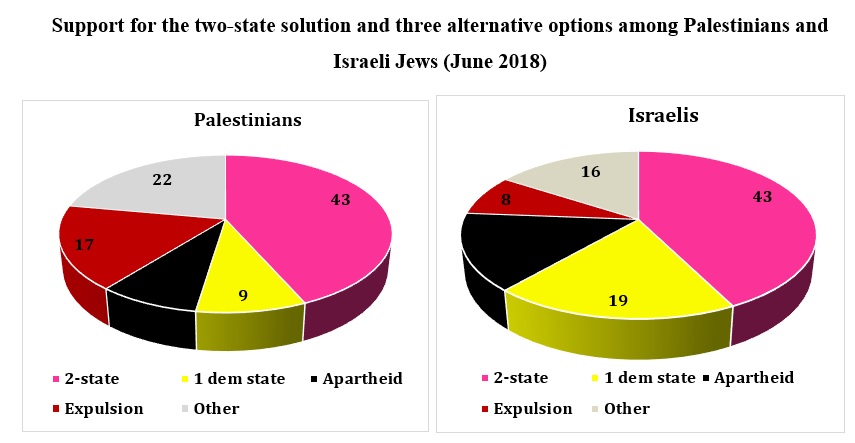
On the Palestinian side, as indicated earlier, there is a difference between Gazans and West Bankers in their preferences for the two-state solution. As the chart below shows, gaps do also emerge between the two areas in their preferences for some of the alternatives: more Gazans than West Bankers show support for apartheid and expulsion. This Gaza-West Bank difference reflects a major difference between the two regions in the level of religiosity (55% of Gazans and 36% of West Bankers describe themselves are religious), a factor that contributes, as the chart below shows, to a reduced level of support for the two-state solution and a greater support for expulsion.
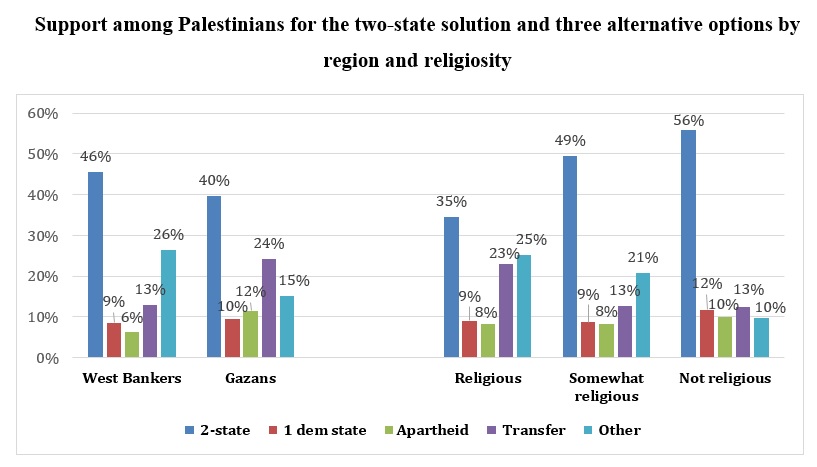
Gaps also emerge when looking at the Palestinian political affiliation or vote preferences, with supporters of Fatah and the third parties showing majority support for the two-state solution. The highest support among Hamas voters goes to expulsion followed by the two-state solution, apartheid and one democratic state. It is worth noting that support for Fatah stands in this poll as 39%, Hamas at 32%, and third parties at 9%, and the unaffiliated at 20%.

A similar examination of the Israeli Jewish side shows that a majority support for the two-state solution is found only among secular Jews. At 37%, it is the one most supported by the traditional followed by the one democratic state. The religious support apartheid and one democratic state and gives expulsion the least support. The ultra-Orthodox support equally apartheid and a one democratic state.

When looking at the political spectrum, a majority support for the two-state solution is found among the left and the center but not the right. Yet, even among the “moderate right,” at 29%, support for the two-state solution is higher than support for any of the three alternatives. Those who define themselves as “right” support apartheid and the one democratic state more than any other. It is worth noting that the size of the moderate right category in this poll is 18%, the right 36%, the “center” 23%, the moderate left 8%, and the left 7% of the Jewish sample.

Finally, when looking at Israeli Arabs, as the pie below shows, support for the two-state solution, as indicated above, is overwhelming, followed by support for the one democratic state solution.

Confederation: For the fourth time, we tested an alternative to the traditional two-state solution in the form of a confederation between two states. The confederation alternative was described as follows:
“Some people recommend the following solution: the creation of two states, Palestine and Israel, which enter into a confederation whereby citizens of one country are allowed to live as permanent residents in the territory of the other but each national group votes only in its state for elections. There would be freedom of movement for all, and Jerusalem is not divided but serves as the capital of two states. Israel and Palestine would deal jointly with security and the economy.
Support for the confederation concept drops slightly to 31% among Israeli Jews compared to 33% last December. But it is still higher than the support we found last June and in December 2016 when it stood at 26% and 20% respectively. Opposition to the confederation among Israeli Jews stands at 54%. By contrast, Palestinian support rose slightly to 30%, a two-percentage point increase compared to last December. But the current level of support is lower than the 37% we found last June. Current opposition among the Palestinians is 63%. As is the case for the two-state solutions, support for the confederation idea is highest among Israeli Arabs, at 68%, with 29% opposed.
Peace and violence. Unlike our December findings which showed significant differences between Palestinians and Israeli Jews regarding what should happen next, the current survey shows similarities between the two sides comparable to those we saw a year ago. Six months ago, right after the announcement of the Trump Administration regarding the relocation of US embassy from Tel Aviv to Jerusalem and the ensuing Palestinian-Israeli street confrontations in the West Bank, Palestinian preference for diplomacy and a peace agreement dropped sharply and the preference for “armed struggle” rose. Palestinians have now moved back to preferring peace agreement over waging an armed struggle despite the rise in tension along the Israel borders with the Gaza Strip. A plurality of Israelis and Palestinians (45% and 41% respectively) support a peace agreement. Among West Bank Palestinians the preference for a peace agreement is even higher, standing at 47% compared to 29% in the Gaza Strip. When given four options for what should happen next, only 27% of Palestinians (22% in the West Bank and 34% in the Gaza Strip, a reflection of the relative calm in the West Bank compared to the tension on the Gaza border with Israel), compared to 38% last June, chose armed struggle. Among the Israelis, 20% chose “a definitive war,” against Palestinians. Last December 19% opted for the war option.
Detailed packages for implementation
As in all four previous surveys of the current series of joint polls, Palestinians and Israelis were asked in this survey to support or oppose a detailed combined peace package based on the two-state solution, gathered from previous rounds of Palestinian-Israeli negotiations. The package addressed all issues of the so-called permanent status negotiations, such as borders, security, settlements, Jerusalem, and refugees, as well as mutual recognition and end of conflict. In addition to the original package presented in the past four surveys, the current study includes a modified version of the package and a new experiment designed to build on the findings of the previous surveys. For the last two years, incentives had been developed to try and convince respondents who opposed the detailed combined package to shift towards support; thus, the previous surveys tested whether opposition to the agreement is fixed or flexible. Over thirty such incentives were developed and tested: some were incentives for one side only, while others were shared incentives, meaning that identical items were offered to both sides. While many of the one-sided incentives were zero-sum in nature, as they would predictably increase support among those receiving them, they would reduce support among the other side, others were not. The current survey includes an experiment that aimed at testing the value of the previous research on incentives in two ways: (1) integrating some of the shared incentives in a modified version of the peace plan in order to test their impact on support for the new version; and (2) separately pairing some of the zero-sum incentives in order to determine their benefits as well as the harm they might inflict on the support for both the original and the modified peace packages.
From all the incentives tested in four surveys over the last two years, we identified three successful “shared” items, those asked of both Israelis and Palestinians who opposed the detailed original agreement at first. These are the items that convinced a large or reasonable number of those respondents who had rejected the comprehensive package to change their mind, and which were also identical for both Israelis and Palestinians. The three incentives were:
- The future Palestinian state will have a democratic political system based on rule of law, periodic elections, free press, strong parliament, independent judiciary and equal rights for religious and ethnic minorities as well as strong anti-corruption measures. The state of Israel will have a democratic political system whereby Israeli law formally guarantees equality of Arab Israeli citizens, who will have equal rights as Israeli Jews by law.
- The agreement will include formal guarantees by the US, Egypt and Saudi Arabia, who will create a joint commission to ensure proper implementation on both sides.
- The agreement will be part of a larger peace agreement with all Arab states according to the Arab Peace Initiative
For this final survey, these incentives were added to the original comprehensive package and tested as regular items of the detailed agreement, but only among half of the Israeli and Palestinian samples. The other half of each sample was given the original detailed package with the items that have been tested in all previous surveys in this project.
As indicated earlier, the sample size of Israelis and Palestinians was increased in the current survey, to ensure that each half was large enough to represent the demographic breakdown of each society. The larger sample also helped ensure that there were not significant pre-existing ideological or political differences to explain different outcomes.[1]
Palestinians and Israelis were asked to respond first to each item separately, as component parts; following nine such items in the original and the modified packages and three more items in the modified package, they were asked if they support or opposed the combined package, and given a short summary of the basic elements.
The results show the potential for raising support in favor of a detailed two-state solution if certain adjustments are made. Among both Palestinians and Israelis, the modified package with the incentives added as additional items received higher support than the original detailed package.
- Among Palestinians, 42% of those who were asked about the new agreement said they would support it, five points higher than those who supported the original plan (37%). A majority of 61% opposed the original package while 56% opposed the modified version. As the chart below shows, the current level of support for the original package is the lowest in two years, reflecting the continued decline in support for the two-state solution as shown earlier; the highest level of support for the original plan stood at 43% in June 2017. Six months ago, 40% of Palestinians supported the original package and 57% opposed it.
- Among all Israelis, a majority of 53% supported the modified agreement, compared to 46% among all Israelis who supported the original package –seven points higher – as will be shown, among Jews only, the gap is six points, very close to the gap among Palestinians. Among Jewish Israelis, 45% supported the modified plan, compared to 39% who supported the original package. Here too, Jewish support for the new package exceeds the Jewish support for the original package since the project began (the lowest support was 32%, in June 2017 and the highest was 41% in December 2016). The number also slightly surpasses total Jewish support for a general two-state solution in this survey (43%). Six months ago, 35% of Israeli Jews supported and 55% opposed the original package. Israeli Arab respondents also showed even stronger enthusiasm for the new plan, compared to their already-high support for the original comprehensive package in the past. While 82% supported the original package, a relatively consistent finding over time, over 91% supported the modified version.
These findings indicate that there is still significant room to raise support should further incentive combinations be identified as effective and identical for both sides, so that they can be added to the comprehensive plan. That challenge is explored later in this report.
Among Israelis, the modified plan with the additional items received the highest support for a comprehensive agreement since the project began in 2016. It is also the first time support for the detailed agreement has reached a majority, and the first time support for the detailed agreement surpassed support for the general concept of a two state solution (50% among the half-sample that was asked about the modified agreement).
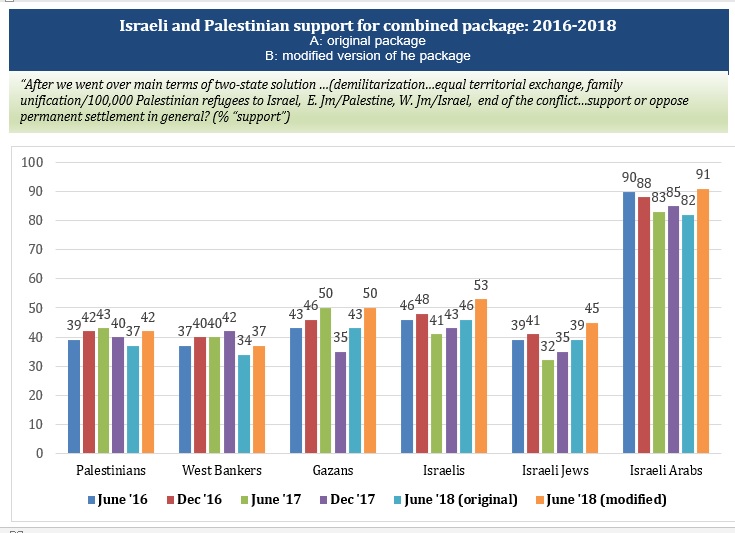
Items of an agreement. A detailed breakdown of attitudes regarding the nine components of the original package follows (non-italicized questions were asked of Israeli Jews and if no other wording appears, also for Palestinians and Israeli Arabs. Italics refer to the questions worded separately for Palestinians; some of the Palestinian wordings were used for Israeli Arabs). The figures after each of the first 9 items indicate support of the entire expanded sample. The new components of the modified package are listed below at the end of the breakdown. As can be seen below, among both populations, the specific new items inserted into the modified plan received positive feedback when tested separately. The idea that the Palestinian state would be a democracy received the highest support of all items among the Israeli respondents. A democratic Palestinian state was also the most successful item of the modified package among Palestinian respondents. Among Jews, a majority supported the idea that the agreement would be part of a larger agreement with all Arab states.
1. Mutual recognition of Palestine and Israel as the homelands of their respective peoples. The agreement will mark the end of conflict, the Palestinian state will fight terror against Israelis, and no further claims will be made by either side. 62% of Israeli Jews support this item.
Mutual recognition of Palestine and Israel as the homelands of their respective peoples. The agreement will mark the end of conflict, Israel will fight terror against Palestinians, and no further claims will be made by either side. 43%, of Palestinians support mutual recognition and 85% of Israeli Arabs support mutual recognition.
2. The independent Palestinian state which will be established in the West Bank and the Gaza Strip will be demilitarized (no heavy weaponry). Only 20% of Palestinians support this (14% in the West Bank and 29% in the Gaza Strip). Among Israeli Jews, 59% support this item and among Israeli Arabs only 44% support it.
3. A multinational force will be established and deployed in the Palestinian state to ensure the security and safety of both sides. Among Palestinians, 41% support this (37% in the West Bank and 46% in the Gaza Strip). Israeli Jews support stands at 48% and Israeli Arab support at 73%.
4. The Palestinian state will have full sovereignty over its air space, its land, and its water resources, but Israel will maintain two early warning stations in the West Bank for 15 years. 31% of Palestinians support this (25% in the West Bank and 41% in the Gaza Strip). Among Israeli Jews, 40% support this, and among Israeli Arabs 55% support it.
5. The Palestinian state will be established in the entirety of West Bank and the Gaza strip, except for several blocs of settlement which will be annexed to Israel in a territorial exchange. Israel will evacuate all other settlements. 31% of Palestinians support this (26% among West Bankers and 40% among Gazans). 40% of Israeli Jews support this and 64% of Arabs support it.
6. The territories Palestinians will receive in exchange will be similar to the size of the settlement blocs that will be annexed to Israel. Just a little over a quarter of Palestinians (26%) support the territorial exchange (21% in the West Bank and 34% in the Gaza Strip). 36% of Israeli Jews support this, and 62% of Israeli Arabs.
7. West Jerusalem will be the capital of Israel and East Jerusalem the capital of the Palestinian state. Less than a quarter (24%) of Jews support this item.
East Jerusalem will be the capital of the Palestinian state and West Jerusalem the capital of the Israel. 26% of Palestinians support this (23% in the West Bank and 32% in the Gaza Strip). 63% of Israeli Arabs support this item.
8. In the Old City of Jerusalem, the Jewish quarter and the Wailing Wall will come under Israeli sovereignty and the Muslim and Christian quarters and Temple Mount will come under Palestinian sovereignty. 28% of Israeli Jews support the Old City arrangement.
In the Old City of Jerusalem, the Muslim and Christian quarters and al Haram al Sharif will come under Palestinian sovereignty and the Jewish quarter and the Wailing Wall will come under Israeli sovereignty. Here again, just one-quarter of Palestinians support the division of the Old City (22% in the West Bank and 31% in the Gaza Strip). 63% of Israeli Arabs support this.
9. Palestinian refugees will have the right of return to their homeland whereby the Palestinian state will settle all refugees wishing to live in it. Israel will allow the return of about 100,000 Palestinians as part of a of family unification program. All other refugees will be compensated. 48%of Palestinians support this (39% in the West Bank and 61% in the Gaza Strip). This item receives the lowest support from Israeli Jews out of all the items tested: 21% support the arrangement on refugees, Israeli Arabs show the opposite trend: 84% support it.
10. Modified Version only: The future Palestinian state will have a democratic political system based on rule of law, periodic elections, free press, strong parliament, independent judiciary and equal rights for religious and ethnic minorities as well as strong anti-corruption measures. The state of Israel will have a democratic political system whereby Israeli law formally guarantees equality of Arab Israeli citizens, who will have equal rights as Israeli Jews by law. Among the Palestinians, support stands at 48% (44% in the West Bank and 55% in the Gaza Strip). 62% of Israeli Jews and 91% of Israeli Arabs support it.
11. Modified Version only: The agreement will include formal guarantees by the US, Egypt and Saudi Arabia, who will create a joint commission to ensure proper implementation on both sides. Among the Palestinians, support stands at 43% (36% in the West Bank and 55% in the Gaza Strip). 46% of Israeli Jews and 67% of Israeli Arabs support it.
12. Modified Version only: The agreement will be part of a larger peace agreement with all Arab states according to the Arab Peace Initiative. Among the Palestinians, support stands at 46% (40% in the West Bank and 56% in the Gaza Strip). 51% of Israeli Jews and 85% of Israeli Arabs support it.
Perception of social support for package. On both sides, respondents perceive their own society’s support for the original plan to be low. Moreover, the elevated support for the modified plan and the relatively high support for the additional constituent items did not have a significant impact on people’s perceptions of how their own society or the other side would react to it. Thus, when Palestinians were asked if most Palestinians would support the original plan, 32% stated that most would support it; slightly more, 36%, said a majority would support the modified plan, among respondents who had heard the new plan. Among Israelis, 22% and 25% said the majority of their fellow Israelis would support the original plan or the modified plan, respectively.
And when asked if they believe the other side would embrace the original or the modified peace package, exactly 36% of Palestinians believed a majority of Jews might support either the old or the new plan. In a mirror image, 33% and 35% of Israelis thought the majority of Palestinians would accept either the original or the modified plan, respectively.
Regional and demographic trends. The internal breakdowns of each population show which sub-groups respond differently to the two options. Among Palestinians, there are variations in responses among different groups. Nearly all sub-groups reflect higher support for the modified plan, even among some hardline respondents.
- As in previous surveys, Gaza respondents are more supportive of the modified agreement (as they are also slightly more supportive of the original package than West Bankers). Half of all Gazans supported the new plan, seven points higher than their level of support for the old plan (43%). Among West Bank respondents, 37% supported the new plan, three points higher than for the old plan (34%). It is worth noting that while support for the two-state solution among Gazans in lower than it is among West Bankers, as indicated earlier, support in the Gaza Strip for the two packages is higher than it is in the West Bank. In fact, Gazans’ support for the concept of the two-state solution is less than the support they give to either detailed package while West Bankers’ support for the concept is larger than the support they give to either package. Part of the explanation for this surprising finding has to do with the difference in the impact of viability on two Palestinian groups: Gazans who think the two-state solution is no longer viable support that concept by almost half the support among the same group of West Bankers (17% vs. 33% respectively) but Gazans who think it remains viable support it by a higher percentage than West Bankers (72% vs. 66% respectively). Similarly, Gazans who think the two-state solution remains viable support the two packages by much higher percentages than like-minded West Bankers: 76% vs 48% for the original package and 78% vs. 59% for the modified package respectively.
- Among Fatah supporters, 57% support the modified plan, four points higher than support for the original plan (53%); Even Hamas supporters showed some flexibility: 21% supported the original plan and 24% supported the modified version – leading to the same level of support as among religious Jews showed for the new plan (24%, as cited below).
- Support for the two packages package is higher among those who are less religious, and lower among those who are more religious. Among Palestinians who define themselves as “not religious” a majority supports the two plans, the original and the modified. Support among the religious for the original plan stands at 29% rising to 36% for the modified one, a seven-point increase.
- Young Palestinians between 18 and 22 years of age, which in past surveys were associated with hardline views, show little or no age differences this time.

Among Israelis, as shown in the chart below, the internal breakdowns of the population show variations similar to those we saw among Palestinians. Like the Palestinians, almost all sub-groups reflect higher support for the modified plan, even among some hardline respondents.
- The lowest levels of support for the two packages is found among religious Jews; higher support is found among the ultra-Orthodox and traditional Jews while the majority among secular Jews support both packages. The findings reflect a very consistent religious-secular divide. When comparing the two versions of the package, a somewhat higher portion of secular Israeli Jews support the modified package, 59% compared to 53% for the original one, while among traditional Jews who are a key constituency, 31% support the original package and 37% support the new one. Although the sample size is limited, the survey also found a significant difference among religious Israeli Jews: just eight percent supported the original package, but three times more, 24%, responded that they would support the modified package with the additional incentives.
- Center and left-wing Israelis showed the greatest contrast between the two plans, while the right-wing responded with only minimal difference. Among left-wing Jews, 79% supported the modified agreement, 15 points higher than those who supported the original agreement (64% among left-wing Jews). Israeli Jews who identify as centrist show an important difference as well: from less than half who supported the original agreement (44%), a clear majority of 58% support the new agreement. Right-wing Israeli Jews showed less difference, with just below one-third supported either package: 31% supported the original agreement and 33% for the modified one.
- Similarly, although young Jewish respondents are often more hard-line than older people, as seen earlier regarding the general two-state solution, in this survey youth support for the package, while somewhat relevant for the modified version, is not too different from other age groups of Jews for the original package.

Feasibility - doubts. Beyond demographic and political differences that typically characterize those who support or oppose the two-state solution and the detailed package, background attitudes are also clearly linked to support. In previous surveys, it has been clear that trust in the other side is a powerful factor, and the belief that the other side wants peace. It also became clear that the perception of viability is important. Among Israeli Jews who believe that the two-state solution is still viable, 51% support the original combined package and 61% support the modified package. Further, for Israeli Jews, support for the original and the modified agreements rises significantly in part on whether the respondents believe there is chance of establishing a Palestinian state within the next five years.


Among the Palestinians who believe that the two-state solution is still viable, 58% support the original combined package and 66% support the modified version. Further, support for the two versions of the agreement rises incrementally the more the respondents believe there is chance of establishing a Palestinian state within the next five years.


INCENTIVE PAIRS
A second experiment considered a new mode of testing incentives. In previous surveys, as indicated earlier, some of the incentives proposed were developed specifically for one side or the other. To offset the possibility that an incentive for one side, such as the zero-sum measures, might alienate the other side, in the current survey we paired incentives to show reciprocal benefits to each side. The incentives were paired thematically, drawing on eight items, representing some of the top-ranked incentives from the last two years. Thus, each pair offered each side a favorable condition on a specific topic – usually related, but not identical to the benefit included to the other side.
Respondents were asked directly if these pairs – an incentive to their own side coupled with a benefit to the other side – raised or lowered their support for an agreement. By contrast to previous surveys, all respondents were asked these questions, not only those who rejected the agreement. The goal was to see whether in a real situation where people are likely to learn of all benefits/incentives offered to all sides, whether respondents of either disposition would switch: would supporters defect and oppose an agreement, would rejectionists possibly switch towards support? And for those who had not made up their mind, could the mutual incentives convince them to support an agreement, or push them to oppose it?
The following is the list of pairs tested. The only difference is the order of the items within each pair: for each side, the question began with the incentives geared at them (Palestinian versions are in italics).
The state of Palestine will recognize the Jewish religious and historic roots in the historic land of Israel (Eretz Yisrael) and Israel would recognize the Palestinian religious and historic roots in the historic land of Palestine.
Israel will recognize the Palestinian religious and historic roots in the historic land of Palestine and Palestine will recognize the Jewish religious and historic roots in the historic land of Palestine.
Palestine will acknowledge the Jewish character of the state of Israel and Israel will acknowledge the Arab and Islamic character of the state of Palestine.
Israel will acknowledge the Arab and Islamic character of the state of Palestine and Palestine will acknowledge the Jewish character of the state of Israel.
An agreed number of Israelis, including settlers, will be allowed, if they wish, to live as permanent residents inside Palestine while maintaining their Israeli citizenship, as long as they are law abiding and an agreed number of Palestinians, including refugees, will be allowed, if they wish, to live as permanent residents inside Israel while maintaining their Palestinian citizenship, as long as they are law abiding.
An agreed number of Palestinians, including refugees, will be allowed, if they wish, to live as permanent residents inside Israel while maintaining their Palestinian citizenship, as long as they are law abiding and an agreed number of Israelis, including settlers, will be allowed, if they wish, to live as permanent residents inside Palestine while maintaining their Israeli citizenship, as long as they are law abiding.
The Palestinian government will commit to ongoing security cooperation like today, including sharing intelligence with Israeli security forces, arresting terror suspects and preventing attacks and the Israeli government will commit to releasing all Palestinian prisoners when the peace agreement takes effect.
The Israeli government will commit to releasing all Palestinian prisoners when the peace agreement takes effect, and the Palestinian government will commit to ongoing security cooperation with Israel like today, including sharing intelligence with Israeli security forces, arresting terror suspects and preventing attacks.
As a sign of reconciliation, Jews will be allowed to visit at the Temple Mount (al Haram al Sharif) and all other religious sites holy to Jews in the Palestinian state and Israel will allow Palestinians to visit Muslim and Christian holy sites in the state of Israel.
As a sign of reconciliation, Israel will allow Palestinians to visit Muslim and Christian holy sites in the state of Israel and Jews will be allowed to visit at the Temple Mount (al Haram al Sharif) and other sites holy to Jews in the Palestinian state.
Jews who left their homes and property in the Arab countries after the 1948 War and the establishment of the state of Israel will be compensated by the Arab countries for the lost homes and properties left behind and the state of Israel will recognize the Nakba and apologize for the suffering of the Palestinian refugees
The state of Israel will recognize the Nakba and apologize for the suffering of the Palestinian refugees and Jews who left their homes and property in the Arab countries after the 1948 War and the establishment of the state of Israel will be compensated by the Arab countries for the lost homes and properties left behind
The state of Palestine will agree to change school textbooks to remove incitement against Jews and the state of Israel will agree to change school textbooks so that they not include incitement against Palestinians
The state of Israel will agree to change school textbooks so that they not include incitement against Palestinians and the state of Palestine will agree to change school textbooks to remove incitement against Jews
Palestinians formally end of the global boycott campaign against Israel, and Israel formally ends its opposition to Palestine joining all global organization and will support Palestinian membership in such bodies.
Israel formally ends its opposition to Palestine joining all global organization and will support Palestinian membership in such bodies and Palestinians formally end of the global boycott campaign against Israel.
Since all respondents received these questions, those who said the item raised their support but who already supported the initial agreement were set aside, and the same for those opposed. Focusing on those who switched sides, we then calculated new levels of predicted support following each pair.
It is worth noting that when compared to the incentives directed separately at the opposition in previous surveys, the pairs were predictably weaker particularly among the Palestinians. For the top ten incentives in past surveys tested among Israeli Jews who rejected the package, the average portion who said they would switch to support was 40%. Among Palestinians, the average portion of rejectionists who would switch based on the top ten from previous surveys is almost identical – 41%.
Comparing just those who opposed the plans (either the original comprehensive package or the new version explored above) in the current survey, the average responses for the paired, mutual incentives is as follows:
- On the Israeli side, those who rejected the original plan had an average of 36% who changed their mind – four points below the original incentives, and 28% of those who opposed the new plan changed their minds as an average of all eight mutual pairs. This is likely due to the fact that the new plan received considerably higher support among Israelis; therefore, a larger portion of those who rejected the new plan were more hardline views from the start (39% of those who opposed the original plan were firm right, while among those who opposed the new plan, 57% identified themselves as firm right).
- Among Palestinians, the average portion of those who changed from rejection to support is just 14% for the new plan; and 18% for the original version, significantly lower than the 41% of rejectionists who changed to support when the incentives were tested in previous surveys. It is possible that unlike the Israelis, Palestinian respondents felt the trade-offs in most of the proposed pairs of incentives favored the other side; that they required less concession from the Israelis and more from the Palestinians. This perception of imbalance in the pairs might have been reinforced in this poll, at this particular time, due to the prevailing general frustration and lack of hope in light of the utter collapse of trust in US credibility and the so-called “Deal of the Century.” This might have also been responsible for the further decline, in this poll, in support for the concept of the two-state solution and the original detailed peace plan and increased doubts about the intentions of the other side.


On the Israeli side, the relative success of the pairs is seen in the fact that six of the eight pairs generated higher levels of support than the initial level for the original comprehensive plan, among Israeli Jews. Ending incitement on both sides caused the greatest level of favorable net shift, and brought support for the original plan up to 61%, from a baseline of 39% - this is consistent with the high rate of success this incentive received in previous surveys as well. Among those who heard the new version of the comprehensive plan, ending incitement was also the most successful pair, yielding a total net support of 58%, compared to 46% support in the initial responses.
For respondents of both halves of the Israeli Jewish sample, the idea that Palestinians would end the boycott, while Israel would allow Palestinians to join international organizations also generated majority support among Israeli Jews: 53% from among those who heard the new plan, and 55% from among those who heard the original comprehensive package.
Among Palestinians, the pairs were mostly not successful at raising total net support beyond original levels. For those who heard the original comprehensive package, two pairs generated supported slightly higher than the baseline of 37%: the prisoner release coupled with ongoing security cooperation with Israel attained a net support of 43%; If Israel were to allow Palestine to join international organizations while ending Palestinian boycott against Israel, enough people would shift to reach 40% support.


Among those who heard the new package, baseline support began at 42%, and none of the items reached net support that surpassed this. Once again, the top pair was the Palestinian prisoner release coupled with ongoing security cooperation, which achieved a new net support of 41%, alongside 56% opposition.
The range of new support following the pairs among those who received the new comprehensive plan was almost the same as the range among the first half of the Palestinian sample, who heard the original plan. However, because the initial support for the updated plan was higher, it was more of a challenge to raise support beyond that level.
Moreover, as we have seen through incentive testing in previous surveys, certain pairs have the opposite impact. This is the case for the release of Palestinian prisoners and ongoing security cooperation – which is among the strongest pairs raising support on the Palestinian side, but for Israelis generates lower support and higher opposition relative to responses to the original plan, and has the most negative effect of all other pairs.
However, one pair emerged as relatively successful on both sides. For Israelis, the idea that Palestine would end the international boycott against Israel while it would allow the new state to join international organizations was among the most successful pairs, and in both cases raised support above initial support for either plan. Among Palestinians, this pair ranked as the second most successful for both halves of the sample. This indicates that the incentive has potential to influence both sides favorably if made part of a future agreement.
|
Negotiation Framework and Third Parties: We sought to examine support for alternatives to the US-brokered negotiation processes that characterized the last two decades. In the last four surveys, we tested five models for a multi-lateral approach to negotiations: 1) an Arab forum in which Saudi Arabia, Egypt and Jordan participate; 2) an American-led peace process; 3) an EU-led peace process; 4) a UN-led peace process; 5) and finally, a US-Russian-led peace process. Findings show that in all surveys, Palestinians are most receptive to the first, or Arab regional, approach (31% in December and June 2017, 27% in December 2017, and 22% in the current survey) followed by a UN and an EU approaches (19% and 14% respectively at present); 5% choose an American-Russian led peace process, and 4% selected a US-led multi-lateral process. It is worth noting that support for the preferred approach, the Arab regional, continues to decline and that the largest percentage of Palestinians (31%) chose “none of the above.”
Israeli Jews prefer practically the opposite approach, with a clear preference for US involvement: the plurality consistently chooses a US-led peace process, with 31% selecting it in the current survey, while 24% selected a US-Russian approach, and 17% selected a regional approach led by Arab states. A UN-led process was selected by just 6% of Israeli Jews and support for an EU-led process is just 3% - this reflects ongoing perceptions in Israeli society that both bodies are biased against Israel, a theme regularly repeated in public discourse. It is worth noting that only 8% of Israeli Jews selected “none of the above.”
Among Israelis Arabs, an EU-led peace process is preferred by 20%, followed by a UN-led process (16%), and the Arab-led regional (15% each). 6% chose a US-led process and an identical percentage chose a US-Russian approach. As in the Palestinian case, the largest percentage of Israeli Arabs (26%) selected “none of the above.”
|
We asked the two sides about perceptions of both the other, and themselves: whether they want peace or believe the other side does, whether they trust and whether they fear the other side. We probed the extent of zero sum beliefs. The picture is mostly consistent with trends in our recent surveys, although assessment of each side of its own conditions, particularly among Palestinians in the West Bank, but not in the Gaza Strip, show significant improvement.
Does the other side want peace? Among Palestinians, 39% agree that most Israelis want peace, a slight increase from December 2017, when 37% of Palestinians gave this response, but a decline from June 2017 when 44% agreed with that statement. Among Israeli Jews 35% agree that Palestinians want peace, a five-point increase from December. In December 2016, 41% thought this way, then just 33% in June 2017. Among Israeli Arabs 81% agree that most Palestinians want peace, and 60% agree that Israeli Jews want peace.
Trust/Zero-Sum Conflict: As in previous recent surveys, levels of trust in the other side are very low and distrust is overriding. Among Palestinians a solid majority feels Israeli Jews are untrustworthy (89% - identical to December finding). The majority of Israeli Arabs feel the opposite regarding Israeli Jews: 61% agree that Israeli Jews can be trusted, and 32% disagree. On the Israeli Jewish side, 68% believe that Palestinians cannot be trusted, a drop from last December (when three quarters believed that) and June 2017 (when 77% believed that). A quarter in this poll indicated that they believe that Palestinians can be trusted.
Distrust is reinforced by a prevailing perception on both sides that the Palestinian-Israeli conflict is characterized by zero-sum relations: “Nothing can be done that’s good for both sides; whatever is good for one side is bad for the other side.” Findings show that 47% of Israeli Jews (compared to 51% in December), 64% of Israeli Arabs (compared to 53% in December), and 71% of Palestinians (compared to 72% in December) agree with this dismal zero-sum characterization.
Fear: More Palestinians fear Israeli soldiers and armed settlers more than they fear Israeli Jews. 52% agreed with the statement “I feel fear towards Israeli soldiers and armed settlers,” but 40% agreed with the statement made about Jews. This trend is nearly unchanged from December 2016. The current findings however, show a rise in Palestinian fear in both cases from 46% and 35% respectively. When asked whether they agree with the statement that they fear soldiers and settlers but not civilians, only 41% agreed with that statement. There are significant differences between West Bank and Gaza respondents: 57% from the West Bank fear soldiers and settlers, while just 44% of Gazans do – this could reflect the fact that West Bankers have more significant daily contact with such figures. The Gaza percentage represents an 8-point increase, probably reflecting the high tension associated with March of Return and the resulting death of dozens of Gazans before and during the collection of data.
Among Israeli Jews, a majority of 55% agree with the statement “I feel fear toward Palestinians,” a slight decline from December and June 2017 when 57% and 67% respectively felt that way. Among settlers 70% agree. Regarding Arab-Jewish relations among Israeli citizens, 44% of Jews agree that they fear Israeli Arabs, but only 16% of Israeli Arabs agree with a statement that they fear Israeli Jews.
General Conditions of the two sides: 62% of the Palestinians describe conditions in the Palestinian territories as bad or very bad (57% in the West Bank and 72% in the Gaza Strip) and 15% describe them as good or very good. These findings indicate a 15-point decrease in the negative assessment of conditions among West Bankers in December (when tension was high after the Trump statement on the relocation of US embassy to Jerusalem) and a 3-point increase in the Gaza Strip. Among Israeli Jews, only 16% described conditions in Israel as bad or very bad and 52% describe them as good or very good. Among settlers, 57% give positive assessment and 16% give a negative one. Six months ago, 46% of Israeli Jews (and settlers) described conditions as good or very good. Among Israeli Arabs, only 39% describe conditions as good or very good. Around 31% among all Israeli groups, and 23% of Palestinians, say conditions are “so-so.”
|
Values and Goals: We asked Israelis and the Palestinians about the hierarchy of the values and goals they aspire to maintain or achieve. Jews were asked about the values of: (1) a Jewish majority, (2) Greater Israel, (3) Democracy, (4) Peace. Among Israeli Jews, peace and a Jewish majority are seen as the most important values (28% and 27% respectively) though overall the percentage who chose peace has declined four points since the project began in June 2016, followed by democracy (21%) and greater Israel (18%). The portion who chose democracy rose five points since December, but has essentially remained consistent over the two years, with just a one-point rise overall from June 2016. However, there has been a notable shift in the priority placed on Jewish majority and Greater Israel: the former declined by eight points and the latter rose exactly by eight points as the total net change since June 2016; this most likely reflects the growing legitimization of the concept of annexation of portions of the West Bank in Israeli discourse, which entails the implicit acceptance of the outcome that there would not be a Jewish majority
Among the Palestinians, we asked about the following goals: (1) Israeli withdrawal and establishing a Palestinian state, (2) Obtaining right of return for refugees to ’48 Israel, (3) Establishing a democratic political system, (4) Building a pious or moral individual and religious society. For Palestinians, the ranking has been relatively stable, with little change over the course of the past two years. The top priority for Palestinian goals remains Israeli withdrawal to the 1967 borders and the establishment of a Palestinian state in the West Bank and the Gaza Strip with East Jerusalem (43% chose this compared to 48% last December and 43% last June), followed by obtaining the right of return to refugees to their 1948 towns and villages (29%), building a democratic political system (14%, a 5-point increase from December), and building a pious or moral individual and a religious society (13%).
| (5) Target Constituencies: Summary observations following five surveys |
|---|
It is important to note that in general both societies contain a wide variety of attitudes among different subsections of the population. The overall findings regarding willingness to support a two-state solution, the detailed package, and the means of raising support are valuable – but we have also sought a deeper understanding of trends among the groups that present the greatest obstacles. These are the communities that need strategic attention in order to shift some portion to supporting a future agreement. In addition, there are groups that can be considered “swing” – they are not inherently ideologically opposed, but they are not as convinced as the top supporters. These are people who might be won over in greater numbers if their attitudes are followed closely over time.
To this end, after five surveys over a two-year period, we are positioned to made broader statements about each key group.
Examining the findings shows that the following groups are important to understand on the strategic levels described above:
Israeli Jews:
- Religious
- Settlers
- Centrists
- Young (18-34)
Palestinians:
- Religious
- Hamas supporters
- Independent/undecided voters
To be sure there is some overlap between these groups, but it is partial. For example: a high portion of settlers are religious Jews, but not all religious people are settlers. Further, note that the most supportive communities are not analyzed with this level of detail, due to the fact that they already support the principle of two states, the specific items and overall package at rates well above the other groups, and above the average for each society. These include:
- Seculars and left-wing respondents among Israeli Jews, and Israeli Arabs/Palestinian citizens of Israel
- Fatah supporters and the somewhat religious/not religious in Palestine. Gazan respondents also show a somewhat higher level of support in general.
The following is a brief account of how each group has responded overall to the two-state solution over time, the items of an agreement and the comprehensive package, as well as incentives to change their minds. The reciprocal pair exercise is not included as it forms the basis of this report in general.
Israeli Jews: For this section, note that the average support for the general two state solution among Israeli Jews throughout this time is 48%, and the trend has been moving steadily downward in small increments. The average support over this time for the comprehensive agreements was 37% among Israeli Jews. The most popular item of the comprehensive accord was mutual recognition of the two states as the homeland of their respective peoples, with 63% average support among Israeli Jews; the greatest obstacle to the comprehensive two state agreement is the proposal on Palestinian right of return, with just 19% support as a two-year average among Jews. The top incentives for all Jewish Israelis who were opposed to the comprehensive package were the following:
- Jews would be guaranteed access to visit the Temple Mount (47% changed their mind leading to 61% total support)
- The Palestinians would commit to ongoing security cooperation like today (44% changed their mind, leading to 59% total support)
- Palestine officially recognizes Israel as a Jewish state (43% changed their mind, leading to a total of 59% support for the comprehensive agreement)
Settlers. Throughout the two-year period, the average support for the two state solution in general is 23%, less than half the rate for Israeli Jews overall, but without a clear trend direction – this low level is relatively stable. Just 20% on average supported the comprehensive agreement, only slightly lower than those who supported it in principle. Mutual recognition is the most supported item in an agreement (42%), just like among Israeli Jews in general, and the two items tied for lowest support are the right of return clause, as well as the arrangement for division of the Old City (10% each). The top three incentives for raising support after changing the minds of those opposed to an overall agreement is the ability to visit the Temple Mount (54% in total would support an agreement in that case), regional peace with Arab states and a clause specifying no full right of return for Palestinians, only family reunification (each of these clauses caused 45% of settlers in total to support an agreement.)
National Religious Jews. Throughout the two-year period, the average support for the two state solution in general is 18%. The average support for the comprehensive agreement was just 11%, significantly lower than among settlers. The main reason they reject the comprehensive agreement however is identical: Palestinian right of return and the Old City arrangement are tied for the last place, at just 7% support each; similarly, mutual recognition receives the highest support – 43%, almost identical to settlers. Like the settlers, the incentives tested in December 2017 were the most successful relative to earlier surveys: again, the ability to visit the Temple Mount is the top incentive, generating a total of 57% support among this group.
Young Jews (18-34). Young people have been an increasingly hardline constituency in part due to demographics (a higher portion of this cohort is religious, which carries hardline political attitudes), and in part due to coming of age at a time of no experience with political progress. Throughout the two-year period, the average support for the two-state solution in general is 34%. Average support for the combined two-state package was nearly one third (32%), slightly lower than the Jewish average. They too were most supportive of mutual recognition, with a majority of 51% who support it (still lower than the Jewish average of 63%). Among young people a majority are willing to support the agreement following 16 different incentives tested over the two years (a total of nearly 30). The top such incentive was Palestinians acknowledge historic/religious links between Jews and historic Palestine, which led a total of 58% of young people to support an agreement following the shift of opinion among those opposed. Visiting the Temple Mount, ongoing security cooperation, and the reassurance that Palestinians would not have full right of return were close behind, causing 57%, 56% and 56% to support an agreement, respectively.
Centrist Jews. In general, the center is a key constituency in Israeli society, for its powerful position within Israeli politics and the ability to join governing coalitions, combined with widespread support for the two-state ideas. About two-thirds of centrists supported the two-state solution in principle over the last two years, with mostly stable trends. However, an average of just 47% supported the detailed agreement, indicating a significant gap most likely caused by lack of detailed knowledge about the agreement. A near-consensus (78%) of this group agrees to mutual recognition, while the lowest item – as other groups – is the Palestinian right of return proposal (22% support this). However, they are among the most flexible groups in the survey: three different incentive items caused so many people to shift and support an agreement, that total support reached over 80%. By contrast to the groups above in which the successful items were those tested in December 2017, these incentives were all tested in the earlier part of the project, June 2016. The top incentives mentioned included a reassurance message on the right of return similar to the one mentioned above (88% total support following shifts), Palestine recognizing Israel as a Jewish state (84%), and the US signing a defense treaty to boost Israel’s security (81% total support).
Palestinians.
Total Palestinian support for the general principle of a two-state solution is not distinctly different from those of Israeli Jews: the average is 47%, and the trend has been slightly less even but a net decline from 51% in June 2016. The total average support for the two-state comprehensive agreement is 40%, a slightly smaller gap than among Israeli Jews. Only one item receives majority average support among Palestinians, the proposal for resolving the right of return: 51% over the two years; this leads by a large gap relative to the next most successful item – mutual recognition (43% average support). The most valuable incentives for changing Palestinians’ minds among those who opposed an agreement were as follows:
- Freeing Palestinian prisoners (56% of those opposed changed their minds, leading to over three-quarters total who would support an agreement)
- Palestinian laborers would be allowed to work in Israel (44% change their mind, leading to two-thirds total support)
- Israel would acknowledge the historic and religious links between Palestine and its historic homeland (44% change their mind, leading to two-thirds total support)
Religious. Among self-defined religious Palestinians, the average support for a two-state solution has been 42%. For the combined package, the average support over two years was 34%. The item which garners the most support is the proposal to resolve the right of return, with 49% support, very close to the general Palestinian average. Mutual recognition receives 38% support, while 37% support a multinational force. The items with the lowest support are demilitarization (18%) and the two Jerusalem proposals regarding the division of the city and the arrangement for the Old City (23% support for each item). Regarding incentives for those who were opposed, the most successful item was the release of prisoners: 56% of the religious Palestinians who did not support the package would move to support it if it included the release of all Palestinian prisoners, moving total support to nearly three-quarters. If Israel would recognize Palestine as an Islamic/Arab state, total support among religious Palestinians could reach over two thirds (68%).
Hamas. General support for a two-state solution among Hamas supporters during the past two years has been 29% on average. Average support for a combined package stood at 24%, significantly lower than the 40% average among all Palestinians. As for the other groups, the proposal to resolve the Palestinian refugees issue is the most successful item and receives 41% support, while all other items lag behind. The second-highest item, mutual recognition, receives 27% support. The lowest-ranked items are demilitarization of the Palestinian state, with only 13% support, and the two Jerusalem items, with 16% support each. Over time, support for a multinational force has risen considerably: from 19% in June 2016 to 31% in June 2018. Similar to the religious group, the Palestinian prisoner release is the most successful incentive for Hamas supporters: 51% would change their mind to support an agreement if it included this item, bringing total support to 63%. Other incentives manage to push total support past the 50% mark: Israeli recognition of the Nakba and compensation for refugees (54%), Israeli recognition of Palestine as a Islamic/Arab state (54%), and an Israeli apology for the suffering caused to refugees (51%). It is important to note that the incentive item of ensuring that Palestine will be a democracy also raises total support up to 51% among Hamas supporters.
Independents/undecided voters. This group that does not belong to or support any of the existing Palestinian factions, such as Fatah, Hamas or third parties, and who are currently undecided about their vote, is a significant part of the population, averaging 23% of the likely voters during the past two years. Among this group, average general support for a two-state solution is 48%. Average support for a detailed package has been 39%. As with other groups, the item regarding Palestinian refugees and right to return receives the most support: 52%. Mutual recognition and the idea of a multinational force receive 39% support as a two-year average for each, while demilitarization receives only 19%. Among this group, there are several incentives which bring support up to around 70%. Israeli recognition of the historic and religious roots of Palestinians in historic Palestine, release of all Palestinian prisoners, and ensuring the freedom of Palestinian laborers to work in Israel increase total support to 69%, 72%, and 68% respectively.
Summary conclusions regarding key constituencies: In the toughest constituencies who represent the most rejectionist attitudes on both sides, including Hamas supporters and religious Palestinians, as well as Israeli settlers, there is a minority in support of the comprehensive package, 11% in the case of religious Jews, but ranging from one-fifth to one-third among the other groups cited.
Flexible, possible “swing” constituencies include the Israeli Jewish center, which is significantly more supportive than the hardline populations from the start, and displays both anxiety about the details of a plan, but high responsiveness to new incentive items. Palestinians who are independent or do not belong to any political faction, similar to the Israeli Jewish center, are more supportive than the hardliners, and those who initially oppose the agreement display high responsiveness to the new incentives. These populations could give a significant base of support to existing constituencies that favor a two-state solution and create a more widespread perception of public support beyond the predictable base.
[1] Among the Israeli halves, nearly an identical portion of both halves are left wing or centrist; with slightly more in the B sample who defined themselves as right wing (49%, compared to 43% of the A sample). This was not a sufficient difference to justify weighting the samples to match one another, but it is notable that this difference was found mainly among those who identified as firm right, rather than moderate: 34% of the B sample, compared to 28% among the A sample. The B sample was the half who were asked about the new package with the additional incentive items. Among the Palestinian sample there was no significant difference among the two samples by political leaning (party preference) or levels of religious observance, two of the main factors that influence attitudes on these issues.

WHILE A MAJORITY OPPOSES E GENEVA DOCUMENT, PALESTINIAN ATTITUDES VARY REGARDING ITS CORE COMPONENTS: A LARGE MAJORITY OPPOSES THE REFUGEE SOLUTION AND THE RESTRICTIONS ON PALESTINIAN SOVEREIGNTY, BUT A MAJORITY ENDORSES EQUAL TERRITORIAL SWAPS AND THE DEPLOYMENT OF A MULTINATIONAL FORCE
04-09 December 2003
These are the results of opinion poll # 10, conducted by the Palestinian Center for Policy and Survey Research (PSR) between 04-09 December 2003. The poll deals with Geneva Document, the peace process, Abu Ala’s government, the popularity of Arafat and the political factions. The total sample size of this poll is 1319 from Palestinians 18 years and older, interviewed face-to-face in West Bank (835) and in Gaza Strip (484), in 120 locations. The margin of error is 3%.
For further details, contact PSR director, Dr. Khalil Shikaki or Ayoub Mustafa at Tel 02-2964933 or email pcpsr@pcpsr.org.
SUMMARY OF RESULTS:
The poll shows significant opposition to the Geneva document among those Palestinians familiar with it and that support for the document is lukewarm. But it also shows that only a very small minority is fully aware of the content of the document and that when respondents become aware of its main components, both support and opposition increase significantly. A majority of the Palestinians sees red lines in two components: the refugee solution and the limits imposed on sovereignty. On the other hand, a majority welcomes the proposed deployment of a multinational force in the Palestinian state and the Israeli withdrawal from the West Bank and the Gaza Strip on the basis of the 1967 lines, with equal territorial exchange.
The poll also shows a Palestinian hesitation between the desire to see armed confrontations continuing (with a majority seeing such confrontations contributing to the achievement of national rights) and the desire for a mutual cessation of violence, including readiness to support the PA in taking measures to prevent armed attacks on Israelis when a mutual ceasefire is achieved. As for the long term vision, Palestinian readiness to support reconciliation between the two peoples has never been stronger.
Finally, the findings show that the Palestinian public is willing to give Abu Ala’s government a very limited vote of confidence especially in terms of its ability to implement political reforms. Arafat’s popularity drops significantly while Fateh’s decreases slightly. Support for Islamist and nationalist opposition continues to rise.
Main Results:
(1) Geneva Document
- · 73% have heard of the Geneva document and the rest has not. But only 4% say they have full knowledge of it.
- · Only 7% have learned about Geneva from the pamphlet containing the document that were distributed with al Quds and al Ayyam newspapers while 79% have heard about it from the media.
- · Support for the document among those who have heard of it (i.e., among 73% of the public) reaches 25% (19% of all the public), opposition 61% (44% of all the public), and the undecided 14%. 37% of all the public are either undecided or have not heard of it.
- · Upon reading a summary of the main points of the document, support for the full package proposed by the document (among 100% of the public) increases from 19% to 39%, opposition increases from 44% to 58%, and the undecided and uninformed decreases from 37% to 3%. All the figures below referring to the Genevadocument have been obtained after informing our respondents in detail about the various components of the Geneva document.
- · A majority supports two main components of the document: security arrangements involving the deployment a multinational force (58%) and the Israeli withdrawal based on the 1967 borders with mutual 1:1 territorial exchange (57%). A map showing borders and territorial exchange was presented to respondents. The percentage of opposition to the deployment of a multinational force reaches 40% and to territorial exchange 41%.
- · The Jerusalem component of the document received the support of 46% with 52% opposing; end of conflict received 42% support with 55% opposing; and the establishment of a state without an army received 36% support with 63% opposing.
- · A minority not exceeding a quarter gives support to the components of a refugee solution (25%) and the limitations on the sovereignty of the Palestinian state (23%). The percentage of opposition to the refugee component reaches 72% and to the limitation on sovereignty 76%. No difference between refugees and non-refugees exists when it comes to the Geneva refugee solution. Both segments of the society oppose it equally.
- · In the eyes of the Palestinian public, the best component of the Geneva document is the one that deals with the territorial exchange and Israeli army withdrawal and the worst is the one that deals with refugees.
In this poll, we have asked respondents to express their attitudes toward the Geneva document based on what they have heard or read about it so far. We then provided them with a summary of seven core elements of the document and asked them to express attitudes regarding each element. We have finally asked them for their opinion on the whole document as a package. The findings show that the Palestinian public is lukewarm on the Geneva document and in fact has significant reservations about two of its components. On the other hand, the public is supportive of two other components while showing limited opposition to the remaining three components.
The poll found that the 73% of the public have heard of or read about the Geneva document and that among those who have heard of or read about it, support reaches 25% and opposition is 61%. Among the whole public these figures translate into 19% support and 44% opposition while the percentage of the undecided and those who have not read, or heard of, it is 37%. After informing the respondents of seven core elements of the document, support increased from 19% to 39%, opposition from 44% to 58%, and the undecided (and those who did not read or hear of it) decreased from 37% to 3%.
From among the seven components read to respondents, support is given to two only: the one dealing with the deployment of a multinational force (58%) and the one dealing with the Israeli withdrawal based on the 1967 borders with an equal territorial exchange (57%). Two components received the biggest opposition: the one dealing with refugees, opposed by 72%, and the one dealing with limitations on Palestinian sovereignty, opposed by 76%. Support for the other three components vary with Jerusalem receiving 46%, end of conflict42%, and the de-militarization of the Palestinian state 36%. From among those who have been previously informed of the document (i.e., 73% of the public), support increases amongFateh supporters (36%) compared to Hamas’ (26%). Support for the Geneva document as a package after being informed about its main components increases among women (42%) compared to men (35%), among non refugees (41%) compared to refugees (36%), among those with preparatory education (47%) compared to those holding a BA degree (29), among housewives (44%) and farmers (40%) compared to students (32%), and among Fateh supporters (55%) compared to Hamas’ (33%).
The following table shows refugee and non refugee attitudes toward seven main components of the Geneva documents:
| Total | Refugees | Non refugees | |||
| Support | Opposition | Support | Opposition | Support | Opposition |
Attitude towards the Genevadocument among those who have heard of it (73% of the public) | 25 | 61 | 23 | 65 | 28 | 57 |
Attitude towards the Genevadocument among all respondents (100% of the public) | 19 | 44 | 17 | 49 | 20 | 40 |
Attitude towards each element of the Geneva document after it was read to respondents: | ||||||
1. An Israeli withdrawal from all of the Gaza Strip and the evacuation of its settlements. But in the West Bank, Israel withdraws and evacuates settlements from most of it, with the exception of few settlement areas in less than 3% of the West Bank that would be exchanged with an equal amount of territory from Israel in accordance with the attached map {show map}. | 57 | 41 | 58 | 40 | 56 | 42 |
2. An independent Palestinianstate would be established in the West Bank and the Gaza Strip; the Palestinian state will have no army, but it will have a strong security force. Both sides will be committed to end all forms of violence directed against each other. | 36 | 63 | 33 | 66 | 38 | 60 |
3. East Jerusalem would become the capital of the Palestinian state with Arab neighborhoods coming under Palestinian sovereignty and Jewish neighborhoods coming under Israel sovereignty. TheOld City (including al Haram alSharif) would come under Palestinian sovereignty with the exception of the Jewish Quarter and the Wailing Wall that will come under Israeli sovereignty. | 46 | 52 | 43 | 56 | 49 | 49 |
4. With regard to the refugeequestion, both sides agree that the solution will be based on UN resolutions 194 and 242 and on the Arab peace initiative. The refugees will be given five choices for permanent residency. These are: the Palestinian state and the Israeli areas transferred to the Palestinian state in the territorial exchange mentioned above; no restrictions would be imposed on refugee return to these two areas. Residency in the other three areas (in host countries, third countries, andIsrael) would be subject to the decision of the states in those areas. The number of refugees returning to Israel will be based on the average number of refugees admitted to third countries like Australia,Canada, Europe, and others. All refugees will be entitled to compensation for their “refugeehood” and loss of properties. | 25 | 72 | 25 | 73 | 26 | 72 |
5. When the permanent status agreement is fully implemented, it will mean theend of the conflict and no further claims will be made by either side. The parties will recognize Palestine and Israelas the homelands of their respective peoples | 42 | 55 | 40 | 58 | 44 | 52 |
6. A multinational force will be established to monitor the implementation of the agreement, to ensure the security of the Palestinian state, to give both sidessecurity guarantees, and to monitor territorial borders and coast of the Palestinian state including its international crossings. | 58 | 40 | 58 | 40 | 57 | 40 |
7. The Palestinian state will havesovereignty over its land, water, and airspace. But Israeli will be allowed to use the Palestinian airspace for training purposes, and will maintain two early warning stations in theWest Bank for 15 years. The multinational force will remain in the Palestinian state and in its border crossings for an indefinite period of time. | 23 | 76 | 22 | 77 | 24 | 74 |
Attitude towards the Genevadocument as a package after reading its components | 39 | 58 | 36 | 61 | 41 | 56 |
(2) Peace, Violence and Reconciliation
- · 58% believe that the Roadmap is dead, compared to 68% last October. Only one third, compared to 28% in October, believes that there is still a chance to implement it.
- · Percentage of support for attacks on soldiers and settlers in the West Bank and the Gaza Strip remains very high at 87%. But supports for attacks on Israeli civilians drops to the lowest level since the start of the intifada (48%, compared to 59% last October).
- · Despite the high level of support for violence, a large majority of 83% supports mutual cessation of violence while 15% oppose it. And if an agreement on mutual cessation of violence were reached with Israel, 53% would support crackdown on those who would continue the violence. But 80% are worried that such a crackdown would lead to internal Palestinian strife; on the other hand, 73% believe that continuation of the violence would impede return to negotiations.
- · 64% believe that armed confrontations have helped achieve Palestinian rights in ways that negotiations could not.
- · After reaching a peace agreement with Israel, 77% would support reconciliation between the two peoples with 87% supporting open borders between the two states, 69% supporting joint economic ventures and institutions, 42% supporting enacting laws that prohibit incitement against Israel, 29% supporting joint political institutions such as a parliament, and 10% supporting school curriculum that does not call for the return of all Palestine to Palestinians.
A majority of Palestinians is not optimistic about the chances for the implementation of the Roadmap as 58% believe that it has collapsed. But this percentage is smaller than the one registered in our October poll when 68% believed it had collapsed. The poll shows a large percentage (87%) supporting armed attacks on soldiers and settlers. But support for attacks on Israeli civilians inside Israel has dropped significantly from 59% last October to 48% in this poll. The current level of support for attacks on civilians is the lowest since the start of the intifada more than three years ago. Nonetheless, the belief that armed confrontations have helped achieve Palestinian rights in ways that negotiations could not remains high at 64%.
After reaching a peace agreement and the establishment of a Palestinian state, 77% of the Palestinians would support reconciliation between the two peoples, the Israelis and the Palestinians. As in our previous polls, support varies depending on the nature of the reconciliation measure proposed. For example, while support for joint economic ventures and institutions reaches 69%, support for enacting laws that prohibit incitement against Israelis does not exceed 42%, and support for the adoption of a school curriculum that does not demand the return of all Palestine to Palestinians is very law, at 10%.
(3) Abu Ala’s Government, Reform, and Corruption
- · 37% are willing to give confidence to Abu Ala’ government, 42% are not, and 21% undecided. Last June, 41% gave confidence to Abu Mazin’s government and 52% refused to do so.
- · Confidence in the ability of Abu Ala’s government to carry out political reforms does not exceed 39%, fighting corruption 37%, improve economic conditions 45%, renewing negotiations with Israel 67%, and controlling the security situation and enforcing a ceasefire 34%. Those figures are similar to those obtained by Abu Mazin’s government last June except for that related to improving the economic conditions which received 56%.
- · Support for internal and external calls for fundamental political reforms reaches 89% with 9% opposing them.
- · Belief in the existence of corruption in PA institutions reaches 81% with less than 10% believing it does not exist. Two thirds of those who believe in the existence of corruption believe that it will increase or remain the same in the future while 21% believe that it will decrease.
Palestinian pubic is reluctant to give confidence to Abu Ala’s government (37% give it, 42% do not, and 21% are undecided). Confidence in Abu Ala’s government ability to implement political reforms does not exceed 39%. But confidence in its ability to renew negotiations with Israel is very high (67%), even though only 34% believe that the Palestinian government will be able to control the security situation and enforce a ceasefire.
Confidence in Abu Ala’s government increases among non-refugees (42%) compared to refugees (33%), among those with elementary education (39%) compared to holders of BA degree (31%), among farmers (55%) and merchants (49%) compared to professionals (23%) and specialists (28%), among those working in the private sector (39%) compared to those working in the public sector (33%), and among Fateh supporters (55%) compared to Hamas’ (32%).
(4) Popularity of Arafat and the political factions
- · Arafat’s popularity decreases from 50% last October to 38% in this poll.
- · Marwan Barghouti remains the most popular (as a vice president) with 16% (compared to 17% last October). Hamas’ Abdul Aziz Rantisi is the second most popular with 14% followed by Sa’eb Erikat (7%), Ahmad Yasin (6%), Hanan Ashrawi and Farouq Qaddumi (5% each), Haider Abdul Shafi (4%), and Abu Ala’ (3%).
- · Fateh’s popularity stands at 25%, Hamas 20%, Islamic Jihad 5%, independent Islamists 6% (with the Islamists reaching a total of 31%). With national opposition groups (PFLP and DFLP) receiving the support of 4%, total support for nationalist and Islamist opposition stands today at 35%.The unaffiliated remains the largest group however with 40%. Last October, Fateh received the support of 28% and Hamas 21%.
Arafat’s popularity drops from 50% last October to 38% in this poll. Arafat’s popularity increased from 35% to 50% last October in the aftermath of the Israeli threats to kill or expel him. The popularity of Marwan Barghouti and Abdul Aziz Rantisi (as vice president) remain almost unchanged at 16% and 14% respectively. The poll shows that these two are the most popular after Arafat.
Support for Fateh drops from 28% last October to 25% in this poll. Hamas’ support remains almost unchanged at 20%. But support for Islamist and nationalist opposition increases by three percentage points from 32% to 35%. Opposition forces include Hamas, Islamic Jihad, independent Islamists, PFLP, and DFLP......Full Report
SPSS Data File:
Baraks Victory and the Peace Process, Economic Conditions and Future Outlook, Perceptions of Corruption, Wasta, Democracy, and Freedom of the Press, Elections for the President and Vice-President and Political Sympathy
03-05 June 1999
These are the results of opinion poll # 41, conducted by the Center for Palestine Research & Studies, between 3-5 June 1999. The poll deals with Baraks victory and the peace process, economic conditions and future outlook, perceptions of corruption, wasta, democracy, and freedom of the press, elections for the president and vice-president and political sympathy
The total sample size of this poll is 1320 from Palestinians 18 years and older, of which 825 in the West Bank and 495 in the Gaza Strip. The margin of error is + 3% and the non-response rate is 3%.
1. Baraks Victory and the Peace Process
- 70% support the peace process and 27% oppose it; meanwhile 45% continue to support armed attacks against Israelis and 49% oppose it.
- 66% do not trust the peaceful intentions of a government led by Barak and 23% trust such a government. Meanwhile, 63% do not trust the peaceful intentions of the Israeli people and 29% trust them.
- A majority of 54% does not believe that Barak intends to implement the Wye River agreement, and 29% believe that he will.
- A majority of 57% does not expect to see a difference between Baraks and Netanyahus settlements policy, while 15% believe that Baraks will be worse.
- 55% believe that final status negotiations will not succeed in reaching a permanent settlement acceptable to both parties, while 36% believe that it will.
- 45% believe that the current peace process will lead to the establishment of a Palestinian state, 27% believe it will not, and 29% are not sure.
- 54% oppose a postponement of state declaration by one year to May 2000, while 37% support it.
- A majority of 52% opposes the call to Palestinian workers to boycott work in Israeli settlements while 43% support it.
Poll results show that the electoral victory of the Israeli Labor candidate, Ehud Barak, did not cause a change in the positions and expectations of the Palestinians. The high level of support for the peace process remained as it was two months ago (70%) while a determined minority of 27% continued to oppose it. Similarly, the level of support for armed attacks against Israelis remained relatively high at 45% with 49% opposing them. Support for armed attacks increases in the refugee camps (49%), among the young (52%), holders of BA degree (52%), students (57%), unmarried (52%), and supporters of Hamas (66%) and PFLP (69%).
The results reveal that a majority of Palestinians (63%) does not trust the intentions of the Israeli people toward the peace process, but 29% do trust these intentions. This seems to explain why the outcome of the Israeli elections did not lead to an important change in the positions and expectations of the Palestinian street. Two-thirds of the street expressed lack of trust in Baraks intentions toward the peace process, while only 23% trusted these intentions. Moreover, a majority of 54% believes that Barak will not implement the Wye River Memorandum, and 57% believe that his policy on Jewish settlements in the West Bank and Gaza will not be different from that of Netanyahu. In fact, 15% of those polled believe that his settlements policy will be worse than that of Netanyahu. However, 23% believe that Baraks settlements policy will be better.
The percentage of those who believe that Barak will not implement the Wye agreement increases among residents of refugee camps (59%), men (58%), the young (60%), holders of BA degree (65%), students (71%), unmarried (64%), and supports of Hamas (66%) and Islamic Jihad (64%). On the other hand, the percentage of those who believe that Baraks settlements policy will be better than Netanyahus increases among farmers (36%), those employed in the public sector (30%), those with the highest income (43%), and supporters of Fateh (30%).
The results also show that a majority of 55% believes that it will not be possible to reach a mutually acceptable permanent settlement in the final status talks, while 36% believe that it will be possible to reach such a settlement. These percentages are almost identical to those obtained in the November 1998 poll conducted after the signing of the Wye River Memorandum. The percentage of those who believe in the possibility of reaching a mutually acceptable permanent settlement increases among women (40%), holders of primary school certificate (43%), housewives (42%), farmers (42%), those with the highest income (43%), and supporters of Fateh (45%).
The results show that only 45% believe that the current peace process will lead to the establishment of a Palestinian state in the coming years. This percentage is identical with that obtained in the November 1998 poll. The percentage of those believing in the possibility of establishing the state increases among the holders of primary school certificate (56%), housewives (49%), merchants (54%), farmers (53%), and supporters of Fateh (55%). The low expectations regarding a negotiated statehood may have affected the level of support for a unilateral declaration of statehood. The results show that 54% oppose the postponement of that declaration by one year to May 2000, while 37% support it. Two months ago, only 43% supported a unilateral declaration of statehood on May 4, 1999 while 48% supported postponement. Opposition to the postponement increases among the young (59%), students (63%), workers (63%), unmarried (59%),and supporters of Hamas (62%), Islamic Jihad (64%), and PFLP (64%). The percentage of those supporting postponement increases in the Gaza Strip (41%), among residents of refugee camps (42%), holders of BA degree (40%), employees (43%), farmers (53%), and the retired (57%).
The poll shows that the call made last May by the National Conference to confront Settlements for the workers to boycott work in Jewish settlements did not receive the support of the majority with 52% opposing it and 43% supporting it. The percentage of support for the call increases in the areas of Nablus (50%), Hebron (49%), Jabalia (49%), and Rafah (48%), and among residents of refugee camps (48%), two-year college graduates (51%), employees (54%), specialists (73%), those employed in the public sector (56%), and supporters of Hamas (47%) and the PFLP (50%).
In brief, the Palestinian street is in a state of waiting before making a final judgement on Barak. The level of support for the peace process is still very high; but at the same time, supporters of armed attacks have not yet changed their position despite the fact that most of them support the current peace process. It is likely that the level of support for armed attacks will remain high until the Wye agreement is implemented. Based on previous trends, support for violence does drop to low levels only when major progress in the peace process is achieved and when settlements activities are stopped. The majority of those supporting armed attacks, like the majority in the street, believe at this moment, that Barak will not implement the Wye agreement and will not stop settlements' activities.
2. Economic Conditions and Future Outlook
- A majority of 54% describes its economic conditions as worse than they were before the peace process; only 11% say they have become better.
- Level of optimism stands at 61% and pessimism at 34%.
The results show that a majority of 54% describes its economic conditions today as worse than they were before the start of the peace process, while only 11% describe their conditions today as being better. The percentage of those describing their conditions as better increases among refugees (14%), employees (17%), those employed in the public sector (16%), and Fateh (15%).
Despite this negative perception of ones own conditions, the majority (61%) looks optimistically at the future, while 34% feel pessimistic. The level of optimism stood at 59% last October, and pessimism at 38%. The percentage of optimism increases in the Gaza Strip (67%), and among women (65%), illiterates (70%), housewives (69%), specialists (68%), those with the highest income (67%), and supporters of Fateh (69%).
These results pose a question and answer it. The question concerns the reasons for the support for the stalled peace process despite the fact that the majority blames it for their personal economic difficulties. The answer is provided by the high level of optimism with regard to the future. The majority believes that overall Palestinian conditions will improve in the future and some may believe that peace dividends will arrive sooner or later.
3. Perceptions of Corruption, Wasta, Democracy, and Freedom of the Press
- Belief that corruption exists in PA institutions stays at 71%, while a majority of 66% believes that it will increase or remain the same in the future.
- A majority of 67% believes that employment is based on wasta, and only 4% do not think so.
- Positive evaluation of Palestinian democracy stays at 27%, while Israels reaches 70%, Jordans 35%, and Egypts 29%.
- A majority of 57% believes that people, today, can not criticize the PA without fear.
- Only 20% believe that Palestinians have free press; 36% believe that they have it to some extent; and 36% believe that they do not have it at all.
The results show that the belief in the existence of corruption in PA institutions is still at the high level it reached two months ago, standing at 71%. This is the highest level since September 1996 when the question was first asked. At that time the percentage of those believing in the existence of corruption stood at 49%. The results also show that 66% believe that corruption will increase or remain the same in the future.
Belief in the existence of corruption increases especially in Gaza City (78%), Jabalia (76%), Hebron (75%), and among men (79%), holders of BA degree (87%), students (86%), employees (83%), merchants (82%), specialists (96%), unmarried (82%), middle income people with monthly income between JD600 JD900 (82%), and supporters of the PFLP (83%) and Hamas (78%).
The results also show that two-thirds of the Palestinians believe that employment is largely obtained through wasta, while the percentage of those who believe that there is no need for wasta does not exceed 4%.
The streets perception of Palestinian democracy did not change compared to the situation two months ago with positive evaluation standing today at 27%, compared to 70% for Israel's democracy, 35% for Jordans, and 29% for Egypts. The percentage of those believing that people can not criticize the authorities without fear stands today at 57%, while the percentage of those who believe that there is free press in the Palestinian areas did not exceed 20%, with 36% believing that a free press exists to some extent.
The percentage of those believing in the existence of a Palestinian free press increases in the West Bank (23%), and among women (24%), those less than 48 years of age (25%), illiterates (30%), holders of primary school certificate (28%), housewives (25%), farmers (42%), and supporters of Fateh (25%).
These results reflect a bleak picture for Palestinian domestic conditions in the eyes of the man in the street with regard to all five areas under examination: corruption, wasta, democracy, the ability to criticize without fear, and freedom of the press. The results show that the percentage of those satisfied with the current conditions is less than one third and that two thirds are dissatisfied. These results came gradually over the past few years and are likely to presist in the absence of major changes in the Palestinian political system.
4. Elections for the President and Vice-President and Political Sympathy
- In presidential elections, Yassir Arafat receives the support of 45%, Ahmad Yasin 11%, and Haidar Abdul Shafi 10%.
- In elections for the office of vice president involving eight candidates, Haidar Abdul Shafi receives the support of 12%, Faisal al-Husseini 8%, Saeb Erikat 7%, Mahmud Abbas and Farouq Qaddumi 6% each, Ahmad Qurai and Hanan Ashrawi (5% each), and Nabil Shaath (2%).
- In elections for the office of vice president involving the three top candidates only, Haidar Abdul Shafi receives the support of 39%, Faisal al-Husseini 28%, and Saeb Erikat 24%.
- In elections for the office of vice president involving the two top candidates only , Abdual Shafi receives 47%, and Husseini 43%.
- The category of nonaffiliated is the largest with 40%, followed by Fateh with 38%, the Islamists (17%), and the PFLP (3%).
The results indicate that Yassir Arafats popularity remains the same (45%) as it was two months ago. The same is true with regard to Ahmad Yassins (11%) and Haidar Abdul Shafi (10%). Arafats popularity increases in the Gaza Strip (50%), and among women (50%), the illiterates and holders of primary school certificate (50%), holders of preparatory school certificate (52%), housewives (52%), farmers (53%), those with the least income (48%), and supporters of Fateh (72%).
In a competition among eight candidates for the position of the vice president, Abdul Shafi received the highest percentage of votes (12%), followed by Faisal al-Husseini (8%), Saeb Erikat (7%), Mahmoud Abbas and Farouq Qaddumi (6% each), Ahmad Qurai and Hanan Ashrawi (5% each), and Nabil Shaath (2%).
In a competition among the top three candidates for the position of the vice president, Abdul Shafi received 39% of the vote, followed by Husseini (28%), and then Erikat (24%).
When the competition was among Abdul Shafi and Husseini only, the first received 47% and the second received 43%. When it was among Abdul Shafi and Erikat, the first received 49% and the second 40%. When it was among Husseini and Erikat, the first received 44% and the second 37%. These results are similar to those obtained two months ago except for the changes in the popularity of Husseini which gained several percentage points. For example, two months ago he received 39% in a competition with Erikat and 33% in a competition with Abdul Shafi. This rise in Husseinis popularity is probably due to his role in the Palestinian-Israeli confrontation over Orient House in the month preceding the poll.
The results show no change in Fatehs standing with 38%, while Hamas dropped slightly from 12% two months ago to 10% today. This drop in Hamas popularity has been reflected in the overall standing of the Islamists who dropped from 19% to 17%. The PFLP remained stable at 3%, but the non-affiliated rose to 40% to become the largest group in all categories. Two months ago, the non-affiliated stood at 38%....More